There is a quite common way to approach cultural heritage: to recognize it, to attribute to it an aura of unquestionable value and, in short, to celebrate it as iconic. In a museum, many people feel pleasure identifying a painting, an author, a style; that small satisfaction produced by encountering something that, in fact, already forms part of our imaginary. It is a matter of pattern recognition, inherent to the algorithmic functioning of the mind, which also concerns music.
Certain "classical" works have acquired such a deep familiarity that even a listener without technical knowledge can intuit their operating rules, anticipate a melody, perceive a tension and await its resolution. Romanticism ventured the possibility of rupture, of opening up to the unspeakable or unexpected, and consciously prepared this crisis, but without yet taking the definitive step. Only with the turn of the century avant-garde art would stop feeding the pleasure of recognizing what is supposed to be known.
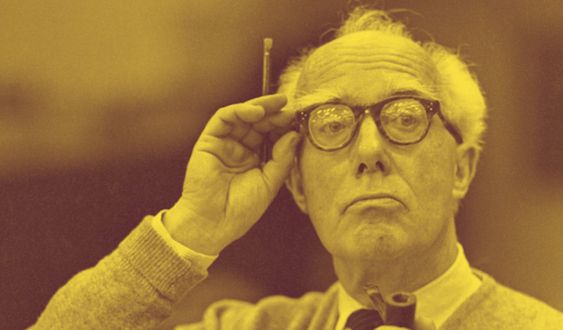
In 1970, the year Robert Gerhard died, the composer Josep Soler said of him that he was "the most unknown of our composers" and, at the same time, "the most important of the contemporary era." Gerhard's work is especially revealing because his career was built amidst this transformation. Born in Valls in 1896, son of a Swiss father and an Alsatian mother, he studied with Felip Pedrell, a decisive figure in the recovery of a Catalan musical tradition and in the search for a modernity linked to his own culture.
In 1923, he went to Vienna to study with Arnold Schönberg, coming into direct contact with one of the deepest revolutions in musical language. Gerhard did not abandon the Catalan tradition when he met him, but neither could he return to it as if nothing had happened. The Wind Quintet, from 1928, composed at the end of his studies with Schönberg, was one of the first fruits of this transformation: Gerhard used serial techniques in a personal way, even departing from the twelve-tone model by using a seven-tone series.
«It would be childish to try to explain this music. You cannot get to it from the outside. There is only one way: listen, listen and listen, simply» (Robert Gerhard)
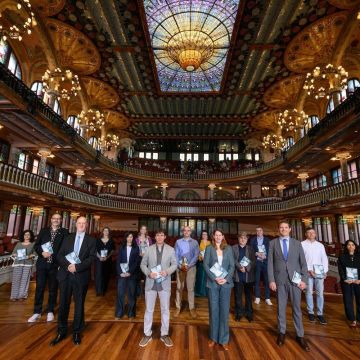
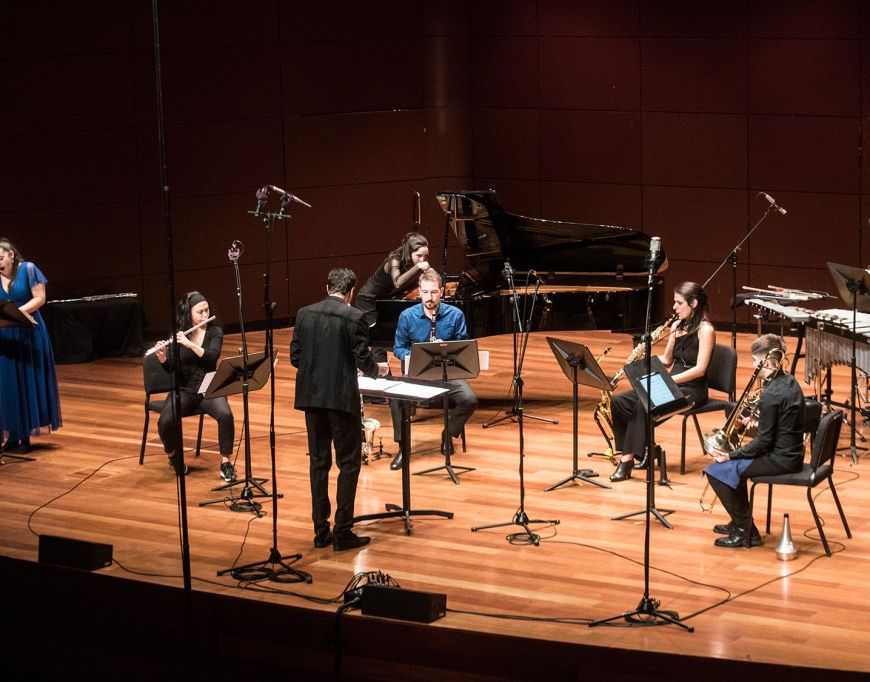
It is precisely within the framework of this tension between the known and the new that the programming of the Biennial of L'Auditori de Barcelona acquires particular interest. The journey does not present Gerhard as a figure confined to a single stage, but rather allows one to follow the different ways in which he expanded his language. The inaugural event, on September 30 at the Music Museum, combines a conference by Oriol Pérez i Treviño with the performance of the late Concert for 8 (1962). Conducted and commented by Edmon Colomer, the concert allows an approach to a chamber work of unusual instrumentation —flute, clarinet, accordion, mandolin, guitar, percussion, piano and double bass— in which Gerhard explores timbral contrast, the different configurations of the ensemble and a writing marked by the interplay between tension, movement and contemplation. A work dedicated to the Gomis-Bertrand family, who at "la Ricarda" hosted creators of the Catalan avant-garde, such as Joan Miró and Antoni Tàpies, but also international ones like John Cage or Merce Cunningham.
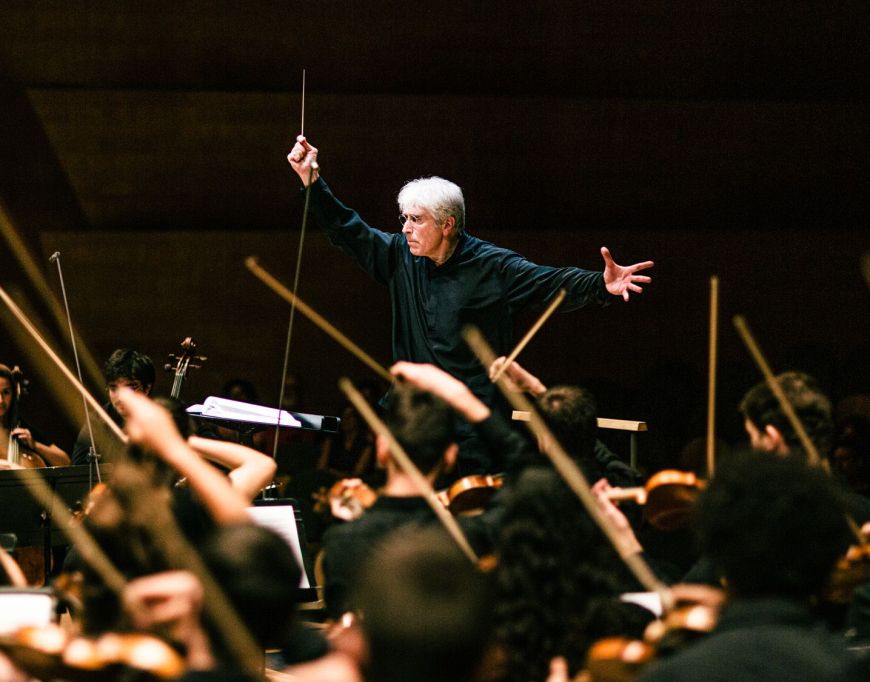
The next event will take place on October 2 and 4 at L'Auditori, when the OBC, under the direction of Ludovic Morlot, will perform the Concertino for string orchestra, composed in 1927-1928 and premiered in Barcelona in 1929. Originating from a string quartet, the work already delves into atonal writing, in which the influence of Bartók has been noted. Programmed between Chopin and Beethoven, the piece allows one to perceive with special clarity the distance between the inherited repertoire and the language that Gerhard was beginning to build.

Another work of great interest is The Marvelous Infancy of Shahrazada, a cycle of twelve songs composed between 1917 and 1918, closely linked to the soprano Conxita Badia. The session on October 13 will offer a selection of these songs along with Alban Berg's Sieben frühe Lieder. More than a return to an earlier language, the program allows one to observe Gerhard at an still early moment in his career, when his writing moves between the tradition of the lied, chromaticism and an increasingly personal expressive search.
For Gerhard, tradition was not an immobile repertoire, but a subject of investigation, as it would be, in its own way, for Bartók, Stravinsky or Falla. After the Civil War, exiled in England, he worked for the BBC and experimented with sound media that radically expanded the possibilities of the music of his time. Hence, it is insufficient to remember him solely as the composer who introduced dodecaphonism in Catalonia. This label leaves out a more interesting question: what does a composer do when the tradition he has received is still necessary and, at the same time, no longer provides him with all the answers.

Lament for the Death of a Bullfighter, from 1959, based on Llanto por la muerte de Ignacio Sánchez Mejías by García Lorca, allows one to approach a Gerhard who transforms recording, the manipulation of sound materials, and electronics into expressive resources. The session on October 27 at ESMUC, dedicated to his electronic music and preceded by a lecture by Gregorio García-Karman, will relate this mature work to Schönberg's Ode to Napoleon Buonaparte.
«What changes is not only the music; the listener also changes and, with him, the assimilation of the acoustic phenomenon»
Heard today, that piece by Gerhard poses a small paradox: sounds that may have seemed radically new to his contemporaries now find an ear much more accustomed to electronics. What changes is not only the music; the listener also changes and, with him, the assimilation of the acoustic phenomenon. At the most experimental end of the Biennial is the concert CrossingLines, on November 15, in which Caligula and Automobiles, Pt. 1 (Sculptures), two works for electronics alone that allow us to see how far Gerhard took his desire to expand the sound field, have been programmed. The event also includes Libra, which belongs to his zodiacal cycle, and establishes a dialogue with creations by Ariadna Alsina, Arnau Brichs and Rubens Askenar. Electronics thus ceases to be a historical rarity to become a meeting point between Gerhard's sound research and the music that continues to be made today.
The difficulty of music largely depends on the distance between the work and what the ear believes it understands. What seems natural to us today was, at some point, a new way of organizing sound. More than a property with which works are born, "familiarity" is something that societies build through repeated listening and its public valuation; two circumstances that, in Gerhard's case, may have been limited by a complexity that contrasted with consumption and listening patterns. The composer himself was aware of it: «My music is difficult. Agreed. But it is not only because of the ideas it expresses and develops, nor only because this elaboration is carried out in depth and not on the surface, but above all because of its sonority. It would be childish to pretend to explain this music. You cannot get to it from the outside. There is only one way: listen, listen and listen, simply».
«There is only one way: listen, listen and listen, simply».
The human ear constantly works with expectations. Neurobiologist Jean-Pierre Changeux has addressed this issue in Les neurones enchantées, a book based on conversations with Pierre Boulez. Part of musical pleasure —he explains— has to do with our ability to anticipate what will happen and with the way a work confirms, delays, or contradicts these expectations, until it becomes a kind of second nature.
Theodor W. Adorno, who was a disciple of Alban Berg, used to say —and not as a witticism, he probably thought it— that dissonance was a distant consonance, to which we were not yet accustomed; in contrast, for example, with the works of Mozart, Beethoven or Brahms, which do not need to be explained when they appear in a concert hall. Gerhard's leap —the transition from tradition to experimentation— offers different answers to the same need: to expand language and with it the meaning of art.
«A score preserved in an archive belongs to history; only when it sounds again can it influence the present»
In From Bacteria to Bach, Daniel Dennett writes that "cultural evolution has been dedarwinized by its own products, but its Darwinian ancestry is still very evident." The recovery made possible by L'Auditori, however, is not limited to placing the composer in a display case. A score preserved in an archive belongs to history; only when it sounds again can it influence the present. Nor does it try to turn that difficulty into a virtue, but rather to grant the listener a different time from that imposed by immediate consumption.
The first edition of the Biennial shows a pedagogical will not exempt from passion in each of its days and formats —conferences, commented auditions, study days and, of course, concerts—, but also something even more decisive: to promote the discovery of a fundamental and Catalan composer not as an act of recognition, but as an experience capable of transforming listening, and thus also a little —necessarily— ourselves.
Add The New Barcelona Post as your preferred Google source for free
Stay informed with the latest news.