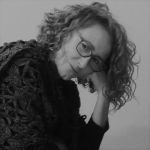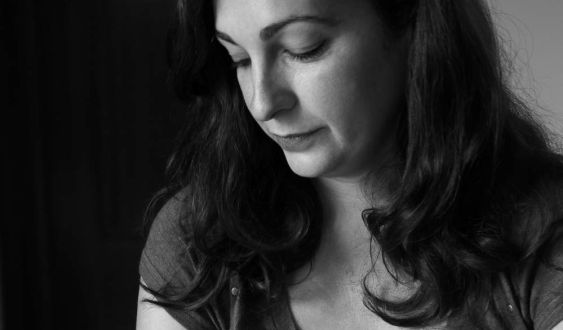
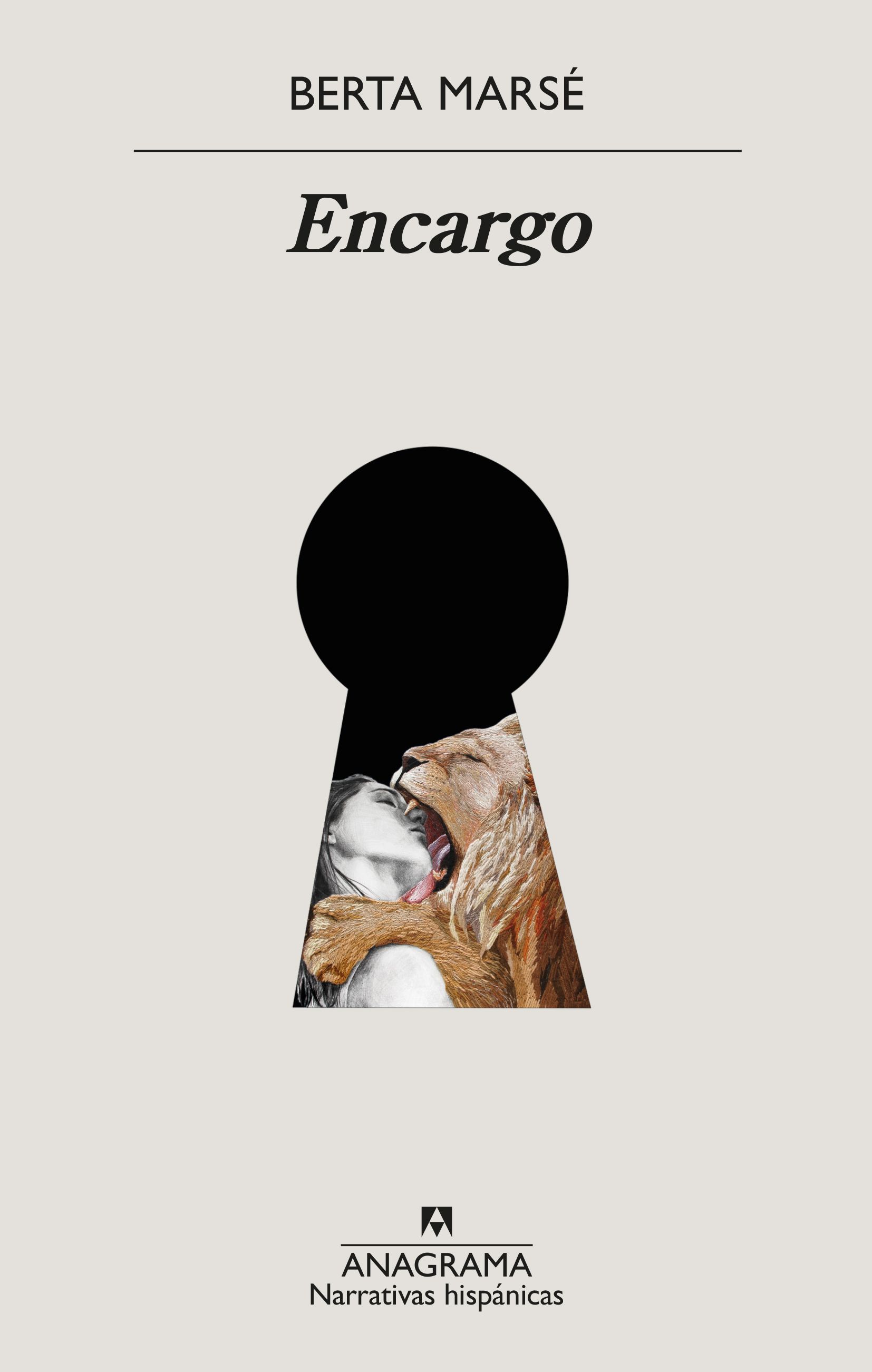
That life was becoming strange, Berta Marsé had intuited without realizing it. It is read in the first novel by this "storyteller by vocation." Encargo (Anagrama ed.), a nouvelle (short novel) of long trajectory but imbued with the rhythm and intensity of the story, which is her habitat (she is the author of the breviaries En jaque and Fantasías animadas). She wrote the novel with great effort, fighting against the time that slipped away in perhaps the most complicated years of her life (Barcelona, 1969): her parents' illness, the death of the great Marsé (the writer passed away on July 18, a date that is like a joke of destiny), and other personal matters that turned "la Marsé's" life upside down.
"And now that I have time, that my father is no longer here ---she says with visible sorrow---, it's harder for me to concentrate: there's no way, uncertainty disconcerts me. We have time, yes, but they have taken away our space." We will not talk about the matter anymore: "What is happening today (the pandemic) will take time to manifest literarily; it needs time, at least for me"; and although many have immediately rushed to write, she has not, that is not her character nor the genesis of her literature, too strange and brutal for a quick read.
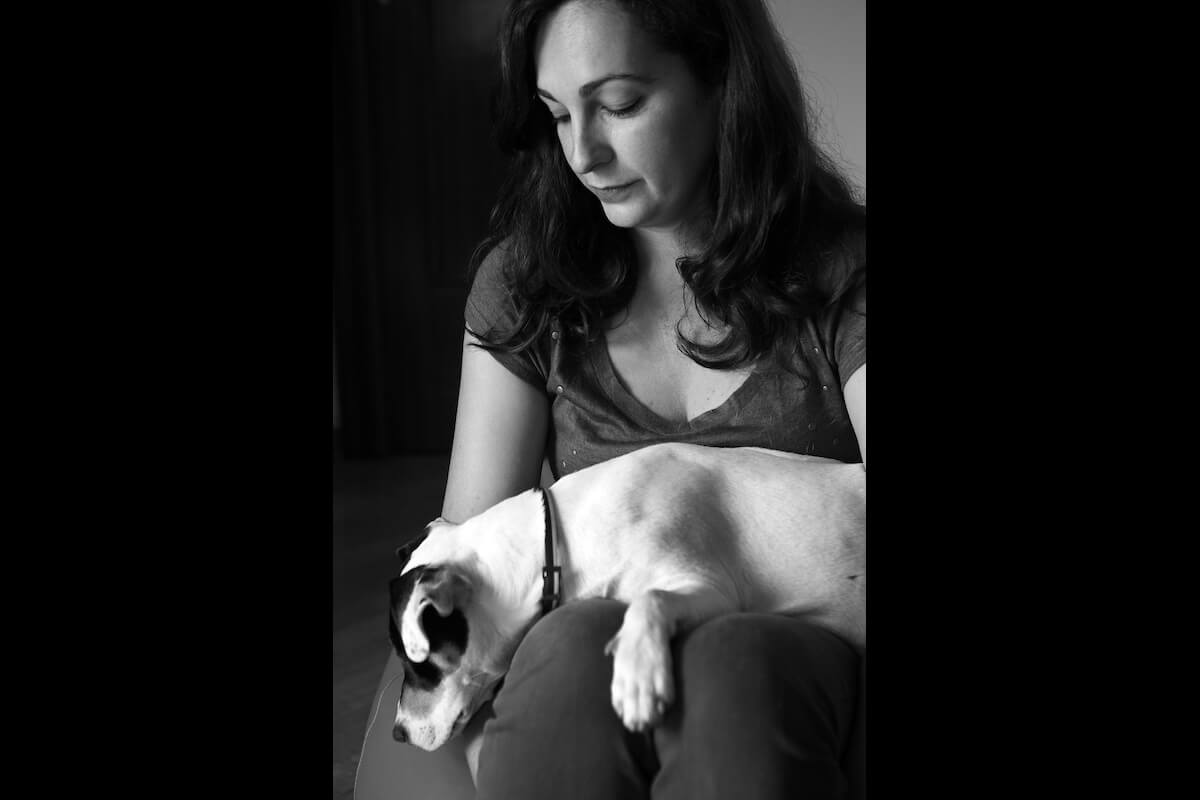
Berta Marsé, film script analyst and editorial reader, walks with her ears sharply attuned and a notebook always at hand, where she jots down "phrases, anecdotes and especially dialogues and situations that amuse me, because humor seems essential to me, always." She has drawn on a very brief incident that happened to her at 22, noted and kept in one of her thousand notebooks, which in a matter of seconds could have ruined or ended her life. Saved by grace of chance, around those tenths of a second she has built a story that grips you to the pages and gives you no respite until the also unexpected end. In between, a precious mosaic of neighborhood stories and characters on the edge that, inevitably, harken back to Ronda del Guinardó, and from there down the street until reaching Sant Antoni, where we find her two-headed character, Yesi or Desi, Desi or Yesi. We converse in the morning, screens interposed.
--- It won't be a coincidence that the most interesting stories published today refer to characters and situations on the verge of dementia, that madness that also runs through your novel, doesn't it increasingly resemble real life?
--- One would have to ask specialists in madness. Mine is pure fiction.
--- Fiction you have written breaking the boundaries between short story and novel, series script and feature film, is it possible to conceive creation today without that rhythm of the short story and the miniseries?
--- It's the rhythm I choose, I am a storyteller by vocation. This was going to be a short story but it got longer, maintaining the intensity and rhythm of short writing. I feel comfortable in the short story register, it's what I most enjoy reading and also writing. Of course, cinema influences everything I do.
--- Workshops, therapy groups, and more workshops, do they want us busy as if we all suffered from a borderline disorder?
--- Well, I haven't been to any workshop, ever; I suppose there's a bit of everything in those work groups, and that some people find them useful.
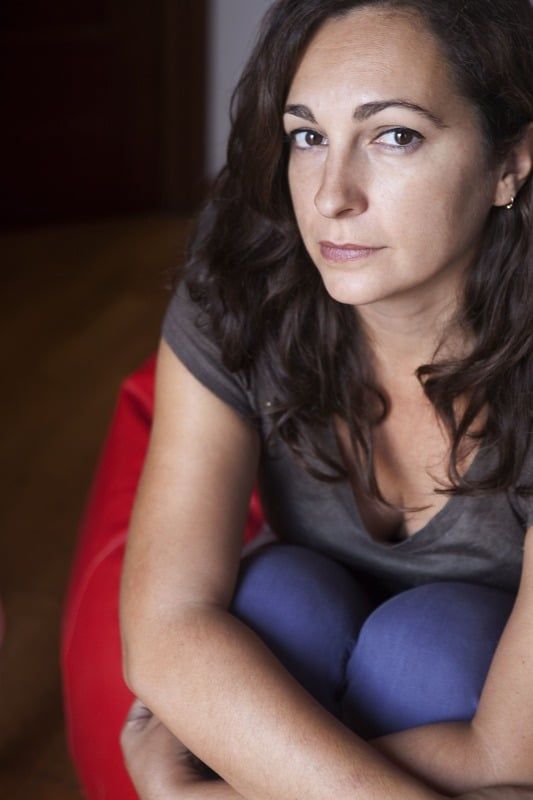
--- Undoubtedly, novels sewn with loose stitches, but which then win awards like the Planeta and others. What will you say when they offer you the Planeta, or has it already happened?
--- It would be great because it would fix my life financially, but it would pose a dilemma, I almost prefer that they don't propose something like that to me. Besides, something like that won't happen, because now a posthumous book by my father is going to be published, a diary he wrote during the year he was a judge for the Planeta, in 2004, where he precisely tells what you just said: how those novels leave the seams visible. Those comments and his resignation in 2005 blew the award sky-high and I don't think they're interested in me now, one Marsé is enough. On the other hand, my style doesn't fit much, I don't think what I write is for the general public and, given the amount of the prize, I suppose they will have to sell a lot.
--- Regarding Encargo, your ability to create suspicion, the avoidance of the obvious, a structure like fireworks, hybridization of genres, extreme simplicity… has been noted. How much work is behind it?
--- A lot. But all that you say… I learn new things about my own work. I write quite a bit by instinct, so these are not deliberate decisions. I am not aware of avoiding the obvious or seeking extreme simplicity. I write and then I suppress what is not essential, which is undoubtedly the most painful part: getting rid of fragments you like but that disperse attention.
--- I'm sure you had written much more about that gallery of prison characters, am I mistaken?
--- No, I had written much more than what I finally left, and especially I had developed that part of the prison. But this always happens, and it hurts, but it is important to do it. I have let the secondary characters peek out but they stay there, I would have much more to tell about each of them.
--- What you have told about yourself is that you go around with a notebook, always, where you write down what catches your attention. As a writing method?
--- Yes, but it's something I suppose most writers do. I have friends who say "don't tell Berta anything, she'll write it down later!" I write down phrases, anecdotes, dialogues and, if something seems funny to me, I immediately record it, because humor for me is essential, especially in the midst of tragedy.
--- I hope not to reveal anything untimely, but I know that the novel starts from one of those many anecdotes noted in a notebook. How and when did it happen?
--- I was 22 years old and lived in the Sant Antoni neighborhood (where the core of the novel takes place), and one night I went down to walk the dog and… it was a matter of seconds: in front of me a fancy car stopped and two men in suits got out of it, they were coming straight towards me but one of them stopped the other and said "no, no, not this one, she has a dog", and they quickly got back in the car and disappeared. It was like a bullet whistling past me. And I wrote it down. That day something surely fatal was about to happen to me from which I escaped by chance, but perhaps another person did not escape.
--- And so many years later, how did you resort to that note?
--- I saw in a newspaper that a short story contest was announced and I looked among my many notebooks. And I found this one: when fatality brushes you but you escape. I started writing and Yesi appeared, and then neither contest nor anything. The scene opens a black hole that lasts five years, but the novel revolves around that void without entering it: Yesi is not interested in telling nor Desi, in knowing.
--- Berta, does it bother you much if I tell you that I can't help but read Juan Marsé in your novel? Those episodes woven from the neighborhood, a story of micro-stories…
--- On the contrary, I love it! But I am very far: his world is enormous, his history and his territory, gigantic, like those of that whole generation that was born in the middle of the war, that lived through the post-war and Francoism. My world is totally different, but if it reminds you of his in any way, for me it is a compliment and a flattery.
--- "Read Marsé!", it says on the back cover of your novel (J.A. Muñoz, Revista de Letras), do you like something like that being said?
--- I think it's great, but I hadn't even noticed. Where do you say that is, on the belly band or on the back cover? Because I always get rid of the belly bands.
--- Has it been complex to be the daughter of such a literary giant and inherit his vocation?
--- I have never fought against his influence: I am his daughter and what can I do. No, it doesn't bother me that people read me as Juan Marsé's daughter. In fact, I can tell you that whenever I have participated in Sant Jordi, out of every 10 women who approach the stand, always women, 9 do so to tell me how much they liked Últimas tardes con Teresa. Comparisons and even prejudices will always exist; but if someone approaches or distances themselves from me because of that, well, fine. I handle it very well. Fortunately, I am Marsé's daughter.
--- What was the writer like as a father?
--- Very easy. Contrary to that impression of being gruff, my father was a very accessible person. I've been writing since I can remember, but the good thing is that I didn't start publishing until very late, in my early 30s. And it's a good thing I didn't try to do it when I was 20, because my stories back then were very green.
--- Would he have told you that?
--- Yes, he surely would have advised me not to publish. That's why I say it was lucky that I didn't even try, that I started late, calmly, without great ambition and with a publishing house like Anagrama, whose criteria are serious. Yes, it was lucky to be discreet and shy, because when one is young, one has neither one's own world nor style, and while searching, one copies or emulates one's writers: I did it with Poe, who fascinated me.
--- Berta, have you met many people for whom resentment is the engine of their lives?
--- Not especially, but if you're asking referring to Desi, I don't think it's just resentment that drives her life, there's also love and hate. And ultimately, it's not known whether she acts out of revenge or compassion. What is clear is that she doesn't do it in cold blood.
--- The usual question: are you still in the novel or have you returned to the short story? Next installment?
--- Well, look, I was thinking of going back to short stories, I already have several written for a volume about difficult old people, which is a subject that attracts me a lot. But I was in the middle of it when, during confinement, an idea for another short novel crossed my mind that surprised me so much that there I am. Although in this situation it's very difficult for me to concentrate, as I suppose happens to all of us: such uncertainty makes us live in the air.
There goes Berta Marsé, doing and on tiptoes so as not to stumble.
Add The New Barcelona Post as your preferred Google source for free
Stay informed with the latest news.