That Barcelona is liked by Italians is shown by official data. In the last 22 years, the Italians registered in the city have gone from 2,437 to 43,258, according to the Statistical Institute of Catalonia (Idescat), based on the continuous census of the National Institute of Statistics (INE).
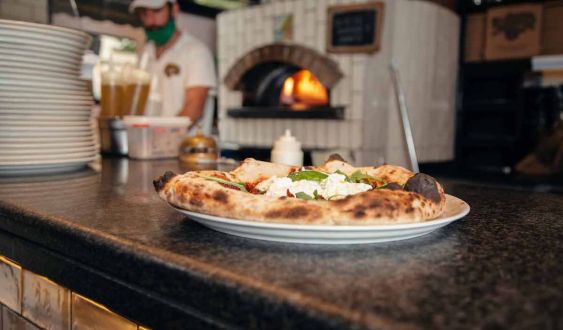
But this is also seen and heard on the street. Restaurants and pizzerias with Italian chefs who prepare specialties from their country are increasingly numerous. Many shops and small supermarkets have also opened, importing raw materials from Italy to prepare the most typical dishes from there at home.
Francesc Collell is an importer of gourmet products from all over the world. Between 70 and 80% of the items in the catalog of his company, Colmado Singular, for wholesale and retail, come from different regions of Italy. As a supplier since 2002 to restaurants and shops in Barcelona specializing in these products, he confirms that there are increasingly more establishments with an Italian imprint, and that on the gourmet food shelves of large commercial areas there are many more items arriving from Italy. The panettone, at first glance in supermarkets and pastry shop windows and food stores, is an example.
"Italians have the gift of making a simple thing an exquisite delicacy. We see it in the simplicity of pizza or pasta, very simple things but very well made, and economical. This, and the fact that we are close cultures, also explains why there are increasingly more establishments dedicated to Italian products and more Italian references in large supermarkets," comments Collell.
Italians, according to data from the Barcelona City Council, ranked fourth last year among the nationalities that most visited the Catalan capital as tourists, after the French, the British, and those from the United States. And in January of this year, they were the second most frequent visitors, after the French.
Fresh pasta on La Rambla de las Flores
Some of the first Italians who arrived in Barcelona to settle and open a street-level business were Carla Rivali's great-grandparents. They were Atilio Rivali and his wife, Giustina. They came from Genoa, where he worked in customs. The couple had planned to leave Italy to live in Argentina, but during their stopover in Barcelona, Giustina, who was pregnant, did not want to continue traveling, and they stayed here. It was the year 1902, and in a kiosk on the Rambla de las Flores, the couple opened the first artisanal fresh pasta shop in Barcelona, La Italiana Rivali.
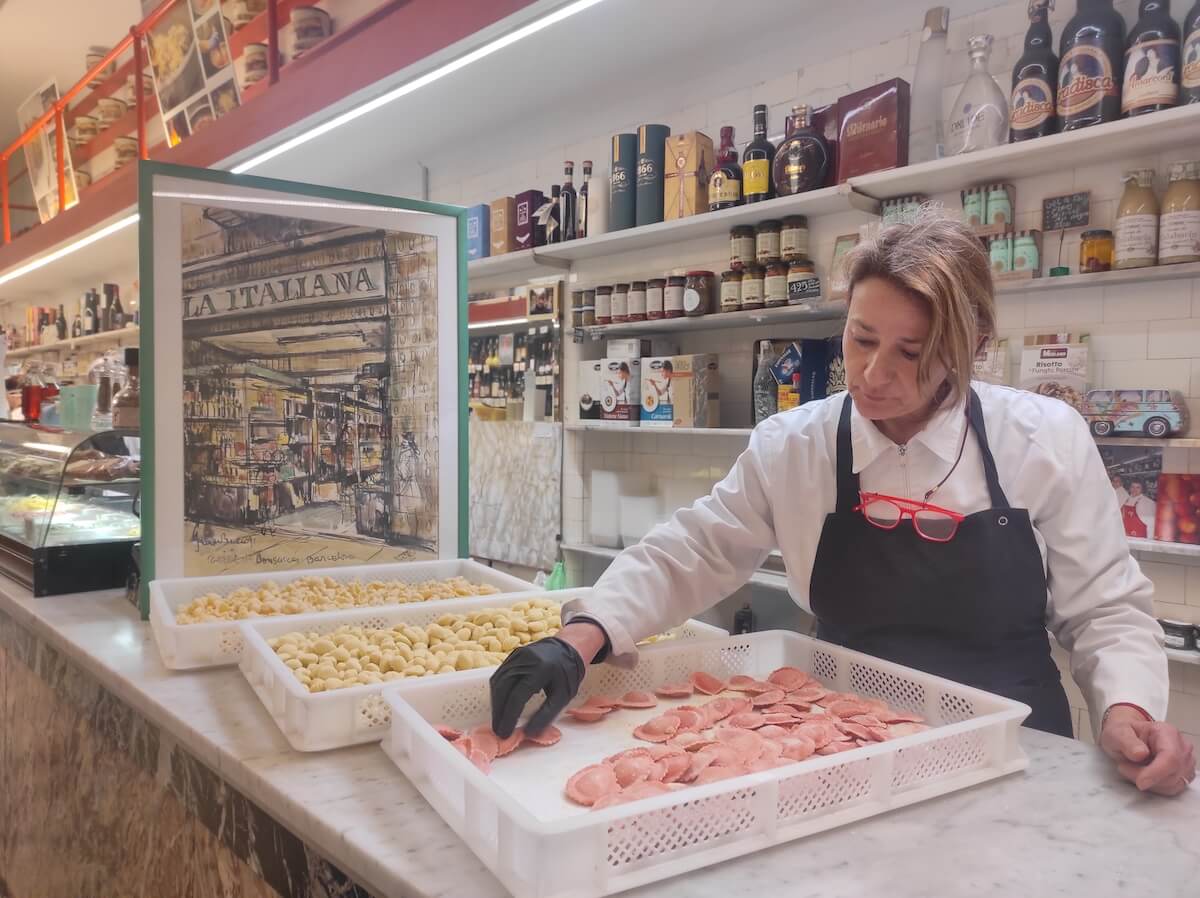
"My great-grandfather started importing Italian products, especially butter, which is why at first the store was called Il Burro di Milano, but they also brought wheels of Parma cheese and tomato concentrate, among other things." This is explained by the great-granddaughter, who is now in charge of that business that in 1904 moved to the premises at number 12 Bonsuccés street where, almost 120 years later, selected Italian charcuterie products continue to be dispatched, and fresh pasta is made just as the great-grandparents did.
Some of the first Italians who arrived in Barcelona to settle and open a street-level business were Carla Rivali's great-grandparents: Atilio Rivali and his wife, Giustina, from Genoa"Fresh pasta has always been our star product, before with much less variety of fillings and formats than we prepare now. But increasingly, customers also buy other Italian products such as wines, condiments, liqueurs, sauces, and prepared meals, which we started making in 1994, to accompany the pastas," explains the owner.
For all that has come to her from her ancestors, in Barcelona at the beginning of the 20th century, "there was already starting to be an important colony of Italians who, like themselves, must have missed their country. For them, my great-grandparents wanted to bring typical Italian products, but also to make them known in Barcelona."
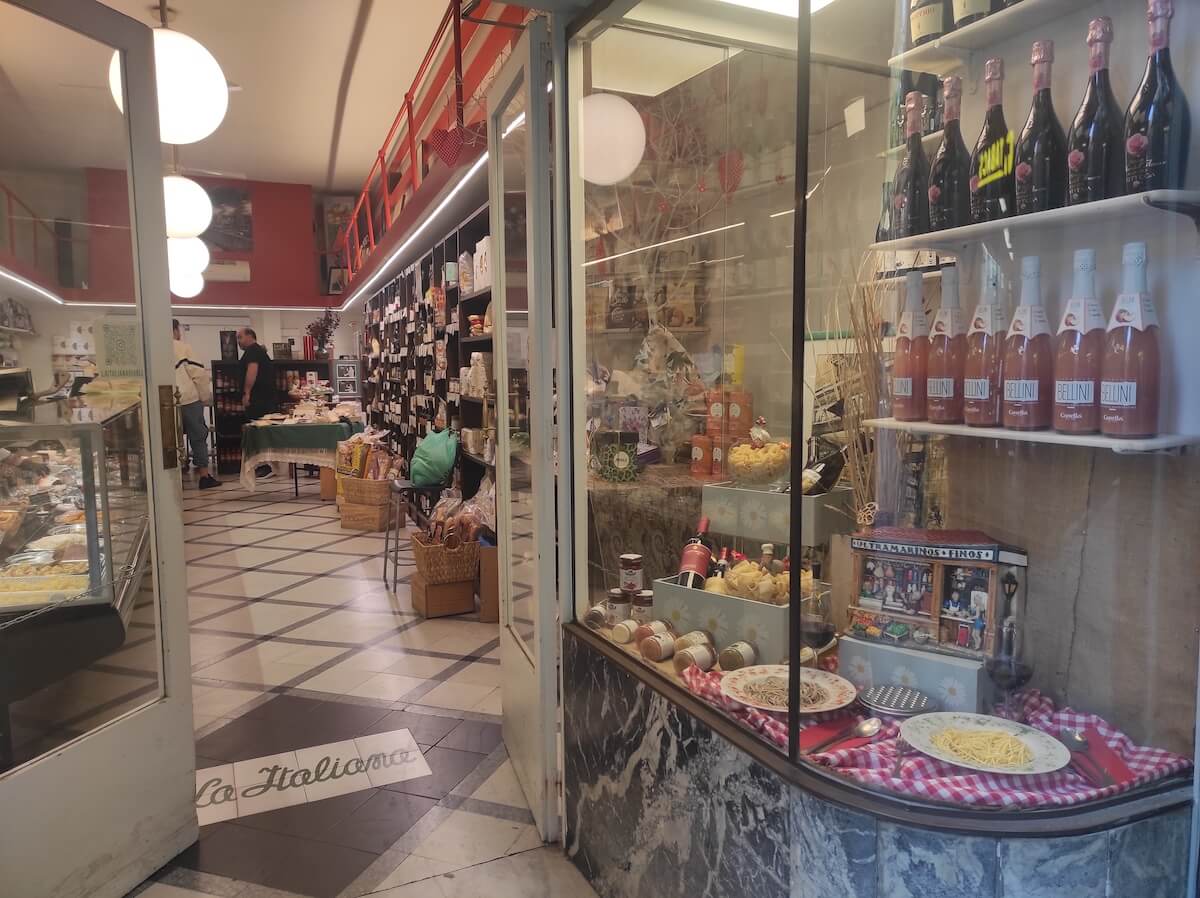
Today, as Carla Rivali points out, what continues to be most in demand is pasta, "both long and short, fresh or dry, and we have been introducing novelties, such as the mold to make galets for Christmas, and stuffed pasta. All types of pasta are highly requested. We have many varieties of vegetable flavors, with cuttlefish, stuffed with fish, vegetables, meat, and cheeses. Customers are increasingly demanding and require products of high quality and perfection, and it is in this that we have positioned ourselves well."
25% of their customers are Italians living in Barcelona, and the rest are locals. They sell wholesale and retail, and daily serve fresh products to restaurateurs and specialized shops in premium Italian products. They have Italian productions from practically all regions, but also a wide range of Catalan wines. "I want to make it half Italian culture and half Catalan, like me, who is half and half," says Carla Rivali. They also sell cheeses from Garrotxa, La Rioja, and France. She strongly agrees that Italian products attract a lot, she believes that "Italians are very fond of their products and believe a lot in what they do," which is why it doesn't seem strange to her that businesses of Italian cuisine or products proliferate so much in a city like Barcelona.
From Turin to Barcelona
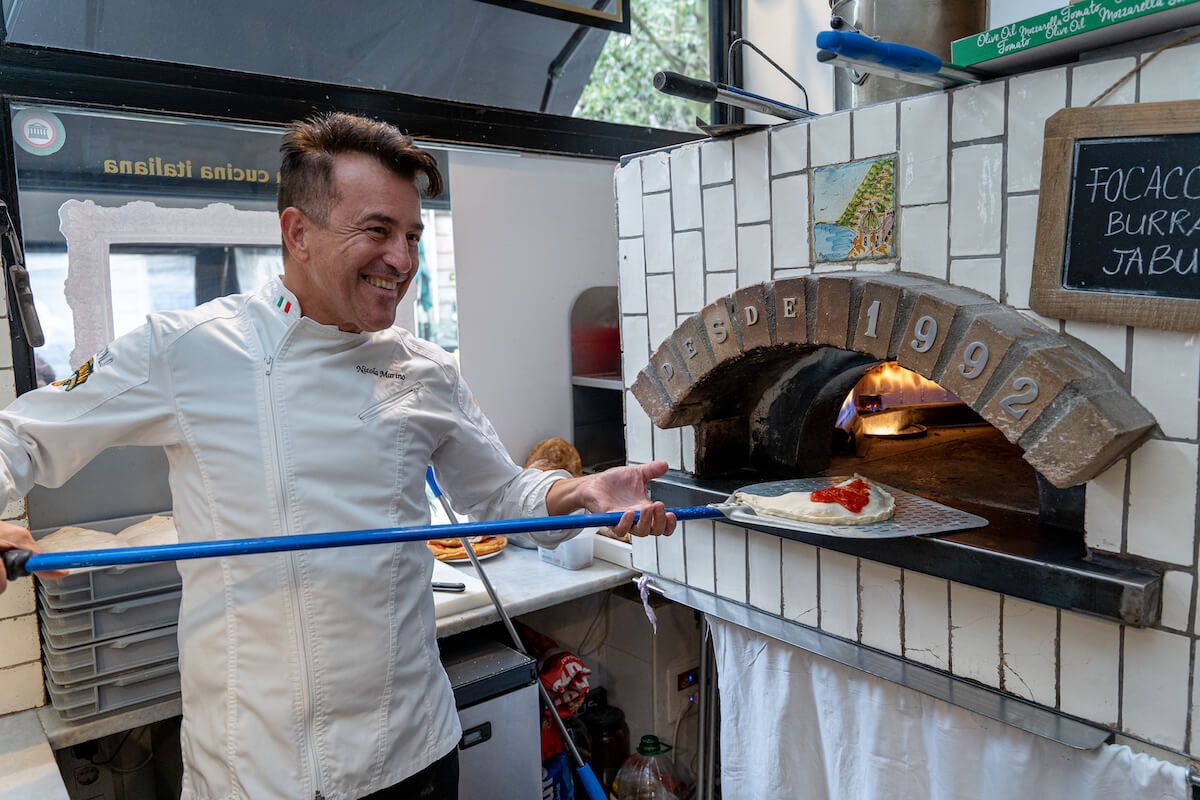
Nicola Marino has counted about 500, including pizzerias, Italian cuisine restaurants, and gourmet product shops imported from Italy, although not all cooks, managers, or owners are authentically Italian. He is. He was born in Bari in 1963, although he lived most of his life in Italy in Turin. He is the son and grandson of bakers and pizzaiolos. Until the 90s, he ran a pizzeria that his father had inherited from a brother, in 1971, in Turin. From there he arrived in Barcelona in 1991, when ---he says--- there were almost no authentic restaurants serving specialties from other countries.
In the Barcelona that everyone could already find on the map thanks to those glorious Olympic Games, Nicola opened his restaurant Piazze d'Italia at number 94 Casanova Street. Risottos, pasta enlivened with truffle, or pizzas cooked in a wood-fired oven have been delighting Barcelona residents and visitors to the city for 31 years. Nicola is convinced that raising the quality level of ingredients and preparations attracts a more demanding and quality tourist, also with a good cultural offer in the city.
Nicola Marino has counted about 500 Italian businesses, including pizzerias, Italian cuisine restaurants, and gourmet product shops imported from Italy, although not all chefs, managers, or owners are authentically Italian.During the restaurant's first five years, he personally brought practically all the ingredients for his dishes in his 600, which he drove from Turin. "Almost no one here knew burrata, nor pasta al dente", he explains. And in the same way that Nicola Marino has strived these thirty years to make known the best of Italian cuisine, he considers it a shame that the city of Barcelona has not helped to preserve restaurants with autochthonous cuisine. "The offer of restaurants from other countries is growing a lot, especially Italian ones, but Catalan cuisine is being lost in Barcelona," he states.
Walking through the streets of Barcelona, it is very easy to find the colors of the Italian flag or Italian names identifying food establishments from that country. Among them are the stores Cibus Italia, Makkeroni, Delizie gourmet italiano, Redoro, La Deliteca, La Castafiore. Pizzerias, there is practically one on every street. One of the first was La Bella Napoli, and one of the most historic in Naples, Damichele, is also in Barcelona. The trattorias and Italian dish restaurants, such as Bella Italia, Makekosa, Agreste de Fabio & Roser, Leccabaffi and Bocca di Bonifacio, have just perfumed the city with touches of basil and oregano.
The Pavese family's ice creams
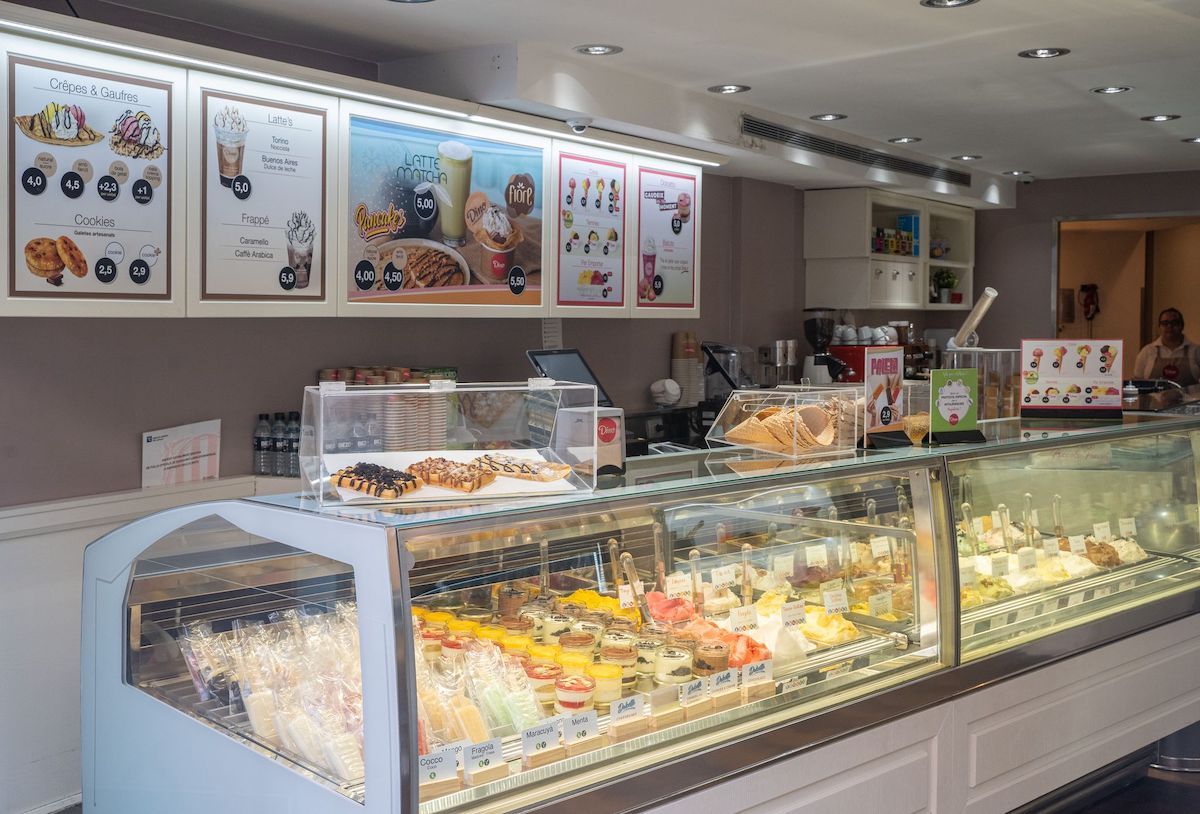
Barcelona also has quite a few ice cream parlors with Italian flavor, in very particular and authentic establishments like Cremeria Toscana or Officina Gelato Gusto Italiano (Oggi). And the offer continues to grow. But one of the first to open was launched in 1993 on Passeig de Gràcia by the Pavese, an Italian family. Alessandro Pavese, known to everyone as Dino, was a winemaker from the Piedmont region who owned a fruit shop in Turin. He had discovered Empordà thanks to a friend who had built a house on the Costa Brava. Walking through it, he noticed tourists eating ice cream near the sea. And, knowing fruit so well from his work in Italy, upon returning to Turin he sought out a master ice cream maker to teach him how to make artisanal ice creams with fruits from his land. In 1978, he opened an ice cream parlor with its own workshop in the town of Empuriabrava, and in Empordà, he still has the factory where the ice creams are made that are sold in more than 30 Gelati Dino ice cream parlors worldwide. In the city of Barcelona, there are nine, in Barceloneta, Gràcia, Poblenou, Sarrià, Sants, and in different shopping centers. In the province of Barcelona, they have four more and two on the Barcelona coast.
Gelati Dino is, therefore, another great bridge of commercial connection, flavors, and culture between Barcelona and different Italian regions. The citrus fruits they use come from Sicily, the pistachios are grown in the small Sicilian town of Bronte, on the volcanic terrain of Etna, the hazelnuts come from Piedmont, the mango pulp from India, and the almonds and other fruits contained in their ice creams are from Spain.
Close cultures
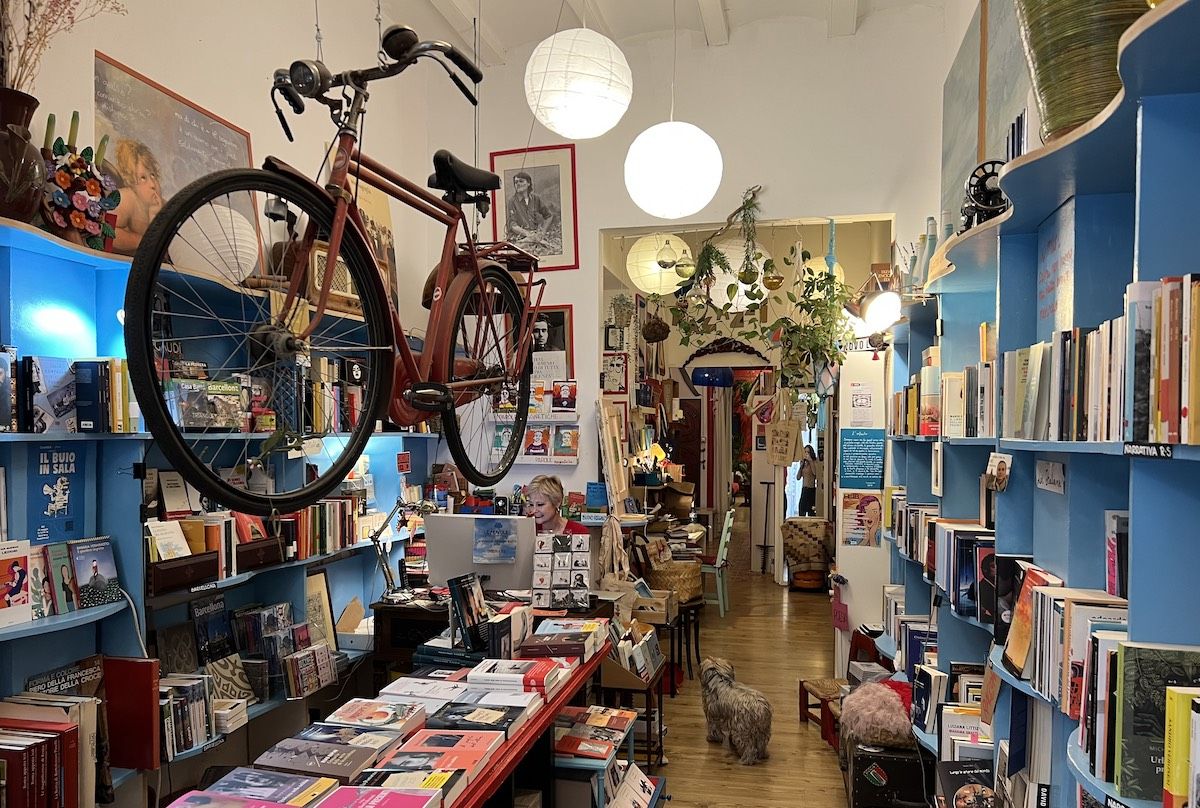
Cecilia Ricciarelli arrived in Barcelona in 2008. She was born in Rome and graduated in Literature. Before settling in Barcelona, where her brother already lived, she obtained a doctorate in Cinema in Paris. There, she combined her studies with teaching Italian classes. Afterwards, she lived in Israel and Mexico, where she was a university professor. Upon arriving in Barcelona, she taught her native language at the Istituto Italiano di Cultura and the Istituto Europeo di Design. Since there was no authentically Italian bookstore in Barcelona where she could find the works of Italian authors she intended to work with her students, she decided to open one herself. In 2011, she opened the bookstore Le Nuvole in the Gracia neighborhood. Very attentive to everything published in her country, and to the interviews published with Italian authors, she makes available to Barcelona residents stories, novels, and all kinds of books with an Italian stamp.
At number 11 Sant Lluís Street, in the Gràcia neighborhood, her bookstore, as she herself comments, is "a reference for Italians living in Barcelona, but also for those who visit it. And Barcelona residents also show a lot of interest in Italian culture." Among all the books in Italian, at Le Nuvole we also find Catalan and Spanish translations of Cecilia's selection of Italian literati, who organizes creative writing workshops, a reading club, and individual and group courses to learn the Italian language. Together with the Jaume Fuster Library, she is preparing this year's edition, in autumn, of the Flibfestival, a gathering of Italian, Catalan, and Spanish writers to reflect and dialogue on a topic.
Among all the books in Italian, at Le Nuvole we also find the Catalan and Spanish translations of Cecilia's selection of Italian literatiWith the same purpose of promoting Italian culture and language, the Istituto Italiano di Cultura, a public entity dependent on the Italian Ministry of Foreign Affairs, was born in Barcelona in 1950. It is located at number 5, Méndez Vigo passage, in a tower practically in front of another great institution for Italians in Barcelona: La Casa Degli Italiani, considered the oldest Italian association abroad that is still active today.
Also important Italian companies that expanded internationally chose Barcelona to establish their first headquarters outside of Italy. One of the cases that left the most mark on the city was Olivetti. The building of the first typewriter factory of this firm opened outside of Italy, still stands in Plaza de las Glòries.
Italian Barcelonians in crescendo
The 43,258 registered Italians revealed by Idescat data, based on the INE continuous register as of January 1, 2022, can be so because they were born in Italy or because they were born in Argentina (or other countries), but because their parents or grandparents were born in Italy, they can also have Italian nationality. All together they represent 12.3% of foreigners living in Barcelona and 2.64% of the total registered population in Barcelona. The Italian community has grown exponentially, almost 20 times more inhabitants in Barcelona with Italian nationality in the last 22 years.
Add The New Barcelona Post as your preferred Google source for free
Stay informed with the latest news.
