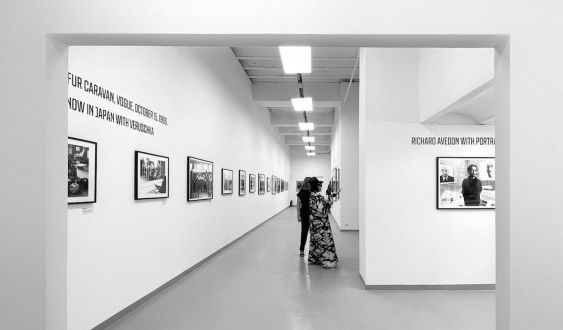
The FotoNostrum photographic gallery is the result of many years dedicated to promoting an art that is gaining more and more weight in the city. Its founder and CEO, Julio Hirsch-Hardy, came to this world after a career focused on business, as a manager at Correo Argentino and City Bank, and as an entrepreneur of a technology company in the automotive sector. When the economic crisis hit, which meant closing the company he had founded in Malaga, he began to dedicate himself to photography by setting up itinerant exhibitions starting in 2010, under the title of Biennial of Artistic and Documentary Photography and passing through Madrid, Buenos Aires, Malaga and Berlin. He ended up choosing the Catalan capital as its permanent headquarters. "I liked Barcelona and it seemed to me that it did not have a sufficiently large exhibition offer for the city it is, with the background and cultural history it has," says Hirsch-Hardy.
It was 2018 when the biennial promoted by Hirsch-Hardy was organized for the first time in the Catalan capital, which already had five editions behind it in other European cities and his native Argentina. The chosen space was Nau Bostik, in Sagrera. At that time, the city only had Foto Colectania ---then came the KBr photography center of the Mapfre foundation---, and Hirsch-Hardy saw an opportunity to expand the offer. The businessman started looking and found a 1,000 square meter, two-story premises on Diputació street, very close to Joan Miró Park, which had been a Roca sanitary ware warehouse and had been abandoned for years. Thus FotoNostrum was born.
Viewed in perspective, March 2020 was not a good time for inaugurations. The city's new exhibition space opened its doors on the 4th of that month, with the sixth edition of the Biennial of Artistic and Documentary Photography. "My idea was to have a permanent space for the biennial and create a first-class center for photographic exhibitions," he says. With a large collective exhibition, the newly opened space had to close its doors in less than ten days. The pandemic gave a truce that same summer and they were able to reopen, but the third wave forced them to close again.
A year and a half later, at the end of 2021, FotoNostrum reopened, this time definitively, reissuing the biennial that had been cut short by the pandemic and which had kept many of the exhibited works in the same gallery for months. Then, Hirsch-Hardy launched the gallery's exhibition program with an extensive show dedicated to Steve McCurry, world-renowned for his portrait of the Afghan girl. "What we try to do is create exhibitions that have never been done in Barcelona and bring in top-level artists who haven't been seen," explains the founder. There is also space for emerging artists, generally concentrated on the ground floor of the photographic center.
The reception McCurry received proved them right, with some 17,000 visits in just two months. "You couldn't walk through the aisles," recalls Hirsch-Hardy, "there were between 300 and 400 people in the room, there were even days when 800 came." FotoNostrum, which has involved an investment of about 400,000 euros, combines ticket sales, with prices ranging from 5 to 11 euros, with the sale of the exhibited work, as if it were an art gallery. "It's a strong bet. Barcelona is still a difficult place to sell photography," he points out. To the weak positioning of the Catalan capital as a collecting center, it is added that it is an expanding art form with a market yet to be developed.
The need for a photography festival
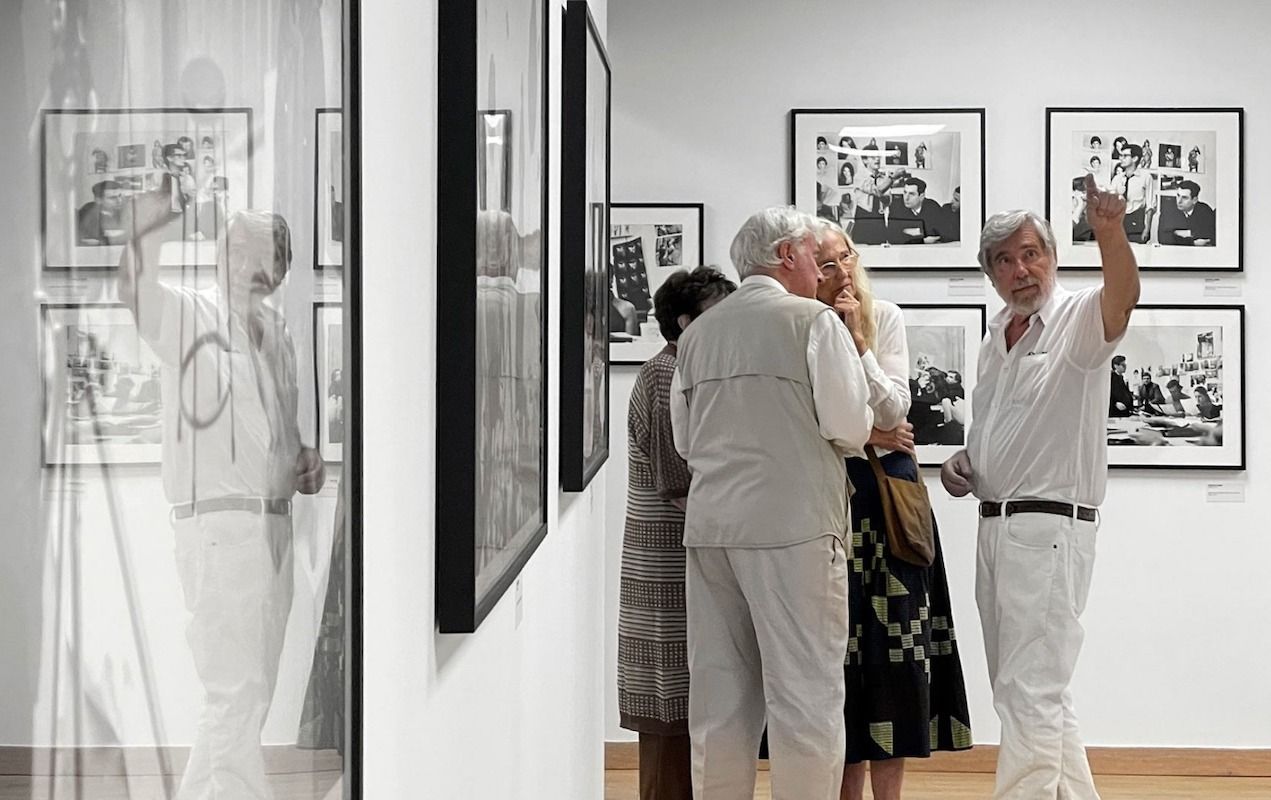
McCurry was followed by Helmut Newton and Richard Avedon. The second exhibition, on the famous American fashion photographer, premiered worldwide in Barcelona and will then travel to other cities. This is explained by factors such as Gideon Lewin, Avedon's assistant and responsible for designing the exhibition, who was Claude Picasso's boss, son of Pablo Picasso, and has been closely linked to the city. Avedon even photographed Claude, along with his sister Paloma.
McCurry's exhibition was followed by those of two other photographers never before exhibited in the city, Helmut Newton and Richard Avedon"There are a series of cultural relationships that make Barcelona a unique place and a brand with impressive appeal, but it is underutilized," remarks Hirsch-Hardy. The founder of the Eixample gallery believes that the city should promote photography more if it wants to become one of the main European destinations dedicated to this art, taking into account that it now has three exhibition centers."Barcelona can become the capital of photography if there is a private and public will to create something it lacks, a festival. PHotoESPAÑA in Madrid has created a very strong environment and has penetrated internationally with high-level exhibitions. Barcelona must be one of the few large tourist cities that does not have a festival," he laments.
The ingredients for it can be provided, Hirsch-Hardy trusts, but it is still missing. He had a project to do it hand in hand with the Union for the Mediterranean, but the pandemic ruined it. For the moment, FotoNostrum will inaugurate next week the seventh Biennial of Artistic and Documentary Photography, already permanently established in the city, with a display that wants to leave behind the complicated years that have preceded it. Thus, it will add more than 1,500 works by almost 400 photographers from all over the world. Such has been the magnitude of the exhibition, that they have chosen to divide it into two parts. The first will run from October 13 to 30 and the second from November 9 to 27. More than 120 photographers are expected to travel to the Catalan capital on the opening day, attracted by the magnetism it still awakens.
Add The New Barcelona Post as your preferred Google source for free
Stay informed with the latest news.
