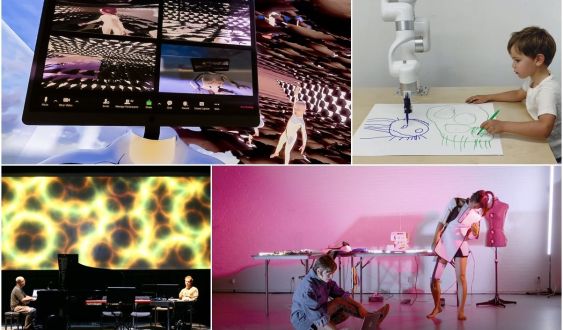
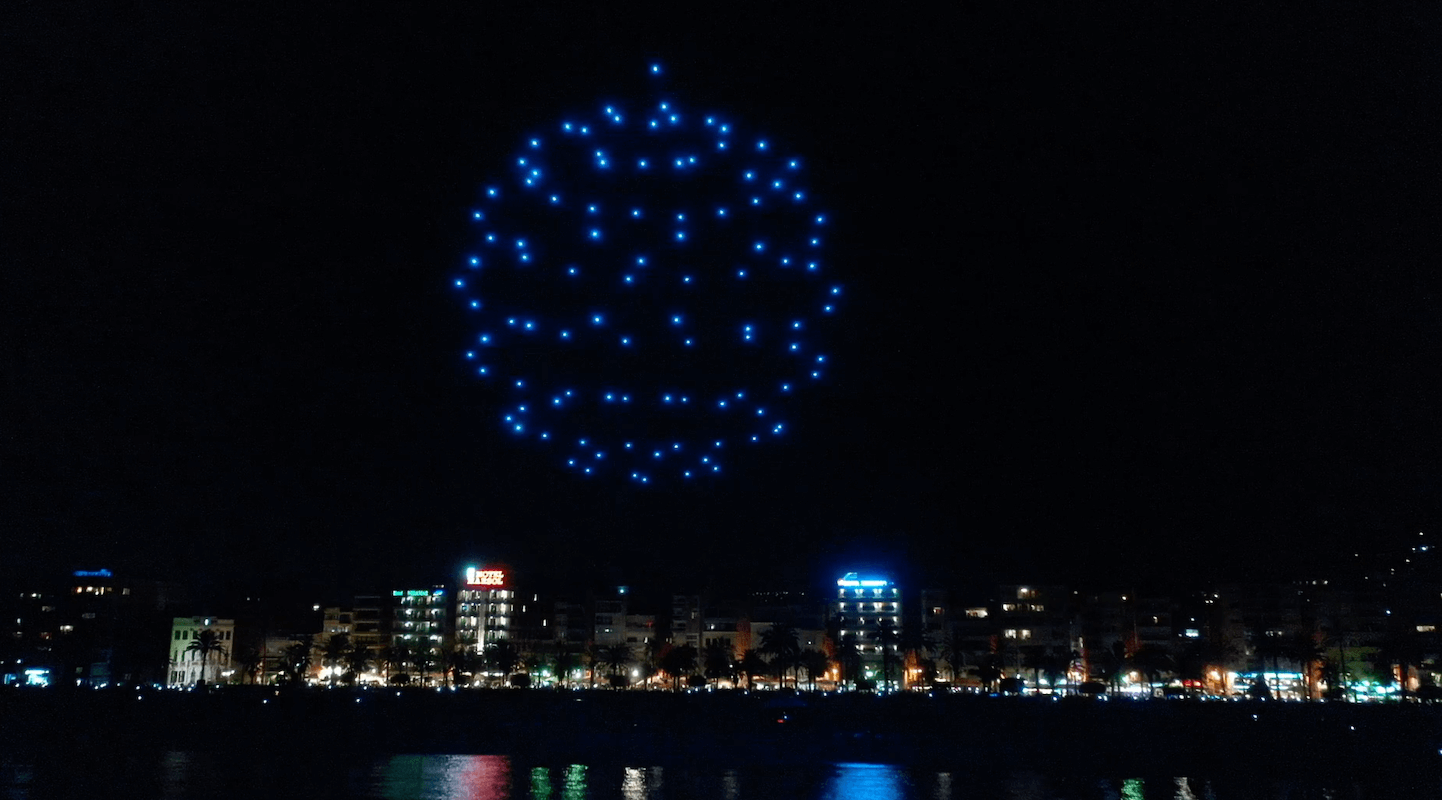
The combination of art, science, and technology opens up endless creative possibilities, and some of them will be on display in Barcelona from June 10 to 16 with the arrival of the International Symposium on Electronic Art (ISEA). Talks and roundtables with leading experts in this field will be accompanied by activities open to all citizens, such as a mapping at the Sant Pau modernist complex, a drone show on Somorrostro beach, or a large immersive installation at the CCCB made by Maurice Benayoun and Refik Anadol —recently popular in the Catalan capital for his mapping at Casa Batlló, which had a millionaire selling price—.
The 27th edition of ISEA will concentrate the bulk of its program at the CCCB and MACBA, where international reference figures such as Olga Goriunova and Christl Baur will pass through, as well as local ones such as Joan Fontcuberta and Ricard Solé. More than 300 presentations, talks, screenings, demonstrations, roundtables, workshops, and performances will be part of the symposium, which will serve as a meeting point for artists, scientists, and technologists.
All this creativity and disruption will be framed under the motto Els possibles (The Possibles), a theme "very characteristic of Barcelona," says the director of ISEA 2022, Pau Alsina. The symposium, promoted by the Universitat Oberta de Catalunya (UOC), will address issues such as the creative capacity of artificial intelligence, the possibilities offered by immersive experiences, the imaginary of biotechnologies in art, the challenges posed by climate change, and new ways of approaching education.
In times of uncertainty, the Deputy Mayor for Culture of the Barcelona City Council, Jordi Martí, sees this event as a way to "illuminate different paths and face a common life that is increasingly becoming more complicated." "Art connected with science and technology opens new spaces for reflection that must allow us to formulate new questions," Martí emphasizes.
The research will be accompanied by artistic expression to exemplify the discussions that take place at the symposium. More than 80 works will make up the exhibition project of ISEA 2022, the largest ever held in Spain in this artistic discipline. Santa Mònica will host the main exhibition, La irrupció, which will explore the current ecological and social crisis from different points of view, with works by Robertina Šebjanič, Lauren Lee McCarthy, Eric Berger, Joan Soler-Adillon or Andy Gracie. La Capella and Sant Pau will be the other two spaces that will organize exhibitions.
Barcelona will not be the only protagonist of ISEA 2022. Beyond the Catalan capital, one of the main protagonists will be Reus. The Cal Massó art center will feature an exhibition on electronic art, with works by Joan Fontcuberta. A mapping will also be presented on the modernist facade of Casa Navás. L'Hospitalet de Llobregat, Mataró, Vic, Tarragona, Girona, Lleida, Amposta, Berga and Balaguer will be other venues for this international event.
Later legacy
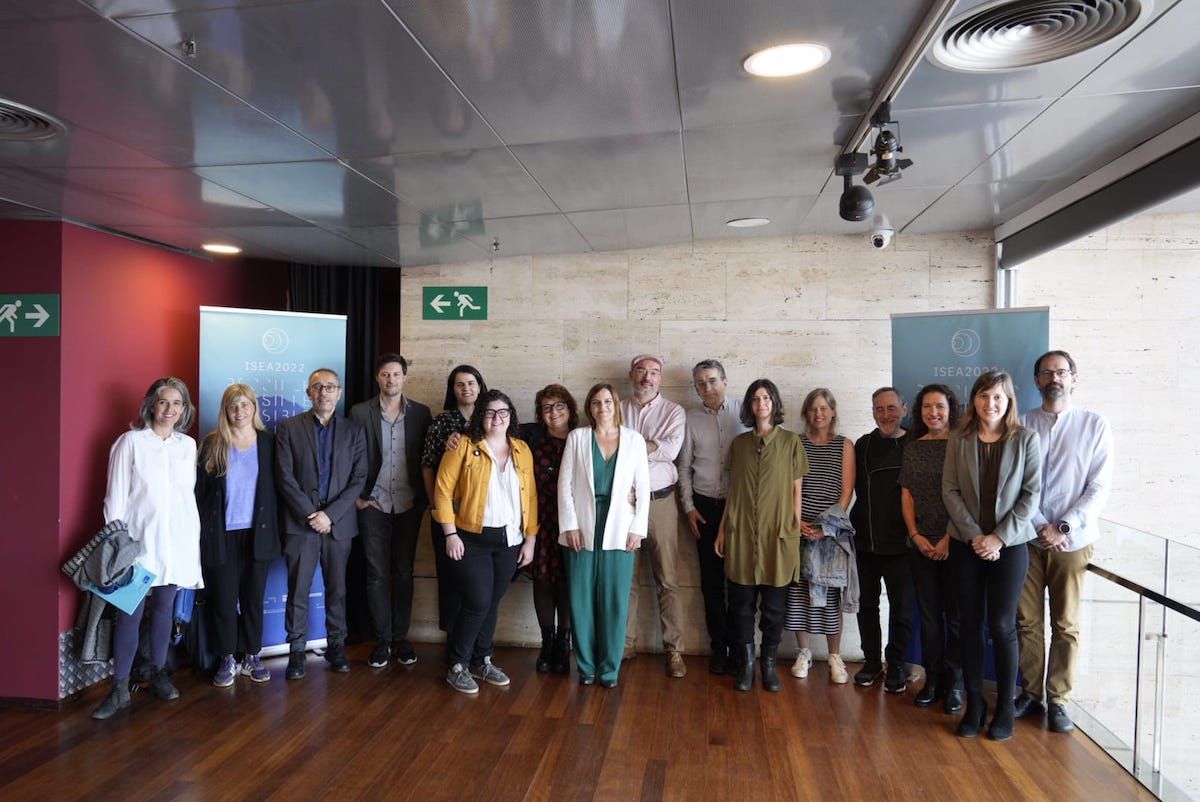
Alsina explains that the "transformative spirit" of ISEA goes beyond the days it will be present in the city and ends up leaving a legacy, as has happened in other cities that have organized it, strengthening and articulating the existing ecosystem. For the vice-rector of the UOC, Pastora Martínez, the involvement of the new Art, Science and Technology hub in the organization of the symposium, which represents its first appearance on stage, will be one of the most powerful legacies. "I hope it will be the seed of many future projects," adds Martí.
After more than ten years without landing in Europe, the Catalan capital will host this new edition of ISEA. "It is no coincidence that it is in Barcelona because the city brings together a cultural, artistic and technological fabric that has the will to participate in the future by designing it," defends Martínez. This will also mean that the symposium will extend its program with the collaboration of local actors such as Graner, Hangar, Sónar, Casa América, the Institute of Photonic Sciences (ICFO), the Barcelona Biomedical Research Park (PRBB), the Barcelona Institute of Science and Technology (BIST), EINA, CosmoCaixa, Sala Beckett or Mercat de les Flors. "There is no better sign of capital status than when they seek you out because an ecosystem already exists," emphasizes Martí.
Add The New Barcelona Post as your preferred Google source for free
Stay informed with the latest news.
