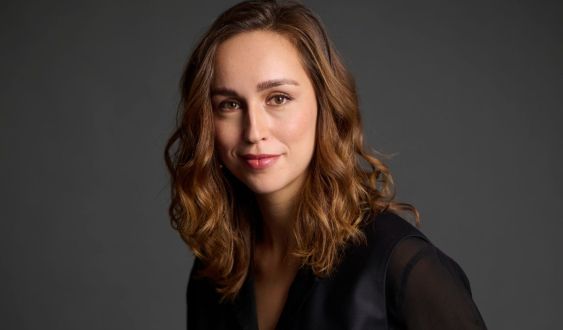
The New Barcelona Post talks this month with Daria Shornikova, one of the young people participating in the leadership and city program taught by Barcelona Global, Barcelona 2040. Shornikova, a specialist in storytelling and communication and previously Brand & Communication Director at ISPD, helps companies connect with their audience through the narrative of their brands.
Her career in cultural management, innovation, and communication has also led her to be a TEDx speaker. The objective of this series of interviews is for this new generation of leaders to share their vision of the Barcelona of the future they aspire to, as well as their impact proposals for the improvement of the city.
--- What do you expect from Barcelona in 2040?
--- The key word is magnitude. I would like to see a Barcelona that has leaped into the future, that has experienced new great milestones comparable in scale to the '92 Games. A technological and cultural capital, ambitious and at the same time livable. A city that has managed to preserve its traditional heritage, has leveraged its potential as a world capital, and at the same time has embraced the diversity of its neighbors, capitalizing on all three for a very rich social and business dynamic.
--- With what city would you compare Barcelona?
--- Barcelona is a city that competes with the world's leading cities and at the same time has the charm of localism. It is a port, so it could be compared with many others: cultural mix, gateways, points of (inter)change, a constant breeding ground. Today, I can think of comparing it with three other port cities. With Antwerp, for its medieval heritage, its art and fashion scene. It offers you the pleasure of tracing through small streets, finding galleries, shops, and taverns that hide treasures. With San Francisco, for being a magnet for technological talent and for dreamers in general. Furthermore, for a long time, it has been a very important focus of activism and DEI (Diversity, Equity, and Inclusion) movements. And with my native Saint Petersburg, for the romanticism and nostalgia it breathes, for being the counterpoint to the state capital, and for being a city more of talking bars than dancing ones.
--- What city model do you think Barcelona should resemble?
--- I believe that the Scandinavian capitals have achieved a balance between tradition, innovation, aesthetics, and coexistence. All of them adapt to changes very quickly, integrating the updating of their services in a seamless manner, respecting the environment and the needs of their inhabitants. A good example could be Oodi, the Helsinki Central Library, or the city's AI Registry. Initiatives like these create spaces to cultivate a conscious, collaborative, and co-responsible society. All of this makes people take an active role in helping their cities and communities prosper. Evidently, there is a great difference due to climate and culture, but these are dynamics that would help Barcelona make a qualitative leap.
--- What is the main challenge that Barcelona must solve in the coming years?
--- Leaving aside the "usual suspects," the integration of international talent and immigration in general seems to me one of the keys to achieving this vision of Barcelona in 2040. That Barcelonians by choice assume responsibility for their participation and their footprint in the city, that they collaborate in its prosperity, and that the natives open doors and act as guides. The division between those from here and those from there still exists at almost all levels, which means that newcomers often do not quite feel the city as their own, that the risk of falling into provincialism and consolidating ghettos persists. We have not yet achieved the evolution of this mindset. In addition, Barcelona needs to raise the quality of the tourism that comes. Here I would put Vienna as a reference.
--- What kind of tourism does Barcelona need?
--- We need tourism that values the unique cultural offer, the privileged location, the sporting legacy... Tourism that invests in enjoying them, that is aware of the great value it is witnessing and what it costs to maintain it. Finally, integrating industry into the city in a clean and sustainable way. This is a very complex challenge, but in the long run it would contribute both to the economic growth of the city in new sectors and to stability for the local population.
"The integration of international talent and immigration in general seems to me one of the keys to achieving this vision of Barcelona in 2040"--- What do you think should be the role of the new generations and their involvement in the development of the city?
--- My generation, and especially those who follow us, must continue to train ourselves to bring the best ideas and best practices, collaborate in city projects, lead new projects that build bridges towards the future. We have to be an example of Barcelona residents, whether by birth or by choice, and help educate newcomers. Raise the bar of what we want to see in Barcelona, each in their own field, and put them into practice. What a colla castellera would do: a castell as high as we can, with everyone's effort from their position. It may sound contradictory, but I would summarize it as humility, ambition, and action.
--- Which business sectors do you think Barcelona should bet on?
--- On technological and scientific industries, mitigating environmental risks. On the blue economy, which has just received a boost thanks to the America's Cup: research, economy, new business models. All this can give Barcelona a unique opportunity to grow and differentiate itself. I also believe it is important to start betting on culture as an industry and as a business sector with great potential for the city. The project to convert the Tres Xemeneies into a world-class audiovisual hub seems like a very good example to me. Public-private collaboration in the cultural field could be one of the ways to achieve this new significant milestone for Barcelona in 2040.
Add The New Barcelona Post as your preferred Google source for free
Stay informed with the latest news.
