The ICT sector in Catalonia closed 2021 with a turnover of around 23,000 million euros, a figure that represents a growth of 12.8% compared to 2019 and 9.52% compared to 2020 projections. But the number of workers went from 129,000 in 2020 to just over 113,600 last year. The reasons: 2020 has been a year of exponential acceleration of digitalization in many companies due to the pandemic, and on the other hand, in 2021 there has been a brain drain of specialists to other companies, especially from other countries.
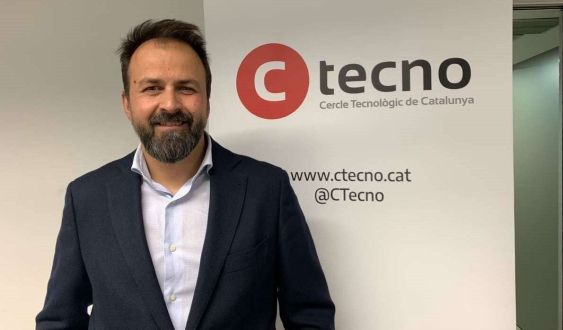
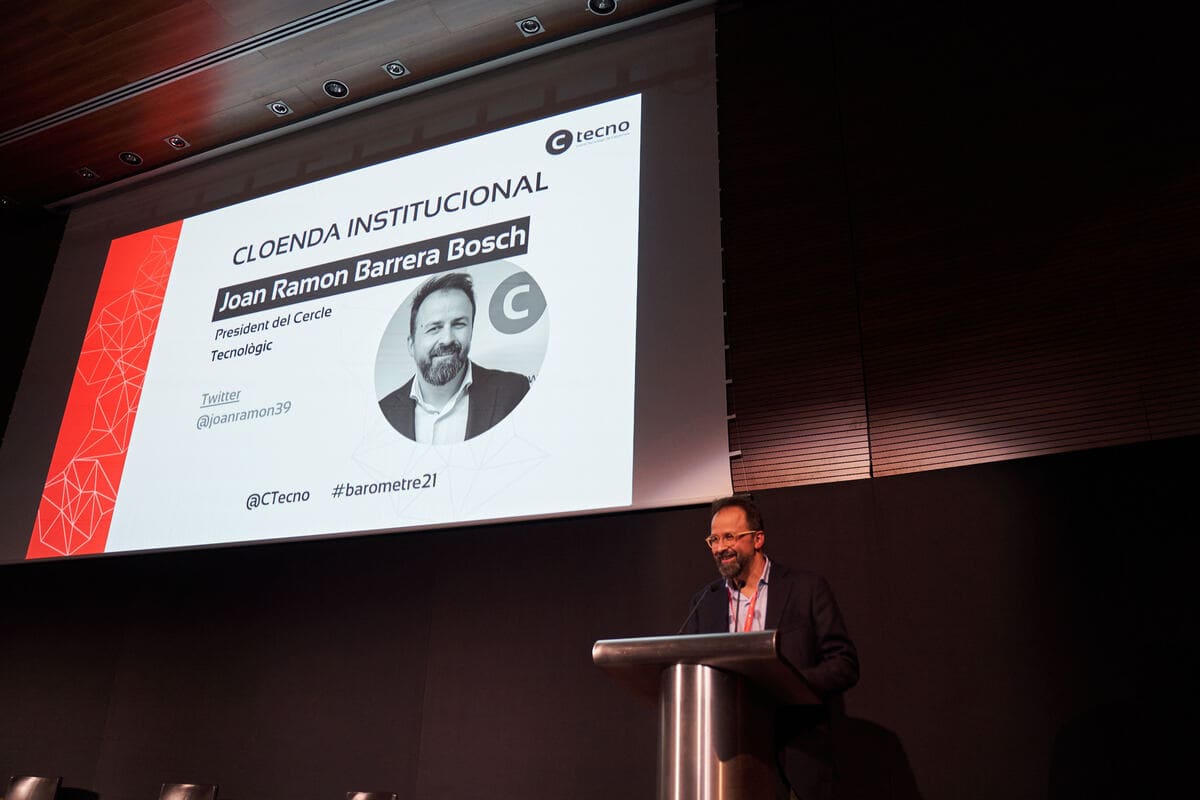
This is corroborated by the Cercle Tecnològic (CTecno), a private non-profit foundation that brings together technology companies located in the territory. In an interview with The New Barcelona Post, its president, Joan Ramon Barrera, analyzes the data from the XIII Barometer of the technology sector for 2021, which the entity prepares annually.
--- There is a talent drain. Is it worrying?
--- We must analyze 2021 with great caution because we come from a 2020 with exponential growth in the ICT sector in Catalonia, due to the acceleration of digitalization in many companies and in all sectors, as a consequence of the impact of the pandemic. Therefore, 2021, and also 2022, will be years of consolidation of exceptional growth, because the volume of employability registered in 2020 is not typical for the sector, although the number of workers has not stopped growing in recent decades. That said, it is true that talent retention continues to be one of the industry's challenges. The latest Barometer we have carried out shows that three out of four technology companies established in Catalonia are developing talent retention plans, given the exodus of professionals due to the low salaries they receive compared to those of international companies.
Three out of four technology companies established in Catalonia are developing talent retention plans in the face of the exodus of professionals--- In this regard, what is Barcelona's situation?
--- In Barcelona there is an external factor that also influences. Everything positive about the city being a pool for attracting entrepreneurship, innovation, in short, technology companies... also has a handicap: we have little talent and we must share what we have. In Barcelona there is a feeling of talent scarcity, since we attract talent from outside, which is a very important fact because you create a multicultural ecosystem, but we lack professionals to cover all the labor demand.
--- And what does that translate into?
--- The pandemic has completely modified the labor scenario and, therefore, the paradigm of the ICT sector is changing. Globalization and teleworking, increasingly present as a result of the pandemic, are drawing different labor patterns. And we must be careful because teleworking allows us to work for companies all over the world, without moving from our city, but the salaries that these companies will offer us are very different from the salaries offered by local firms, even for performing the same job. Therefore, we need to reduce the wage gap. Until a few years ago we could say that there was a brain drain because people went to work abroad... but that is no longer the case now. This is a challenge that the sector must address; now it is necessary to observe the market and see how this change caused by the pandemic consolidates and analyze its consequences. I believe that, until the end of 2022, we will not know exactly how the panorama will turn out (teleworking, wage gap...).
"Teleworking allows us to work for companies all over the world, without moving from our city, but the salaries that these companies will offer us are very different"--- How to solve it?
--- The challenges will not be solved in two days. Short and medium-term actions are needed, but above all, long-term actions. The immediate, for example, in the short term, is the promotion of talent. Talent is a long-term path. It is a reality that we lack talent; year after year we are aware of it. It is a problem of the professional world, of the university world, of the school world... we have fewer and fewer vocations and fewer and fewer university students pursuing technical careers. It is not an element that we can solve overnight. It is true that short-term actions are being taken that allow us to partially mitigate this problem.
--- Such as?
--- From CTecno we work to highlight the value of senior talent, through reskilling, professional retraining to adapt people to a job. It is necessary to involve in the digital world those professional profiles over 50 years old who have been left out of the labor market because they were working in areas not very digitized. This is a short-term action. Another action, in the medium term, are the university scholarships promoted by CTecno, with the ApadrinaTIC program, which allows students, especially women, who want to pursue technological careers to enter the university world with ICT studies. We provide them with coaching, accompaniment...
--- But we still have the long-term actions...
--- In the long term, we need actions that focus on creating role models for the general population; for society to understand that being an ICT employee is something of value. Often a stigma has been created around the profession: that it is a very masculinized world, a very difficult world... therefore we must see how we are able to make visible the presence of women in the technological sector because it is a sector of value. If we achieve this, we will influence in the long term.
--- And who is responsible for that?
--- Long-term actions are much more transversal issues, which must be taken by all parties involved, and the Administration has an important role as a dynamizer, but also society, entities and institutions... the sector as a whole. As a sector, in the short term we can structure and organize ourselves; in the medium term, it is also in our hands to make certain decisions; in the long term, it is a handicap for all parties.
"A stigma has been created around the profession: that it is a very masculinized world, a very difficult world... therefore we must see how we are able to make the presence of women visible"--- In this context, what role should Barcelona play?
--- There are four factors that have placed Barcelona at the center of the digital and technological world; a job that has been carried out for about 20 years, it's not now. One of the advantages is that the city, as such, is today an open, cosmopolitan city... that invites living and doing business. The climate, the urban space, the services, the hotels, and the restaurants also contribute. Barcelona has done this exercise very well, and it also has an ideal connectivity situation because we are an hour by plane from many very relevant cities. Technological zones such as 22@ have been created. A momentum has also been created with the Mobile World Congress (MWC), Digital Week Barcelona, among others, which have put Barcelona on the world map. With all this, a base of entrepreneurship, of people linked to technology, has developed and settled in the city (investors, unicorns...). Barcelona has entered a positive dynamic, which we must take care of and know how to maintain.
"One of the advantages is that the city, as such, is today an open, cosmopolitan city... that invites living and doing business"--- What are the prospects for 2022?
--- After the pandemic, as a society in general, we are realizing that it is not only necessary to have and provide technology, but also to make good use of this technology. Not only in the business world, but also in the personal world. The responsibility we technologists have is to accompany society on this path of adopting new technologies and, therefore, it is important to promote the training and qualification of people in relation to technology. And very important: without forgetting the extremes of the bell curve. On the one hand, solving how we introduce senior people into the digital world; but on the other, how we do the same with people at risk of social exclusion who may have little access to technology. That is, technology accessible to everyone, because in all areas we can find hidden talent from people who until now have not had access to technology and have not been able to demonstrate their technological capabilities. This is a whole challenge ahead: to accompany and help in this adaptation to technology.
--- Are the Next Generation funds an opportunity to implement all these objectives?
--- Certainly. But it is necessary to manage resources in an orderly and structured way to make them available to companies. We are in a situation where we all look at how these resources are transferred to improve people's lives, to digitize life... The initial idea was that to achieve this, public-private partnerships would be promoted, but what we are seeing is that what has been done so far is to provide many direct or indirect aids and open public tenders for projects. European directives oblige us to spend billions in a super short period of time and in an orderly and structured way, but administrations are not sufficiently transformed to be able to assume it. The administration works with very bureaucratized processes.
Add The New Barcelona Post as your preferred Google source for free
Stay informed with the latest news.
