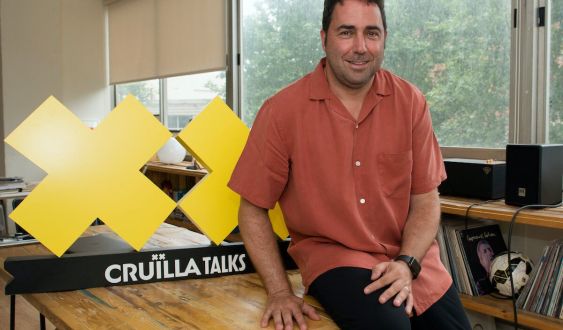
When he speaks, it seems he's not organizing a festival but organizing the planet. Jordi Herreruela is a perfect, almost bidirectional, symbiosis between efficiency and sensitivity. The Cruïlla festival, from this Wednesday to Saturday, has been one of the few that endured during the pandemic, and now it returns with the desire to make us happy.
Beyond the musical philosophy, seeking roots and authenticity, this time Herreruela says he wants to make us dance. But he also has another obsession: that data control doesn't devour cultures.
--- Can we call it the local music festival?
--- The festival of music with roots. That is, not so different in that sense from other years. We want to be a festival that truly reflects the city, a city that, however cosmopolitan it may be, also has its own culture. This festival is a meeting point, a crossroads. A place of diversity and creativity, which is what makes people visit Barcelona is its creative character. We are a big event, yes, with international ambition, but aimed primarily at the local audience. Barcelona has an identity that is not replicable in other cities, and Cruïlla, unlike other festivals, is exactly like that.
--- Would it be that difficult to reproduce?
--- The model, yes, but not as Cruïlla. We are an identity festival of this city. Which is a city that mixes many identities.
--- Do we run the risk of making festivals too replicable?
--- All cities run this danger: shops that are more and more alike every day, similar brands, similar offerings… When precisely the success of Europe is its diversity!
--- "The world can be Catalan or Taliban"…
--- We live in the midst of a double cultural tsunami: Anglo-Saxon and Asian. And Europe must protect itself, promoting public policies to support its identities. Algorithms and large platforms rule, which makes us tend to focus only on what might have more consumption. That's when any European culture, and not just ours but any, runs the risk of becoming a minority culture.
"We want to be a festival that truly reflects the city, a city that, however cosmopolitan it may be, also has its own culture"--- And you don't forget the Spanish language? This one is not in much danger of becoming a minority language.
--- South America is a very rich continent, but also diverse! Sometimes we put everything under the concept of "Latin music," which is like if from there they talked about "European music." Or "African music." No, there is no African music, nor South American, but many: Residente is not Molotov and Molotov is not Trueno, nor Juan Luis Guerra. A language does not configure a musical unit, at most a certain cultural unit.
--- In this sense, the threat is for everyone.
--- And not just for cultures. Rosalía herself said that she not only had artists collaborating on her album, but that she herself wanted to appear as a "guest star." Why? Well, because if she put herself as an artist, being a woman and young, she was penalized in the algorithm. She appeared less, in short. Therefore, there are also gender minorities, cultural "recommenders" are not neutral. Not at all.
--- On the other hand, we are very sensitive when it comes to saving the planet.
--- Exactly, an ecology of culture is necessary. Europe should create a Spotify for minority languages. If all of them were added up, there would be enough critical mass.
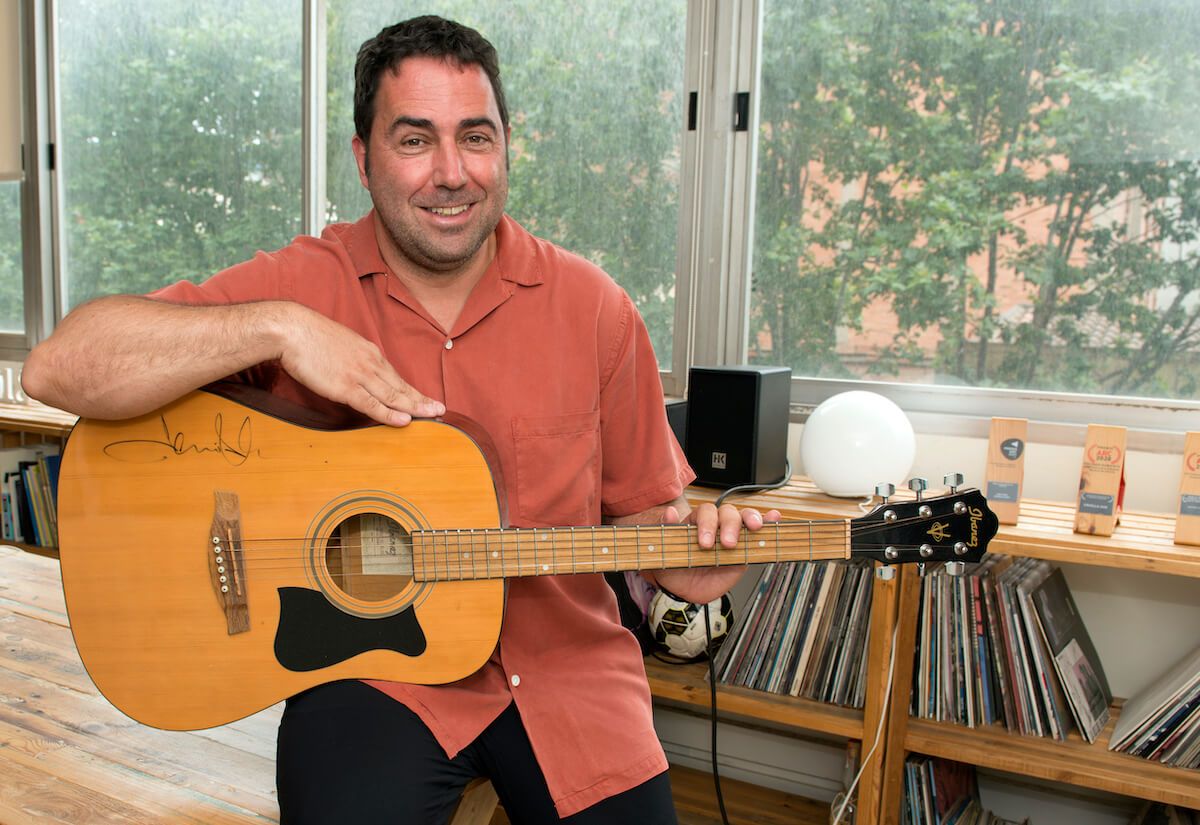
--- Are we at a crossroads, then?
--- Absolutely. We are at the most important cultural moment in recent years. Genís Roca always tells me that in Asia, data is often controlled by governments, because they depend on them, and thus governments dictate consumption. But in the United States, data is controlled by a few corporations and these can also direct the consumer. And in Europe? Well, in Europe, data belongs to individuals, which makes us lose competitiveness. What we should do is not give away this data so easily to large companies, nor to governments. We must reconcile people's privacy with being competitive. Clearly stated: that the Cruïlla festival, among others, has access to this data.
--- To be information agents?
--- We are the perfect intermediary between the person and big businesses. The two tsunamis I mentioned are data control and content creation. We are moving towards a world where the offer of online and offline content will be distributed through the same channels: Amazon or Spotify, for example, may soon start selling concert tickets.
--- Are we already here?
--- Not yet, but it's in the air. Live music had two circuits: tours, in the hands of large international agents, and independent promoters who organize music festivals. Now we are already seeing how the former want to devour the latter, so promoters are increasingly less independent. Large companies organize festivals, or buy them. And what will be in danger when the independent promoter disappears?
"We must reconcile people's privacy with being competitive. To put it clearly: that the Cruïlla festival, among others, has access to this data"--- The identity.
--- Exactly.
--- Are you pessimistic, then?
--- No. I am optimistic because culture is something too difficult to scale. Knowledge, people, territory… are not easy to transfer or replicate globally. However, local agents must equip ourselves with tools and enter big data, artificial intelligence, 5G, business intelligence… We must compete at the highest level, and since we are atomized, we must unite. We are already starting to have a certain mutual complicity, because now the countdown is no longer just climatic: now the countdown is also cultural!
--- Well, let's go: what will we find at this Cruïlla?
--- This edition is for dancing. We have not stopped during the pandemic, we have given concerts with masks and distance, but seated or without being able to dance. In this edition, almost all the artists on the lineup are called to be able to dance. We also incorporate a humor program (which will be growing) and visual arts or performances, and also photography… We return to the big theme: Barcelona creativity, we want to concentrate as many creators as possible. I would also like to do more gastronomy and fashion. Project Barcelona's creativity to the world, addressing above all the local public.
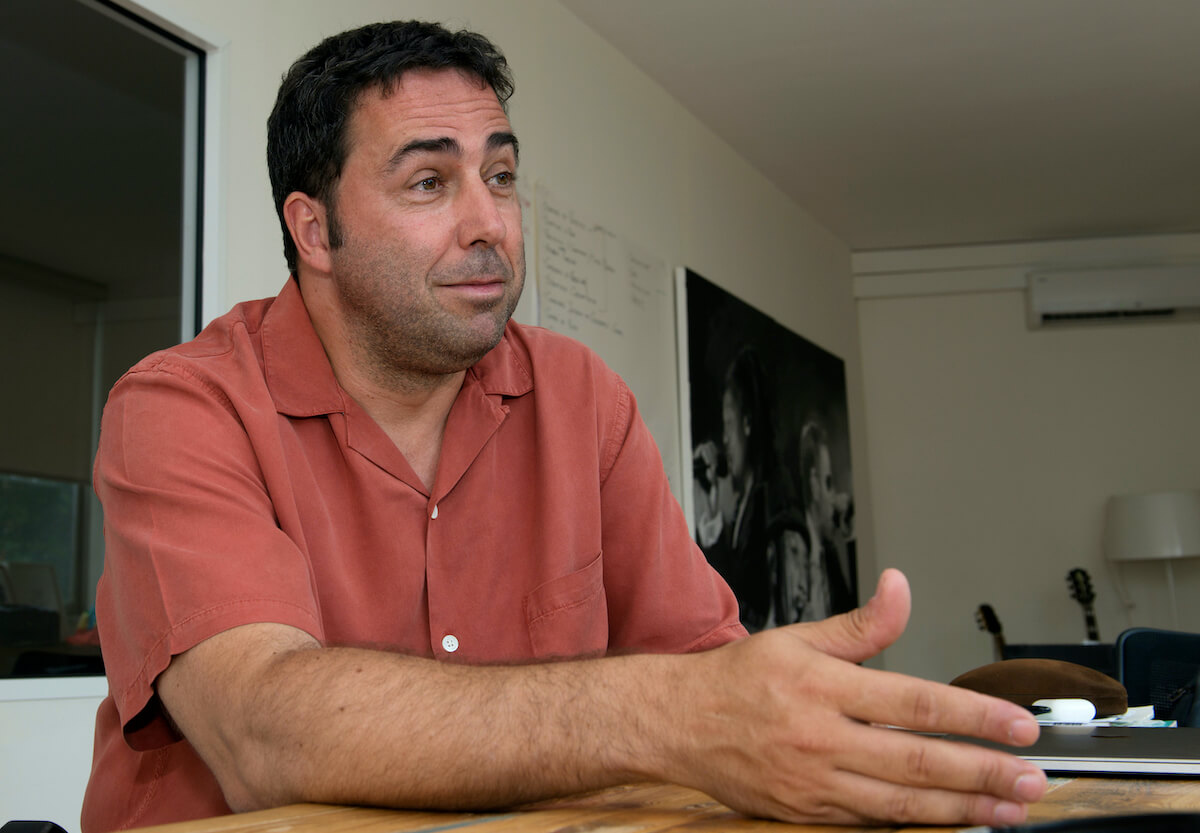
--- Why, local?
--- Because large events generate a great environmental impact, and one way to reduce and compensate for it is not to attract long plane trips. It must be possible to hold a great festival without having to be a pole of attraction for planes, apart from the fact that our suppliers are also local, and the workers, and the gastronomic products. We are also a zero-plastic festival, and one that proposes several challenges to local startups to find more solutions to be sustainable. Right now there are six finalists. For example, one proposes closed composting within the festival itself: that is, no waste leaves, that it has total self-circularity. Or they propose ideas for edible cutlery, ketchup bags made of seaweed…
--- Is Barcelona's creativity really such an obvious attraction?
-- Look: in the Basque Country they had the best culinary tradition, it was a gastronomic epicenter of the world. But not because it had a concrete structure, but because it had a legacy and tradition. Then Ferran Adrià and the Roca brothers arrived, innovated, and shifted the pole of attraction towards Barcelona. The Basques reacted and created the Basque Culinary Center, in San Sebastián. Well, that's it: in Barcelona we have the legacy, the language, the tradition, etc., but we lack the methodology. Structure. Method.
--- Systematize creativity.
--- Exactly. We leave everything too much to chance, and we need to order and systematize. Barcelona has a lot of entrepreneurship in innovation, which it accompanies with knowledge and a sense of risk. In the world of creators, however, this path does not exist. We must propose this: help them to trace it.
Add The New Barcelona Post as your preferred Google source for free
Stay informed with the latest news.
