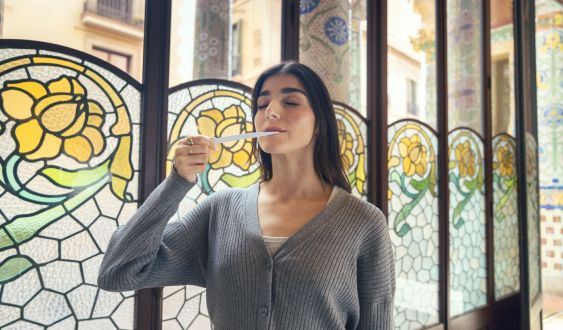
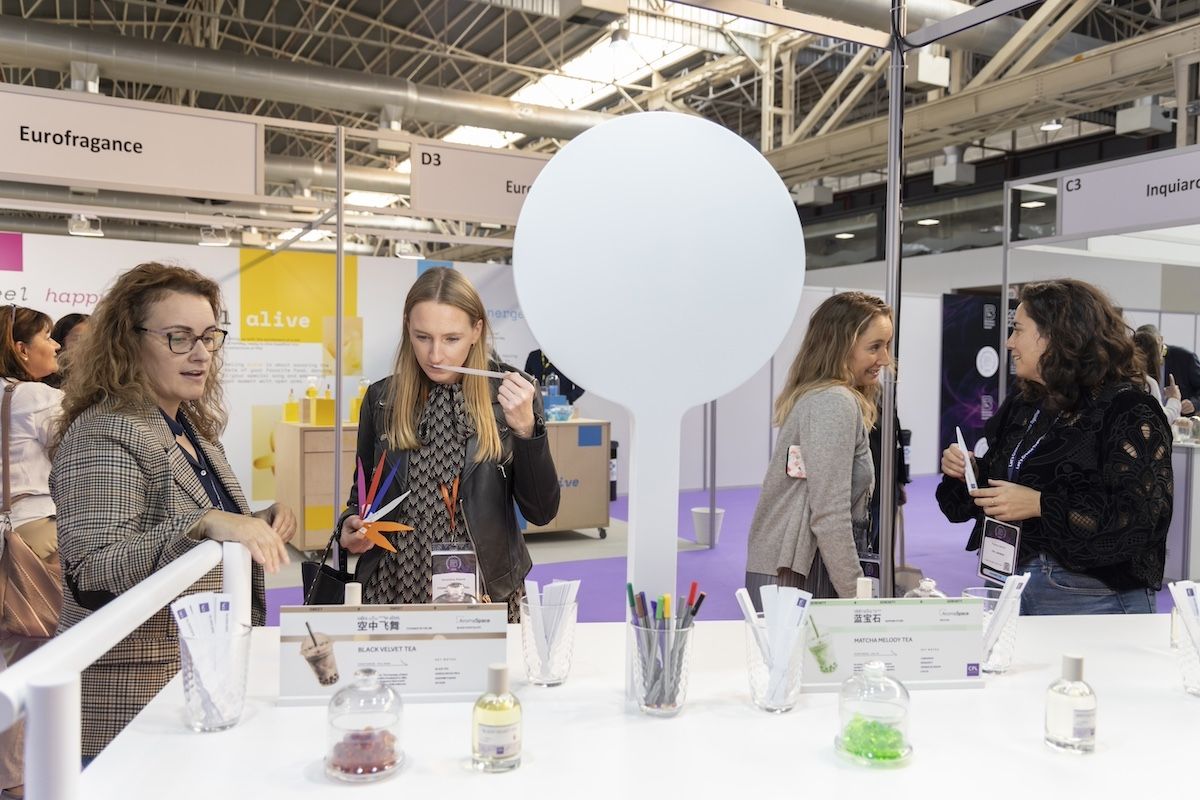
Barcelona allows itself to be discovered in many ways: through modernist architecture, its gastronomy, business dynamism, or its creative pulse. But there is another way to explore it, less obvious and much more intimate: through the sense of smell. Because cities are not only seen or walked through. They are also experienced through the senses, and smell is one of the most powerful. This is the philosophy that inspires the Barcelona Olfaction Week, the initiative that until May 24 transforms the Catalan capital into a large sensory map of perfume. During these days, emblematic spaces such as the Palau Güell, Casa Vicens, the Palau de la Música, Poble Espanyol, or the CCCB become settings for immersive installations, historical routes, and olfactory experiences that propose a new way of reading the city: with the nose. The initiative, however, goes beyond the artistic experience and becomes a way to make visible the strength of one of the great sectors of Catalan and Spanish industry: that of beauty and perfumery, often associated only with consumption and not so much with its true economic dimension. But the figures illustrate the magnitude of the sector: today Spain exports more cosmetics and perfumes than emblematic products such as wine or olive oil, and has consolidated itself as the second largest exporter of perfumery in the world, only behind France. According to the latest data from the employers' association STANPA, the sector exceeded 10,000 million euros in exports in 2025, with perfumes as the main driver, representing almost half of the total (47%). In this scenario, Catalonia plays a central role: Barcelona and its surroundings have consolidated themselves as one of the main European perfumery hubs, with emblematic companies such as Puig or Eurofragance. In total, the sector exceeds 12,000 million euros in annual turnover —more than half directly linked to perfumery—, represents close to 4% of Catalan GDP and employs some 35,000 people, according to data from Acció.
A fragrance to evoke the past
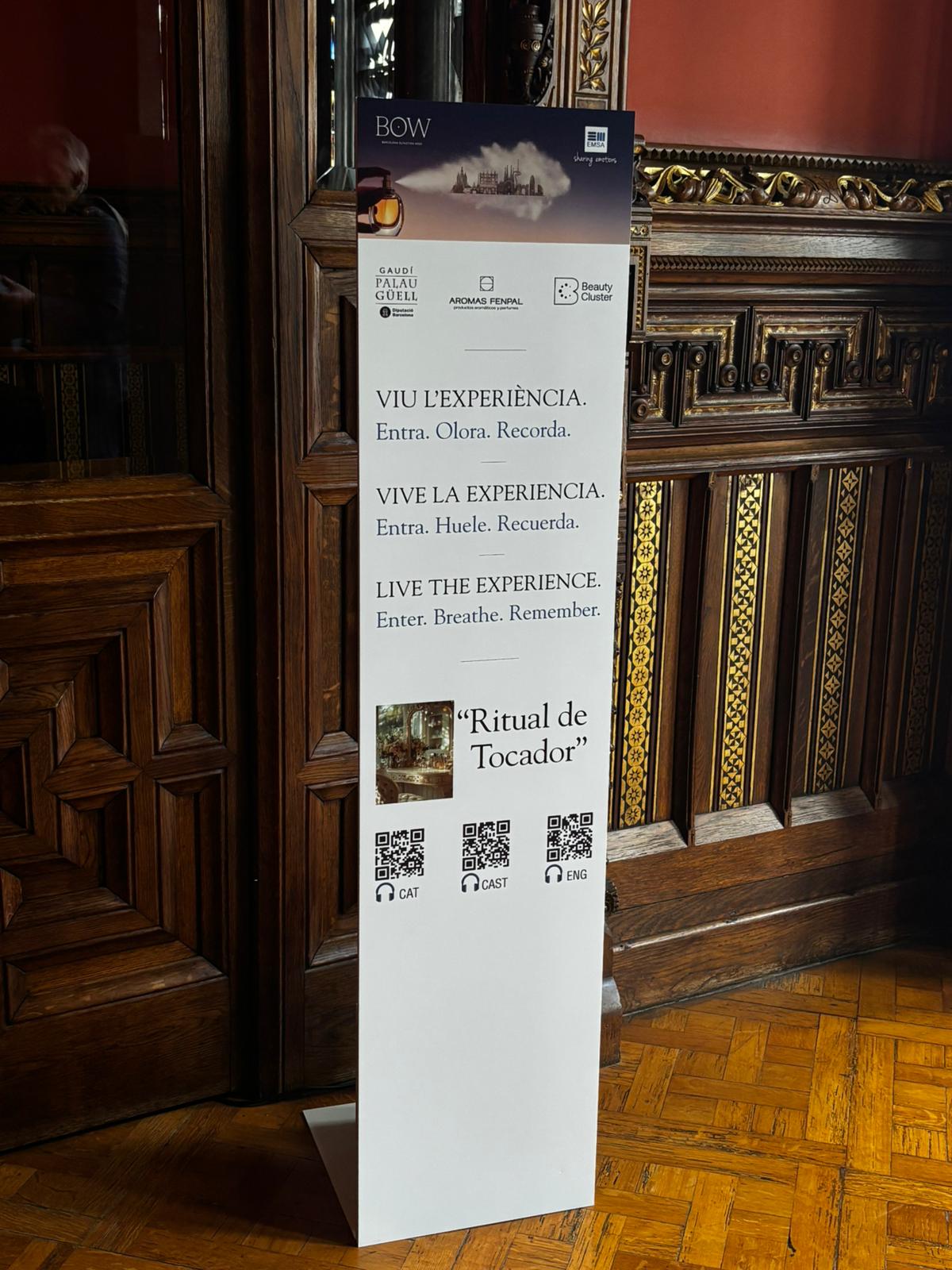
In the Palau Güell, this idea acquires a particularly emotional dimension. The intervention, developed by EMSA Esencias Moles —a Catalan company specialized in fragrances with more than seventy years of history—, does not simply seek to perfume the space. The proposal aims to reconstruct the invisible memory of the palace: to recreate the life of the Güell family —tenants of the house designed by Gaudí— and of the Catalan bourgeoisie of the late 19th century through smells.
"Palau Güell precisely lacked this sense: smell," explains Dolors Farga, marketing manager at EMSA Esencias Moles. "It's a very emotional sense, as fragrances have the ability to transport us immediately to a memory or an era. And that was our idea: to revive the life that was inside the palace," she adds. Few disciplines have this direct ability to activate memory: with a single smell, one can be instantly transported to a place, a person, or a vital moment with an intensity difficult to match.
The experience of Palau Güell is, in itself, a journey designed to awaken the senses. The touch of textures and materials inspired by the Orient that Gaudí imagined, the light filtering through the architectural forms and transforming the spaces, or the deep and monumental sound of the organ, which resonates several times during the visit. Now, to all these elements, the sense of smell is also added: fragrances that discreetly permeate the different rooms and evoke their past.
The tour begins in the old stables. There, notes of leather, wood, and amber evoke the presence of horses, the dampness of the stone, and the movement of carriages. In the smoking room, the aromas of tobacco, vetiver, and dark woods recreate the intimate atmosphere of the private conversations held there, while in the dressing room, that intimacy takes on a more floral character, evoking the makeup used by women in this space. But it is in the grand central hall where the experience reaches its peak. Incense, myrrh, and spices envelop the space while the organ fills the room. The diffusers responsible for perfuming this ensemble are almost invisible, making the fragrance seem to emerge from the architecture itself, filling every corner of the perfumed rooms.
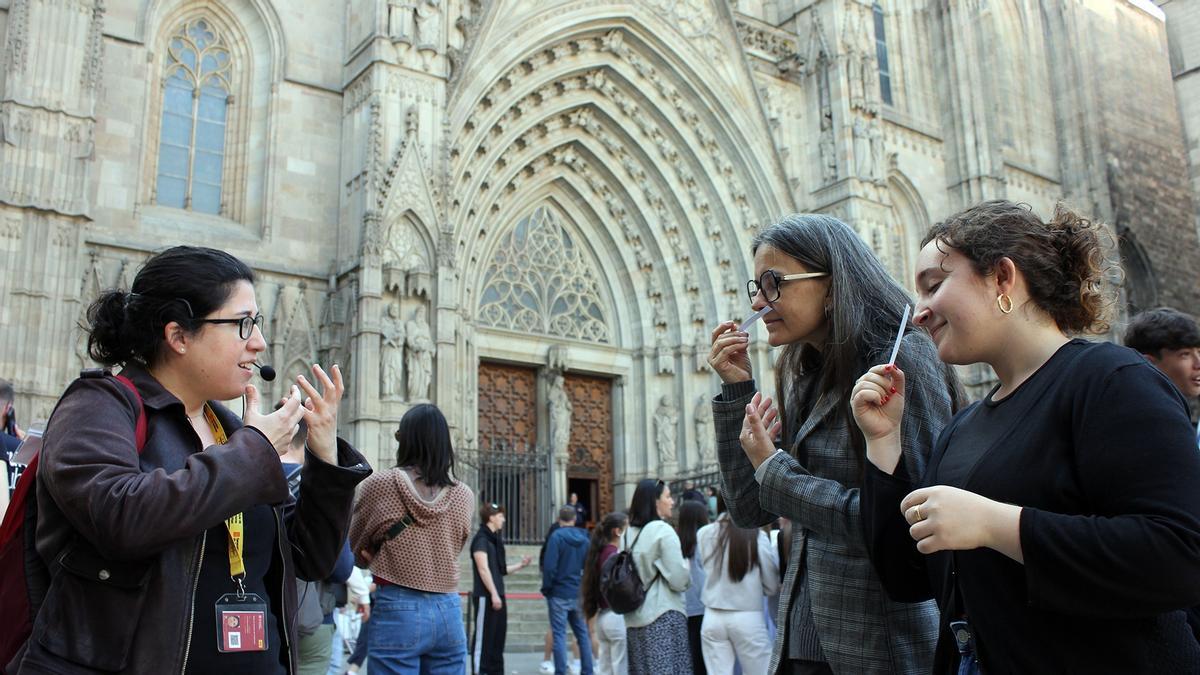
This approach is not limited to the Palau Güell, but extends to the rest of the city during Barcelona Olfaction Week. At Casa Vicens, the Palau de la Música or Poble Espanyol and the CCCB, different installations propose olfactory journeys to travel through the senses. In Poble Espanyol, for example, visitors can explore different landscapes of the country through aromas inspired by the Mediterranean, the north or the south of the peninsula, turning the space into a sensory geography. Even the streets of the historic center become the setting for this exercise in sensory memory. The olfactory routes through the Gothic quarter explain how Barcelona smelled at different moments in its history: from Roman Barcino to medieval markets or ancient guilds.
Add The New Barcelona Post as your preferred Google source for free
Stay informed with the latest news.