With this story that relates the culture that arrives from all over the world by plane to Barcelona, we begin a series of five chapters in The New Barcelona Post. A series that talks about the city's relationship with its airport from many points of view: economic, sports, cultural, social... It is a look at the past of Barcelona airport, officially called El Prat since 2011 and to which the name Josep Tarradellas was added in the spring of 2019.
The airport we know is located on land that has seen planes come and go for more than 100 years. La Volatería was the name of Barcelona's first airfield. Here, air operations from the city were definitively established, which in 1910 debuted at the Casa Antúnez racecourse... although this is a story for another chapter.
Cinema, music, art and artists
Barcelona-El Prat is a mandatory stop for every artist who comes to perform or present themselves in Barcelona. The most recent example is Bruce Frederick Joseph Springsteen. About to turn 75, the New Jersey musician performed two nights, June 22 and 24, at the Estadi Olímpic Lluís Companys, and spent several nights at his favorite accommodation in the city: the Gran Hotel La Florida, practically at the top of Tibidabo. This establishment more than meets his need for tranquility and privacy, as is also the case with his plane trips.
Springsteen arrived and departed from Barcelona using the Corporate Terminal of Barcelona airport, a discreet building apart from T1 and T2, which serves private and business jets, an facility inaugurated in December 2008, much appreciated by VIPs of all kinds who arrive in the city apart from regular flights.
The privacy of the corporate terminal is one of the most appreciated characteristics by personalities and the teams that accompany them. However, years ago celebrities arriving by plane did so in a very different way: they were awaited by hundreds or thousands of people on the terraces of the terminals or on the perimeter of the airport, to which they sometimes approached to greet and thank those who were waiting for their arrival or were going to see them off.
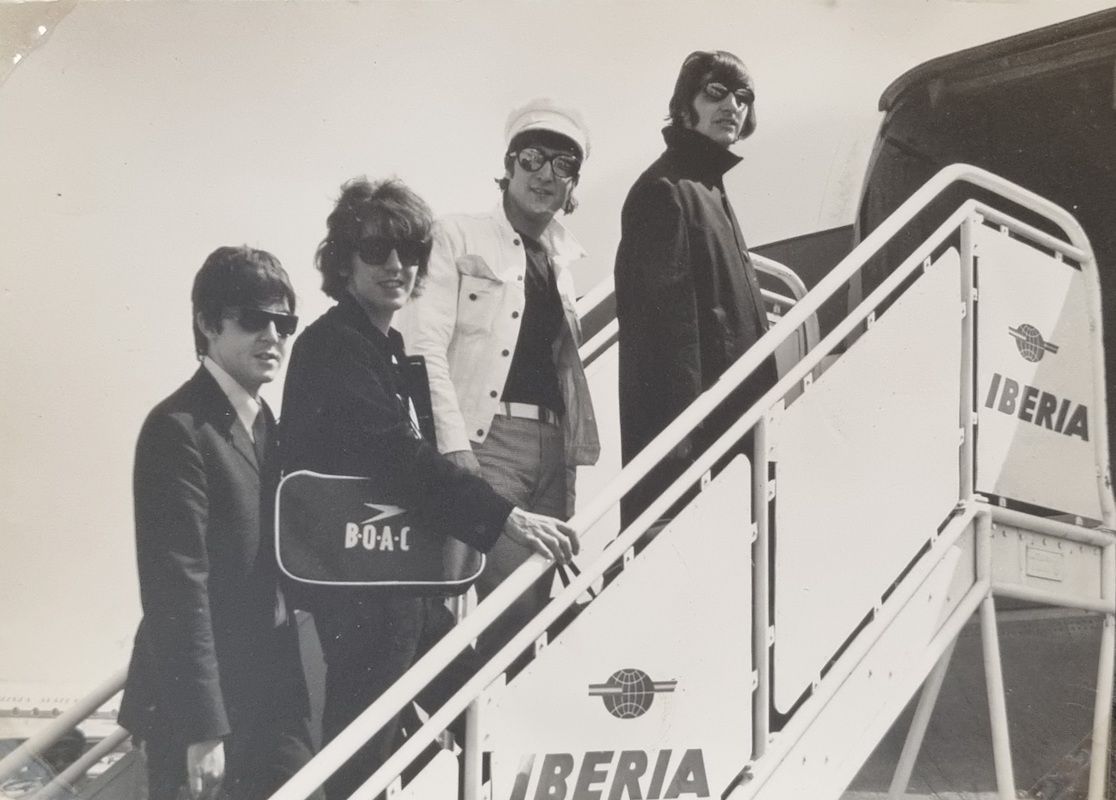
The visits of artists, singers, actresses, and people related to the world of entertainment and culture also had something very characteristic: the presence of journalists and photographers at the foot of the plane. Professionals accredited by the airport authority who had access to the platform to take photos of the arrivals and departures of the great figures who came to the city or who left Barcelona after a performance, a presentation, or a few days of vacation.
Thus, while photographers took the opportunity to take good pictures of well-known faces disembarking from a plane, reporters, microphone in hand or with their notebooks, took note of the first impressions of the celebrity in question who was visiting Barcelona on a promotional, professional, personal trip or passing through to a second destination, taking advantage of connecting flights that passed through El Prat.
From ship to plane
The increasing number of personalities arriving in the city by air was to the detriment of those who used the international terminal of the Port of Barcelona, located where the World Trade Center is now and, more specifically, its east building.
Air transport began to compete head-to-head with transatlantic travel by regular liner ships from the late 1940s. In the case of Barcelona, the arrival of Pan American and TWA from Chicago and New York changed the perception of air travel to and from the capital of Catalonia. These were not direct flights, as the limitations of the first transoceanic aircraft required intermediate stops for refueling and crew changes, although Barcelona was among that handful of modern European capitals with services to the United States. Jets eventually made them direct.
Now aviation is something normalized, democratized. We all fly: the authors and the admirersThe world of travel was changing and moving between continents and within Europe itself was no longer an adventure, but a matter of hours. That changed the airport's relationship with society, which went from being an almost exotic place to an increasingly frequented one. If in 1947, the year before the inauguration of El Prat's first terminal, 61,000 passengers traveled by plane to and from Barcelona, eight years later, in 1955, the figure had already reached 432,000 people. Few, if we compare them with current traffic, which is close to 50 million passengers annually, although a spectacular growth if we put into perspective the size of airlines, the price of flying, and the limited destinations and frequencies available.
Celebrities in Barcelona
In a Spain very different from today's, traveling abroad was almost an event, and even more so if it was done by plane. The prices of tickets to fly to European capitals or the United States in preferred classes were for a long time almost equivalent to what it would cost to do so today by private jet, so the arrival of great personalities from the world of culture became a real event.
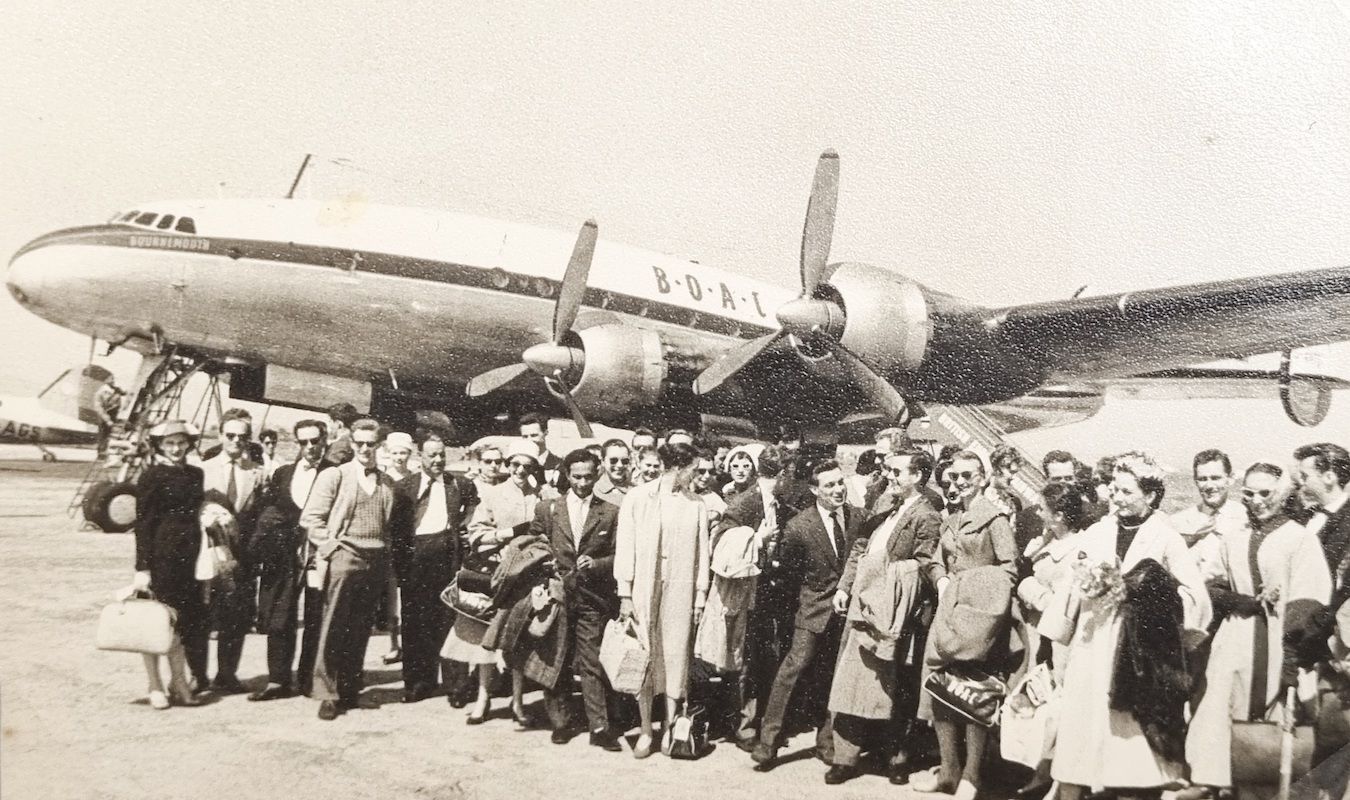
Thanks to the airport, Barcelona opened up a little more to the world and a certain modernity arrived in drips and drabs. In the form of actors and actresses, singers, painters, writers, filmmakers... They arrived on BEA flights from the United Kingdom, with Lufthansa from Germany, on Alitalia from Rome, with American airlines from the Big Apple or with Iberia and Aviaco from different European and national destinations.
The great ballets from Europe and America that have performed at the Liceu in recent decades have arrived by plane. The great symphony orchestras that have performed in its pit or on stage have also arrived at the Liceu or the Palau de la Música by air. All the stars of world opera have been received with interest at El Prat. And they have also been seen off. For the great local figures have started their artistic tours from the city: from Montserrat Caballé to Victoria de Los Ángeles or Josep Carreras, the latter using both regular flights and private planes.
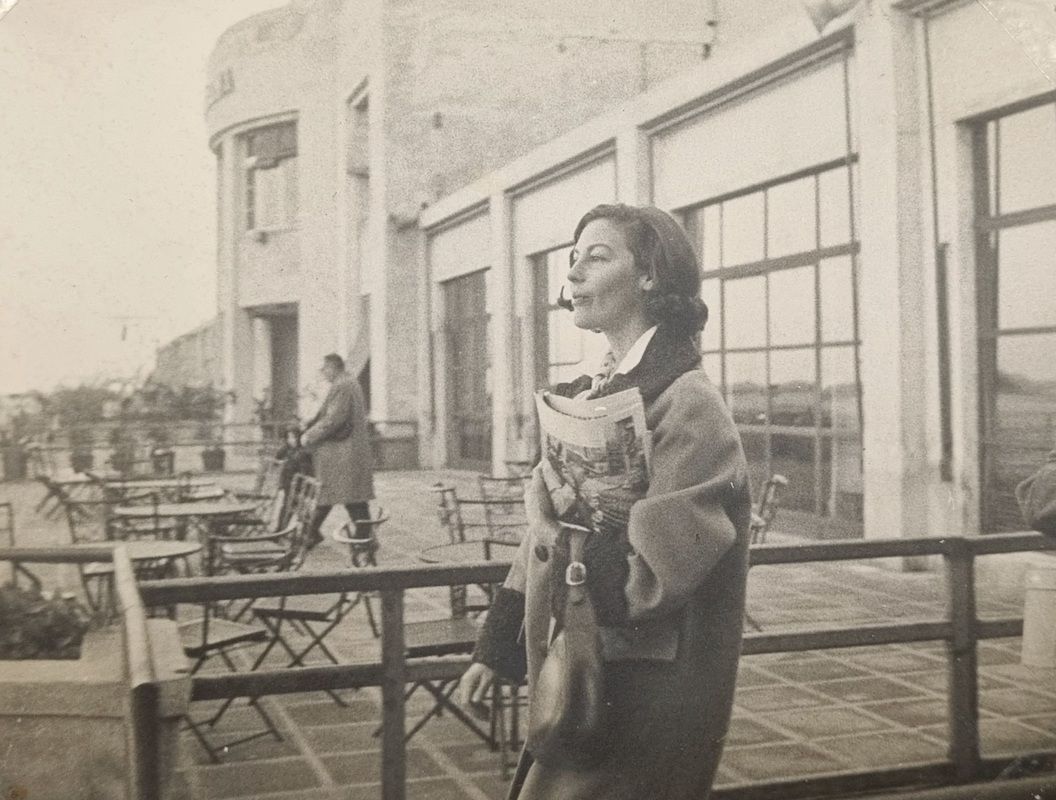
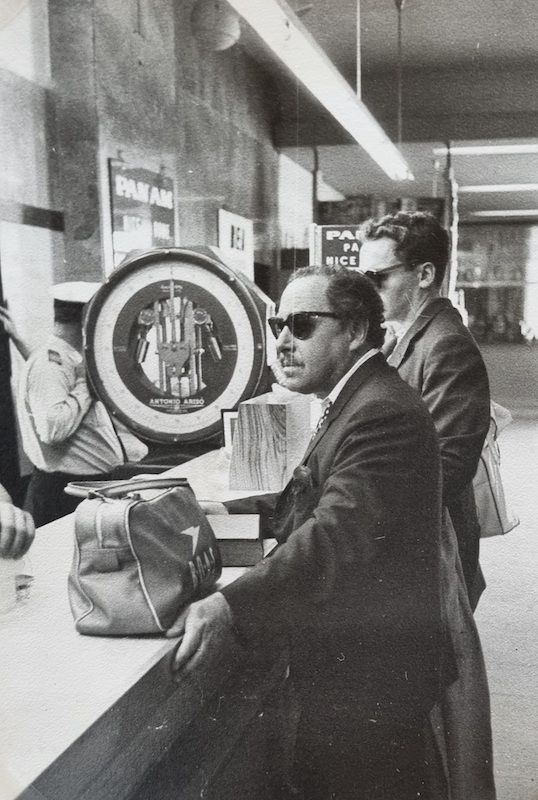
The great film stars have passed through the city preferably using the airport, as we can see in the photos that accompany this text and are part of the fascinating photographic archive preserved in the airport's communication department, in T1: hundreds of black and white images of faces for history and faces that were famous in their time only to fade with the passage of years.
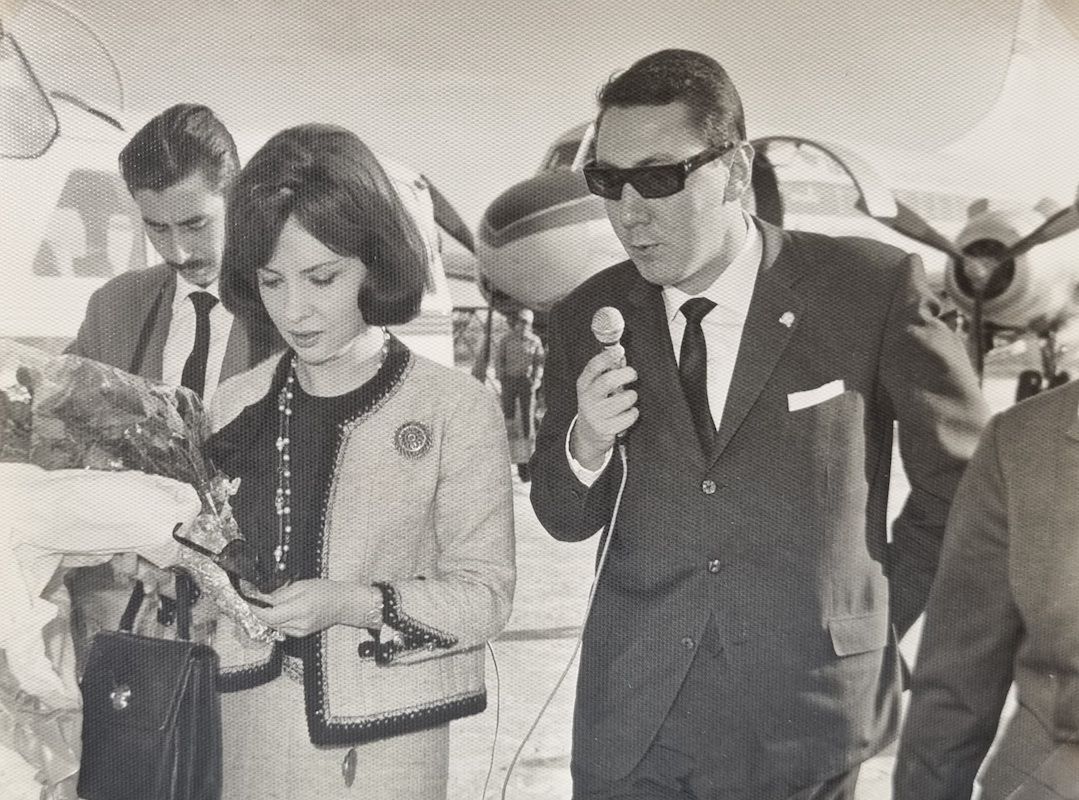
It is interesting to see the everyday images of Ava Gardner walking towards her plane carrying some newspapers with her, the unfriendly face of a very young Gina Lollobrigida chased across the airport runway by a reporter with a microphone in hand, the charm of Claudia Cardinale, the charisma of Marisol or the seriousness of playwright Tennessee Williams in the El Prat terminal patiently waiting to check in for his flight while being photographed. The Beatles, Serrat, Peret, concert artists, painters, sculptors…
Marking status
Arriving or departing Barcelona by airport marked status. Flying in the 50s and 60s was far from today's normality and an embarkation or disembarkation with the presence of graphic media was used by the figures of the time to increase their popularity, emphasize their closeness, friendliness… or maintain an air of mystery or seriousness.
The photographic archive in which the stars from different fields of culture appear ends with the arrival of color in the developing process. The increase in security measures meant that access to platforms became more and more restricted and the terraces for viewing the runways disappeared, and this reduced the influx to the terminals of non-passengers who came to the airport to welcome or bid farewell to the people they admired. Many things change over time. Sometimes even by logic.
And life goes on
What does not change is the use of the airport, increasingly, with greater influx. Culture continues to travel by plane, its protagonists too. There are no longer photographers stationed at the airport or journalists trying to get a statement at the foot of the plane. Aviation is normalized, democratized. We all fly: authors and admirers… and El Prat continues to be the great entrance and exit to the world of trends, of those who create them, of those who film them, sing them, tell them, express them or make them sound or be danced. Everything passes through the three terminals of Barcelona-El Prat airport, which recalls a personality who also arrived in the city through this facility: Josep Tarradellas.
Add The New Barcelona Post as your preferred Google source for free
Stay informed with the latest news.