With more than 65 years of activity behind her and more than 40 works produced, including feature films, documentaries, and short films, she worked in analog and digital, with more awards than profits, and great expressive freedom. Agnès Varda never spoke of success; she spoke of narrating. Cinema was always her refuge, her home. In the vein of philosopher Gaston Bachelard, cinema was for her a way of confronting her vision of life with the world around her.
Inspiration, creation, and sharing—these were some of her maxims. Without one barely being able to detect a transition, her works wander through naturalism, fiction, documentary, feminism... and always contain the imprint of affection and empathy for people. For many, she was, eminently, a filmmaker of beaches and, above all, of people. In her shoots and projects, she used family, acquaintances, friends, and neighbors. She filmed the displaced, the marginalized, the elderly, workers, and women, expressing through them a cinema based on others.
Born in Belgium in 1928, she never considered herself a cinephile. Her gaze was accustomed to ancient art, literature, and painting. She defined herself as a photographer making cinema, and she did it like her French contemporaries, between neorealism and what was the incipient Nouvelle Vague. In her first feature film, La Pointe Courte (1954), an almost photographic film, two ideas of the artist converged: a costumbrista portrait of fishermen, peasants, and village people, with the idea of a love relationship between two young people in voice-over. The film, in black and white and edited by Alain Resnais, anticipated by four years the most important cinematographic movement in the history of cinema, later commanded by a series of male directors such as Truffautt, Godard, Resnais, Rivette, Rohmer, or Chabrol, and in which only she marked that distinctive feminine note.
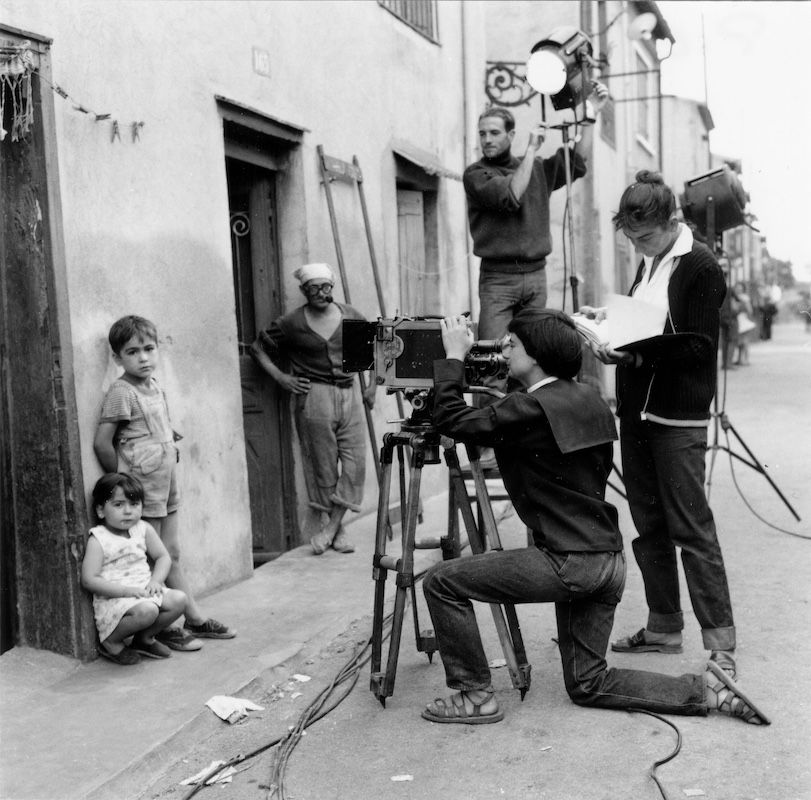
Her gaze, although it coincided in time and references with her colleagues, who forever changed the rules of cinema as an industry and the way of interpreting it, and placed expressiveness above aesthetics, was particular and not very fond of being framed in any movement, neither formal nor generational. Today, therefore, she deserves double credit for her counter-current struggle against history, for being the pioneer and for being considered in schools and academies as the mother or grandmother of said movement, falling, once again, into the commercial game of labels that the artist disliked so much.
Her cinema starts from a rhythm that emerges from within the shot, which allows actions to unfold in real time and which, subsequently, is always structured in editing; with a particular taste for the omniscient narrator and the voice-over, which is often her own.
Obsessed with creative independence and concern for real people, for real folk, she trained in an environment of popular culture. She defined her works as a kind of cine-writing, based on references to Faulkner and her personal way of understanding cinematographic narrative as a reflective adventure in permanent revision, an extension of her literature.
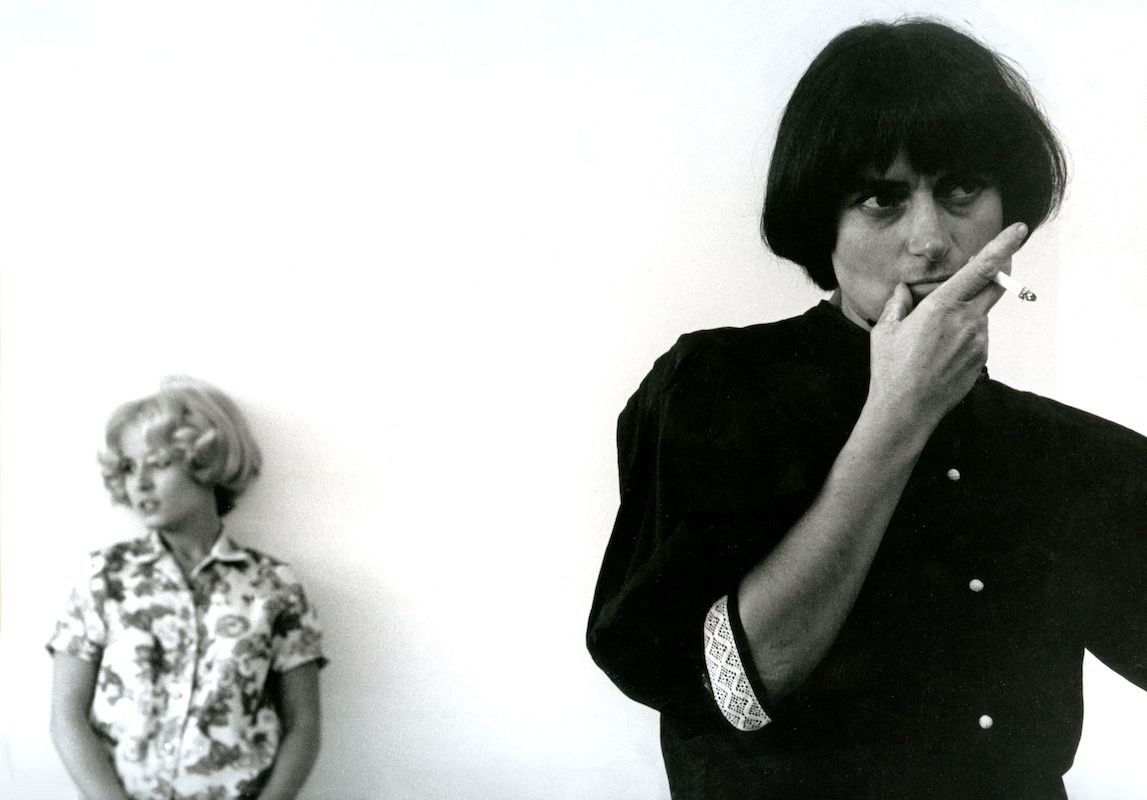
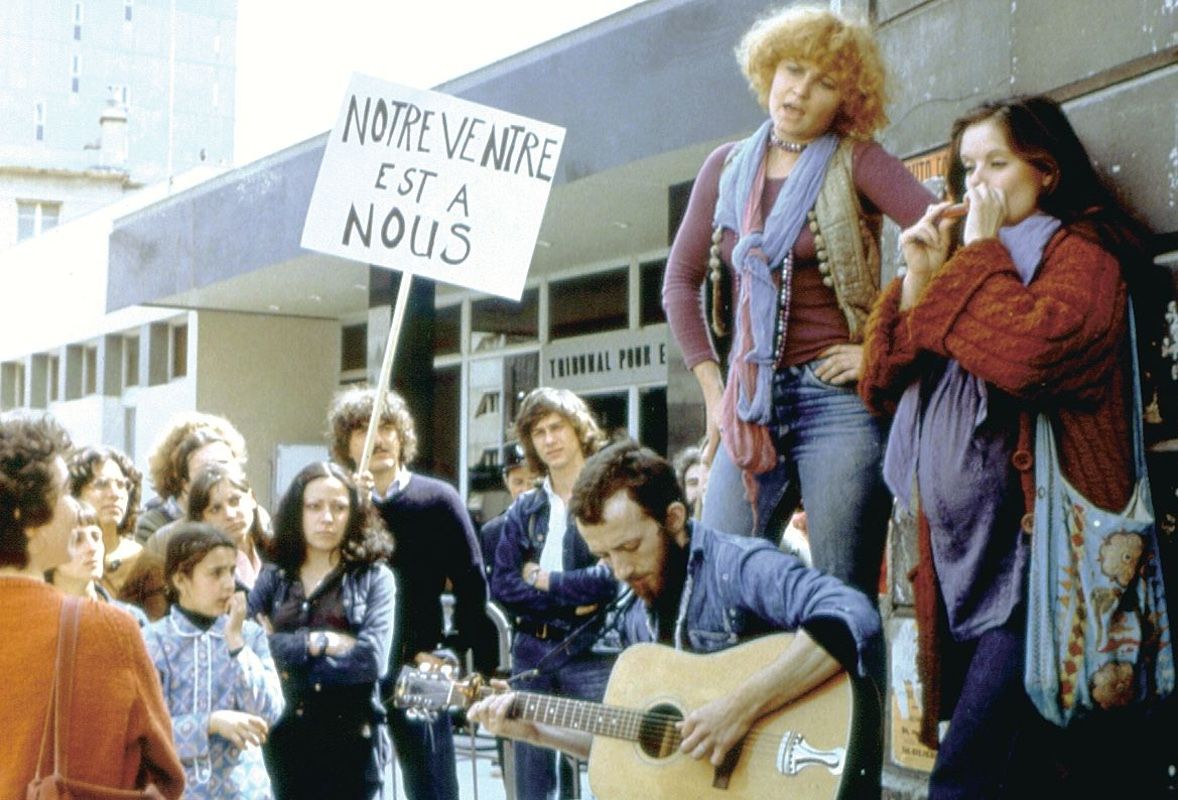
In her best-known film, Cleo from 5 to 7 (1962), real time and subjective time coexist, concentrated on the universal concept of the fear of death. She uses music as another expressive element, which here, supports or refutes the protagonist's arguments or completely identifies the characters, as in One Sings, The Other Doesn't (1977). The spaces she uses are expressionistic and stem from painting and surreal images. She did not consider herself to be making political cinema; for Varda, the primary concern was always expressiveness and not the effectiveness of the discourse.
The film Vagabond (1985), a commendable road movie, centers on the discovery of the corpse of a backpacker who travels the world alone. The structure of the narrative emerges through what those who knew her tell us about her. Freedom and its price, and the skewed passage of time are the themes to be addressed. The film, which won the Golden Lion at Venice, is one of the examples of a cinema of openness for other women, something Varda fought for throughout her life: to take women out of gender roles and for them to find their own voice to express themselves without complexes.
Varda approached the experiences of the world from the lived experiences of others and gave paramount importance to structures over argumentsHer female characters are independent, subjective, and self-defined. They always show their character without fear of reprisals, question the circumstances of their environment, and are not afraid to express their emotions. They define themselves by their own parameters and not by the social parameters that are contemporary to them.
Agnès Varda always prioritized words over images. Photography taught her how to make films. It was the starting point of everything. She always understood editing as a mode of writing and came to catalog her feature films as film essays. The subject was the most important thing, more than the filmmaker, and more than cinema itself. In her belief, even in documentary, despite approaching reality in such a direct, naked way, one can fall into egolatry when selecting shots, as in the fiction genre; it is then that one must realize that one is not the owner of the images that succeed before one's eyes. Varda called this radical attitude the school of humility, making the pure chance of life the assistant director.
She loved people and felt integrated by them. She always wondered about the subject to be dealt with before setting up the camera. She looked at them with appreciation in a conversation, with full sympathy and with the need to be the other to understand them. Behind a camera, there is always a person looking, with their prejudices, their wills, their tastes, their references, their intentions, their emotions...
In painting, Millet and Picasso were always by her side, but reality ended up imposing itself as the great inspiration. Cinema was the conjugation of all the arts she admired, it ended up being everything for her: play, reality, fiction, memory, imagination... anything served her to make a film. Varda declared that an artist is one who constantly plays with concepts. She played with time, aware that it is omnipresent, valuable, and ultimately determines everything. It shortens or lengthens depending on our subjectivity, and cinema and photography are perfect means to manipulate it.

In The Gleaners and I (2000), Varda focuses on the act of gleaning as reusing, recycling, with a use of time that cuts like an arrow through generations and centuries in favor of reusing what others discard. The documentary garnered countless critical awards worldwide and is considered one of the best works in history, according to Sight and Sound magazine.
Varda's cinema is an example of how to find your own expressiveness by resorting to yourself. For her, cinema cannot be taught in any school. Her empathy for the world made her an artist and she was the first woman to win the posthumous Oscar and the honorary Cannes Palme d'Or. She was also an actress, screenwriter, producer, and visual artist. She married fellow film director Jacques Demy (1962 – 1990) and died of cancer in Paris in 2019, at the age of ninety.
Her last work, a visual autobiography, The Beaches of Agnès (2009), won the César Award and the René Clair Award from the French Academy.The beaches, her memory and her obsession, are explained because she was sand and sand is time.The director mimicked what she filmed and became that very thing.As with Van Gogh's pair of boots, Varda transformed herself into what she looked at, body and soul. This fact gives something magical and authentic to her images, a capacity to cross the screen and enter into the soul of the models.
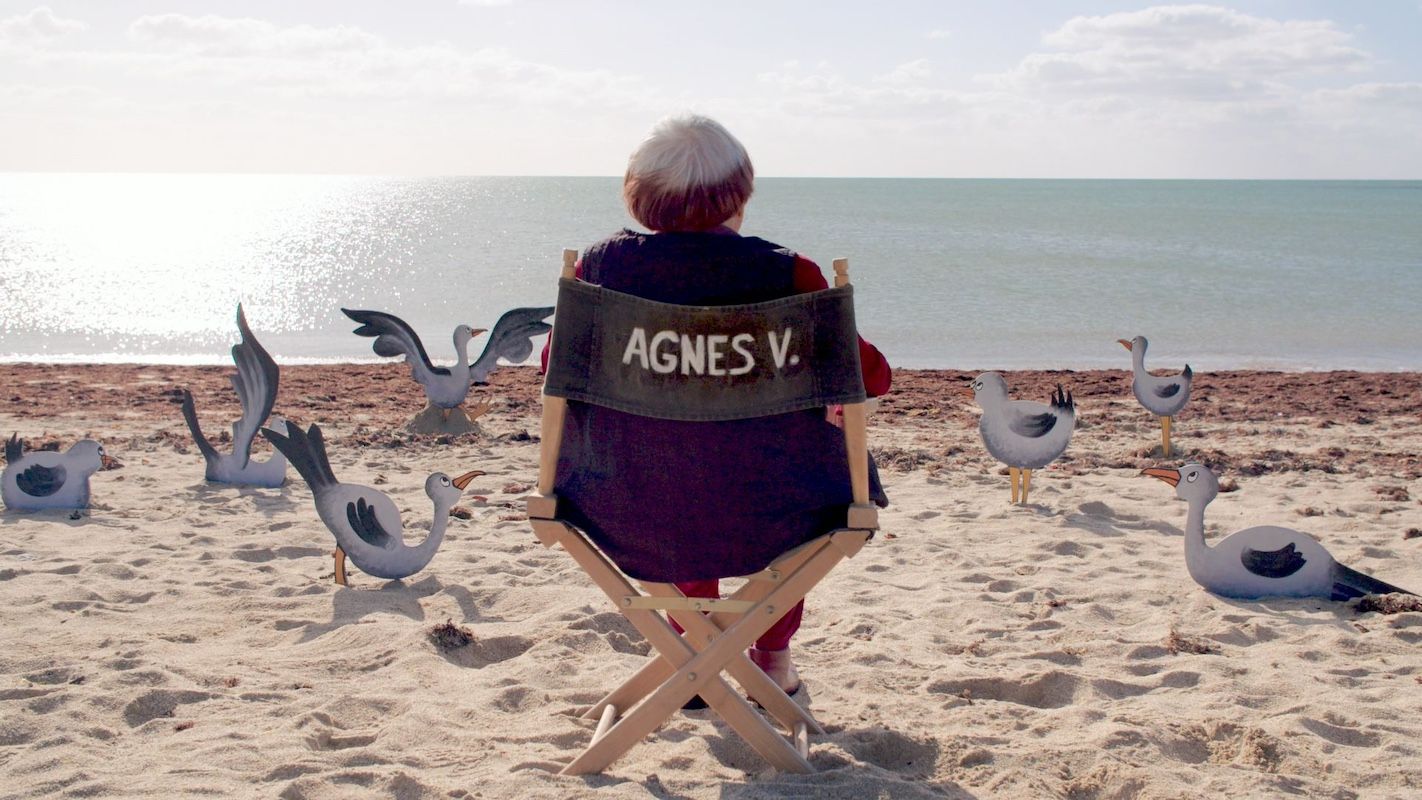
The exhibition, directed by Rosalie Varda and Inma Merino, is curated by Florence Tissot and is an extension of the exhibition Viva Varda! from the Cinémathèque Française in Paris, in collaboration with her long-time production company Ciné-Tamaris and the contribution of her family. It includes a photographic series of her trip to Catalonia in 1955 and, for the first time, the four installations created by the artist to be exhibited in museums can be seen.
The exhibition, which can be seen until December 8, features countless personal objects, posters, works of art, portraits, and photographic reports. A collection of how, through photography, Varda reflected the society of her time, from feminism to hippies, the Black Panthers... and how she related to artists and celebrities, as well as to the marginalized and anonymous people.
The CCCB complements the experience with the Varda Laboratory workshop, a playful space to discover the fascination for cats, mirrors, and the aforementioned beaches. The exhibition is twinned with the Filmoteca de Catalunya, programming its Agnès Varda Essential cycle, where her most emblematic films and the documentary Varda per Agnès (2019) are still screened throughout September. Within the framework of the exhibition, the Xcèntric Archive of the CCCB will screen four pieces related to the director's world or inspired by her and her figure within the Varda Variations program. The titles are La mar peinó la orilla (Valentina Alvarado Matos, 2019), Histoire de ma vie racontée par mes photographies (Boris Lehman, 2002), L'automne (Marcel Hanoun, 1972) and My tears are dry (Laida Lertxundi, 2009). In October and November, the workshop The Faces of Agnès Varda will be inaugurated, a course to delve into her countless references and continue playing to understand her creativity and her work as a visual artist.
Add The New Barcelona Post as your preferred Google source for free
Stay informed with the latest news.