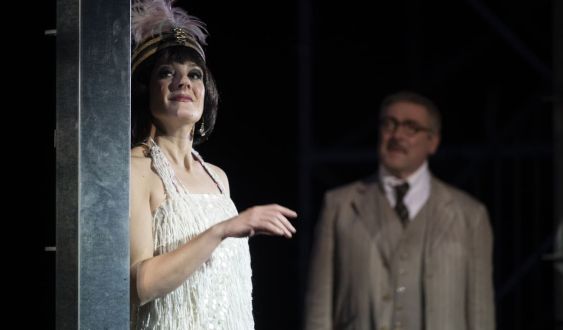
Xavier Albertí has just premiered Emperadriu del Paral·lel, the last production he will give us as artistic director of the Teatre Nacional de Catalunya (TNC), a compendium of his theatrical philosophy which, as could not be otherwise, has been nourished by a text by his "scenic sister" Lluïsa Cunillé (the anecdote is categorical: this is the first time a living author premieres in the Sala Gran of our eminent public theater) and declaimed by the best of his usual troupe of actor-singers. Cunillé has written a sensational play, which not only aims to be a polymorphous look at the G-spot of our thirties in Barcelona, but also shies away from a nostalgic gaze to approach Paral·lel as the ground zero of a Mediterranean city, with a contrasting spirit, that celebrates the hangover of the lavish exhibition of '29 and lives with hope the advent of the Second Republic while it begins to boil with anarchist thirst (the appearance of Ferrer Guardia is wonderful!) and the cupletistas stand as the sexual dumping ground of bourgeois frustrations.
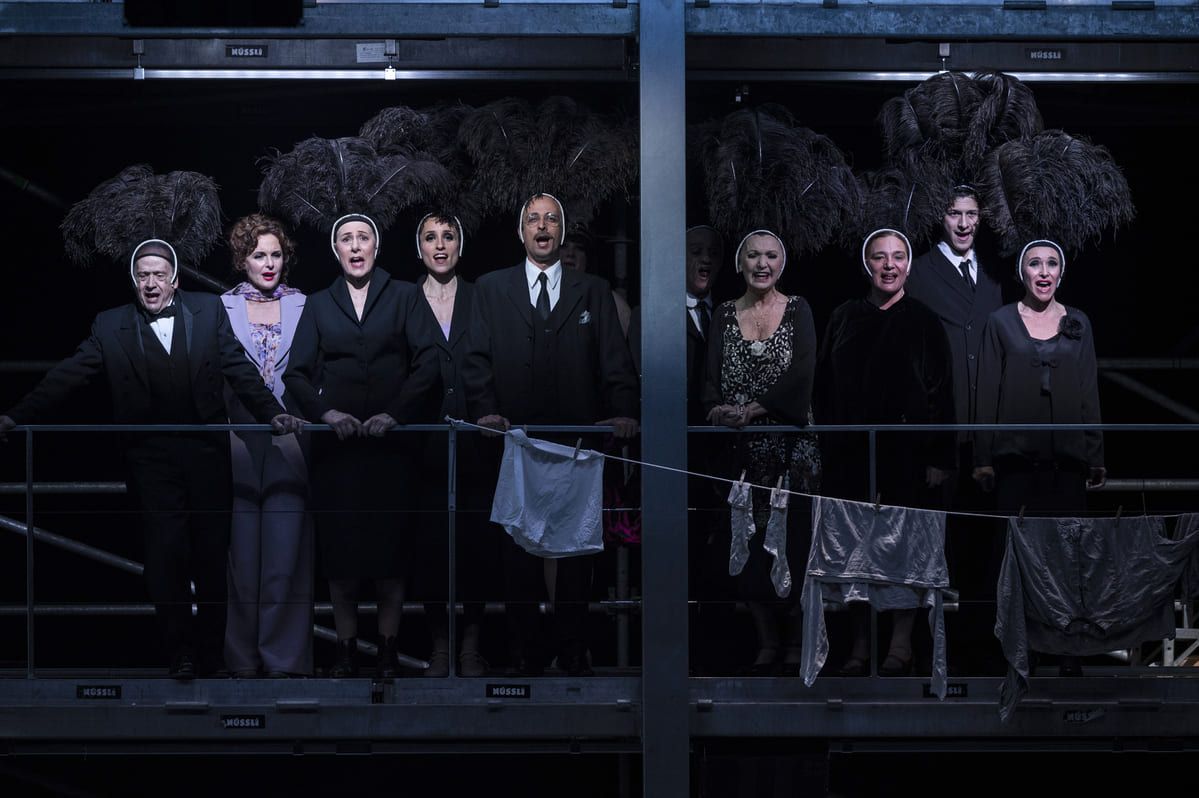
Cunillé weaves her text around the death of Palmira Picard, empress of the cupletistas, and enjoys telling us the bildungsroman of the journalist Roc Alsina during the night he approaches the artist's corpse to write her epitaph. Cunillé and Albertí base the dramaturgy on an oratorical requiem, and not because the plot is woven from micro-scenes in the form of a cantata, but because Alsina's journey (and costly ascent) to Picard's tomb is truly the path of a collective death: the singer's body becomes not only the black hole of all masculine sexual impulses, but also the neuralgic center of the city's socioeconomic contradictions. In fact, Cunillé's text has the grace of explaining to us with great rawness the death of the citizen corpus that is macabrely reflected in this goddess (we should read this Emperadriu in dialogue with what was happening in Barcelona, mapa d'ombres), characters who witness their own demise with a mixture of histrionics and a pitifully destructive parsimony.
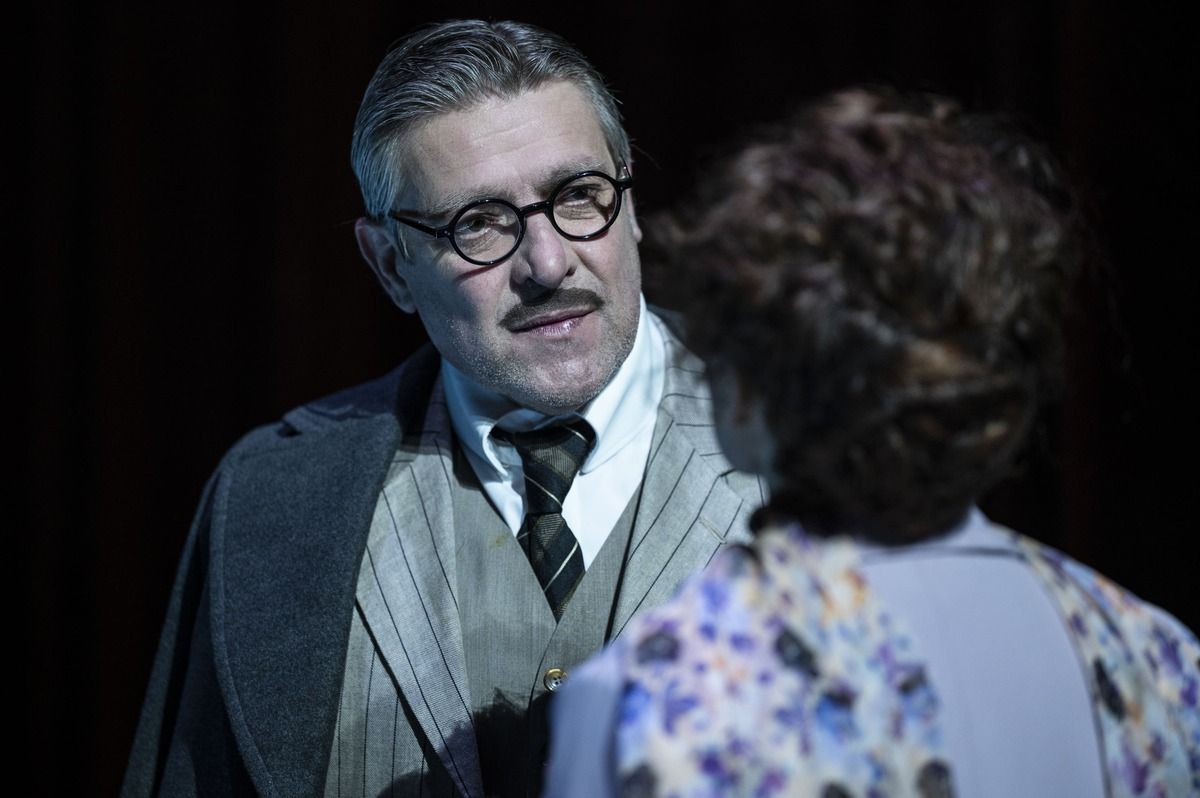
It is symptomatic that, when one refers to our best writers, the tribe still has the clumsiness to exclude theater from its literature. Cunillé is, let's be clear, one of the most important pens in our letters, and the relentless robustness of her theater demands a Premi d'Honor that she already deserves more than some of the recent and overrated awardees. Only a great author can imagine a path that breaks the Dantesque paradigm of the fall into hell through a spiritual ascent that changes the narrator's life, leaving the viewer with a good punch to the liver. This is a journey that required an almost impossible guide to catch, but Pere Arquillué proves to be a hell of an actor who at the beginning of the plot perfectly portrays the naive and candidly clueless character of Alsina (in the Yankee style, that is, acting when not acting) and progresses in an incisive learning that leads to a goosebump-inducing final scene. This job that Arquillué pulls off is very, very difficult, and he overcomes it like a true beast.
Cunillé is, let's be clear, one of the most important pens in our letters, and the relentless robustness of her theater demands a Premi d'Honor that she already deserves more than some of the recent and overrated awardeesAs the play progresses, in an orgiastic cascade of delirious characters, one might be tempted to believe that Cunillé and Albertí have revived the Paral·lel using a phantasmagorical story. But if our reviewers had the kindness to read a little before going to the theater, they would see that author and director have clearly inspired their divine comedy in the foundational figure of Rossend Llurba and, especially, in the chronicler Francesc Madrid(from Rossend we have published theHistory of the Paral·lelin the venerable Comanegra and from Paquito you can read the magnificentBlood at the Shipyards, which Quim Torra published in Acontravent when he was dedicated to doing useful things for the country). If one reads these magnificent chroniclers, especially the articles from Madrid inThe Scandal, we will see that the orgiastic bacchanals of homosexuals, the anarchists who strive to redeem harlots, and the kidnappings of children who end up lost were the very real hidden face of a Barcelona that has never gotten away with trying to hide the dirt under the rug.
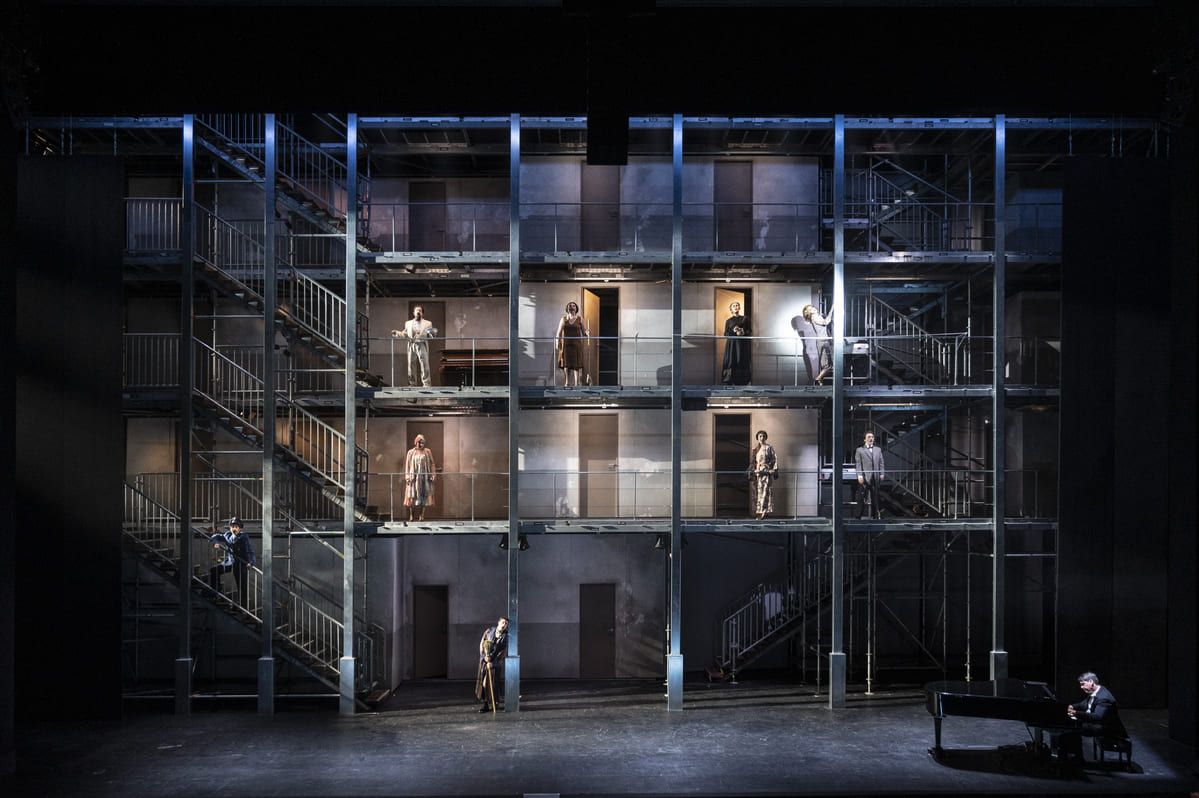
Albertí has acted saintly by naturalizing the heart of the characters of the Empress to highlight their infinite inner sadness (I see more Brossa than Horváth there), starting with the splendid María Hinojosa who, we can now say, is the natural successor of Anna Ricci and, alongside our dear counter Jordi Domènech, forms the natural succession of the fantasies that Carles Santos embodied in Antoni Comas and Clàudia Schneider. It is normal that Albertí, reading a story that extols our interpretive past, has performed an act of justice by opening the doors of the TNC to deans of our interpretation such as Carme Sansa, Mont Plans and the enormous and titanic Oriol Genís, who is a heritage of the land more relevant than any wine designation of origin. On stage, as in life, the girls win, from the well-returned Silvia Marsó in the role of Virgil (too sober at the beginning; give her a little more air in the gesture) to Aina Sánchez, who shows she has the couplet chromosome embedded in a spine that floats on stage like a snake hungry for little mice.
I would say that the show will gain as it adds performances and I dare to affirm that it would improve if the spectator were given a little more time between the micro-scenes so that they can digest all the intensity of the text (I understand that continuous applause between numbers must be avoided and that we still live too determined by the pandemic thing and the need to get to the point, but with an injection of waiting measures the symphony would flow more benignly). Be that as it may, all these are quibbles in the face of a show that, apart from Cunillé's text, stands out for the Albertinian obsession of reconnecting us to our scenic, musical and interpretative tradition. It is a delight to hear again (and what a shame that in recent years it has had to be at the TNC and not in one of the city's numerous musical facilities!!!) El papissot by Berdiel and Pla, the Exregidor by Zamacois and Casas, the extraordinary music by Morera i Clarà, a beautiful repertoire that in any awakened country would oblige to sing in schools and that would return to its natural owner: the people.
In the celebrated inaugural lecture of the Institut del Teatre for the 2012-13 academic year, Albertí already spoke of the need to reconnect our acting life (and I would add, that of Catalan theater in its entirety) to the culture and heritage that sustains it. Allow me to quote that meritorious speech: "I do not believe that there is any other scenic culture in the Western context that suffers from such a terrible disease as the one that consumes us; namely, the awareness that our dramaturgical heritage is bad. This, firstly, is not true and, secondly, it is a disease that does not help us at all. Perhaps, before judging it, we should put it on stage with the awareness of making known everything that facilitates its understanding." Texts like Cunillé's translate this spirit, and not only because they recover the patrimonial tradition of Paral·lel, but because they do so from a pandemic present in which the country's culture still approaches this heritage as a minor factor. Returning to the Barcelona of contrasts, the city that hides in the black hole of its contradictions, is more than ever an imperative.
Returning to the Barcelona of contrasts, the city that hides in the black hole of its contradictions, is more than ever an imperativeDuring the eight years that Albertí has been in charge of the TNC, our city has experienced a kind of parenthesis of normality in which the great texts of European theatrical literature have been linked with the work of Guimerà, Sagarra, Cortiella, Rusiñol or Pous i Pagès.After listening to the theatrical prose ofSun, little sun...or the unparalleled Catalan ofSílvia's Fortunein our theater, only the ignorant will be able to once again belittle our heritage. Unfortunately, we still have years to go before we can approach the tradition of our own history with the free spirit of thisEmpressof Cunillé. That in a show about the Paral·lel like this one, thetheatergoersCatalans still hope to attend a show of numbers and sequins shows us that there is a lot of work yet to be done.Of the Emperadriu the highest praise one can give is to treat it as an immense exercise in picking at the wound, the wound of a city that digests its memory very poorly and that buries its darkest areas with Olympics. The best compliment that can be paid to this piece is the immense sadness that assails you once the performance is over.
Run to the TNC and drink from the chalice of this wonderful requiem by Palmira Picard, of this macabre symphony of the dead with which Cunillé has made us travel to the past with a shiver. And above all, dear Albertí, don't go too far, because we failed writers need you to write our chronicles of this dark and tedious Barcelona of ours where of the Paral·lel, and so many other things, nothing at all remains.
Add The New Barcelona Post as your preferred Google source for free
Stay informed with the latest news.