
Hand in hand with Nietzsche and Barthes, Giorgio Agamben established a vision that is now a commonplace of contemporaneity (What is the Contemporary?), from which the contemporary being is an individual who does not quite adapt to his time, an anachronistic entity that, precisely because he is capable of "moistening his pen in the darkness," can move away from the blinding light of spectacle and distraction to transform the present by weaving it in relation to other eras. The Italian philosopher's inquiries pursued me as I walked through the rooms of Apunts per a un incendi dels ulls, the first exhibition of Panorama, an artistic proposal by MACBA through which its director, Elvira Dyangani Ose, has wanted to bring together emerging art woven in Barcelona with the scarcely disguised Agambenian intention of curbing the gaze of the pandemic present and approaching the darkness that current events tint with shadows.
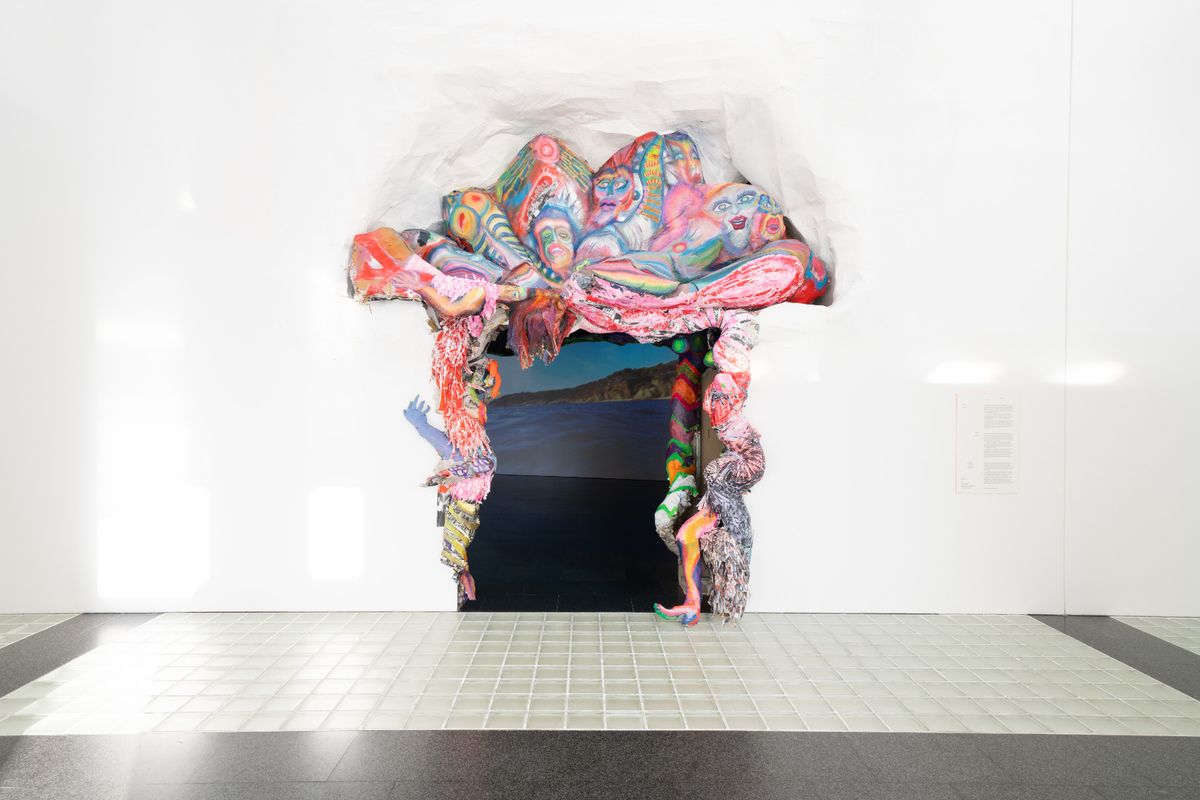
There is no need to look for a very unitary narrative in the proposals of these seventeen artists, beyond the inspiring aroma of Gabriel Ventura's poetry that warns us of the predominance of vision over other senses ("if you burn a sense, says the poet, you get a repertoire of ghosts"). It makes all the sense in the world, therefore, that the exhibition has as its portal the imaginary frontispiece of the Teatre Arnau conceived by Antoni Hervàs, an old space for creation in Barcelona that the City Council's neglect has turned into a kind of ghost facility in search of an inauguration and program that never quite arrives; the logic is rounded off, once through the portal, with the guttural sounds and canned shouting of Marc Vives in the video installation SSSSS (2020), a maritime journey by the artist himself that breaks the prototypical view of the tourist areas of the Costa Brava from a sidereal anti-postcard immersion.
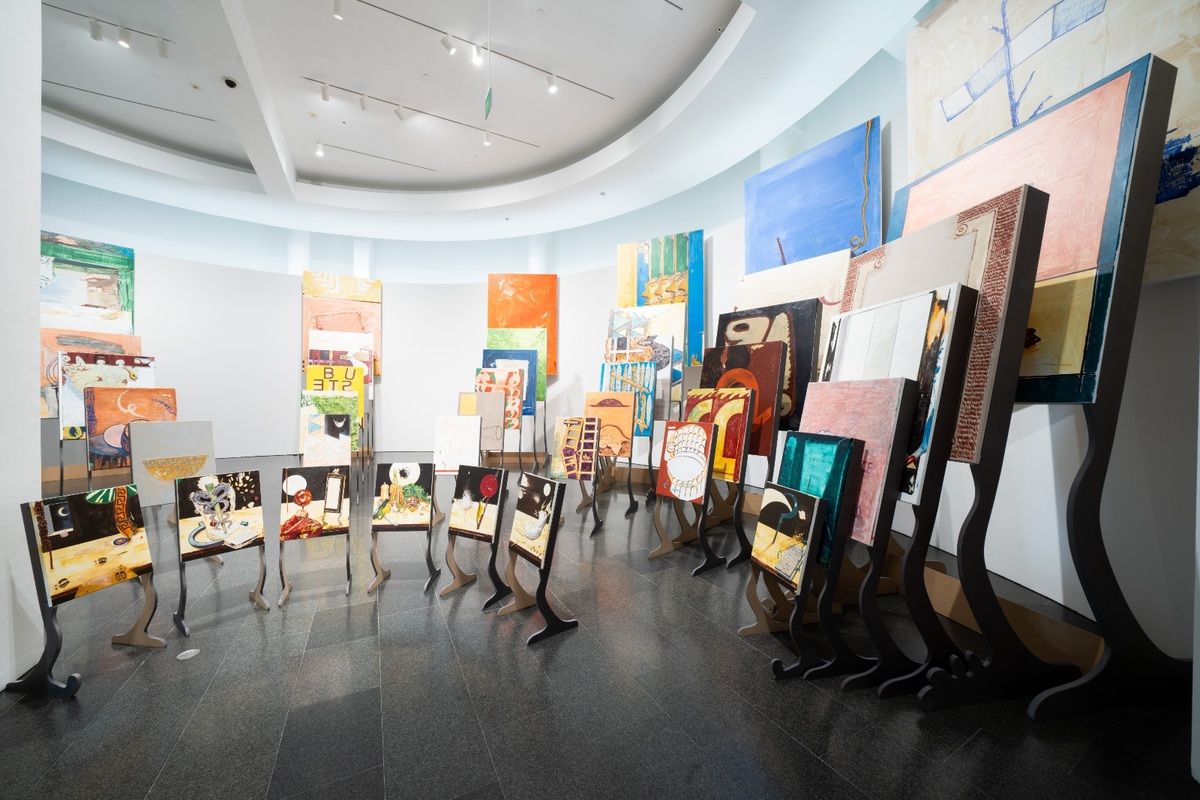
Contemporaneity, he said, demands an anachronistic gaze with a certain dose of irony (as we observe in the theatrical arrangement, as ceremonial as it is laughable, that Rasmun Nilausen weaves with 49 paintings exhibited in a false Greek theater), but it also asks for the distortion involved in the forms of bodily transformation that El Palomar reflects, sheltering itself in the queer destiny of the German judge Schreber. It is a good decision that in the most spacious room the search for identity is related to the reflection on how Barcelona has woven and admired itself in architecture. Loren Bou and Aymara Arreaza present a good review of the false all-encompassing pretension of viewing the city "from above," whether in a hot air balloon, through battle painting, or in panoramic statues, and both Eulàlia Rovira and Laia Estruch ironize about the museum space itself as a source of uniformizing hygiene and a denaturalized bubble.
This new environment of depersonalization, in a new success by curator Hiwai Chu, asks the viewer of this fire to experience the vision in motion from the artworks themselves. This occurs in a more literal way in interesting pieces, with perhaps too naive a humor, such as Clàudia Pagès's video Gerundi Shipping (2021), but also in the surrealism and nauseating bureaucratic transience experienced by artist Arash Fayez when regularizing his citizen status in a new country of residence. It is normal that one of the most celebrated pieces of the fire is Rosa Tharrats' excellent textile triptych Akal/Selene/Uluru, a wonderful example of disconnected collages that manages, who knows if involuntarily, to connect the interior of the MACBA with the highly creative displays of clothes hung in the Raval.
It is interesting, then, that MACBA approaches contemporaneity from the old pretension of making a non-exhibition that helps the viewer to question the very entity of the museum. The problem, I would say, is that the intentionality and political character of most artists is done through concepts that politics and media society have exploited ad nauseam and that no longer represent any type of research on the contemporary. Nor in the Agambenian sense that I mentioned at the beginning of the Saturday psalmody, along the lines of looking back to be able to return to the present with reborn eyes. The solutions and paths that I find, wandering through MACBA, are a regurgitation of proposals that we have seen a thousand and one times displayed in museums around the world during the last twenty years, and one has the feeling, and may the artists forgive me, that one is facing an art exhibition much older than contemporary, closer to something ancient than to anything new.
Or perhaps, simply, it is that the contemporary art of our city, beyond looking nostalgically back, does not have much to say. Which, ironically, is still a fairly accurate portrait of the apathy that Barcelona is experiencing. A fire that does not burn, anesthetizing and predictable.
Add The New Barcelona Post as your preferred Google source for free
Stay informed with the latest news.