
It is logical that the plague of political-social regression that imprisons Catalonia derives, among many other forced regurgitations of the past, in returning to the bullangas of the Liceu on the occasion of the contemporary theatrical interpretation of an opera as sacrosanct as Tosca. Whether we like it or not, opera is one of the few spectacles born of the West that maintains its communal aesthetic pulse (more clearly stated, a salad of total art where the spectator believes that what happens on stage represents them in some intimate way), and it is even touching to see some Liceu spectators demanding "where is Puccini?", as if the composer from Lucca had woven the score thinking of the narrowness of their taste. The phenomenon is particularly idiotic, and even more so if we apply it to a production like Rafael R. Villalobos', as interesting as it is conservative.
Shielding himself in a somewhat topical reading of Pasolini's legacy, Villalobos ties the existential singularity of the Bolognese genius to the aesthetic and political struggle of Cavaradossi and Tosca. In fact, the characterization of the artist as a singular voice (rebellious and cantankerous by nature) who ends up fatally swallowed by a darkly dictatorial political present is a suggestive but purely romantic idea. This is highlighted by an ending that avoids Floria's suicide by changing it to a proud walk of the protagonist towards the light of salvation thanks to aesthetic transcendence. In parallel, we contemplate a wise characterization of Scarpia as that sadistic ruler for whom power is channeled through carnal vexation (the villain does not want Tosca to love him but to despise him: his ultimate motive for seduction is not to awaken admiration, but for her to feel disgusting).
Curiously, Villalobos serves this second backbone of the show (much more related to a present like ours, overflowing with Putins and Trumps everywhere) in a too timid way. I believe the regista would do well to rethink a show that often sins of excessive references to say too many things in a short time (Pasolini fits in perfectly there, but his shadow would leave more of a mark with scenes of insinuation than with unnecessary inventions like the spoken beginning of the second act) to thus delve much deeper into the sadistic-political aspect of his proposal. In any case, the stage director has fulfilled his duty; namely, to take seriously the opera he had to re-read and defend his choice with total conviction. If someone disagrees and wants to boo him, which is totally legitimate, please be minimally polite and do it when the curtain falls.
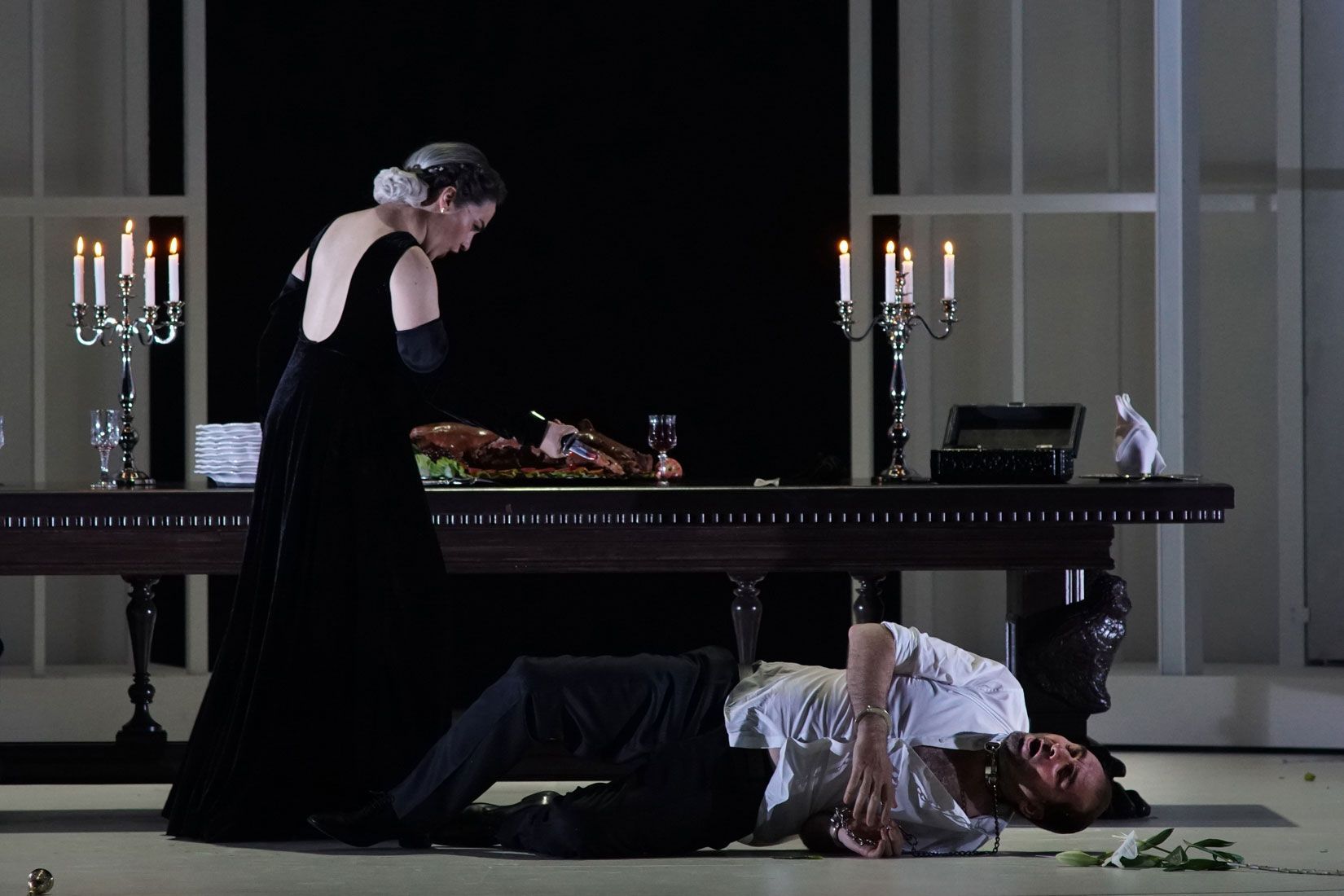
All this shows that, no matter who it bothers, the Liceu is still a theater with an audience of profound theatrical ignorance and obsessively vocista. In this section, and after a vaudeville of last-minute cancellations and substitutions, we must regret that the theater presents a simply correct first cast. The best of the performance, and this is not good news, goes to Michael Fabiano; the instrument is not very beautiful, often suffers from excessive vibrato and, although the Yankee tenor tried some well-intentioned pianissimos, his Cavaradossi presents more testosterone than art. Maria Agresta has a notoriously more beautiful timbre, but it is not a voice for Tosca (she endures the teca of the second act as best she can, but ends up screaming in the third like a chicken). Željko Lučić creates a Scarpia without any ounce of subtlety, fired with blows of stomach and glottis. That the Liceu offers such a cast should provoke boos. That, yes.
I understand that part of the audience also showed little sympathy for a musical direction that was not very operatic. But it must be said that Henrik Nánási attempted some very interesting resources: the first act was very hopeful, with slower tempi and the search for very eloquent silences that most Puccinian masters rush through with banal speed (also letting some phrases shine that are usually dispatched with little science, seeking a very thoughtful legato). But Puccini demands more substance and, as the opera progressed, the Hungarian maestro did not quite find the narrative temper that it demanded, often covering voices that were too much on their own (I suspect the conductor did not have enough time and rehearsals) to finish instilling his musical interpretation). Finally, one hot and one cold: the Liceu choir sounds worse every day and the orchestra better every day.
In short, and after a colossal Trittico at all levels, it seems that the Liceu has returned to the (undesirable) space of a certain parsimonious lukewarmness of proposals that, in the present case, has only ended up transcending due to a public scandal and a shouting match that many rude people had already prepared from home. These are times of regurgitations of the past, we said at the beginning, and one might think that we are returning to that splendid stage of the Liceu with which Joan Matabosch fed our spirit by renewing the theater's productions with an ambition that we now miss like the air we breathe (and facing an equally stupid opposition). Nothing could be further from the truth, because unfortunately this Liceu is light years away from that artistic excellence that can now be enjoyed at the Teatro Real in the enemy capital. The fact should make its very high officials reflect.
PS.- Speaking of the controversial scene in the second act: I beg on my knees (since, exceptionally, someone speaks in Catalan from the Liceu stage) that as far as possible our language is not destroyed. You see how naive I am that I even thought that the public was protesting due to the umpteenth assassination of our beloved Pompeu Fabra.
Add The New Barcelona Post as your preferred Google source for free
Stay informed with the latest news.