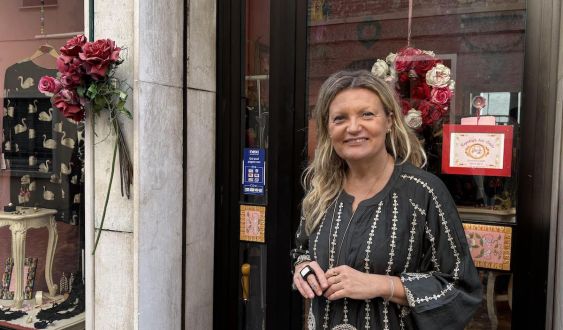
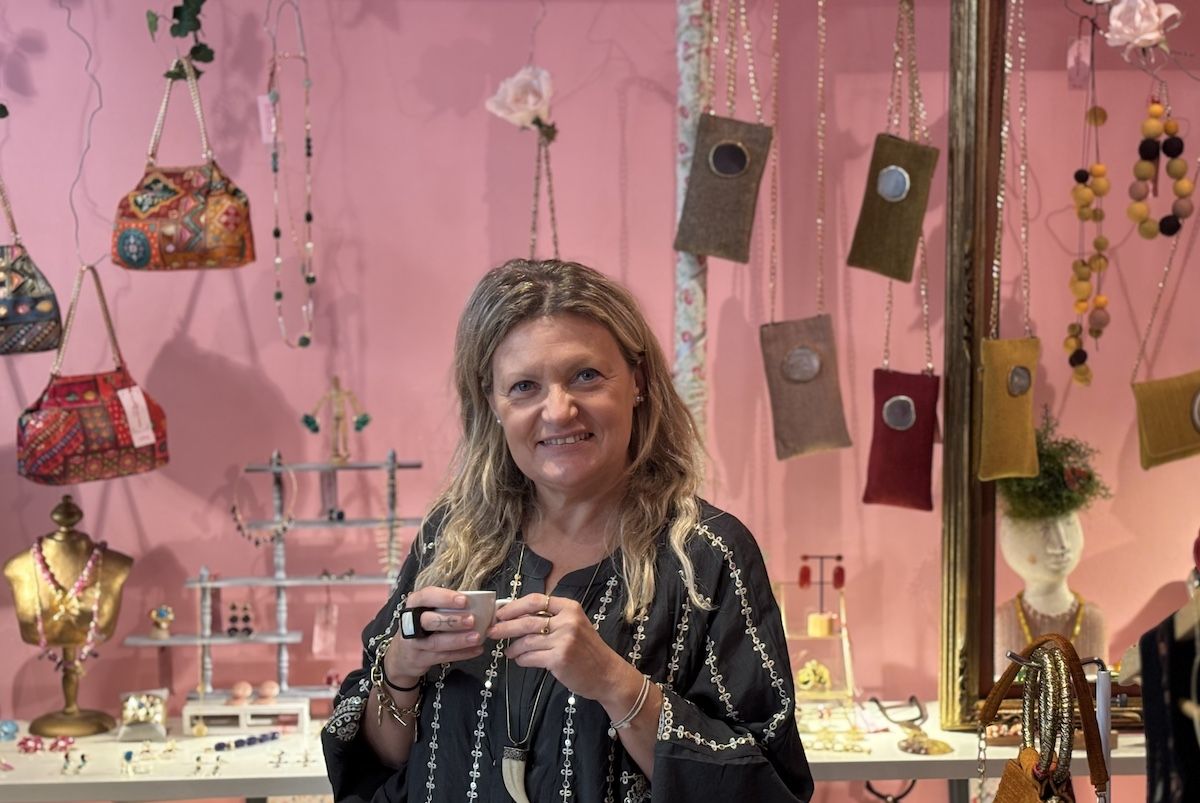
Walking through the network of small streets in the historic district of Padua, narrow stone streets, it is surprising, suddenly, to look up and read on a shop sign 'La República dels Estels, Barcelona'. In the shop window, women's clothing, necklaces, belts, handbags, earrings... Inside, pink walls, a dance of butterflies decorating a space, different, colorful, original jackets, pants, skirts and suits, and bouquets of flowers that welcome you to a special store. It is one of those businesses that more than ever we want to find in the neuralgic center of the cities we visit. They are businesses with their own personality, from which we are attracted by the careful selection of items that we do not find everywhere. And where there is an atmosphere, a particular homey, comfortable environment, that invites you to come in and stay conversing. At the head of this republic of stars, this boutique full of romanticism, we find Anna Trilla from Barcelona.
The European student exchange program for young university students Erasmus led her to buy a plane ticket to land in Padua to spend a whole course. It was 1996 and that disciplined Psychology student from the University of Barcelona, who had never missed a class, wanted to fully live the Erasmus experience, with a lot of partying at night. "I started doing everything, I slept very little because I went out, but I went to class every day. After the first semester I realized that the training at the University of Padua was very different from that of the UB. In Barcelona it was essential to go to class, but in Padua they debated, asked questions, but the core of the study was the bibliography, which was very extensive. I didn't want to miss the party, so I started getting up when my body wanted and studying. That way I could experience everything."
She remembers the coexistence in the first student apartment where she stayed as a real chaos. "We were supposed to be six, theoretically, but very often we were twelve, because couples, friends, dogs arrived... I ended up looking for another rental," she says.
All classes at the university were in Italian, a language she already knew a little because the previous course, in Barcelona, she had taken a first Italian course with university elective credits. It didn't take her two weeks in Padua to meet who would be her partner, an engineering student. That relationship led Anna to ask, already outside the Erasmus program, to be able to stay in Padua to do the internships for the following year of her degree, and both universities accepted it.
After two years of relationship, the couple came to Barcelona, he to do an Erasmus in Terrassa and she to do a master's degree in Couple and Family Psychology at the Universitat Ramon Llull. After that year, he returned alone to Italy and the relationship paused, before regaining momentum at a distance. And in 2003, Anna settled in Padua because he got a very good job opportunity.
This is, then, another couple of Europeans from different countries engendered by the Erasmus program, whose founder died in Rome on October 18. She was the Italian pedagogue Sofia Corradi and was 91 years old. She leaves as a legacy this initiative, which is one of the most known and requested by young Europeans, sending university students to study in universities in other countries since 1987. And in university campuses, relationships like Anna Trilla's have been promoting migrations for love. "The Erasmus program has mixed us a lot, it has sent us to see the world and to put down roots in other places," says Anna, twenty-three years after arriving in Padua for her Erasmus course.
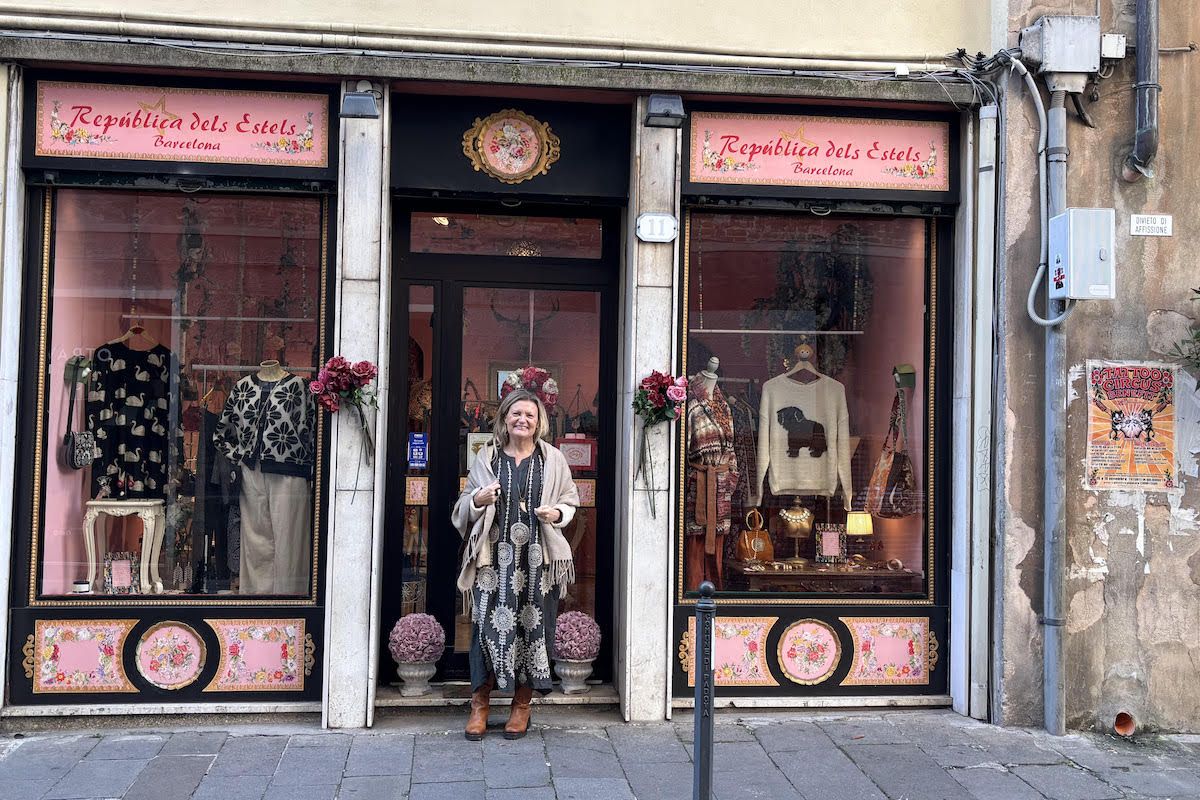
Once she settled there to live, the first thing she did was enroll in a decoration and interior design course, and looked for a job as a Spanish teacher. Many jobs came up in schools. "There was then, and still is now, a lot of interest in the Spanish language. And I also gave a private Catalan class."
Fashion had always interested her, and in 2008, faced with the precariousness offered by classes, she decided to leave everything and open a store. "My maternal grandfather and his parents had founded a furrier in Barcelona. They had their own workshop and made coats. In some way, there was a family antecedent in fashion."
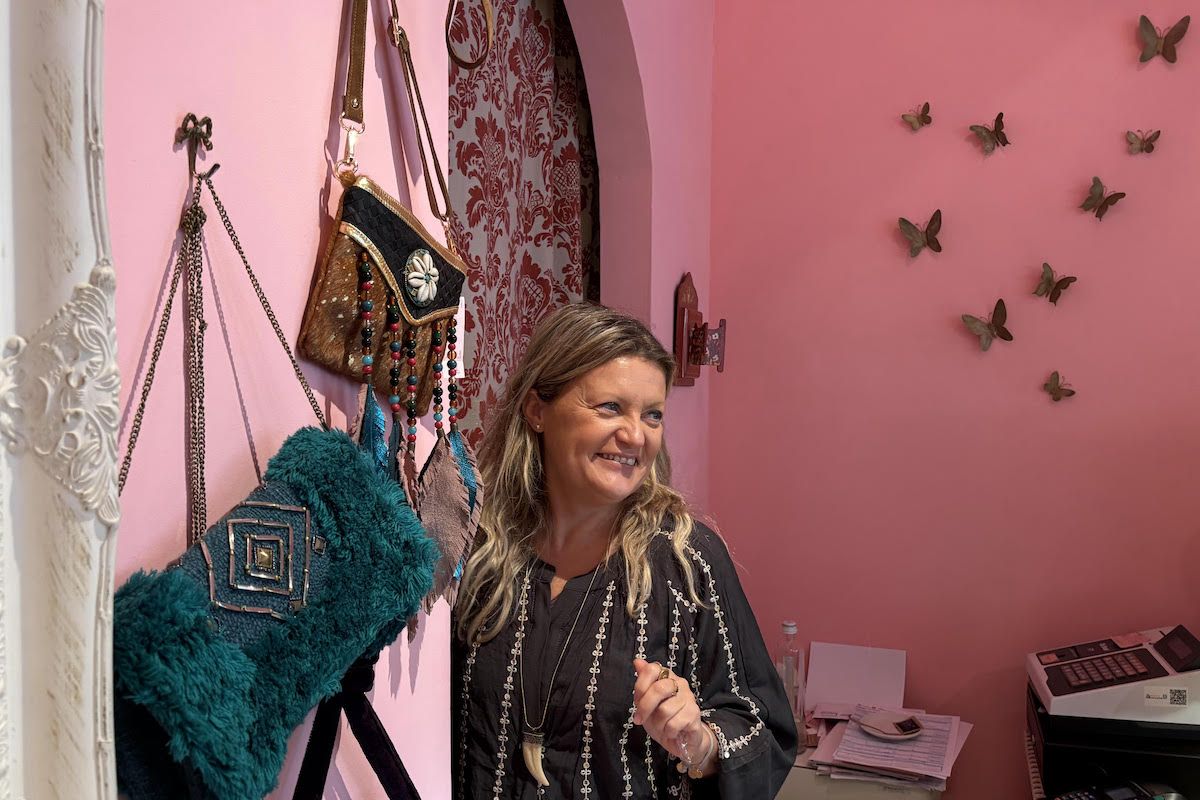
Once she chose the place, she named it La República dels Estels, "and I added Barcelona to refer to my origins," she points out. "The idea for the store came to me quite intuitively. I did see what the market was like, but I didn't do an in-depth study. I was clear that all my suppliers had to be Spanish, to change things, Italian fashion has international fame, but Spanish fashion is different. And that was what I wanted to sell. First, I only sold women's clothing, and when I had my daughter, Gaia, I liked to dress her in much more elegant clothes than what is usually sold. And my friends would ask me: Where do you get these outfits? And I ended up opening a corner in one angle of the store, with children's clothing. But it was a parenthesis. There is much more offer for children's fashion in Spain than in Italy and it is a totally different style," she explains. "Now I only sell women's clothing and accessories. All in a very original style with a lot of color. I like natural fabrics that are quite elaborate, embroidered, with applications...".
And, among the suppliers in Spain, she has some who are designers from Barcelona. From Italy, she only has one: Antonio de Canistris, who works with her in the store attending to the public. Antonio is from Padua and "creates from pre-existing material, which he recycles giving it a new life. It can be a belt, a brooch, shoes, he can transform anything that comes to his mind."
All these details help to shape what La República dels Estels is. It is the note that makes the difference, the attraction of a store in the neuralgic center of a city with a lot of history. "Padua has several places that are World Heritage Sites, and this has greatly boosted the discovery of the city, which had been eclipsed by Verona and Venice. Among the places on the UNESCO list is one of the oldest botanical gardens in Europe, and the Palazzo della Ragione, which is also very visited," explains Anna. Her store is close to all of this, in the Jewish quarter of the city, where tourists stroll with all the calm in the world and, even if they are not looking for her store, it is very easy for them to discover it.
"I think this store is like a bridge. The name in Catalan refers to my roots. I've seen that later they've opened stores in the neighborhood with Spanish names, despite the owners being Italian, but that gives it an exotic touch. In my case, it's not that, but rather truly reflecting my roots, that I am Catalan, I liked it. Although it's long and the pronunciation isn't known, therefore, it becomes more complicated, but I don't mind. More than once Catalans have come in, quite a few times, out of curiosity, to ask."
Of one of the groups of Catalans, specifically, Anna will always remember. "My daughter was about three years old when, one day she was in the store with me, she choked eating a chocolate candy that had a coffee bean inside. She was choking at the precise moment when some Catalans entered because they had read the sign and were asking me questions, while I was going through that nervous moment because my daughter was choking, and they immediately called one of the group who was a doctor and he performed the maneuver for her to expel the candy."
Trips to Barcelona
Three times a year, at least, Anna and her family come to spend a few days in Barcelona, and in summer, they enjoy some time on the Costa Brava. "Every time I come I see changes in Barcelona. I see it more globalized, losing its roots and language, and it makes me sad that all this is being lost," she says. She finds it very curious that Catalan specialties, such as crema catalana, are offered in many restaurants in Italy, and she has the feeling that Barcelona, on the other hand, "being more cosmopolitan, is losing many of its most authentic things.""In Barcelona you find guacamole, burrata, a lot of Italian things, and even a good part of the population that now lives in Barcelona comes from Italy, and they have brought their gastronomy there. This is good, because it implies being open to other things, but, in a certain way, it has become an amusement park and the authentic life of the city has practically disappeared. For example, when I come to Barcelona, finding a taxi driver who speaks Catalan is a miracle. We are governed by the law of least effort. In fact, I have met many Italians who believe that Catalan is a dialect of Castilian and, if we start from this ignorance, we really don't know what the situation is."
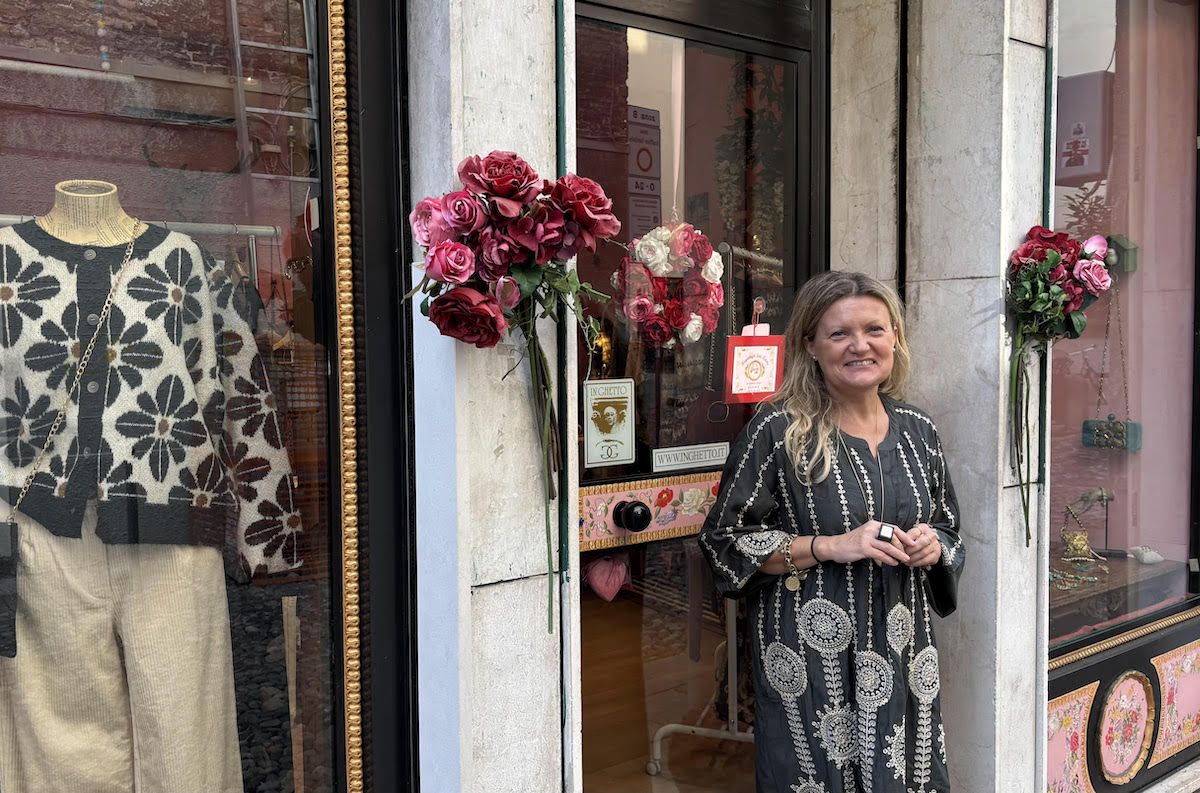
Visiting fashion fairs like MOMAD in Madrid and the markets of Ibiza as a very creative destination always serves as inspiration. "I am constantly researching new ideas, because the characteristic of my store is originality." But psychology has never ceased to interest her. Now Anna combines work in the store with training in bioneuroemotion. Her days of study did not stop after her Erasmus. They only took her to live almost everything quite far from her city.
Add The New Barcelona Post as your preferred Google source for free
Stay informed with the latest news.
