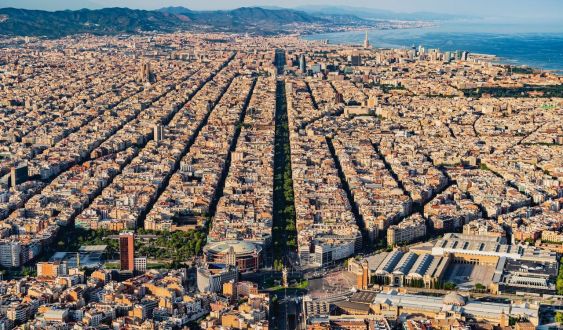
Barcelona weeps these days before the images of the riots and acts of vandalism that this weekend have hit the city center and have damaged shops and businesses that every day raise their shutters and give life to our streets. These acts have been disguised as a protest, but they soon revealed their true nature: it was not a claim, but organized vandalism, incited and spread through TikTok by the anonymous platform Blocus.
Fortunately, we can celebrate that it has remained a punctual episode, in one night, but this does not make it less serious or less inadmissible. And, above all, it does not erase its impact on Barcelona's image, on its perception.
And perceptions count, and a lot: they condition the way citizens live the city, but also how visitors, businesses and those who are considering investing or settling there see it.
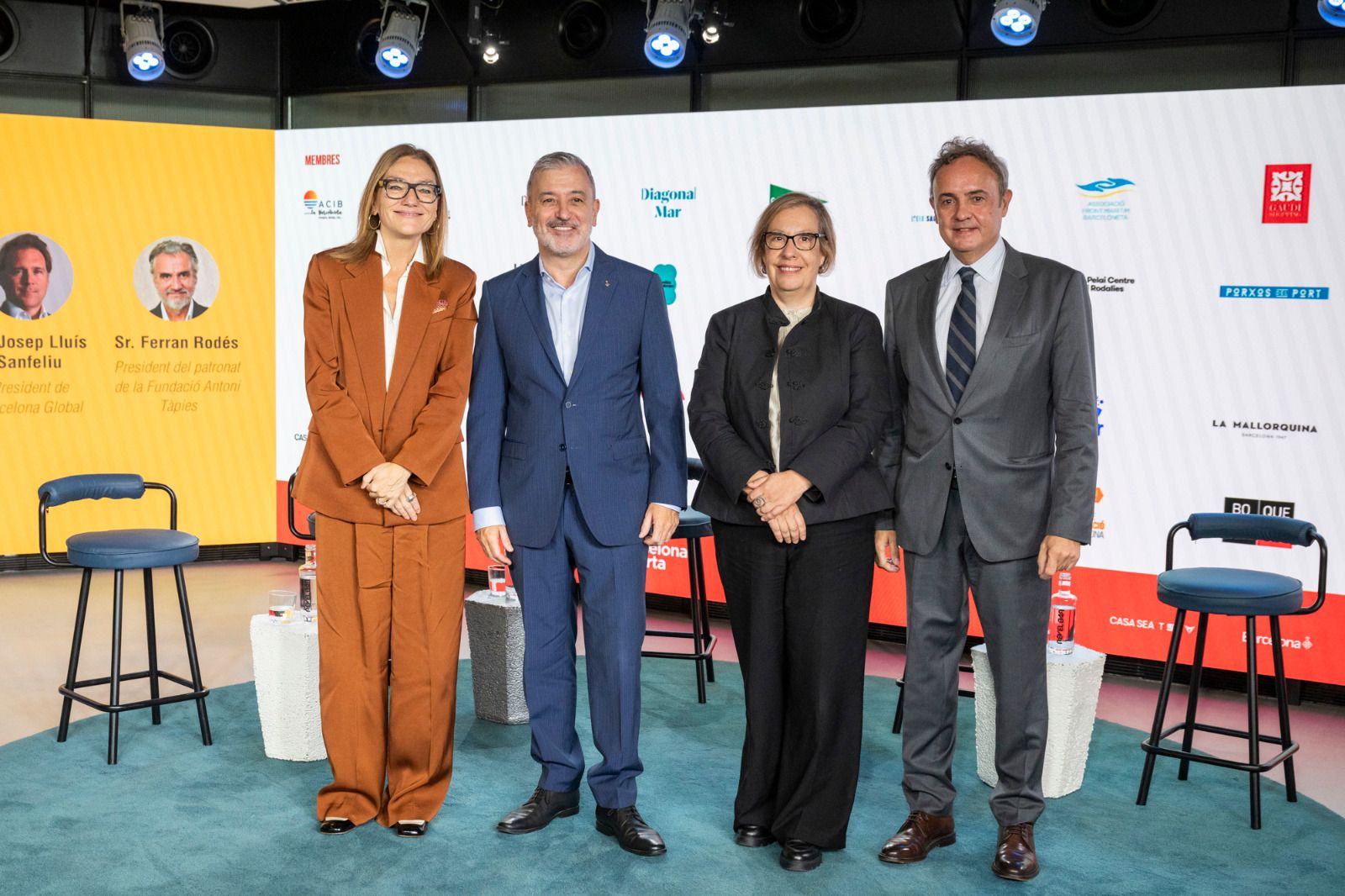
In fact, perceptions and the Barcelona we project were discussed a lot just a few days before, a few meters from where there were later riots, at the Casa Seat Cupra, where Barcelona Oberta celebrated the eleventh edition of its Summit, under the title The Barcelona that could be. A meeting in which representatives from the business, commercial, cultural and infrastructure world debated the obstacles the city faces and the measures that should be taken to make it more open, accessible and competitive.
The contrast is inevitable: while some damage the shops and the space we share, others wonder what needs to be done for Barcelona to remain a vibrant, attractive and prosperous city. And we, who are clearly from the second group, stick with the proposals that, moreover, were not limited to commerce. Housing, talent, culture, mobility and economic openness concentrated a good part of the debate on a Barcelona that, according to several speakers, still puts too many obstacles to activity.
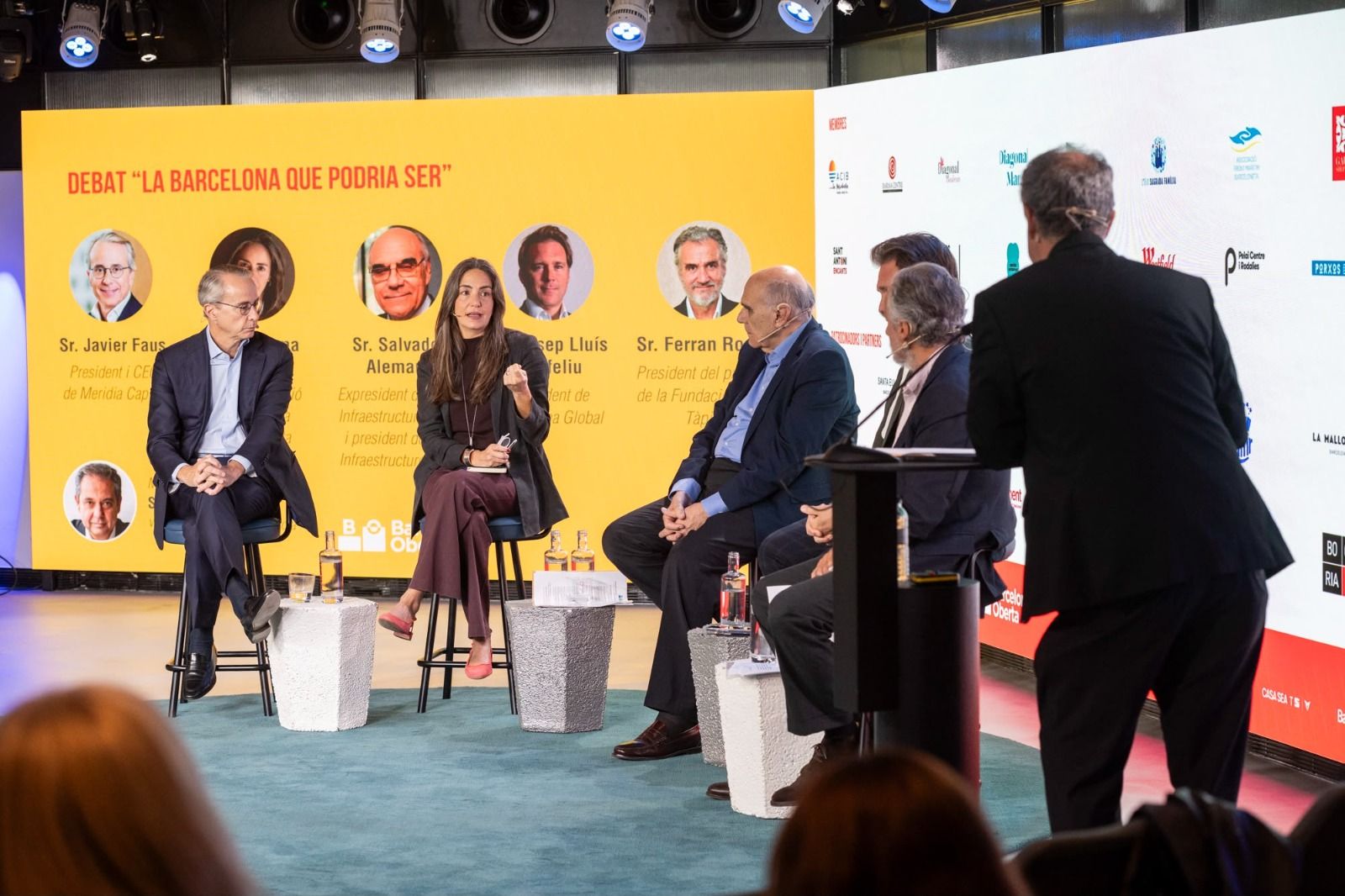
In his speech, the president of Barcelona Oberta, Gabriel Jené, summarized the challenge as the need to facilitate economic activity and stop hindering trade. He called for more flexibility in land use plans, more freedom in opening hours, and a more agile administration. And he concluded with an idea that summarizes the spirit of the meeting: "The Barcelona that could be begins with the commitment of each one of us."
The meeting also featured the participation of the mayor of Barcelona, Jaume Collboni, and Marta Angerri, general director of Commerce of the Generalitat de Catalunya. The presence of both allowed representatives of commerce and other key sectors for the city's economy to convey their concerns and proposals directly to the administrations. Because imagining "the Barcelona that could be" is not just about pointing out what doesn't work, but also daring to propose what needs to be changed, building complicity, and finding a way to make it possible.
These are ten measures for the Barcelona that could be.
1. Provide direct aid to small businesses to open, renovate, and consolidate businesses
"The problem is not the rent price, but the activity." This is the idea defended by Paloma Bergós, portfolio management director at Casacuberta, when addressing the difficulties of commerce. For this reason, Bergós proposed direct support measures for establishments, so that they can cover initial expenses, open their doors, and make their activity viable, such as the administration assuming "the two months of mandatory deposit." The objective is to strengthen local commerce and prevent economic difficulties from emptying the streets.
2. Simplify procedures and reduce bureaucracy
Bureaucracy continues to be one of the obstacles to entrepreneurship and launching new projects. Both Bergós and businessman Javier Faus called for a more agile administration that drastically reduces processing times. The opening or renovation of a commercial establishment in Barcelona often faces excessive administrative slowness and complex bureaucratic requirements. And this delay in granting activity licenses forces entrepreneurs to incur added technical expenses and to request longer grace periods before starting to pay rent. A situation that makes projects more expensive and can end up discouraging business and commercial activity.
3. Caps on commercial rents, at the center of the debate
How can we prevent rent increases from expelling traditional commerce? Mayor Jaume Collboni, in his inaugural speech, defended opening the debate on capping rents in commercial premises, as a measure to limit increases between contracts, in the face of "increases that can reach 30%, 40%, 50% or even 100%", he stated. But in the subsequent debate, it was questioned whether caps are the general solution. Bergós, in fact, who was very much against it, pointed out that the way is not to burden owners, but to opt for direct aid to businesses.
4. Thinking about mobility from a metropolitan perspective
For Salvador Alemany, former president of Abertis and president of Saba, Barcelona cannot be understood apart from its metropolitan environment. It is necessary to coordinate administrations and infrastructures, improve access to the city and plan works taking into account how they affect displacements and economic activity. Mobility, therefore, is not just an urban issue: it is also a condition for competitiveness.

5. Flexibilize accommodation offer and review moratoriums
Javier Faus defended lifting moratoriums and facilitating new forms of accommodation where they make sense. This includes hotels, student residences, flex living and temporary accommodation for professionals who come to work in Barcelona. The idea is to adapt the offer to the needs of a city that receives students, workers and international talent.
Faus's intervention culminated in spontaneous applause from the audience when he enumerated the restrictions that, in his opinion, hinder activity in Barcelona. "Nowadays, you can't build hotels in Barcelona, you can't build student residences, you can't do flex living... You can't do anything! Nothing! Nothing!" he exclaimed vehemently. A direct criticism of the moratoriums and obstacles that, he argued, prevent expanding accommodation options and responding to the needs of a city that wants to attract talent and economic activity.
6. Create a single window to attract talent and investment
Josep Lluís Sanfeliu, president of Barcelona Global, called for a system that supports companies, investors, and researchers who want to settle in Barcelona. A single window would allow guiding them and helping them resolve administrative procedures, including those related to obtaining the NIE, which can become a hindrance for those coming from abroad. The goal is for the city not to lose opportunities due to administrative obstacles.
7. Expand housing and temporary accommodation options
The difficulty in finding a place to live is also an obstacle to attracting and retaining talent. Sanfeliu proposed exploring new formulas to expand the offer, including leveraging underutilized public housing and the possible conversion of some empty commercial premises on secondary streets. In the same vein of expanding accommodation options, Javier Faus advocated for facilitating formulas such as flex living, designed to meet the needs of professionals who move to Barcelona temporarily. The underlying idea is to diversify the offer and adapt it to different residential needs, especially those of people who come to the city to study or work.
8. Improve international connectivity and project Barcelona's strategic sectors
Sanfeliu also focused on international connections, especially the need to strengthen direct intercontinental flights with Asia. At the same time, he advocated for better projecting sectors in which Barcelona has potential, such as science, health, and technology. Connectivity is a tool to facilitate business, attract investment, and position the city in global knowledge circuits.

9. Promote a grand cultural pact with a twenty-year vision
Ferran Rodés Vilà, president of the Board of Trustees of the Fundació Antoni Tàpies, advocated for a grand cultural pact involving administrations, cultural institutions, the private sector, and philanthropy. The proposal involves defining a long-term strategy, with a twenty-year outlook, and providing it with a funding model that allows for project stability. Culture, from this perspective, is not a complement to the city, but an essential part of its attractiveness and its international projection.
10. Strengthen own communication channels to better explain Barcelona
Rodés also insisted on the need to improve how Barcelona communicates its strengths and its own offerings. Strengthening its own channels would allow for better connection of activities with citizens, giving more visibility to what happens in the city, and projecting its attractions outwards. Because a city not only has to have a strong offering: it also has to know how to explain it and make it reach its audience. Work on perceptions.
Add The New Barcelona Post as your preferred Google source for free
Stay informed with the latest news.