Zeleste, the musical refuge of 70s Barcelona

The Mas i Mas Festival closes its twentieth edition with a tribute to the Zeleste venue, opened in 1973 and which changed the city's musical skin, bringing together important elements of what was then called the Ona Laietana, in the P62 venue, full of a participatory audience

september 08, 2023 - 11:43
Zeleste was a flagship of popular music with cachet, with class, from the 70s and 80s of the last century. Irregular management, accompanied by a new location that didn't quite work out, led to its closure in 2000. As could not be otherwise in a culturally and socially cainita city like Barcelona, Víctor Jou (1939-2023), the mentor of the invention, wove a rich tapestry of music around jazz, rock, and Cubanism, all with Mediterranean aromas. In other words, the Zeleste hall was a pantheon of endless fusions, alliances, and controversies. Zeleste was also a booking agency, record label, and music school. The musical result became known as the Ona Laietana. Under the name 1973-2023 50 anys Zeleste Ona Laitena Barcelona, the tribute concert is an initiative of Jamboree, the jazz club and other venues in Plaça Reial, which also has its ups and downs. With this proposal, the Mas i Mas Festival, in its twentieth edition, captured a massive presence, a natural clientele of Zeleste, who found five decades ago, in the Born space, an emotional refuge, which accommodated a very broad musical forest. The room behaved like a cultural transformer, a kind of incubator of interdisciplinary ideas and projects avant la lettre. The stage, populated by qualified young musicians, of the packed P62 hall pleased the audience, in which the social segment under 35 years of age was conspicuously absent.

The sound of the Ona Laietana went from Jaume Sisa to Xavier "Gato" Pérez (1951-1990), in his rock phase in Secta Sònica, alongside Jordi Bonell, composer and fine guitarist, to whose figure the first part of the session was dedicated, as well as to Música Urbana, an incipient and, then, restless Dharma; Toti Soler, who could not attend. Also Blay Tritono and the Orquestra Mirasol –a group that underwent various transformations in its short existence and that deserves to be discovered by audiences absent from the hall–, represented, on Saturday night, by Xavier Batllés' mandolin and honored by Lluís Vidal's piano playing. More Iceberg, Max Sunyer's progressive rock quintet, which years later would evolve into the jazz fusion of a new formation, Pegasus.

The planned program did not forget the illustrious, multifaceted, cinematographic and ductile Jordi Sabatés(1948-2022), who recorded a beautiful and necessary album with Tete Montoliu, Vampyria (1974). Again, Vidal was splendid recreating, in the manner of a suite, three pieces dedicated to Anna Pomerol, widow of the former member of Pic-Nic, a pop group, prior to Zeleste, in which Sabatés coincided with Soler.
"It is a tribute and a re-reading of the music that was made in Zeleste", indicated Vidal, also, one of the directors of the night. A new musical generation, intense, uninhibited, prepared and interested in urban music –jazz and rock in a broad sense are urban rhythms– made the corpus of the Ona Laietana its own, to starting from some exquisite arrangements executed with care by the brilliant Barcelona Art Orchestra (BAO), which is nourished by musicians from different schools in the city. The training discovers tones and colors, a hidden plasticity, in some records and some musicians who deserve not to be forgotten.
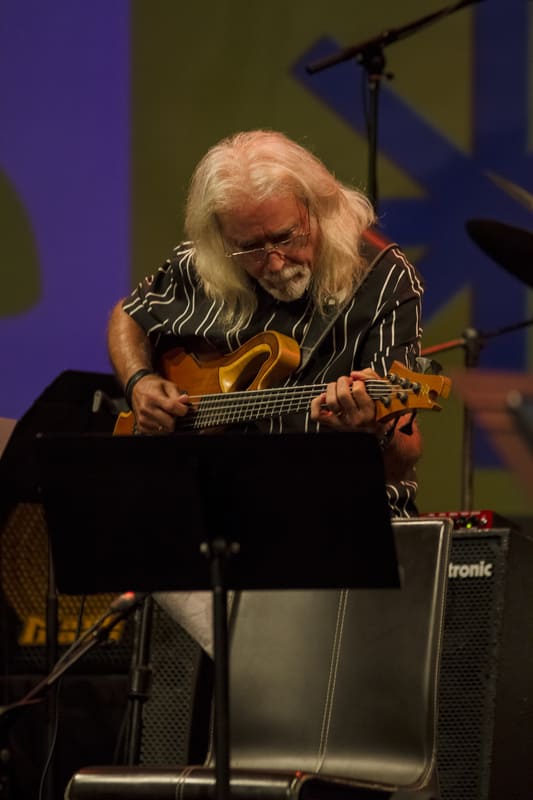
Carles Benavent, with the bass. ©Juan Carlos Abelenda
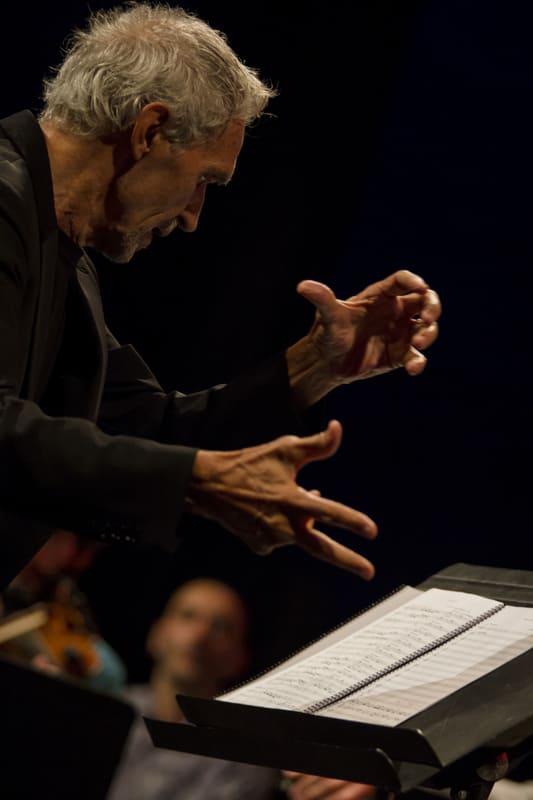
Bassist Carles Benavent, always impeccable, with just the right note, not one more, alongside the smartest in the class, Joan Albert Amargós, this one as director of the BAO. In the final part of the concert, they got a lot of juice or imprinted a lot of imagination, depending on how you look at it, on scores from four decades ago, their own works, as both were in Música Urbana –another name to recover–, now interpreted by a big band. If the concert was recorded on video, it would be good if the audience could savor the musical intention of music that, at the time, bridged rock and jazz, and now it sounds almost the same, but it resembles nothing. Advantages of talent. The BAO sounded contemporary and cinematic. Sweet and solid, at the same time. Nothing orthodox. Not so long ago, at the Auditori, Amargós did something similar with the work of Camarón de la Isla, in the show Suite de La Isla. As I said: the smartest in the class. What happened in the Paral·lel venue is an everyday reality in Anglo-Saxon scenes where musicians do not give each other awards or diplomas; they gift each other the music of the honoree or of the manager who made it possible, such as a record producer. That is the greatest and best recognition a musician can receive. To be considered a reference musician by his own colleagues.On this occasion, he has gone very far, by involving musicians from the Ona Laietana, still active. It was an act of gratitude and respect that should also reach young audiences. A night that will remain on the 2023 calendar.
Joan Albert Amargós, composer and conductor. ©Juan Carlos Abelenda

Add The New Barcelona Post as your preferred Google source for free

Stay informed with the latest news.

Activate now

About the author

Miquel Queralt
View biography
Tags