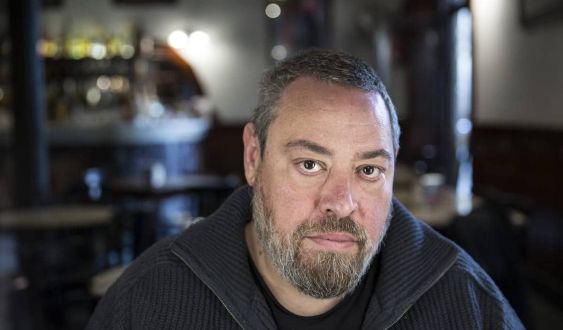
"I am the result of countless encounters, conversations, events, incidents, reflections, doubts, and perfectly random coincidences, which have made me this way. Every last minute lived has influenced, in one way or another, this dynamic process. We are the result of all the people who have loved us and whom we have loved. And, of course, also of all those who have hated us," reasons Xavier Theros at the bar, black coffee with saccharin in hand, his large, almond-shaped eyes scanning an uncertain space.
An essential chronicler of Barcelona through articles and essential books such as La Sisena Flota a Barcelona, Barcelona a cau d'orella, Barcelona: secretos a la vista or Vida i miracles de la plaça Reial. And a novelist with the acclaimed La fada negra, a historical noir that is the first adventure of the forceful Captain Llampades. Xavier Theros's life has been largely dedicated to cultural and literary activism.
"I left my studies very early ---he explains--- and had various perfectly anodyne jobs until, at nearly 30 years old, I entered university to study medieval history and left with a degree in anthropology. Meanwhile, I was doing poetry recitals with different groups and collectives, until in 1991 I co-founded with Rafael Metlikovez the duo Accidents Polipoètics, with whom we spent 25 years touring the world. In addition, since the late eighties, I have been collaborating with various media outlets, writing essay books and novels. Within the editorial profession, I have written everything from encyclopedia articles to all kinds of guides or textbooks. I even worked for a time as a literary ghostwriter, writing for others."
Personally, he defines himself as "someone not very sociable," who loves being at home and rarely goes out at night. "I read less than I would like and I have many things left to learn," he adds.
Resuming projects
"I have just been widowed, after a long illness of my wife that absorbed all my energy," explains Theros, who in recent years has dedicated himself body and soul to caring for his beloved Núria Pujol, a cherished translator and a capital presence in Catalan letters.
"Now I am writing everything that has been delayed for me, basically the second installment of Captain Llampades' adventures, a biography about the chronicler Ramón Draper, and a book about my personal experiences caring for a brain cancer patient," he explains, his eyes focusing on the smoky blackness of the coffee oscillating in the cup.
After a few moments of silence, Xavier Theros recovers a conciliatory smile and states: "If I met my teenage self and told him what I do, he would surely like it. I am proud to be able to earn a living doing what has been my passion since I can remember."
--- The truth is, that's great luck.
--- That is a not-so-common privilege, that of trying to be oneself.
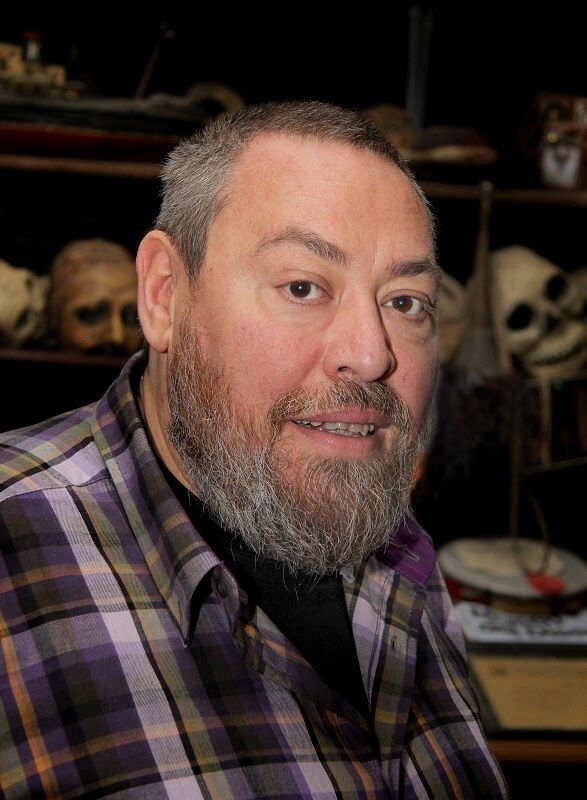
Barcelona: mutatis mutandis
"I am bothered by a certain pessimistic tendency among Barcelonans who announce, day in and day out, the end of the authentic Barcelona, as a rejection of the natural transformations a city undergoes, without seeing in it the changes inherent to a living organism. Whether we like it or not, a city goes through various phases, just like people," Theros reasons. "Perhaps this is not the best moment the city has lived, but neither is it the worst," continues this lover of "Barcelona's rebellious and revolutionary force, the 19th-century bullangas, and the libertarian explosion that dominated its streets in the first half of the 20th century."
Asked to highlight a historical episode, he mentions the Jamancia revolt, which he already discusses in La Fada Negra: "A rebellion led by the destitute and the unemployed, which turned the city upside down and ended with three months of bombardments, from Montjuïc castle and the Ciutadella. And yet, it passed without much fanfare in our history. Barcelona is very selective with its memory, full of moments that remain hidden, waiting for someone to recover them." And Theros has already recovered quite a few.
"Barcelona is very selective with its memory, full of moments that remain hidden, waiting for someone to recover them"Son and grandson of manual laborers and municipal market butchers, born next to the Riera Blanca, Xavier Theros admits that, like everyone who lives here, his relationship with the city is one of love-hate. "Barcelona is my home and that of my ancestors; I have a very intimate and personal relationship with it. In a way, when I write about the city, I also write about myself and my family. I believe it is a place that has generated history, despite not being a great metropolis, perhaps due to its antiquity. And despite the changes and the current tendency to standardize cities until it's hard to distinguish them, I still really like living here."
The coffee comes to an end and the writer rolls a cigarette to go outside and smoke it. The street fills with passersby looking for a place to have lunch; it's already time.
--- Do you want to eat something? Menu? Tapas?
--- A traditional menu, just that. ---he replies with a hungry look on his face.
Add The New Barcelona Post as your preferred Google source for free
Stay informed with the latest news.
