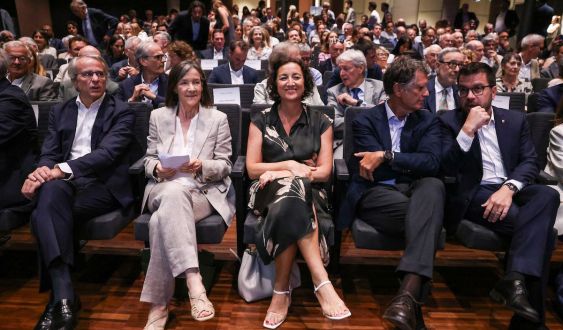
Without fear. As easy as that or, in any case, as difficult as that. The general director of the Factor Humà Foundation, Miguel de la Dehesa, assures that "it is better never to lose the humanist gaze, not to lead from fear and to have deep conversations." They say that the resolution of the conflicts that surround us requires vision, shared values and conversations, many conversations. So, over these last weeks of intense summer rhythm, I have dedicated myself to seeing to understand, speaking to transform and, above all, listening to connect.
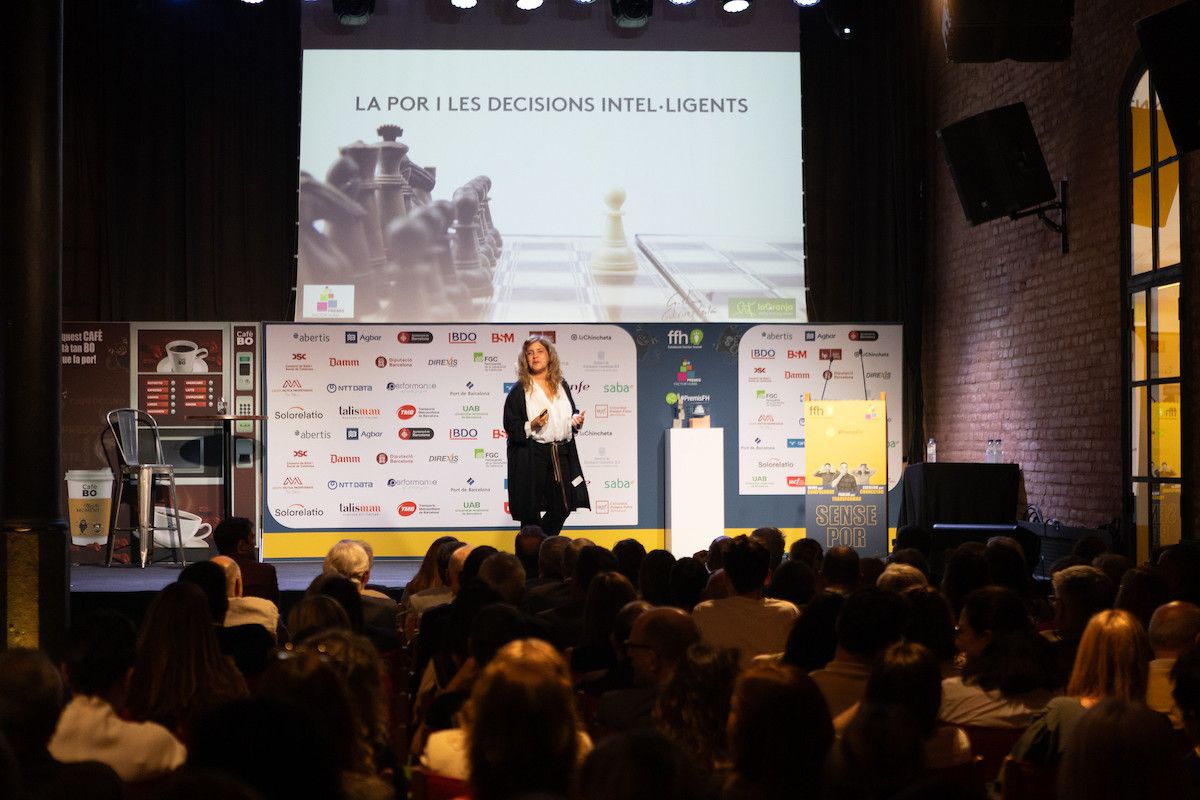
Cristina Gutiérrez, director of La Granja Ability Training Center and author of the book Líbrate del miedo (Free Yourself from Fear), gave a true masterclass during the Factor Humà Awards, on fear and intelligent decisions. It all starts with a good question: How does fear act, what does it generate, and how can it be neutralized? Or, how does human behavior work? What we feel has a direct impact on our attitude and our behavior, both individual and collective.
And it continues with an even better answer: "Fear is the lack of information and its main function is to move away from danger. It blocks the prefrontal cortex and makes us make less intelligent decisions. Having fear is for brave people. How to resolve fear? With a lot of active listening. Fear reminds us of what we are, and bravery reminds us of what we can become. In short, bravery is not not having fear, it is having it and, even so, doing it more than saying it." We started strong.
Let's congratulate the bravery of institutions that have blown out candles this month, such as the Associació de Joves Empresaris de Catalunya (Aijec) or the ICF, which have turned 40, the 10 years of Eurecat, or also the 125 years of Fontvella and the 30 years of Port Aventura's turns, among others. Enduring the passage of time with coherence and doing it well as much as possible is not easy at all.
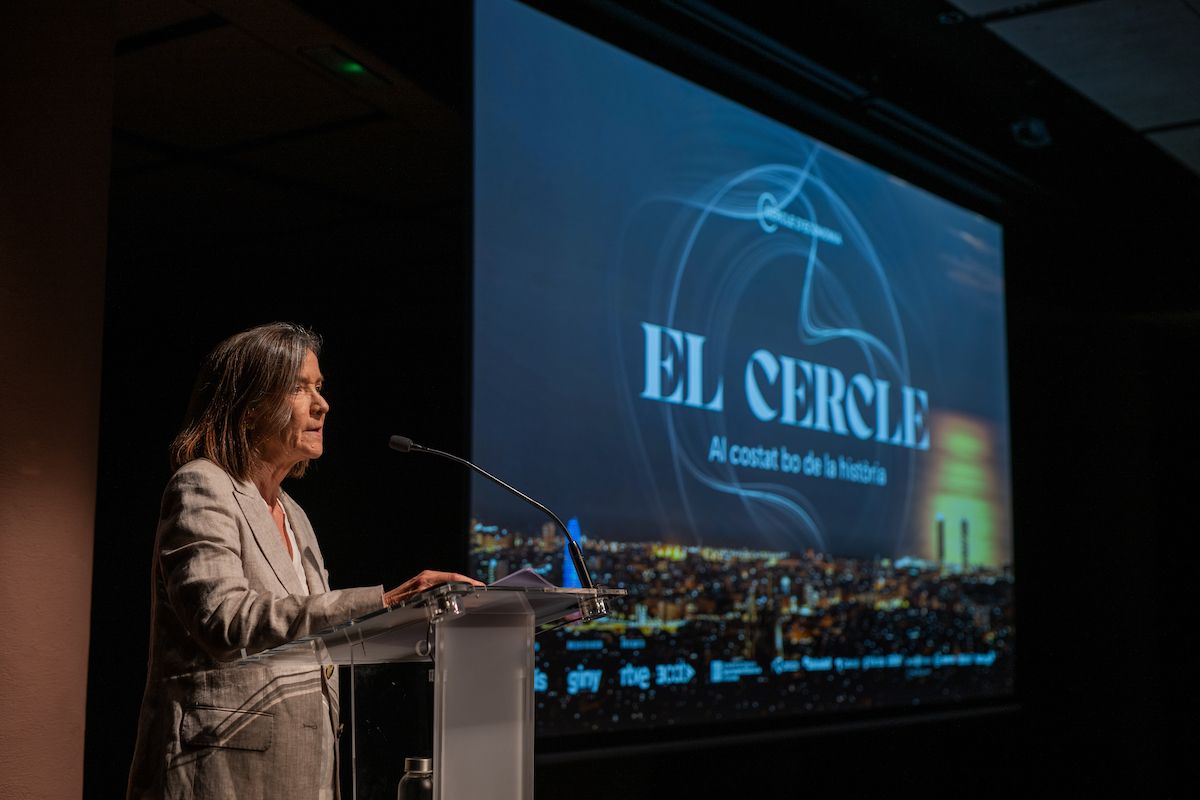
"The notes of the Cercle d'Economia age well," Jaume Guardiola pointed out during the presidential handover with Teresa Garcia-Milà at the helm of the Cercle. The professor of Economics is the first woman president of the institution in 67 years of history, and in her inaugural speech, she points to the threats to the liberal economy due to political instability, to Europe's source of opportunities, and to the importance of ensuring that "the Cercle says what others do not dare to say." With courage, rigor, and independence from whoever is in charge or wants to be in charge. Without fear.
The lawyer Carlos Cuatrecasas was president of the Cercle d'Economia between 1975 and 1979, and he recalls that the last spark of complicity he saw between political parties was during the Barcelona Olympic Games and the reconstruction of the Liceu. "I perceive a lot of indecision in the public sector, but the country and the city of Barcelona must be above political parties. Politics is serving the country and not serving one's pocket or party," he points out before the attentive gaze of the young people. There is a lack of courage to break with the inequality that hinders any progress, to embrace new leaderships inside and outside the cradle of Europe, to recognize the merits of others ---"those around you, they exist"--- and to live a whole life with the tranquility of duties and work well done.
This idea of leaving with a job very well done could be said of the professor and owner of 7 Portes, Paco Solé Parellada, who has passed away at 81 years old and leaves a great legacy of cuisine, thought, and innovation. I remember as if it were yesterday when he received me in his office with a Joan Miró lithograph that reflected the colorful life of his restaurant and an underlined and printed interview from 2020 with Ferran Adrià. We spent a good many hours talking about his craft, about his friends Xavier Marcet and Alfons Cornella, about the keys to innovation, the recipe for success, or the emotions of restoration. Do you know Proust's Madeleine? Well, the same as the paella, the cannelloni, or the "pijama" dessert at 7 Portes. In search of lost time. "Do good and do no harm," he advised me before leaving with a joke. Thank you, Paco Solé Parellada, for so much.
The dynamism of the Catalan economy
In a context heavily marked by geopolitical disruption, the Catalan economy grew by 3.6% during 2024, well above the 0.9% of the eurozone. According to the Economic Report of Catalonia 2024 presented by the Chambers of Commerce, the Catalan economy accumulates greater economic dynamism than Spain and Europe thanks to the growth of the labor force and productivity. However, Catalan productivity is still below the European average. The director of economic analysis at the Barcelona Chamber of Commerce, Carme Poveda, points out that industry needs more investment and fewer bureaucratic obstacles to grow.
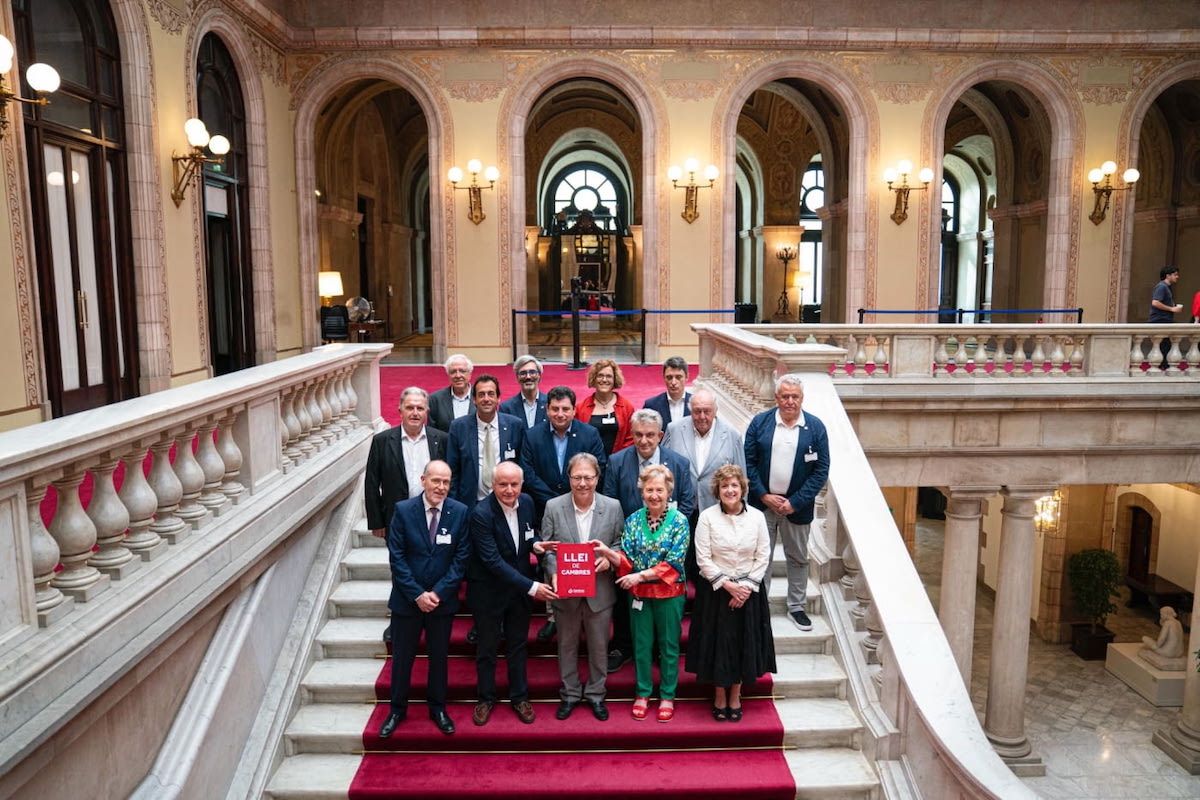
A decade! The Chambers Law has taken more than 10 years, but it seems that after a long journey through the desert with different councilors, business and union leaders, it reaches a good parliamentary port. The fact is that Catalonia has not had its own autonomous law until now to regulate the Chambers of Commerce, which will be recognized as consultative, representative, and collaborative bodies with the administrations. Chamber plans will also be created, and there will be progressive funding of 3 million euros in 2026, 5 million in 2027, and 7 million in 2028. Let's not forget that the main historical source of funding for the Chambers was chamber fees, which were eliminated in 2010 by the central government, then presided over by José Luis Rodríguez Zapatero. In addition, an agreement has been reached between the Generalitat and Aena to expand the Barcelona Airport with 3.2 billion euros. Beyond extending the sea runway and respecting environmental plans, the key to this agreement will be found in the details of governance, the famous accountability or the execution of the budgeted investment.
In this sense, the Minister of the Presidency of the Generalitat, Albert Dalmau, encourages the consolidation of economic leadership, while reforming public services and resolving security and housing as the "main bill" of our society. He also applauds "the brave decisions" of nearly 700 companies that have decided to return their registered office to Catalonia. However, the muscle of the Catalan business system still has many tasks to do. As indicated by the 4th Congress of Economy and Business of the College of Economists of Catalonia, public policies are needed to strengthen the Catalan business fabric (industrial, technological, services...), which are aimed at supporting the development and continuity of companies and self-employed workers, which value initiatives, actions and sectors that activate our economic potential, which focus on the convenience and compatibility of aligning the adoption of ESG criteria with the increase in the added value of companies and which analyze the need to promote public-private collaboration when mobilizing investments in the improvement of infrastructures at the service of the economy and social welfare.
Finally, BBVA's hostile takeover bid for Banco Sabadell, which has gone halfway around the world, continues to make headlines. The Council of Ministers of the Spanish Government has validated its formula without a merger for 3 years extendable to 2 more years, and this implies above all that the legal personality, assets and management autonomy between entities must be totally independent during this period of time. But BBVA is clear that it wants to push it through to the ultimate consequences, because too much is at stake in this operation. Sabadell is pulling out all the stops, with the recent sale of the British subsidiary TSB, which has driven up its shares and will allow an extra dividend to be paid to shareholders, who are ultimately the ones who will have the final say. The president of Banco Sabadell, Josep Oliu, insists that if BBVA wants to succeed, it must change the conditions and, especially, the price of the takeover bid, which is the key to everything.
Ruscalleda: "No laziness! Learning is continuous and daily"We end this column with a final reflection from chef Carme Ruscalleda, awarded as an honorary member of the College of Economists: "No laziness! Learning is continuous and daily.The story of a company is tangible when it is real, and our path has been one of commitment, hard work, and respect for people." And this is said by someone who has won up to 7 Michelin Stars. Without fear, or with courage.
Add The New Barcelona Post as your preferred Google source for free
Stay informed with the latest news.
