
We spoke with soprano Adriana González a few days after the premiere of an opera she knows well. Not only has she sung the role of Micaëla previously, on different occasions, but last season she participated in Calixto Bieito's stage production at the Opéra Bastille in Paris. The revival of his Carmen at the Gran Teatre del Liceu, 25 years later, maintains its original impact, if not increases it. Perhaps because it is more familiar, the presence of undisguisedly kitsch elements, such as scenic violence and an unsettling, grayish atmosphere, reveal the inherently sinister nature of a loving paradigm based on possession.
--- How do you feel, after the revival of such an iconic staging?
--- Well, the truth is very good, happy, the performance seemed to be liked. The audience was enthusiastic, with applause after each aria. In some theaters, for example, there is no applause after the habanera, regardless of the singer. The audience in Catalonia is adorable, very expressive and effusive. If they like something, they are with you, you receive a lot of energy back, something that singers appreciate. It's a relief to know that the spectators are enjoying themselves. Some even wait for you at the artists' entrance. That doesn't happen everywhere!
--- For you, singing at the Liceu is not new…
--- My first project here was Viaggio a Reims, where I sang the character of Corinna, in 2017, I also participated in Les contes d'Hoffmann, with the role of Stella. A small role, but in the same season, in May 2021, I played Mimì in La bohème. This same season, Liù in Turandot and now Micaëla, in Carmen. We also have other projects. Together with Iñaki Encina, for example, we will present a recital with songs by Albéniz, Granados and others. I am delighted to work at the Liceu, because you can feel the love for opera. Talking to Jaume Tribó ---the prompter for so many years, who has collected anecdotes in a book---, he explained to me that he has had a subscription since 1963.
"The sound can be beautiful if you listen to it at home, but there is something distinct and unrepeatable in the vibration of the human voice live, which is what makes you cry, feel pity, get emotional"--- In Barcelona there is a very loyal opera audience, well-versed in singers ---as you mentioned--- and also in stage productions. Fortunately, art, like literature, is important for some music lovers.
--- Well yes, reading is fundamental, and lately I've been with this [he shows me a copy of Thomas More's Utopia] which I'm sure you know. One cannot be thinking only about whether the voice is good, or the complication of memorizing certain passages... No, no, you have to feed the brain, the soul, in various ways: visit a museum, go for a walk, meet new people. That teaches you a lot for the stage too.
--- I have the feeling that singers, as actors, benefit from humanistic knowledge, from feedback with creative disciplines to get into their roles.
--- Completely, it helps to understand the context or ideological background, as well as the motives or raison d'être of the characters. Thinking about Carmen, it was very interesting for me to discover that the character of Micaëla does not appear in Mérimée's novel, but was created by the opera's librettists (Meilhac and Halévy). They understood that it would be good to create a contrast with the protagonist. Carmen is presented as the libertine, while Micaëla would be the representative of purity, of social rules and, in short, of how a girl should be in that context.
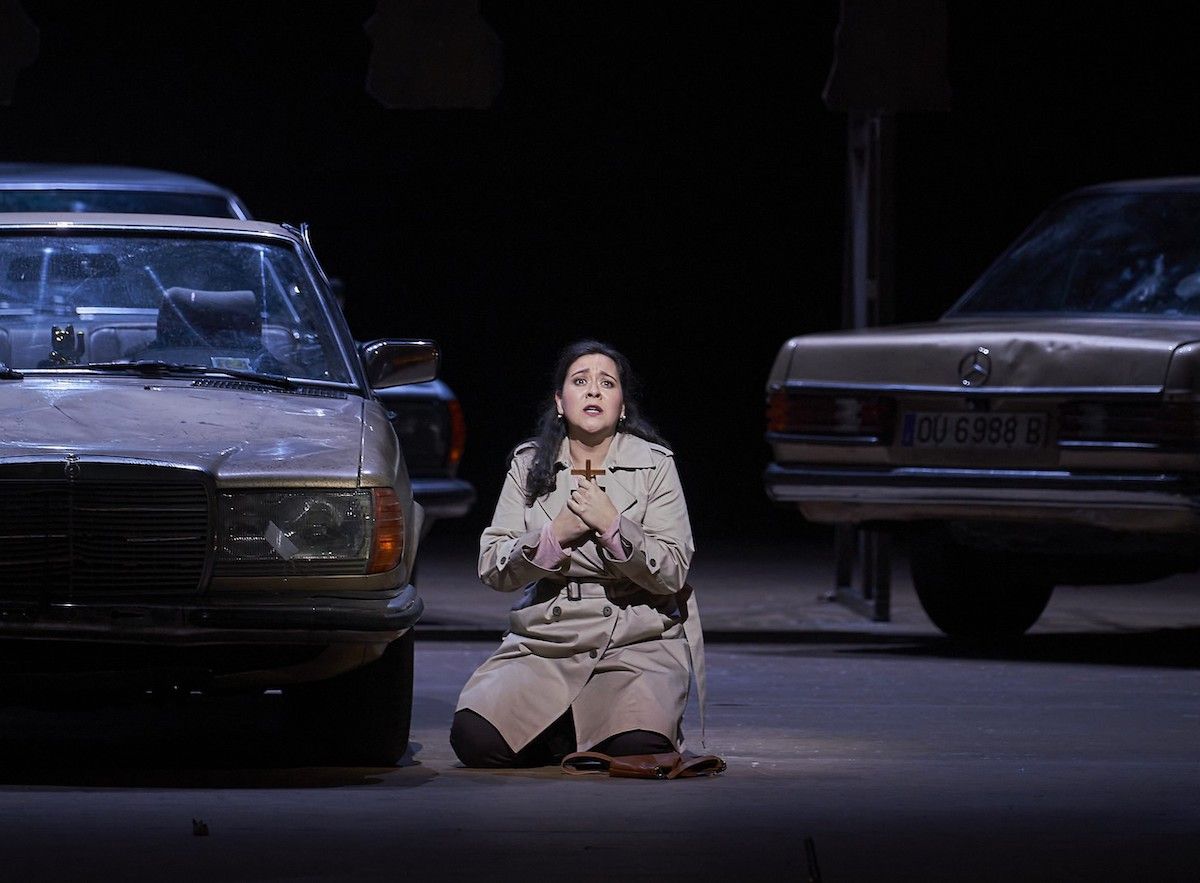
--- Of course, at a dramatic level, this contraposition works very well. It is comparable to what happens in other operas, with characters that mirror each other, as in Don Giovanni. Curiously, the protagonist makes us wait in Carmen. You intervene first, after the soldiers' chorus, in a certainly violent scene.
--- In comparison with Carmen, Micaëla's interventions are specific, but very important, starting with the first one. Whatever the staging, the libretto already highlights how rotten society is. The behavior of the military is intimidating, machismo is clearly shown as something established.
--- The abuse of power is evident in the soldiers' insistence, despite Micaëla's refusal. She initially appears helpless, but manages to make her position clear...
--- Yes, speaking with Lucía and Emilio ---Calixto Bieito's assistants in charge of the revival of Carmen at the Liceu--- we reflected a lot on Micaëla's role. How she, in her innocence, is lost in that world: the more uncomfortable, the more foreign she feels ---at least at that moment--- the more contrast and better the violence that permeates the atmosphere is made explicit, and in which Don José will also participate.
"Of course, it's all acting, but the impression it evokes is very strong. Because the violence against women, the social dynamic without ethics or morals that are represented… are not fiction."--- Thus, in the present staging, what characteristics of your character accentuate that contrast?
--- Well, beyond her first intervention, her interaction with Carmen in Act III shows the strength and determination of the woman who, with a very different style, is Micaëla. You have to think that she has come to Seville from Navarre... For someone leaving their village, it's a challenge, let alone in that era. She has to be strong, and in fact she asserts herself, she goes to look for Don José on two occasions!
--- Yes, in the second one ---the one you just mentioned--- to save him from perdition, which contrasts with the first encounter, when you sing that wonderful duet. Micaëla brings a letter for Don José from his mother, and a kiss, which she takes back. It's a musically soothing scene, pointing to a path that won't be taken... Something that this version narrates in a stark way.
--- Bieito's staging seems impactful to me, it makes you reflect. There is so much violence on stage that you feel uncomfortable. I, as an audience member ---watching those scenes in rehearsals--- wondered how my colleagues could do that... You have to completely step out of your shell, out of your daily life. Of course, it's all acting, but the impression it creates is very strong. Because the violence against women, the social dynamic without ethics or morals that are represented... are not fiction. I imagine ---I hope--- that people leave the opera thinking that's not right. My more idealistic point of view wants to believe that with actions like these we can change the world a little. That is my great hope.
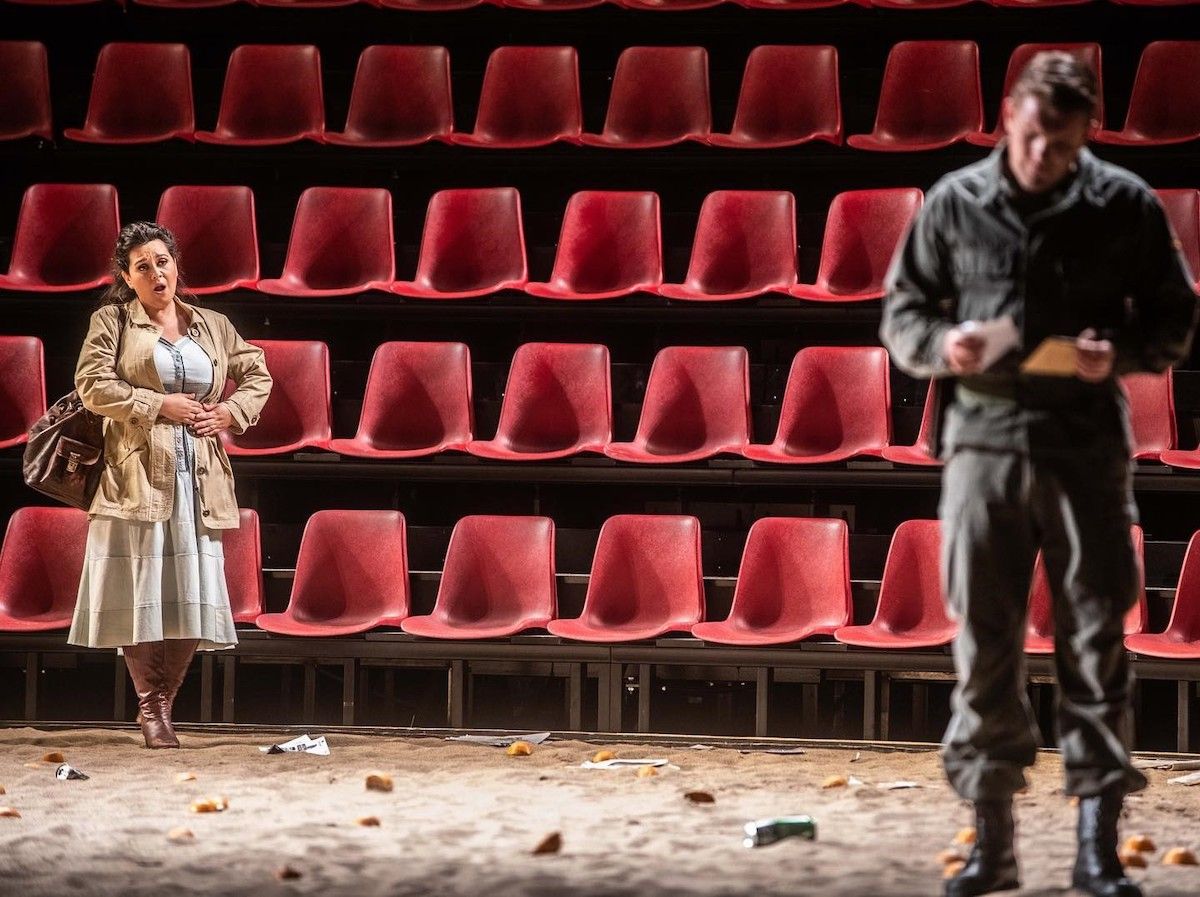
--- Although there are no guarantees, art's ability to shake things up is surely what allows us to think about the possibility of some kind of improvement, greater social justice. Music does not transmit ideas very efficiently, but it does induce moods, which is no small thing.
--- That's the root of it all! In the end, if the staging makes you uncomfortable, it puts you in a special emotional state. It opens you up to a new experience, in which music has a unique and to some extent inexplicable impact. Seeing opera is one thing, but the acoustic vibration of the live human voice, that's what really makes you feel. The sound can be beautiful, too, if you listen to it at home, but there is something distinct and unrepeatable in that vibration ---emitted directly, without amplification--- that makes you cry, feel pity, get emotional.
--- Identification with the drama of the character on stage ---or the happy situation, which also exist--- is all the more real through the musical medium, don't you think? Even beyond the words that are spoken…
--- Completely, I got into music when I felt that I couldn't make myself understood with ordinary words, words that didn't express exactly what I wanted to say. Instead, when I sang, a magical transformation occurred. I felt understood, which is what we all want in this world. To feel part of something.
Add The New Barcelona Post as your preferred Google source for free
Stay informed with the latest news.
