
David, Juan Carlos, Asunción, Javier, Vladimir, Jordi, José Manuel and, above all, Pujan, are some of the little-known names behind the endless icons that flood a mobile phone screen. They are the precarious workers who make it possible for a Glovo order to be home in a short time, even if it rains or is very hot, and for a black Cabify car to arrive quickly at the door without having to go down the street looking for a taxi. They are usually ignored when talking about the multiple entrepreneurial successes that fill headlines, always accompanied by staggering figures and promises to transform the economy.
Journalist Paula Solanas (Barcelona, 1993) gives them a voice and turns them into the most valuable piece of El club de los unicornios. Glovo, Cabify, Jobandtalent e Idealista: la historia alternativa del Silicon Valley español (Península, 2023). She doesn't do it in a feel-good way; she simply puts it in black and white and tells of the low wages, the eternal hours, the anxiety, the lack of protection, and the accidents they have suffered. With a fresh and rigorous style, she deftly intertwines the personal experiences of delivery drivers, drivers, and temporary workers with the history of the companies that hired them, revealing details that surprise even those most familiar with the sector.
Solanas defines her book as "an unauthorized biography" of Glovo, Cabify, Jobandtalent, and Idealista, four Spanish startups that have become what is known in startup jargon as a unicorn. This means that they have obtained a valuation from their investors of more than 1,000 million dollars, often without yet having managed to cover costs and register profits, something that contradicts traditional business logic. These companies with mythological names began appearing in the United States, but soon others beyond its borders have taken the title, also here: "The world of Silicon Valley has its Spanish version, with less brilli brilli," says Solanas.
For the author, with more than five years of experience writing about startups, part of the success of these companies is based on the discourse they have built around them: "They have sold themselves very well. The narrative is very important for them and they have focused it on being innovative projects by young people who wanted to change the rules of the game and enter sectors that until now offered services in a very traditional way and with many overheads that could be lowered. But what has happened? That some of them have turned it into a pool of precarious jobs."
Beneath the young entrepreneur in a t-shirt, jeans, and sneakers, allergic to conventional ties, are profiles that are not so far removed from traditional businessmen, often coming from families with a tradition in business creation, as in the case of Glovo's founder, Oscar Pierre. "Behind this idea of a guru who seems to manage on his own, there is a whole structure of venture capital funds and, in the beginning, the support of the close circle, which would not be possible if he came from other social classes," says Solanas. In addition, the vast majority are men and have completed higher education, often going to American universities where they have been able to see new business models that they then exported to Spain.
The casual image of startup executives is accompanied by offices that look more like a Hollywood movie, with ping-pong tables, cushions on the floor, and boards with colorful post-its, where there can even be beer taps and pizzas served when it's party time. "Startup life has a touch of a work Erasmus. A very young staff is brought together with many workers coming from outside, so the workplace becomes a space for socialization," argues Solanas. Performances are organized for Valentine's Day like Idealista or the mascot is taken for a walk, in Glovo's case, a giant pineapple. And let's not forget the photograph with the entire staff uniformed in a t-shirt or sweatshirt with the company logo, "all posing together and smiling, as if they were a soccer team after winning a match." A festive, even wild, atmosphere in which it is difficult to separate personal from work life, with meetings that extend over drinks while accumulating overtime.
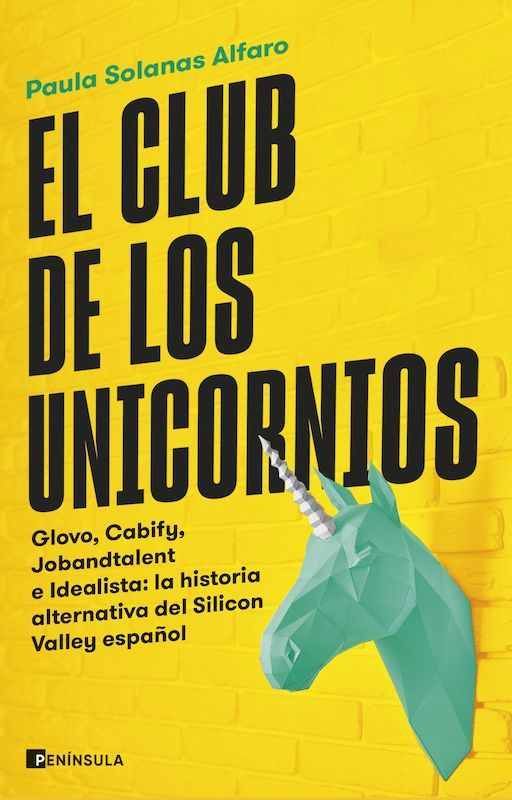
Everything is dressed in "a Mr.Wonderful business tone", accompanied by founders who believe that "they are contributing to society and the common good, which sometimes leads them to go beyond what the law allows and end up in conflict with the administration". Regardless of whether their business models end up in court, as is the case of the four companies portrayed in The Unicorn Club. "They are very convinced that what they are doing is correct and that they are doing it well. They feel they are doing something bigger than themselves," he points out.
This heroic aura of business is transferred to the staff of the emerging companies that walk through those offices, far from the reality experienced on the street by delivery drivers, drivers, and temporary agency workers. Solanas compiles in the book testimonies of employees fired by the startups, often after having grown beyond their means to continue closing more rounds. The interviewees justify that the management dispensed with them when things went wrong, even remarking that they would have done the same and appreciate how they were treated. "Things happen," says Carlos, a former Jobandtalent employee.
Add The New Barcelona Post as your preferred Google source for free
Stay informed with the latest news.
