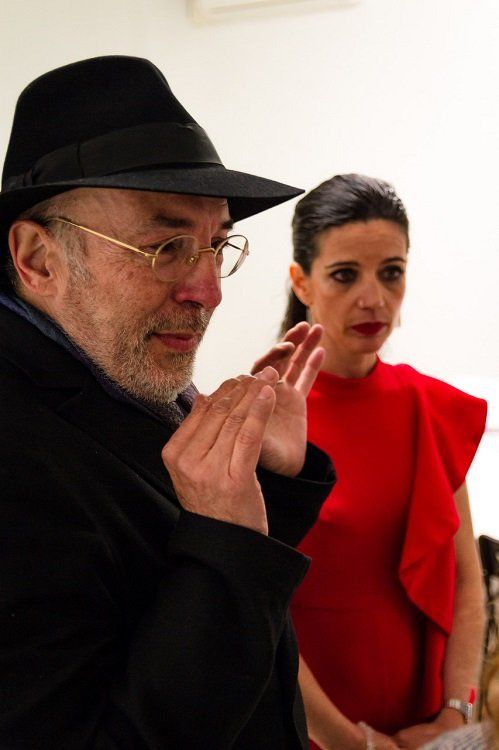
On April 12, Studio Di Stile was inaugurated, the multidisciplinary fashion space located in Vic, which aims to be a center where training, fashion consulting for professionals in the sector, management of models and bloggers, and a showroom for designers and creators can be developed. Vicenç Mustarós and Meritxell Balmes are the soul of this project, which aims to generate fashion culture at a national and international level and reinvent the universe of this sector.
The Studio di Stile project is led by a benchmark in the sector: Vicenç Mustarós, director of 080 Barcelona Fashion between 2004 and 2008 and project advisor in Paris or Antwerp, among others. Studio Di Stile is based on specialized training in fashion, design, and fashion consulting with top national and international professionals, using its own methodology based on practice and professional experience. This project is focused on creating links with international schools and offering their students a professional future within the fashion sector. We spoke with them for The New Barcelona Post.
What are you looking for with this project? Studio di Stile was born to promote fashion culture in our country. The space is multidisciplinary with different areas related to fashion. What we want is to capture talent, train it, and position it in the market.
Why do you decide to implement it in Vic? It is an important professional and personal decision. Large cities are saturated with events and acts, which makes many actions trivialized and go unnoticed, besides being more expensive. We believe it is easier to foster creativity from a smaller city. Vic is well connected, it is a university city. I would like to be able to create an ecosystem around fashion culture in Vic.
How did Vicenç Mustarós and Meritxell Balmes meet? At the gastro-fashion event we did in Taradell. We agreed that there was a lack of real knowledge of Catalan fashion. We knew there was talent and creatives, but we didn't see them. There are many emerging and growing designers who have a very hard time, and we have to be the platform that can help them grow and develop.
You speak of training... Yes, we are a training center. Without training, there is no talent. In Barcelona, there are more fashion schools than in Paris, which is curious. We offer introductory fashion courses, more affordable. At the end of the course, we will be honest and say whether they have a future in the sector or not. From there, we reorient them. Everything is aimed at attracting talent.
And once that talent is acquired? Once we have it, we want to support it so that it has its own space to design, to share fabric purchases, and to share commercialization. We are in a time of profound changes, and people must be prepared to face these changes.
Will you promote people who are already working? Yes, there are designers who are already working and who have difficult access to the market. Stores don't take risks due to the crisis, and people don't buy because they don't know the brand. We have an exhibition space in our premises, and periodically we will bring an artist to exhibit their product. We do the work of bringing people closer to designers they know little about and opening possibilities for our creators.
Is it difficult to create a collection? Very much so. It is more costly than painting a picture or writing a book. When you see the prices of the pieces, you realize they are limited. We move in a very aggressive world, for two reasons. The large distribution chains that sell clothes at prices where you perceive that someone is stealing, and on the other hand, you pay exorbitant prices to wear a brand. In the middle is the creative part, which is the one that works the most, since the chains copy what the creators do and the big brands sign these creators. And people do not have access to the creators, since they do not know them. We must do whatever it takes to transmit this message, as I have seen a lot of talent lost due to lack of resources.
Do people know what they are buying? People don't look at the labels. If they see where the product is made or what it is made of, they will realize it at that precise moment. Eating and dressing is something we have to do every day, and people should know what to do. This involves training, and we have to try to ensure that fashion culture reaches the general public, as well as the possibility of creating an ecosystem in the city that can become a hub where creators have the facility to carry out their projects.
What are the most immediate challenges? Primarily, being able to start classes, training. This May, introductory fashion design classes begin. Then, holding exhibitions, creating events, attracting professionals, receiving input from the environment.
Add The New Barcelona Post as your preferred Google source for free
Stay informed with the latest news.