
There are cities that take this European capital thing very seriously: Paris, London, Vienna or Berlin. All share an ancestral pattern when Christmas holidays arrive and that defines modern civilization: a monumental Christmas tree in the city center, as tall as national self-esteem and as bright as municipal budgets. It is a type of initiatory ritual: if you don't have a giant tree, you simply don't play in the big leagues.
And in the midst of this panorama, Barcelona arrives —yes, the same Barcelona that still sighs between "Mediterranean modesty" and the need to appear cosmopolitan— and decides to plant an almost giant Christmas tree. What audacity, right? Last week Mr. Bernat Dedéu wrote an article in this magazine that you have the pleasure of reading. Mr. Dedéu spoke of "vulgarity", of "provincialism", of the end of the "respectful, modest and domestic" Barcelona. That is: putting up a tree with lights is equivalent, apparently, to betraying the deep essence of the city.
The problem is that, by this rule of three, all serious European capitals ---absolutely all of them--- would be a monument to vulgarity. Imagine Trafalgar Square without its tree: London would lose half of its Christmas personality and, probably, a couple of million selfies. Paris without a big tree? Inconceivable. Berlin? Vienna? No way. No sensible urban manager would think of leaving the city without a central light tree that tells visitors: "We have style, we have budget and we want to appear in all the stories."
Therefore, Barcelona putting up a giant tree is not an extravagance: it is an unequivocal sign that the city has finally accepted its status as a European capital. And it is normal for it to do so: tourists do not come to contemplate our discretion, but for a good light show that can compete with that of any other city. Barcelonans don't deserve less either: after a year of works, debates and endless queues, at least we want a tree that shines. In fact, it is probably the only urban element that no one will ask to immediately remove from public space.
I understand that there are those who miss that Barcelona of dim light, nativity scene atmosphere, and rather kindergarten-like decoration. But the world has changed, and the city has too. If we want to be "a Mediterranean London" ---an expression that is so often repeated every time a survey on global competitiveness is presented--- we cannot fall short with a three-meter pine tree half-embedded in a square. Modern capitals have trees that cast shadows on entire buildings, and Barcelona, if it wants to remain on the symbolic map of European Christmas, is no exception: it is an aspirant.
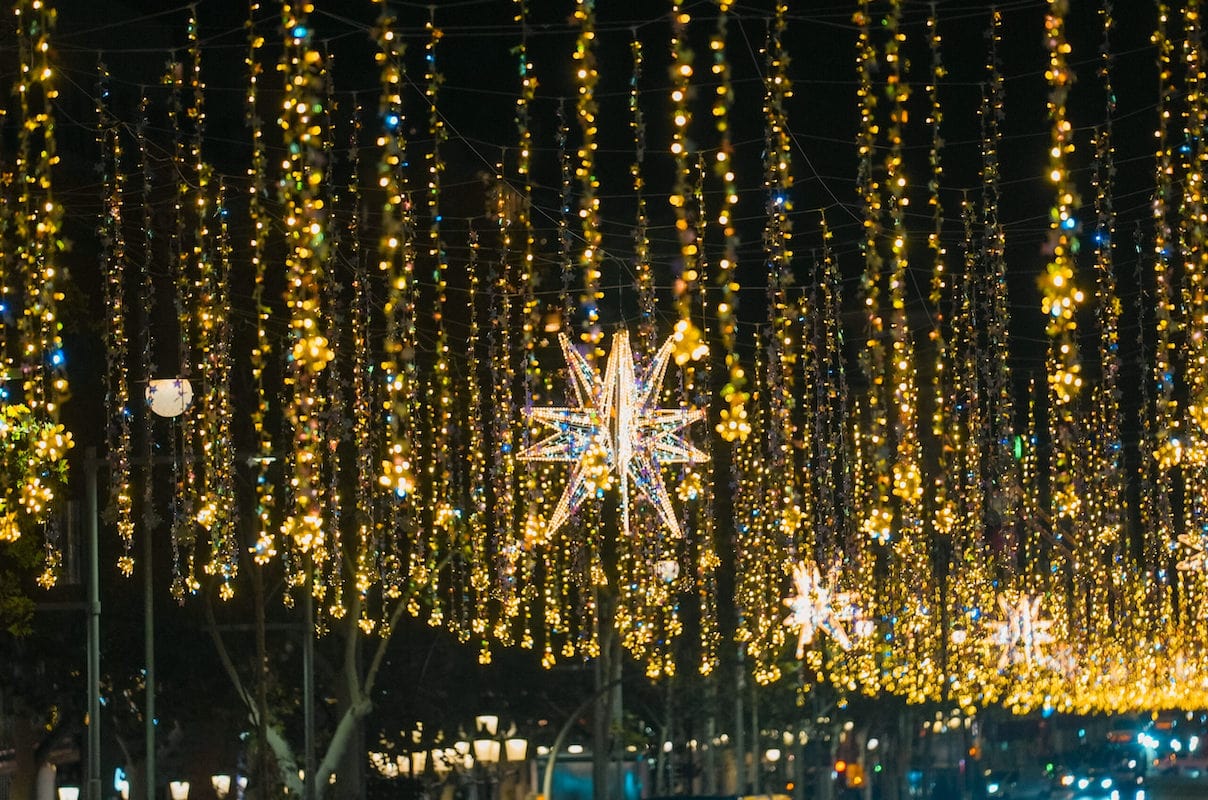
And here comes the curious part of it all: the same people who accuse the tree of "provincialism" are those who, paradoxically, demand an unrepeatable and exceptional Barcelona. But, in reality, wanting to be the only European capital without a giant tree is the exact definition of a province: thinking that exceptionality itself is a merit. The capitals of the old continent don't consider this; they simply put up the tree, turn on the lights, and let the city come alive.
So welcome be the global Barcelona, modern, European, and ---oh, sacrilege--- capable of having a Christmas tree as it should be. It doesn't make us more vulgar. It makes us more normal. And, for once, perhaps this is already a good gift.
Add The New Barcelona Post as your preferred Google source for free
Stay informed with the latest news.