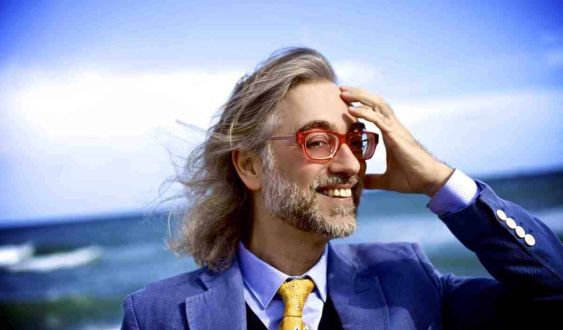
"In Cuba, García Lorca made peace with himself. He accepted his homosexuality. He was happy, and even more so after his trip to New York where he had such a bad time. There he wrote his play El público, which accurately predicted that it would take fifty years to premiere". Víctor Amela talks about his new book, Si yo me pierdo (Destino), about the three months the poet and playwright spent on the Caribbean island, leaning against the bar of the Bar while enjoying "an espresso Martini, like those they prepare at Mamainé del Born".
--- So, why did he return to Spain?
---Out of a sense of duty. Because he considered it his place, to the ultimate consequences.
In the background, Chan chan by Compay Segundo plays, "a song that came to the artist dictated in dreams, waking up with the melody and lyrics clear in his head, and he only had to transcribe it," explains the writer and, above all, vocational "and inevitable" journalist with luminous and easily contagious enthusiasm.
"At home, my father would come home from work every day and explain in meticulous detail to my mother how his workday had gone. From him, I inherited the inclination to tell things, to explain, which is added to other great loves: reading, the pleasure of listening, and a great curiosity that results in a tendency to ask questions. In that kitchen of that apartment in Congrés, every afternoon, when my father explained, step by step, his day and the rest of us listened to him, the journalist I was going to end up being was forged."
In the last quarter of a century, "and thanks to Javier de Godó, who is a liberal man and, above all, a journalist," he has gathered nearly 2,750 interviews for the shared section La contra of La Vanguardia, possibly the oldest section of the Spanish press, "to which must be added some four hundred or five hundred that he had done previously". And he is far from getting tired.
Paternal Providence
The parishioner unreservedly acknowledges that he is where he is thanks to his father. "Not only because of those afternoons of daily narration in my childhood, but because, at some key moments that have led me to be who I am, his intervention was providential."
The parishioner unreservedly acknowledges that he is where he is thanks to his fatherWhen I was in my fourth year of journalism, Víctor, who at the time was studying both journalism and law, had to go and apply for an internship. "It was important to be in Bellaterra at a certain time, to be able to apply for these internships in newspapers, but I fell asleep and by the time I realized what time it was, I gave up the opportunity for lost. What happened is that my father urged me to get dressed quickly and drove me there in his car. I arrived with a five-minute margin to register and, because of my grades, they gave me a choice between the main media outlets."
--- Is that how you asked to join La Vanguardia?
The journalist laughs. "The truth is no, I wanted to join El País which, back then, was a newspaper with few years, young, daring. The masthead where any twenty-something like me wanted to be. But there my father told me why I wanted to go to a newsroom that was in the Zona Franca, being able to go to La Vanguardia's, which was on Pelayo street and which I could walk to from my house." Another providential intervention, because the day everything changed in the parishioner's life was when he first entered the newspaper's newsroom. "There was Francisco González Ledesma ---he pronounces his name with infinite affection---, smoking like a chimney and working hard with his Olivetti. There was a commotion. Everyone was going up and down. I knew that was where I would want to be forever."
A few weeks later, on May 6, 1984, his first article signed with his name appeared. "A report on the closures of movie theaters and the rise of video clubs." It was headed by the initials V.A. There was no turning back. "I have come to this world to interview," he states, paralyzing the gesture of his hands in the air, emphasizing the passion of someone who lives from what he loves.
The paradox of a great city
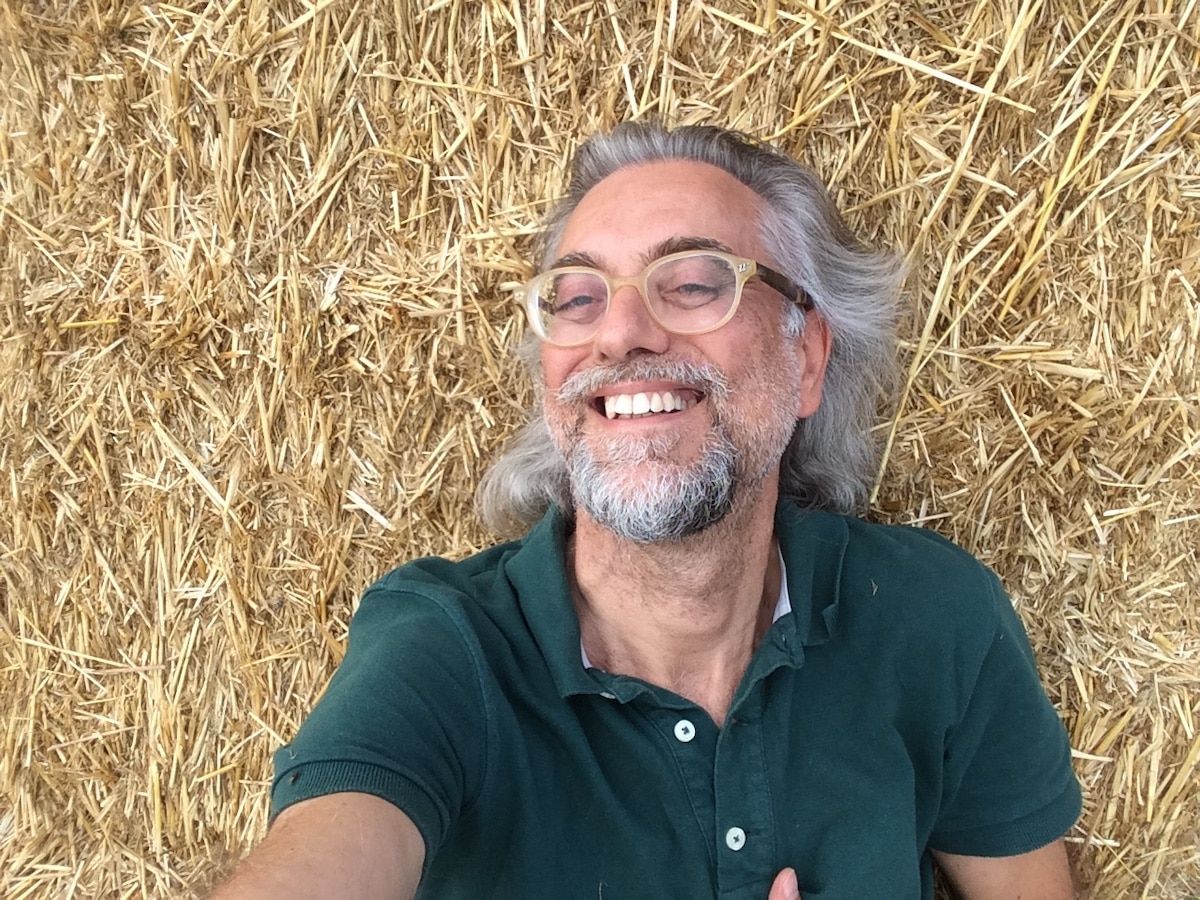
"Barcelona is my home, its streets are like the hallways of a home in each of whose corners I have an associated memory, an episode, an emotion. This is the city where my grandfather, Víctor Amela Ejarque, settled one day and where he built his house with his own hands, the place where my father would be born. I feel like a son of Barcelona and with it I have an almost proprietary relationship, that it is something that belongs to me." And, while he decants García Lorca's words about that Rambla "the only street on Earth that I would wish would never end," in the background, the rhythm of the version of Lágrimas negras by Bebo Valdés and El Cigala frames this declaration of love.
"Barcelona is my home, its streets are like the hallways of a home in each of whose corners I have an associated memory, an episode, an emotion"--- However, the city does not seem to be going through its best moment.
The journalist cocks his smile. "We Barcelonans tend to criticize others and not ourselves. The city changes, evolves, and we have to learn to adapt our perspective. And ask ourselves what we can do to make this place better and better. It is unfair and very unbalanced to say that everything used to be better in Barcelona, which we have turned into a magnet for outsiders. And that is the paradox: the city improves and attracts people from outside, and that makes everything more expensive and inaccessible for Barcelonans themselves. With high housing prices, for example. But what can we do? Prohibit things from happening? Take the city back to the 60s or 70s? A powerful city is nothing more than the sum of people eager to do many things. And we must have done it well, for this to be the city where so many people want to come and live!"
"We Barcelonans tend to criticize others and not ourselves. The city changes, evolves, and we have to learn to adapt our perspective"--- Where we do things well is in this Bar, with a superlative culinary offer if, after your cocktail, you feel like having dinner. We have everything: menu, à la carte, tapas, sandwiches, combo plates or portions.
Without losing his smile, Víctor Amela strokes his chin while scrutinizing the culinary offer.
--- I think I'll have a menu, although I don't turn my nose up at combo plates. I like to enjoy food. And I do it with pleasure, both in good company and alone.
---Heard, kitchen! Tonight you dine in good company.
The patron affirms, while delighting in his Martini espresso.
Add The New Barcelona Post as your preferred Google source for free
Stay informed with the latest news.
