
"I have been able to cheat death on several occasions. Two due to illness and another by escaping an attack. The years I spent as a member of the Civil Guard's Information Service made me delve into the toughest aspects of crime and terrorism. Attacks like those in Zaragoza and Hipercor leave a very deep mark. And thirty years living as a detective the hardships of the citizens who hired me to solve their anxieties have filled my life. I need to tell all that." After enjoying a combo plate of fried eggs with a hamburger and fries, the writer and literary activist Vicente Corachán orders an espresso at the bar while letting himself be surprised by the news and sounds that, from the radio, fill the space of the Bar.
Hardened in the special Organized Crime and Counter-terrorism groups of the Civil Guard, Vicente opened his private detective agency in the early 90s, training in various areas of specialization such as criminalistics or calligraphic expertise and document examination. Writing reports, shaping facts and stories through words and observation, gradually pushed him towards an unexpected shore: that of writing stories based on everything he had experienced. Thus, in 2011 he debuted with his novel Un cadáver para un detective (A Corpse for a Detective), with which he received the award from the College of Private Detectives of Catalonia. That first step turned into an unstoppable impulse.
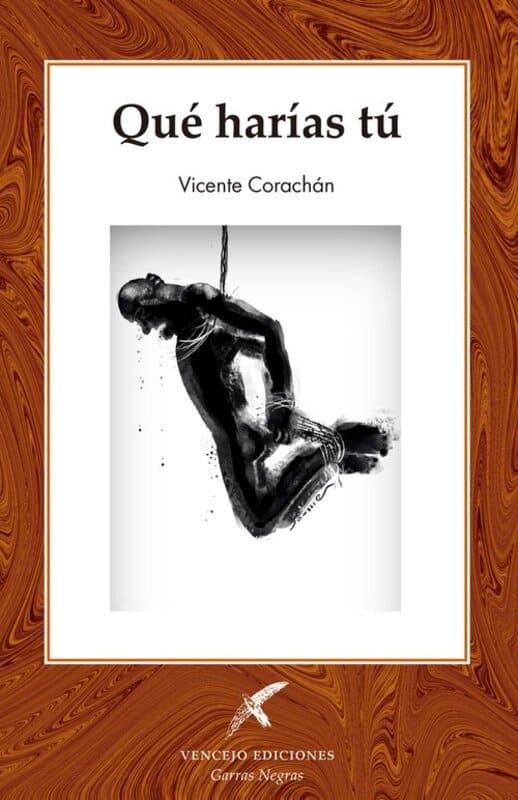
After various solo and collective works that have been added over time, Vicente Corachán presents these days his latest book, Qué harías tú (What would you do) (Vencejo): a story of unbreakable friendships, loyalty, underworlds and secrets that are dragged to the grave, set in Sant Boi, the town where the author ---born in 1959--- resides.
Apart from the presentation of the new novel, he assures that he is working on a new work with the idea "of closing a trilogy focused on a story in which I try, among other things, to focus on the deficiencies that we have in our country in terms of support from the police and judicial sector towards the most vulnerable people."
High-intensity literary activism in Baix Lobregat
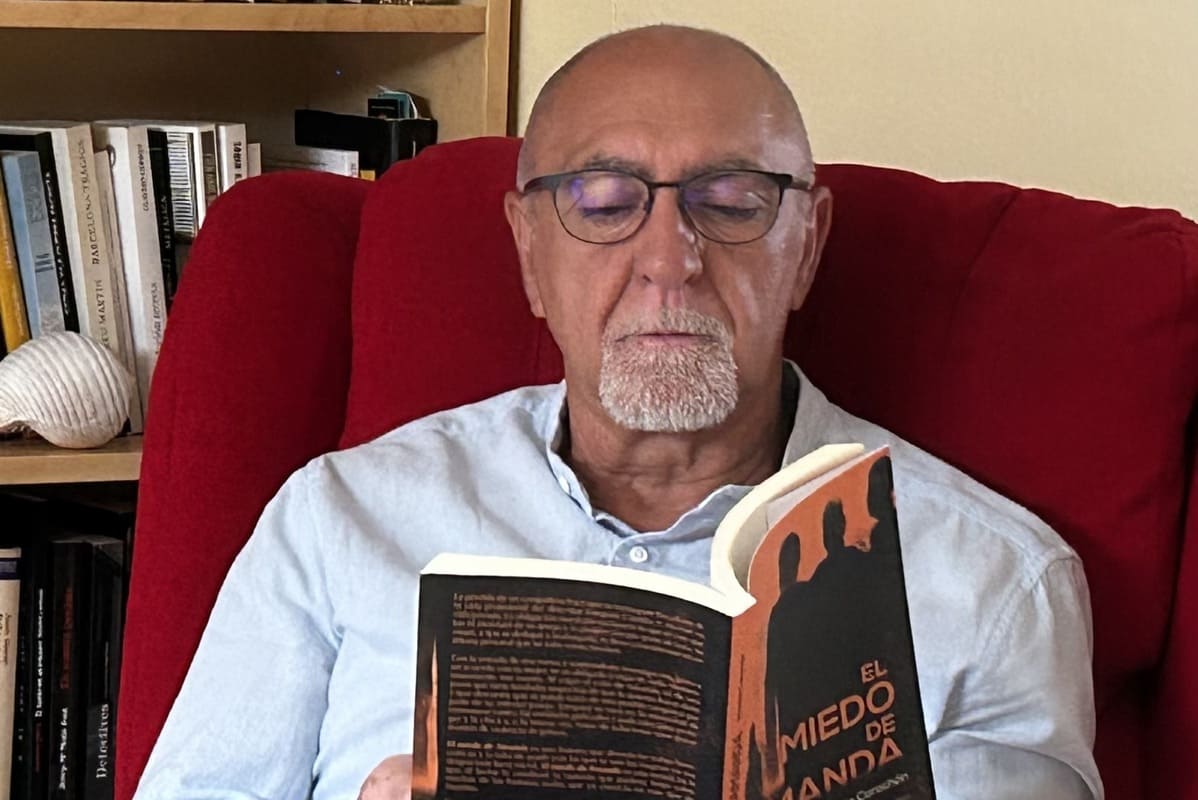
Proud "of what I have come to learn in many ways, of what I have been able to help with in the resolution of some very distressing situations, and that my professionalism has served to resolve many matters," Vicente cannot help but smile under his goatee at his current situation: "now I dedicate myself to writing with greater intensity. Until now, the work as a detective consumed my time, but I have learned to delegate and I am the one who manages my calendar at my whim. The time has come to be able to fictionalize all those things I have experienced during more than forty years of my professional life!" he states.
Experiences that he not only transmits through stories, novels ---or even a book, Am I calling a detective? based on his first-person anecdotes---, but also through initiatives that invigorate the literary environment of that Baix Llobregat which has been his vital stage. This is the case of the literary associations Autor@s de Cornellà and Lletraferits de Sant Boi or the collaboration with contests such as Esparraguera Negra, Collbató Negre or Sang Boi, before launching to create his own festivals dedicated to crime and police novels: Cornellà Negre in 2018 and, since 2022 and after the Covid hiatus, Sant Boi Negre which next year will celebrate its third edition.
Advisor for the series Detectiu on Canal 33, he still has time to organize fun murder scavenger hunts in community centers, libraries, and bookstores, where the public must figure out who the killer is. He also participates in several radio and television talk shows on ETV-Llobregat, Radio Televisión Gavá or Radio Sant Boi, sharing his extensive experience and knowledge in criminal, detective, and literary matters.
The city of selfishness
Due to his life and professional journey, Vicente Corachán's vision of Barcelona is uniquely linked to a criterion of service and help: "it is my life, where I have spent thousands of hours trying to serve the citizen."
And one aspect that has stuck with him, like a stone in his shoe, is "the fact that people here live as if they were the only ones in the world. We are not capable of helping each other when we see a problem affecting other people. Perhaps being a cosmopolitan city leads to that. And the fear that institutions also do nothing to prevent it! On the contrary!" he exclaims, downing his coffee in one gulp.
Precisely, through his work, the writer seeks to focus on this aspect: "the lack of respect for others, the selfishness that has settled in our society, social deficiencies... In my books, I try to denounce all that." And, after these words, he becomes absorbed in a reflective silence, like someone who has many things to say because he has lived them, has suffered them. Sometimes, he has contributed to solving them, to resolving them. From expert reports to the fight against terrorism. So much to tell about that less kind side of what we are and that he knows so well.
--"You've become immersed in a sudden silence!"
Vicente Corachán again brandishes a frank smile under his white goatee and, ready to continue the after-dinner conversation at the bar, asks for the appropriate poison for it:
--"Give me a gin and tonic, I feel like one."
--"Heard! This is getting better by the minute!"
Add The New Barcelona Post as your preferred Google source for free
Stay informed with the latest news.
