
I don't know where I first heard about Salsitas. Perhaps it was in Què Fem because, at that time, I'm talking about the early years of this century, La Vanguardia's leisure and culture supplement was a goldmine for discovering what we called the coolest Barcelona. Although it could also have been in one of those ephemeral trend magazines that we found in Dom ---a retro-aesthetic decoration store on Avinyó street that, by the way, was a landmark--- and that those of us who aspired to be modern read with devotion. The fact is that one night I showed up at Salsitas and immediately fell at its feet.
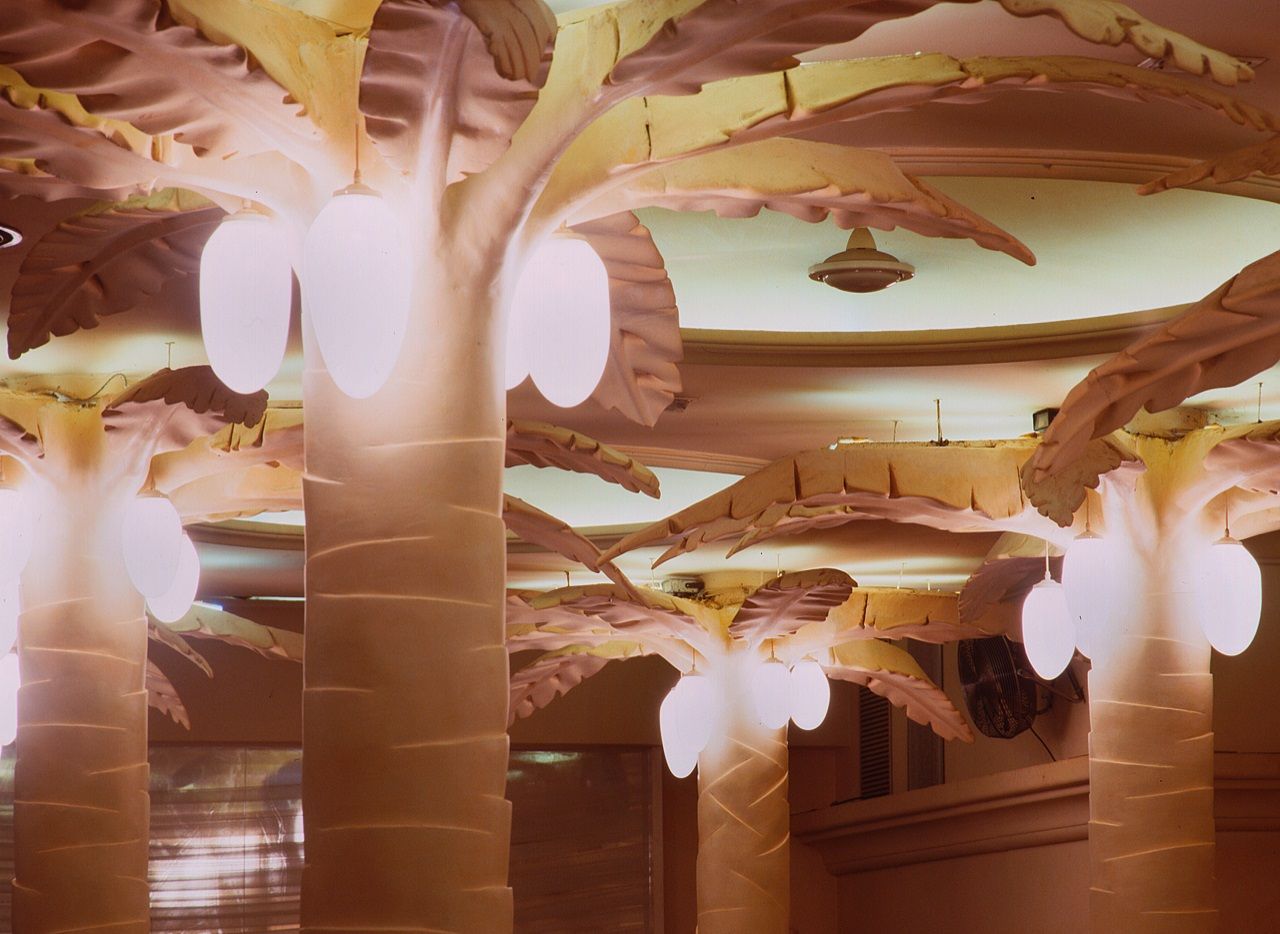
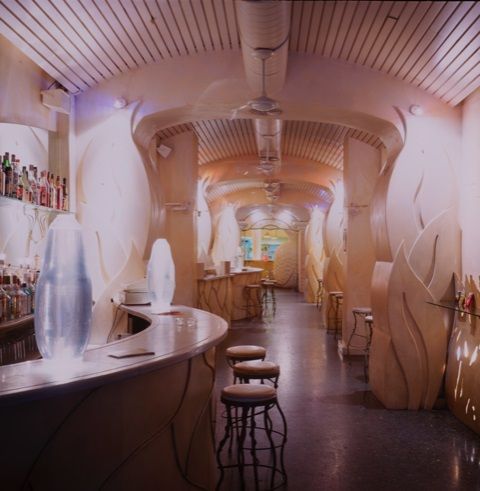
Located at number 22 on Nou de la Rambla street, Salsitas was a place like no other in that Barcelona of 2000. With a theatrical and cozy decoration that contrasted with the prevailing minimalism. Walls, bars, ceilings, and furniture had adopted sinuous forms of plant inspiration. The most iconic element of the place was some elegant palm-tree-shaped columns that, at the same time, served as lampposts since, among the foliage, as if they were coconuts, were the lights. A decoration that recalled the tropicalism of the mythical New York Copacabana of the first half of the 20th century and, if you will, the fruit-filled hats of the great Carme Miranda. As can be seen in the photographs accompanying this article ---practically unpublished and provided by Futur2---, the entire place was white. Not only because it was more elegant and open but because it allowed projecting diverse shapes and colors that made the room different every night or, in fact, that it changed as the hours passed. Because, in that, in that mutating and not just of skin as the night progressed, Salsitas was a pioneering place.
It opened its doors as a restaurant and, as midnight approached, the electronic music intensified and the lighting became dimmer. At first, they thought of offering mainly pizzas ---hence one of the iconic elements of the place was an oven with a large tropical pineapple on top--- but, with a keen eye, they finally opted for a more sophisticated offer that fused Mediterranean and Japanese cuisine. Yes, Salsitas was one of the first Barcelona restaurants to bet on fusion cuisine, which would also end up becoming a trend. Night owls would have their first drink squeezed into the entrance hallway while the staff cleared tables and chairs to turn the dining room into a dance floor, to the surprise of more than one diner. Barcelona had seen Sónar born a few years earlier and electronic music was gradually reaching new audiences away from small clubs for initiates, thanks to venues like La Paloma, Fuse, and, of course, Salsitas.
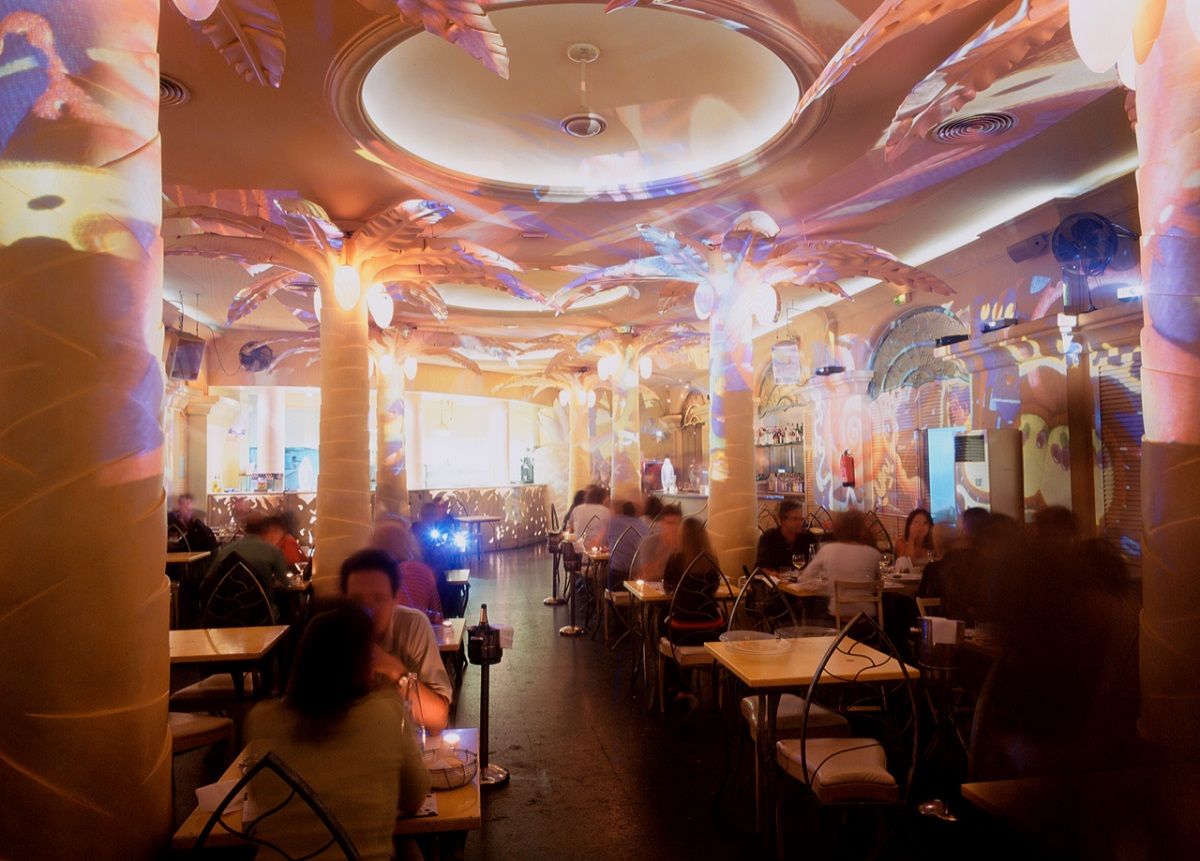
When I started researching for this article, I was surprised to find so few traces of Salsitas on the Internet. I think there's a very simple explanation: two decades ago, we didn't go everywhere with our mobile phones in our pockets, and since there were no social media, when we went out at night, we didn't feel the urgent need to take photos to show our followers how much fun we were having. I suppose back then we just focused on having a good time. Fortunately, one of the few images of Salsitas circulating online led me to the website of Futur2, an internationally recognized design and interior design studio in Barcelona focused on creating trends in restaurant, retail, contract, and ephemeral design. I read that its creative director, Pepe López del Hoyo, was a pioneer of the restaurant-lounge-club concept in Spain in the late 20th century precisely with the design of the mythical Salsitas. Therefore, Pepe is the father of the creation and the one who tells me the story of the place.
That Salsitas opened its doors on Nou de la Rambla street is due to purely financial reasons. Pepe and his partners did not have the capital to rent a place in the areas where the beautiful people they wanted to attract to their club usually moved. Therefore, they decided on a space located on this street in the lower part of Raval. It is true that by the late 90s Raval was already becoming fashionable among moderns and that city managers were working to make El Chino stop being El Chino but, no matter how close the Palau Güell was, Nou de la Rambla was still very Chino. They were clear that they wanted to create a fun place and, for this reason, after traveling around the world to see what was trending in London, Berlin or Los Angeles, they opted to do something that no one else was doing in this city at that time. The experience accumulated by Pepe after more than a decade creating scenographies for cinema, theater and television proved decisive when it came to imagining a space full of organic, sculptural and theatrical forms where lighting played a key role.
The beginnings were not easy. Pepe tells me that it took Salsitas almost a year to take off, but, finally, it did, and in what a way. When dinners were still being served inside, outside there were already hundreds of people ---many with extravagant outfits that rivaled the theatricality of the venue itself--- waiting to enter and dance. Sometimes, the queues reached the Rambla. They were epic nights.
There are nightlife venues that have the capacity to embody the spirit of an era and, after chaining a few nights of those you would never want to end, they close their doors and disappear. Tempus fugit. I think of nightclubs and discos like the legendary Studio 54 that, with only three years of frantic activity (1977-1980), was enough to revolutionize the nights of late seventies New York and has gone down in history as the last great temple of hedonism.
There are nightlife venues that have the capacity to embody the spirit of an era and, after chaining a few nights of those you would never want to end, they close their doors and disappearTen years earlier, in Barcelona, Bocaccio had opened its doors, possibly our most mythical discotheque of all time. Driven by Oriol Regàs with Xavier Miserachs and Teresa Gimpera, this venue located in a basement at Muntaner 505 was an oasis of freedom in late-Francoist Barcelona. TheGauche Divinehe made it his headquarters and, therefore, what they callthe place to befor intellectuals, beautiful people, and aspirants to both categories. Although Bocaccio officially closed its doors in 1985, decades later its nights, far from being forgotten, have become legendary. Largely because some of its regulars, turned intopatumsof culture, have continued to feed their myth, I suppose to remind us and remind themselves that one day they were young, sophisticated, and had a blast. The journalist and film critic Toni Vall published a very interesting essay on Bocaccio a couple of years ago, and the Palau Robert dedicated a small exhibition to it, curated by himself.
Salsitas also had a short life. In fact, it can be said that it died of success after a few years, mainly because the venue was not prepared to host such a crowd and had to close. Perhaps no books or exhibitions will ever be dedicated to it, but it doesn't deserve to fall into oblivion either. Many Barcelonans who are already over forty will always remember those nights when we danced under the palm trees of Salsitas.
Add The New Barcelona Post as your preferred Google source for free
Stay informed with the latest news.