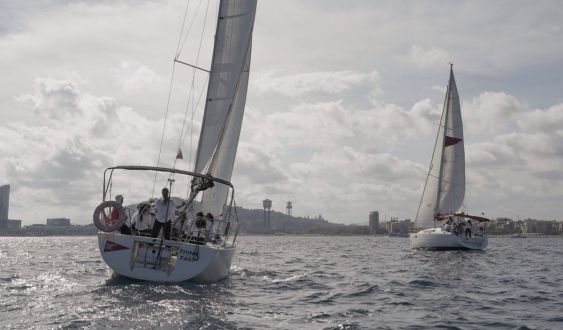
Generally, training and learning are concepts associated with a specific physical space: classrooms with desks, pens, and projectors. However, in recent times this conception is changing: pens have become computers and blackboards have become projectors. But Lagertha Project goes a step further and subverts these strict rules by transforming the teacher into a ship's captain and the four walls of the classroom into a sailboat navigating the Barcelona coastline.
The pioneering project, promoted by A Bordo Lab, aims to boost and accelerate blue economy projects led by women. Thus, this program not only wants to break with the classic classroom teaching methodology but also proposes to subvert the scarcity of female role models and women entrepreneurs. In the last decade, the number of startups founded by women has remained unchanged: reaching a meager 20% at both Catalan and national levels, and even European.
The ten candidates selected to be part of this pioneering project come to combat these figures and demonstrate the potential of their blue economy projects ---that is, which, directly or indirectly, are related to the sea and its ecosystem---. They do so in a highly masculinized sector, with the helms and course largely set by men. And in an economic sector that, moreover, is in full growth, especially in Barcelona, after UNESCO chose the Catalan capital to install the first, and only, center to promote the blue economy.
They do so, moreover, taking as an example and inspiration Viking women like Lagertha who, in a warrior society like theirs, did not seek to fight against men or snatch their role, but to demonstrate that they could compete at the same level, and even surpass them. Thus, the participants of the program promise to be these new Lagerthas: coming from different parts of Spain, from the Canary Islands to the Terres de l'Ebre, they share the same love for the sea, as well as the same grit and leadership, which has led them to want to undertake their own professional project.
These ten participants —selected from almost a hundred applications received— meet promptly every weekend, throughout an entire month, at the Barcelona International Sailing Center (BSIC). During this month, each weekend involves practical learning on how to approach, continue, or refocus their projects, through a pioneering method that combines classroom training on cutting-edge technologies they can apply in their projects, such as artificial intelligence or augmented reality, with mentoring and practical lessons aboard the sailboat.
Sailing, spread over three hours each Saturday of the month the project lasts, provides an informal and relaxed moment to put into practice and realize firsthand the importance of leadership or teamwork, both inside and outside the sailboat. In addition, they also take with them valuable lessons about the skipper's craft or how to perform certain maneuvers aboard a sailboat, internalizing the complex and technical language used in this sector. But this knowledge is not purely theoretical, but also practical, as, in turns, the Lagerthas exchange different roles within the sailboat: from the helm to the sheets, so that they can be aware of the importance of respecting hierarchies within the boat and of the entire crew being perfectly coordinated for maneuvers.
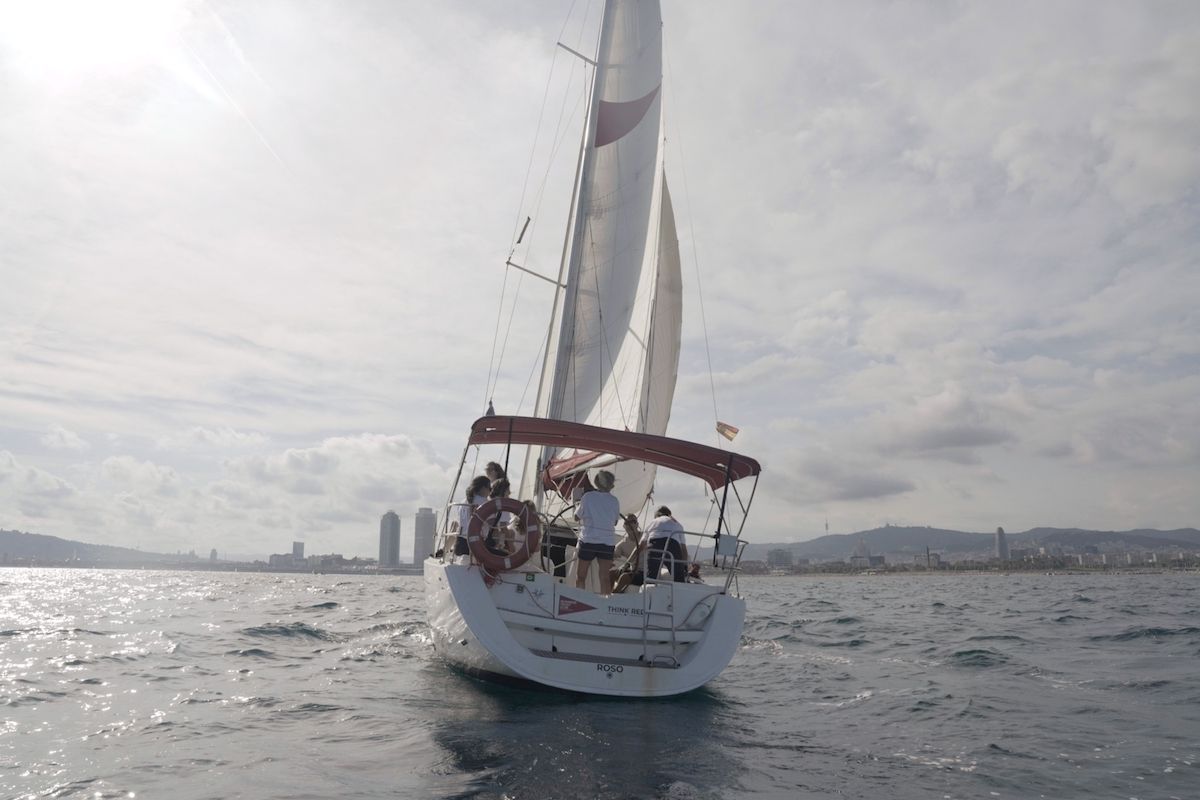
For some, this experience represents one of the first times they go sailing, while for others, sailing the sea even becomes part of their routine or lifestyle, but for all of them, it is a valuable lesson on leadership and teamwork, extrapolable to their different projects. Projects that, like their previous sailing experience, are also at different stages: from incipient ideas to some in the growth phase.
Projects, moreover, totally varied: from mobile applications that integrate a calculator of our carbon footprint to reduce the environmental impact of travel or a search engine that allows us to know if a sun cream is harmful to our body or the sea, to a brand that reuses sail fabrics or an interactive documentary on environmental impact. The program, which is also complemented by individual mentoring by Cristina Sáenz de Pipaón, detects the needs of each participant and helps them where they need it most: from personal coaching to the development of a business plan.
Sailing towards utopia
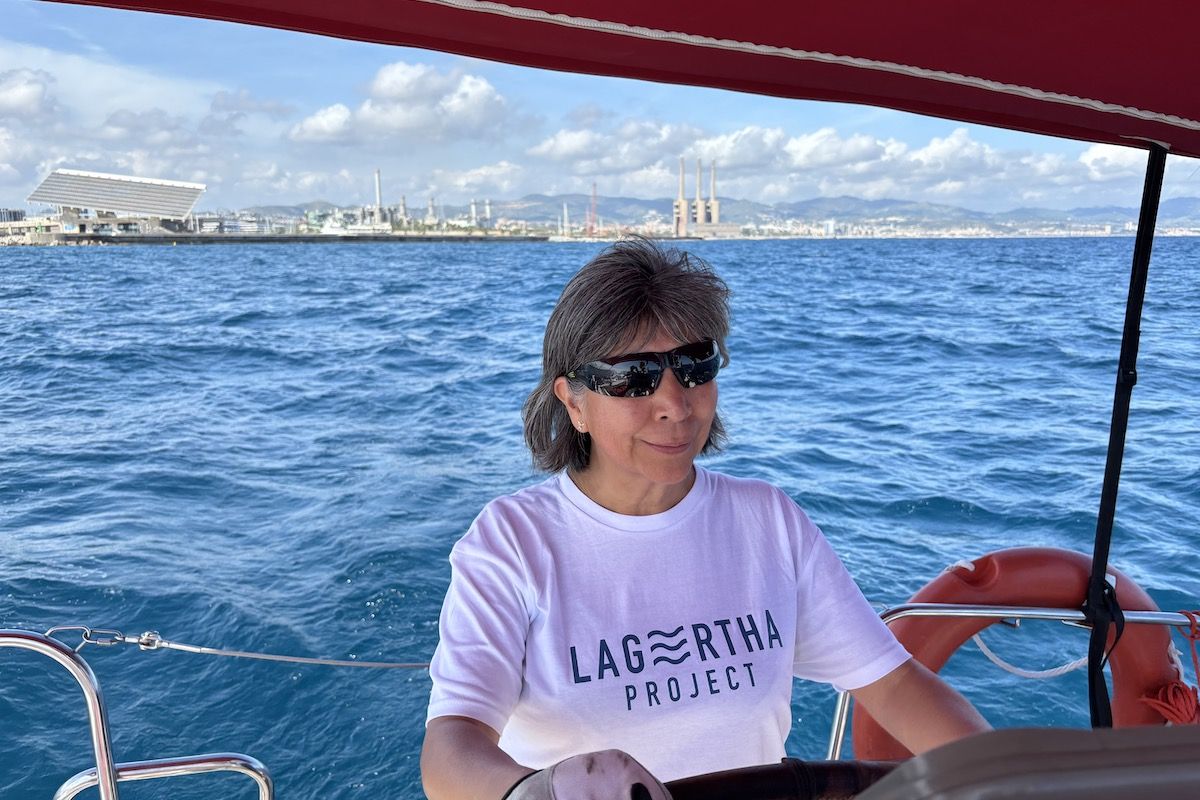
The boat provides an informal and idyllic space for the ten women participating in Lagertha Project to discuss how what they learned in class has helped them or the doubts they have about how to apply that knowledge to their entrepreneurship process. It is in that informal moment when the magic happens: the participants give each other feedback and help with their different ideas, advising each other on how to continue or refocus the strategy. A synergy between the participants that extends beyond the sailboat and even to the training days, since, although most of the program is concentrated during the weekend, the participants are in continuous contact through Whatsapp, where they share ideas on how to improve or refocus their respective projects and even links or resources that have helped them.Navigation itself is also a learning experience, as entrepreneurship is almost like sailing. That is, no matter how much we set a specific destination, sometimes we have to change course and even turn back. "Sailing at sea is a continuous learning process; one never stops training and honing their intuition," comments the skipper of the sailboat with which half of the Lagerthas undertake the mentorship. Entrepreneurship, likewise, is not a linear path: "sometimes you have to adjust the sails and tack, change course but always keeping our destination very much in mind," summarizes Pat González, promoter and CEO of A Bordo Lab, the blue economy project accelerator behind this female entrepreneurship project.
"When we decide to undertake, we must design our journey from utopia, without conditionals, because otherwise we end up approaching it from viability and, as there will surely be conditionals such as lack of time or funding that hold us back, then we will never end up carrying it out," González encourages the program participants while on board the sailboat. And she adds: "this utopia we design must be our lighthouse, and then we must ask ourselves: What do we need to make this dream a reality? Who can offer me what I need?, and that's how we start sailing towards our destination," she adds.
In fact, A Bordo Lab is the result of believing that the utopia one dreams of can become a reality. It was during the pandemic that González, who has years of experience advising innovation projects, felt the call of the sea. Without having sailed previously and having no contacts or acquaintances in the sector, she decided to train and give free rein to that maritime passion that filled her so much. And, incidentally, turn it into her professional motivation: designing different programs aimed at accelerating blue economy projects.
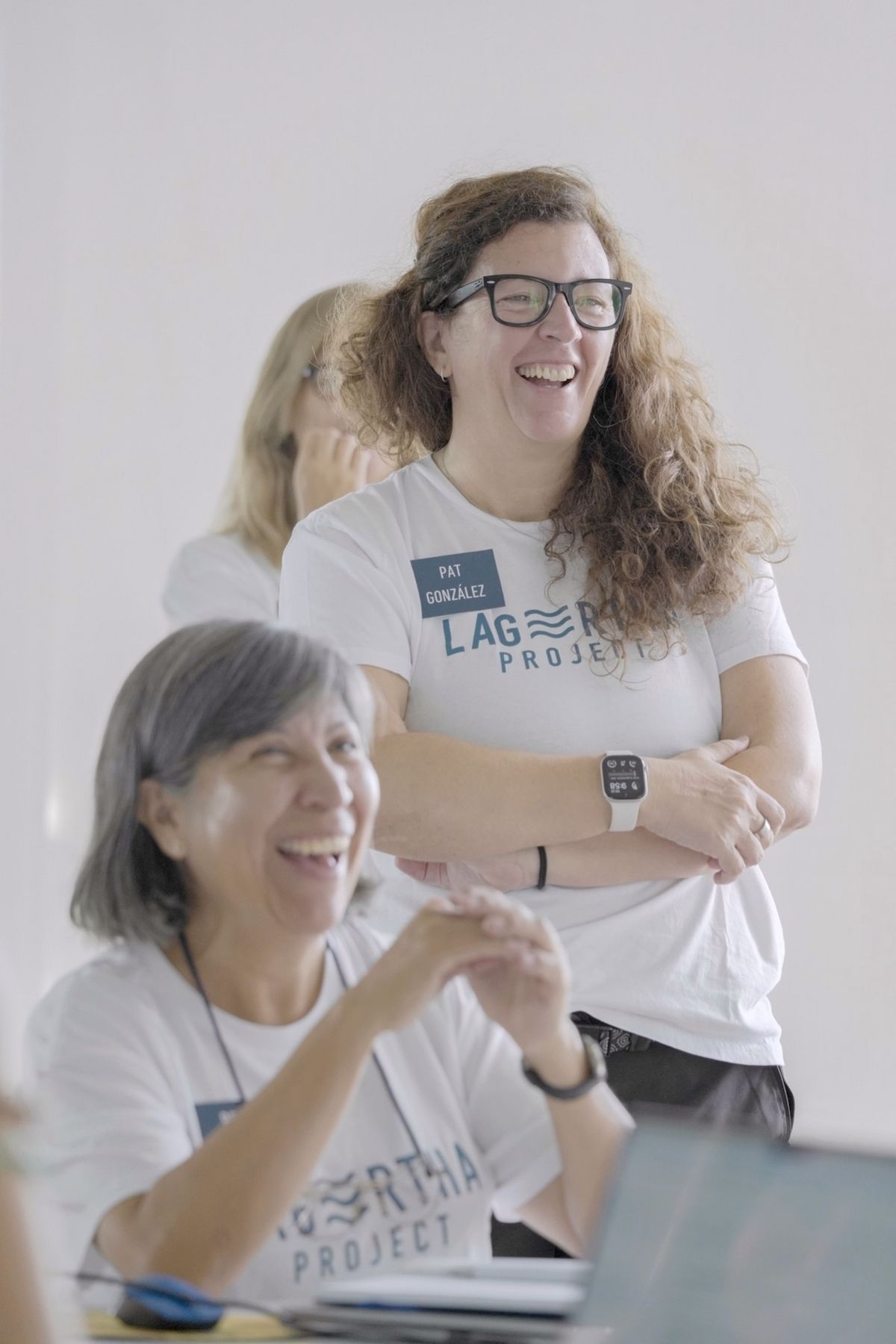
After months and even years prototyping these programs, it was in January 2024 when she decided to create A Bordo Lab, an accelerator that, as González defines it, conceives the sea both as a purpose, promoting blue economy projects, and as a tool, meaning it serves as an excuse or reason to transmit knowledge about leadership and teamwork. For this reason, A Bordo Lab organizes everything from teambuildings aboard the sailboat to specific mentoring programs, focused on different groups that, for various reasons, have more difficulties organizing themselves and undertaking projects: from primary and secondary school girls (with the Spark Girls program), to people of pre-retirement or retirement age (Late Bloomers) or people with disabilities (We did it), and a long etcetera.
"The goal is to empower these groups, just as we do in Lagertha Project with women entrepreneurs, individually, to then generate a collective impact," adds González. But González's utopia does not end here: these projects are also guided by a lighthouse that illuminates their path. That is, in a certain way, they serve as a rehearsal and test for a larger objective: a classic wooden boat that sails permanently through the Mediterranean, docking from port to port, and that can act as a laboratory and an accelerator for blue economy projects but that, instead of being docked on land, sails permanently.
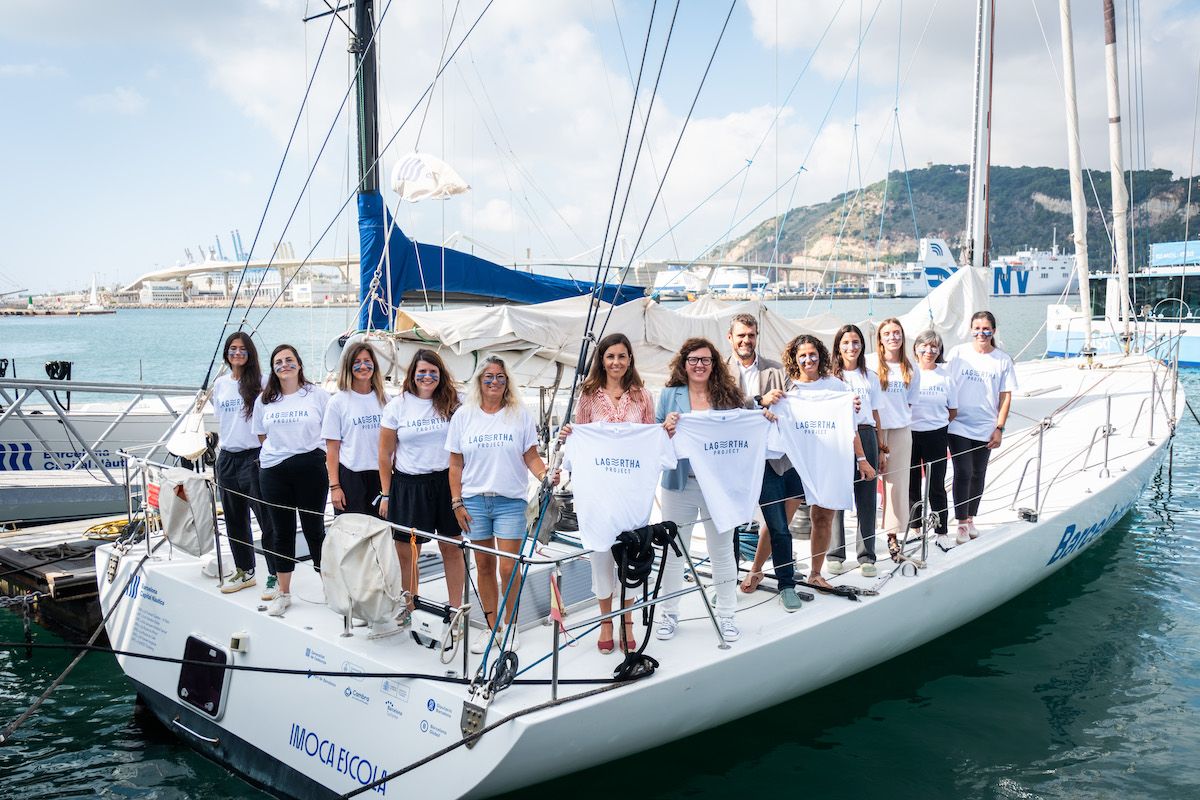
For now, the different programs serve as a first project laboratory. Thus, Lagertha Project, in addition to being promoted by A Bordo Lab, also collaborates with the Fundación Barcelona Capital Nàutica, Telecos.cat, and the Fundación Ship2B. The program, valued at 8,800 euros for each participant, is fully subsidized thanks to co-financing from the Generalitat de Catalunya within the framework of the Recovery, Transformation and Resilience Plan, financed by the European Union through the Next Generation EU funds.
Sailing and entrepreneurship, two non-linear paths
The hours of navigation, thus, in addition to managing to connect with colleagues, also serve to share the doubts that may arise on the way to the different utopias of each participant. The sea, likewise, is also responsible for offering first-person lessons that go beyond sailing a sailboat: such as, for example, how to manage a crisis, whether aboard a sailboat or an organization.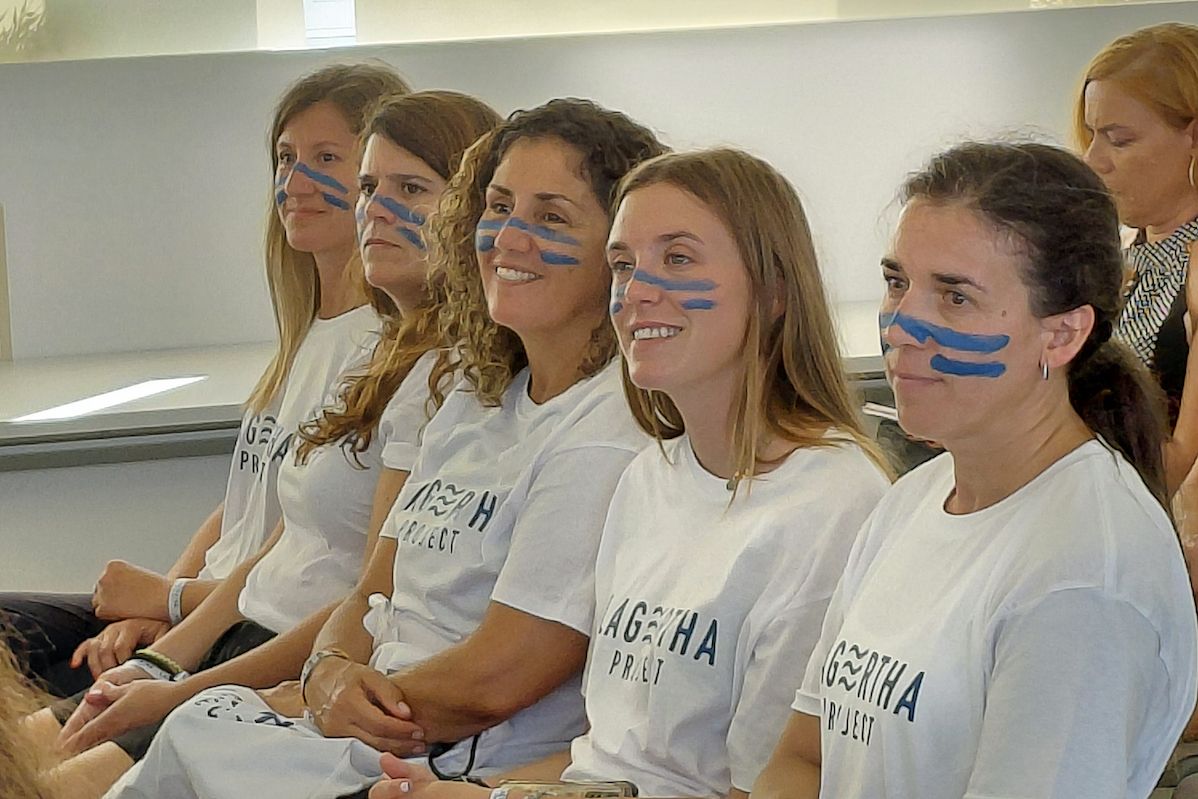
Because even when navigation seems simple, with totally favorable weather conditions, and the course is already fully set, even if the destination port is being reached, events can take a turn. A learning that the Lagerthas lived and experienced firsthand during one of those onboard mentorships: since, at the most unexpected moment, the engine can overheat and stop working. It is at that moment when lessons on leadership and teamwork make more sense than ever, with a totally coordinated crew and following the orders of a captain who remains calm and confident to reach port.
These onboard learnings on the sailboat are complemented by training on disruptive technologies also in the classroom: with specific classes on artificial intelligence, blockchain, Internet of Things (IoT) or virtual and augmented reality, led by experts such as Montse Guàrdia or Eli Bonet. These trainings, seemingly somewhat more conventional than those that take place on the boat, also do not conform to the traditional master class format, but rather their objective is for the participants to incorporate these technologies practically into their projects.
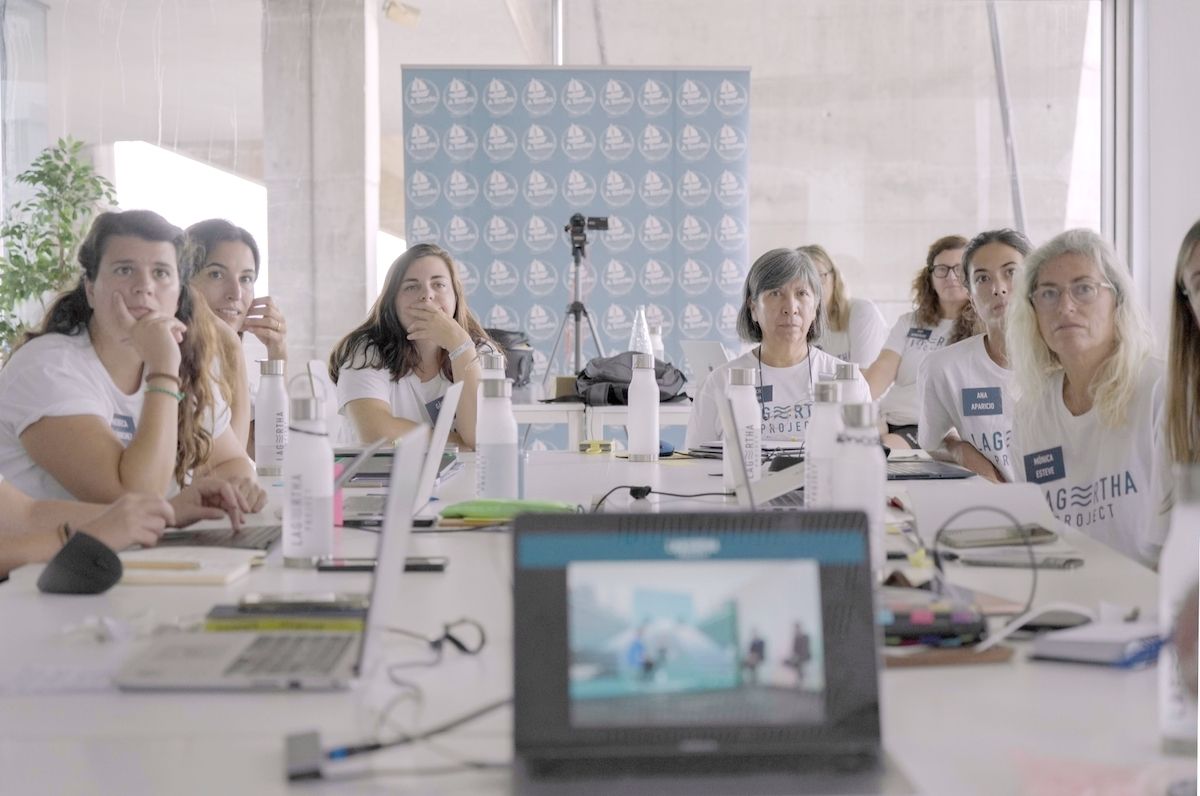
Thus, for example, after learning how an augmented reality project is conceived and worked on by Patricia M. Val, creative producer at Futura Space —an immersive technologies studio that has developed projects for Vueling or El Celler de Can Roca—, and even experiencing it firsthand thanks to glasses that incorporate this technology, it is time to think about how they can apply these technologies to their own projects or to those of the other participants.
"With all the knowledge, this week I have approached work differently," comments one of the program participants at the end of an intense weekend. And it is that, although most of them currently combine their personal entrepreneurship project with other jobs, through these mentorships, both on board and on land, they are beginning to build the path towards this utopia that is becoming increasingly possible. Encouraged by a tireless Pat González who reminds them that their present is already part of the past, "since it is a product of decisions made in the past." And that, therefore, to change their future and get closer to that utopia, they must first "take the helm and set course for that longed-for destination."
Add The New Barcelona Post as your preferred Google source for free
Stay informed with the latest news.