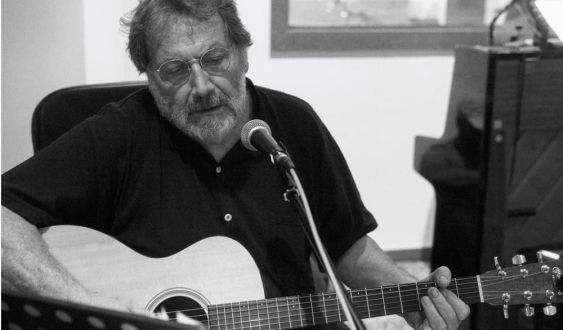
Still in an armchair, inside the RoomTo Studios studio, in Poblenou, is Tim Staffell. He is sitting in comfortable clothes with a smile on his lips. When he sees me, he opens his arms, examines me with his clean and tender gaze, squints his eyes and dedicates some welcoming words to me. He doesn't know it, but I've been listening to his albums for three days straight. The admiration I felt has turned into tenderness: I have an endearing person in front of me. The way his agent, his son and the other musicians in the room have spoken to me about him confirms my suspicions: everyone loves Tim.
He began his career in various musical groups in 1960s London, until in 1968 he decided to form Smile with Brian May and Roger Taylor (these names might sound familiar). He was bassist and vocalist until he left the group in 1970. His replacement was his friend and classmate Freddy Mercury, and from there the legendary group Queen would be born. Staffell was looking for new sounds at that time and first joined the band Humpy Bong and then Morgan, an experimental progressive rock group. He left music in 1973 and resumed it in the 2000s. Since then he has not stopped playing and has just passed through Barcelona to record his third solo album.
—What have you been working on in recent weeks?
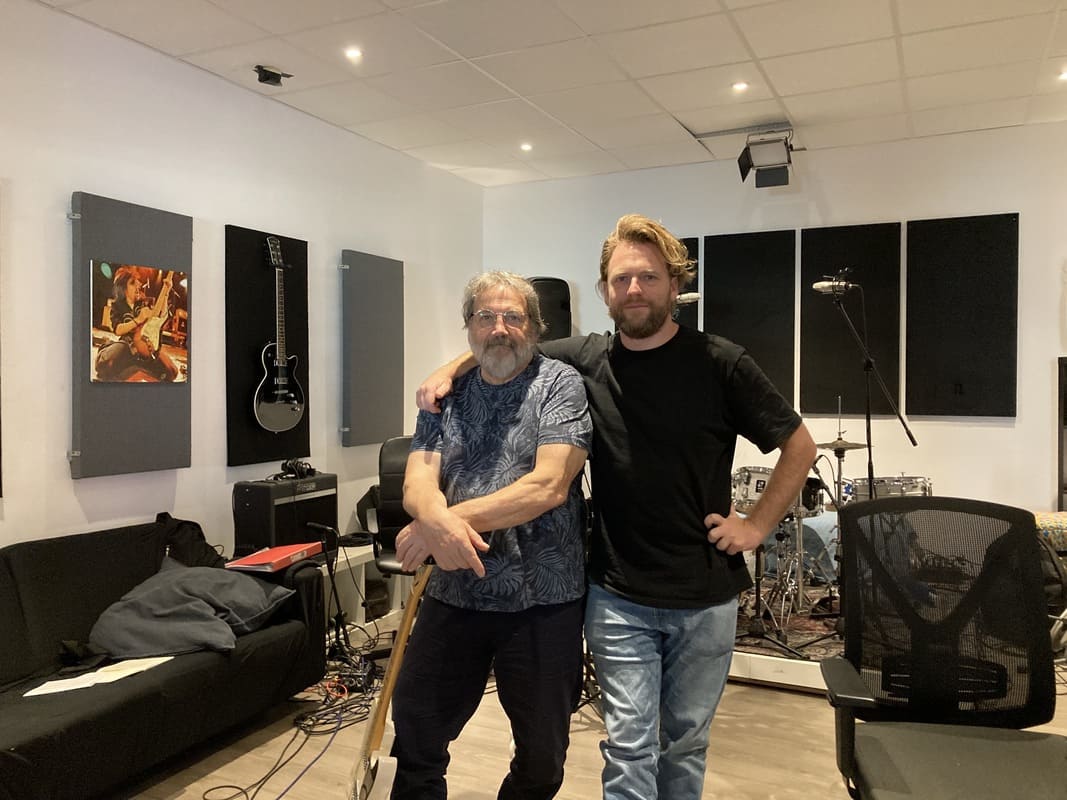
—During the pandemic I composed many songs, the opportunity arose to come to Barcelona to record them as part of my third solo album and I accepted. My son Andrew, who lives here, told me about the studio, the producer, the city… It has been a wonderful experience. In my other works, my son had been my drummer, but here we have connected in a special way. We have created a community of different and fantastic people. At least for me it has been one of the most fun experiences of my life.
—You started in London, then with the band Morgan you recorded in Rome and now you do it in Barcelona. What is the relationship between your music and the cities you are in?
—In my previous works I had record labels behind me, now I am financing my own album. If I have to choose, I'll stick with Barcelona, here I feel at home… I know this city very well and coming here made perfect sense, I think the results show it, I'm very happy with everything that's happening to me. And of course, there's also the weather (laughs), here you can leave the studio, walk around and relax, without having to take out your raincoat.
—What have you found here that London doesn't have?
—Here I have perceived a broader sense of community, I have felt more connected to people, safer. In Barcelona everything is open, there is a feeling of comfort, of warmth. We don't have this in London. And, besides, I have three children who live here!
"In Barcelona I have felt more connected to people, (...) here there is more comfort, more warmth"—I suppose you must be very tired of people always telling you that you are "the one who left Queen" or "the one who could have been Freddy Mercury."
—It's been 50 years since all that, I really don't care anymore, it's fine. One must be courteous to one's past. I was a small part of it, I'm grateful for it and I feel very honored. Before, I used to be worried because I didn't know if I remembered enough things, my memory isn't good and I'm quite old actually. But since they made the movie, Bohemian Rhapsody, in which I participated; and talking with Brian May, remembering those days, I felt part of the family again and relived everything again. Of course, I didn't know that Queen was going to be as big as it was, nobody imagined it. If I had known, I would have kept photos and recordings, I could have made some money!
—In 1973 you decided to leave music. I have always admired that kind of decision: the writer who stops writing, the artist who stops painting, the musician who abandons music.
—Actually, I stopped releasing records, but I never left music. I had to earn a living, so I moved to television, commercials, movies... I continued to have a great time. When I retired, I was able to record again, in the early 2000s. I decided to do it solo. For the Queen movie, Bohemian Rhapsody, I played a song and appeared as a character, which gave me enough money to be able to release albums now peacefully.
"I stopped releasing records, but I never left music"—So after so many years, Queen lends a hand in his new works.
—Exactly! Don't tell me there isn't a bit of poetic justice there.
—I suppose it must have been wonderful to live the music scene of the 60s, especially in London. Don't you feel nostalgic?
—I'm not nostalgic at all. The 60s were a great time, no doubt, I was at university, everything in London was alive, America was also starting to explode: great festivals, good bands, Bob Dylan, Joni Mitchell… And in England, well, The Beatles, The Rolling Stones, Led Zeppelin… Everything was wonderful, but you have to move on. That's one of the reasons I left Queen, I wanted to play in a more improvised way: jazz, blues… I didn't like hard rock, I wanted more naturalness and I've continued that way.
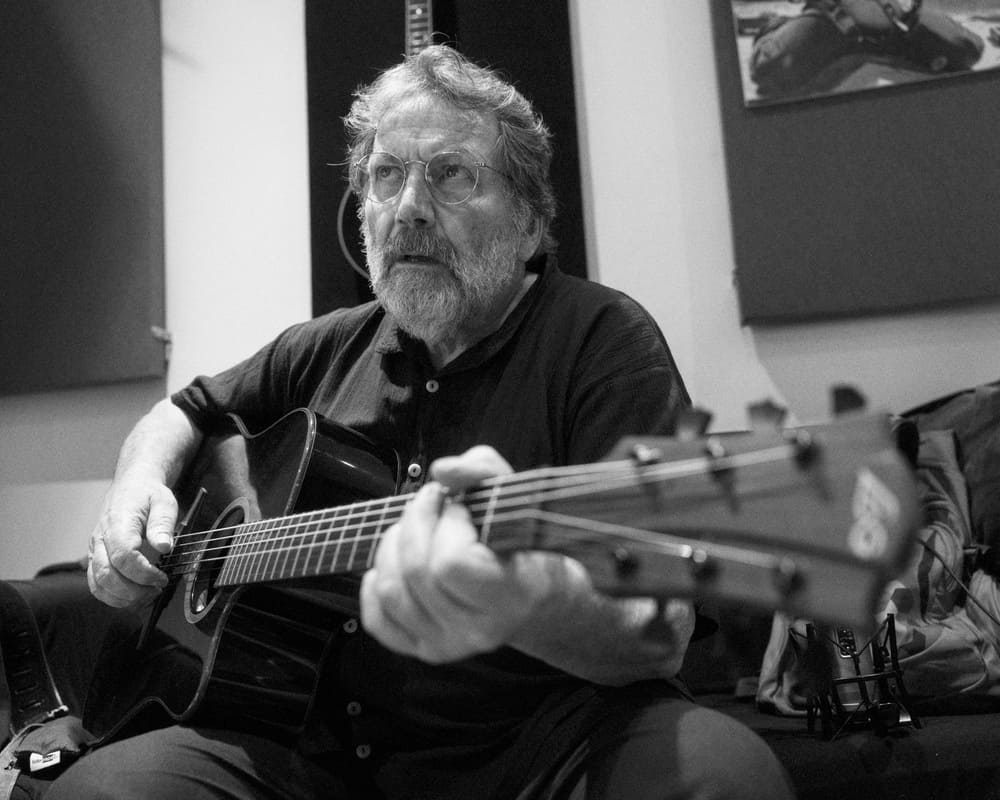
—Do you still listen to music from that era?
—Never! I don't have any 60s records or any Spotify playlist… I prefer to look forward than back and now I'm very eclectic, I like many, many things. And that has also been thanks to the Internet, I think that in this era we have access to almost everything and we can discover an infinity of music that we like. I might find an artist tonight that I don't know and perhaps that discovery will change my life. That's something typical of modern times, you're always looking for something new.
—How does a musician change over time? What differences do you notice between the young Tim Staffell and the current one?
—I think I can't express that difference in words, it's very deep inside me… I can show it to you with music. When the interview is over, we'll play some tracks from this latest album. Writing songs is my way of understanding life, even if I'm not going to sell them, I can't stop. I like doing it, that's all. And it's good for my brain. Composing, playing guitar, singing… I need to keep my mind busy, I'm 73 years old and I'm quite old actually, I think if I feel good it's thanks to music. Perhaps when I was young I saw music as a form of social acceptance, but now I see it as something I must embrace. I must digest it, mechanize it and tell stories with it.
"Writing songs is my way of understanding life, even if I'm not going to sell them, I can't stop doing it"—And where do you find the inspiration to write and compose so much?
—Inspiration appears to me: the song of a bird, something I've heard, something I may have imagined... I might hear a verse in a song at some point, it stays in my head, wanders around, changes, and there you have me, humming something I don't know where it came from. And then I have no choice but to write it. But I don't really write about concrete things, but about truths that I consider universal. Of course, they are personal problems, but they are human and general. I worry about what happens to me: getting older, the passage of time... Luckily and unfortunately, these are not personal issues, these things happen to everyone!
—It's nice to think that the musician goes through the world knowing that at any moment the germ of a song can appear to him.
—Sometimes I wake up in the early morning, as if in a dream. I wake up singing and I think, Where did this come from? Then I have to grab a notebook, write a few lines, and start playing it on the guitar... The neighbor won't be happy, but I can't do it any other way.
—To finish: What advice would you give to a young musician reading this interview?
—Perhaps sometimes you feel discouraged or sad, but remember that you will have something original and powerful inside to express. Don't doubt yourself and express yourself without questioning your worth.
Add The New Barcelona Post as your preferred Google source for free
Stay informed with the latest news.