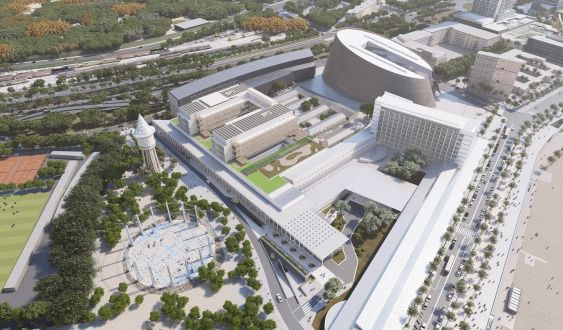
The covid-19 crisis has highlighted the need for a hospital network with resources and resilience, capable of adapting to new pandemics or crises. Hospital del Mar, the center with the fewest beds per inhabitant in Barcelona, will appeal to this lesson learned in the last year to opt for the Next Generation funds. The resources it hopes to obtain from Europe will serve to continue its expansion, delayed for years by cuts and which has only executed a first phase, completed in May 2017 with the construction of a first building of almost 20,000 square meters.
The works that now have to be done at Hospital del Mar, with a total budget of 147 million euros, are part of the second phase of the expansion, which will add a new building of 22,500 square meters, reaching a total area of 61,000 square meters and solving part of the current space problems. Specifically, 75 beds will be added, distributed over six hospitalization floors, a new Intensive Care Unit (ICU) with 18 beds, four operating rooms, and a helipad.
Likewise, emergency services will be unified, and a 1,000 square meter ophthalmological institute will be created. Currently, this service is located at Hospital de la Esperanza, above Travessera de Dalt, very far from the patients destined for Hospital del Mar, who are those from Ciutat Vella and Sant Martí.
The coronavirus has also influenced the design of this second phase. Thus, flexibility criteria have been incorporated to be able to adapt spaces easily and quickly and separate them by circuits. "The hospitalization floors will be designed with separate clean and dirty circuits, entrance and exit elevators, with areas where professionals can change, allowing waste to be managed and different areas to be isolated without construction work," explains the center's Director of General Services and Infrastructure, Elisabet Izquierdo.
Another legacy of the pandemic that will be included in the expansion of Hospital del Mar will be the strengthening of its digital transition, responding to one of the pillars that must be met to receive funding from European funds. Video consultations will be reinforced, increasing the quota of visits made telematically, and 5G will be incorporated. Beyond improving connections, this technology will allow live surgeries to be performed and remotely controlled by internationally renowned experts, as demonstrated at the Mobile World Congress two years ago, and will facilitate telemedicine with high-quality images in real time. The Pharmacy Service will also be robotized, and televisions in the rooms will be replaced by tablets.
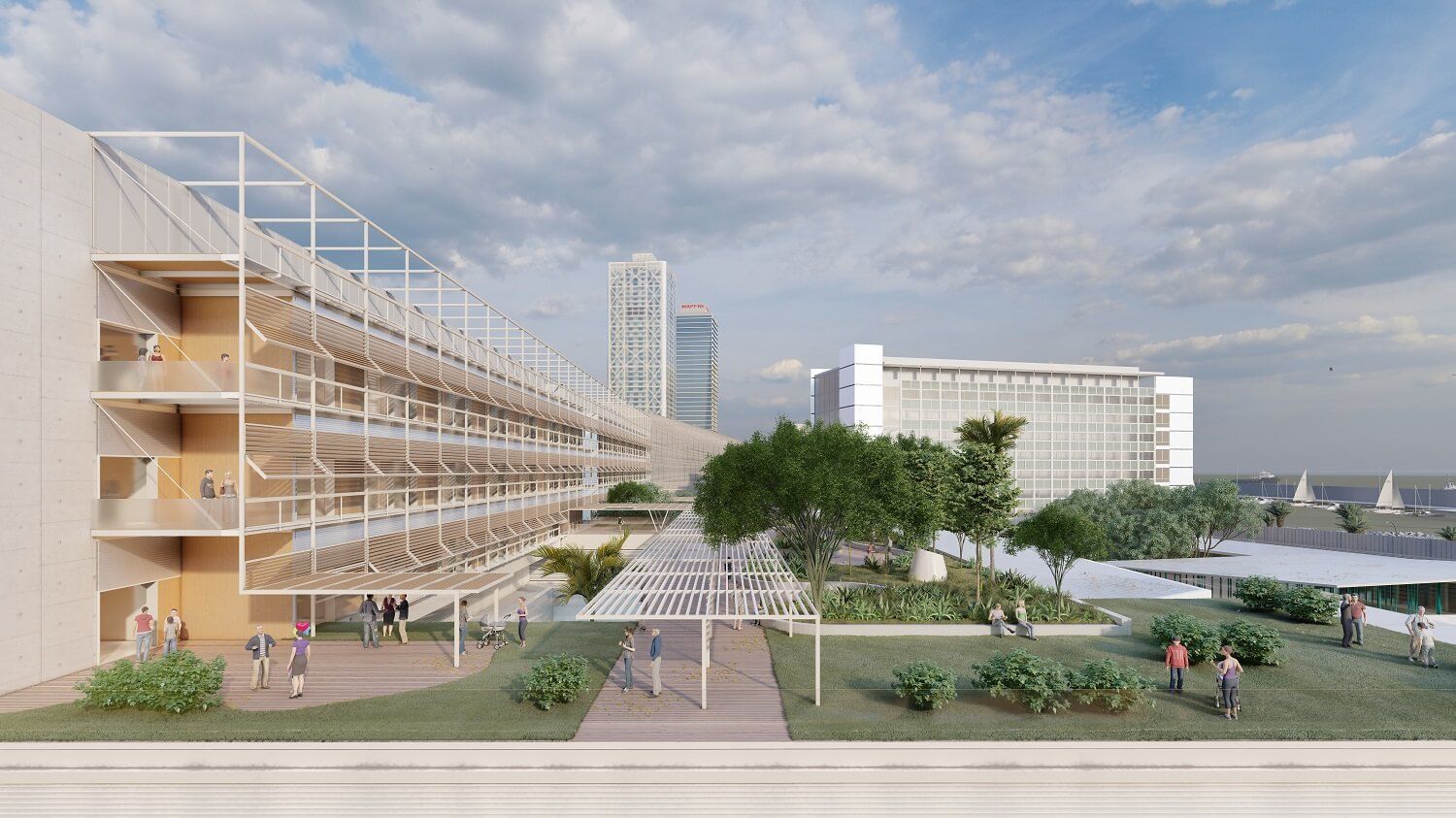
On the other hand, the reform will also take into account the sustainability of the facilities, the second pillar of the Next Generation. Photovoltaic panels will be installed on the roof to generate the electricity needed to cover self-consumption and LED lighting to reduce energy expenditure, as well as the incorporation of applications for light and climate control and the construction of a double skin on the facade to take advantage of natural light, minimize heat, and reinforce ventilation.
A legacy of the pandemic that will be included in the expansion will be the strengthening of its digital transitionIn addition to all thisvegetated roofs will be added to the terraces, covering 2,700 square meters, with the aim of reducing the building's carbon footprint. These green roofs will generate coolness and shaded areas, in addition to creating therapeutic gardens for patients and meeting points for professionals.
With an eye on 2030
While awaiting European funds, the Generalitat and the Barcelona City Council have advanced the necessary financing for the executive project, at a cost of 2.5 million euros, and for the preliminary works, at 11.4 million. These initial actions include demolishing some pavilions that currently occupy the space where the new building is to be built, as well as relocating the services currently provided, basically, the professionals' changing rooms.
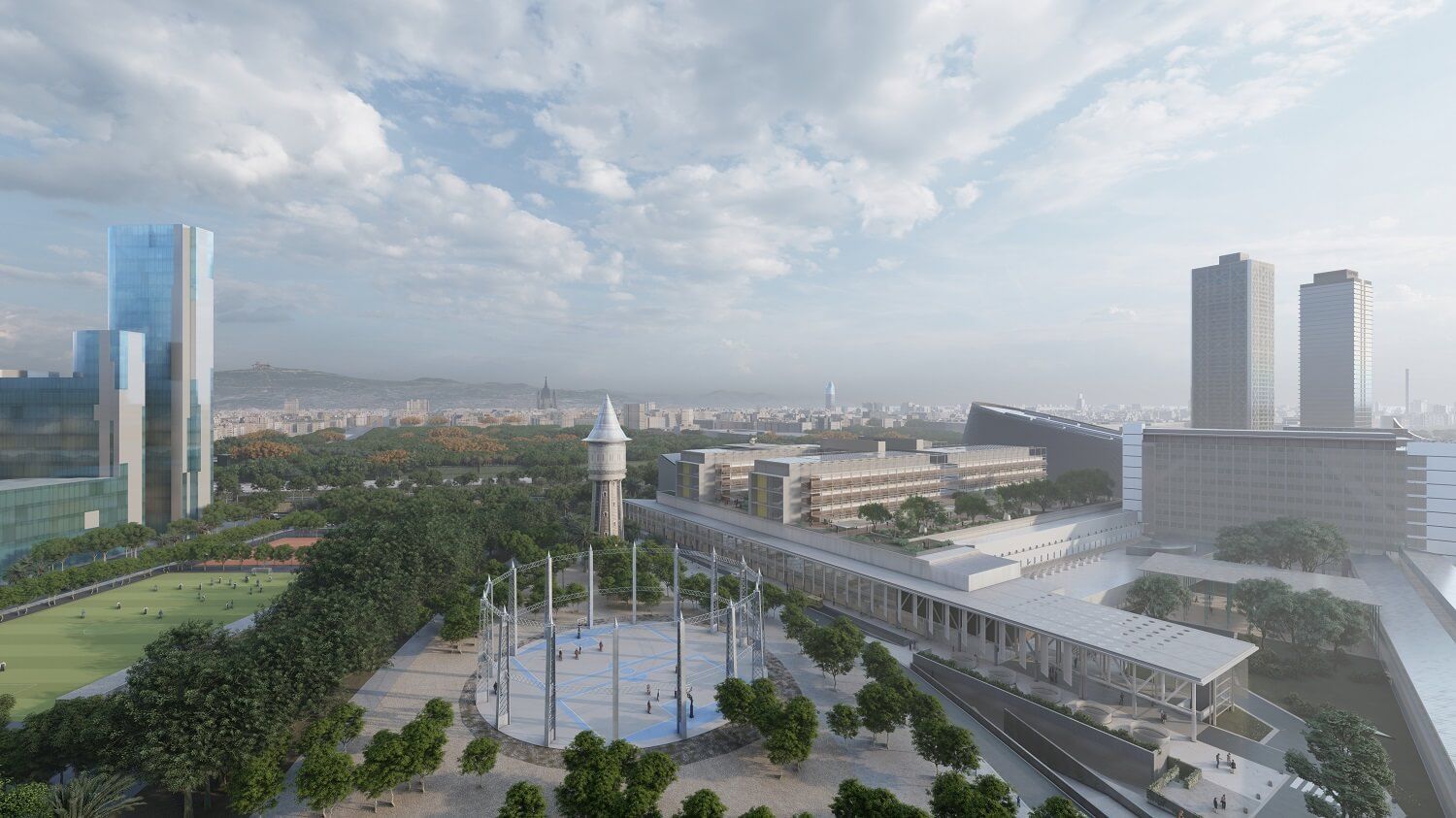
The first actions to be carried out will be the relocation of the professionals' changing rooms and the demolition of some pavilionsThe construction schedule for the new building will begin this June and will extend until mid-2024. When this point is reached,a final phase of the hospital expansion project will still be pending, which will allow reaching 103,500 square meters of total surface area and 544 beds, 150 more than the current ones. This third phase is expected to be completed in 2030.
All this transformation will serve to relaunch Hospital del Mar and turn it into a pole of attraction for talent. In this sense, the decision of Universitat Pompeu Fabra (UPF) to develop the new Medicine degree alone starting in September, which until now was done jointly with Universitat Autònoma de Barcelona (UAB), stands out. The commitment to this health center will reinforce the future Ciutadella del Coneixement, a project that aims to transform this area of the city and provide it with a new scientific and cultural centrality.
Add The New Barcelona Post as your preferred Google source for free
Stay informed with the latest news.
