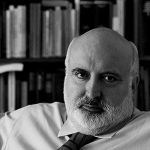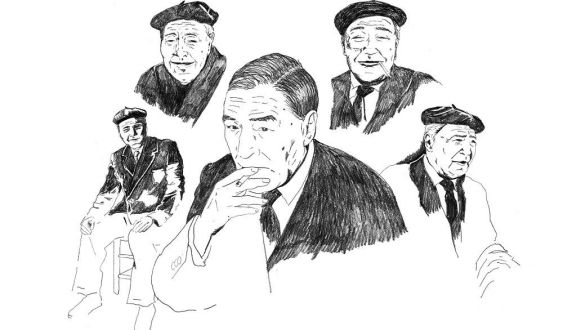
Mr. Pla, what is the purpose of the bourgeoisie? One of the first duties, in effect, of the liberal man is to defend the country's money against the omnipotent State, especially against a State led by a policy that has not precisely demonstrated remarkable constructive capacity.
Is there a bourgeois ideal? The bourgeois tends towards respectability. But on this point there is something to clarify. The intelligent bourgeois does not aspire to respectability for purely personal reasons; he aspires to it for the profession he has, for the knowledge, for the métier. To become respectable is the ideal of the bourgeoisie.
A bourgeois spirit... An authentic bourgeois cannot be a defeatist.
A country's bourgeoisie? Thus, he considers love for his country to be as obvious and indisputable as political and economic liberalism, as commercial competition, as family and social respectability, as tolerance and political freedom, as the exercise of rights and duties.
Bourgeoisie means capitalism. Capitalism is anarchic, I also believe it, but humanly speaking it is effective and productive. Socialism is adequate but inefficient.
And the homeland? Patriotism is a feeling that has been so abused and in such a dangerous way, that perhaps it is not worth alluding to or talking about. It seems that there must be some general principles, intimately related to the tribe with which one coexists, situated at a higher level than particular outbursts and whims. It is perfectly clear. When patriotism fails, the phraseology of betrayal quickly appears. The traitor is the opposite of the patriot. In times of peace the contrast is very softened.
What do you think of patriotism in Catalonia? Many Catalans are interested in Catalonia, but they do not believe in it. The exact opposite happens to them as with religion and the afterlife: they believe in it, but they are not interested.
What power? I will always prefer a Catalonia led by our industrialists and merchants with all their defects than one led by inept bureaucrats and puritanical socialists, proponents of false statistics. I am a supporter of individualism —a factor of all possible economy— but I would like a courteous, well-educated and conversationalist individualism.
What are Catalans like? Catalonia is a country of erotics corrected by avarice. It is an appreciable form of national health.
And how do they coexist? The country is very small: tiny. And, precisely because it is so small, criticism —not even the most normal— has never been considerably acceptable. It is the country of praise, of systematic optimism. Do not present any objection, even the most well-founded.
Do you believe in a Catalan sentimentality? In this country, sentimentalism has been exercised in an excessive way.
But what about seny? Catalan seny seems like a commercial, positive form of skepticism.
Flaws? The Catalan is corrosive. Corrosiveness is used especially against any form of ease —of realization—. This bothers, annoys. What bothers most about others is what they do. Others are always imbeciles, but the most imbecilic are those who do something.
With what geography? The Catalan, until proven otherwise, is an exacerbated mountaineer who works on the plain with mountain ideas.
A small country? Is Catalonia so small that it cannot assume, within the limits of its area, a mistaken man? Moreover, is Catalonia so small that it has to feel how the most qualified representatives of its culture drive away a Catalan with manners of grotesque, inquisitorial plebeianism, of an unseen Africanism? Patriotism is a very serious thing. It is one of the most serious things in the world. Those who serve it right and left every day do it a disservice; those who use it to decapitate unpleasant neighbors and to divide citizens into good and bad, in the name of what culture and what civilization do they speak? What is civilization, in reality, but the elimination of the arguments of the cannibal chauvinist in social and political dealings?
How can politics be done? And politics is not just an art of empirical manipulations. It is an art of eternal elements and principles, geographical, traditional, spiritual principles, which are imprescriptible.
The pact, the transaction... In consolidated countries, politics is the art of negotiation according to the conveniences of each moment. In our country, politics is a struggle —think of the last century and remember this one— and all struggles end badly and among us in a bloody way.
What causes a civil war? In countries of civil war and violent upheavals, the contrast works with the same sharpness as the guillotine. The two camps appear separated by an impassable line. That is why Talleyrand's words, which he wrote in his Memoirs, speaking of himself, are true: "Treason is a matter of dates." And I would add: "And of geographical situation." Those of us who have lived through the last civil war know this very well.
Then... Politics is the art of avoiding civil war.
And after a civil war? One of the most curious, though perfectly predictable, effects of the last civil war was the immersion of an immense number of people in a very dense shadow zone not only regarding the immediately preceding years, but also the previous centuries. At a certain point it seemed (due to the sophistication of propaganda) that we were contemporaries of the Catholic Monarchs and that at any moment we would see Philip II pass by in the street. A kind of mirage occurred over history, the resurrection of a falsified world, the appearance of a fictitious light to create the appearance of an immediate reality destined to infiltrate into people's spirits a new conception of the world.
Given so much barbarity, what is the role of culture? I have lived through a time when the greatest cruelties, the most impressive savagery, have been committed. It has been, at the same time, the era in which more books have been published and read. Therefore, if culture is books, and the coetaneous savagery has been so enormous, books do not make culture. It is almost certain that they increase madness. Culture has nothing to do with books: culture is a certain state of mind, an understanding, a tolerance, a hospitality. I have known many total illiterates or semi-illiterates incomparably more cultivated —more cultural— than so many intriguing, fanatical, dangerous intellectuals, whom I have also known. Now, when a certain way of being is reinforced by the knowledge of a few books, then a well-made man appears.
What political ideas annoy you the most? I understand all social utopias, all ideas, whatever they may be. Anarchism, however, has always produced in me a sensation of physical discomfort, of unpleasant disorder —of arriving in bed and finding it unmade—.
What makes a country great? Countries are not important for being big or small. Their substance depends on the quality of the people who live in them. Switzerland is a tiny country, objectively poor but very important. It is a country that has achieved universal trust due to its intrinsic situation. Small countries are the only ones that fit into people's brains. They can deal with the whole and the parts: they can become, in many aspects, of splendid perfection.
And what is Spain's circumstance? The whole problem consists in judging what future moderation has in Spain.
History does not progress... History is an immense effort to give no solution to anything. History is a description of the plant and animal world. History is Darwin.
Mr. Pla, you are considered a total individualist... Either individualism or decadence.
And is writing, living? Writing has created, within my intimate and spontaneous self, a strange person, whom many times even I do not understand what has to do with me, so many differences are what I observe. By virtue of this splitting, it turns out that if I, by nature, am a weak and miserable being, when I have a pen in my hand I become Dionysian and offensive, I enter a state of silent exaltation and am capable of maintaining an opposition to the ultimate consequences.
Do you believe that culture is progress? In any case, literature seems that it will be the great remedy against boredom. People read because they are bored. The fact means, ultimately, that writers will always earn a living—more or less, of course. Sociologists affirm: people read more every day. Culture progresses, moves forward. No. What progresses and moves forward is boredom.
What writer have you wanted to be? I have done what seemed most urgent to me: an easy, clear, intelligible, common literature. I started a vulgar literary path but without pornography, gossip, or anarchy, always in favor of a society full of whatever defects they want, but which is the most racial. I have made many mistakes, certainly, but I can do nothing: it is normal. I have been one of the most attacked writers in this country. It seems indifferent to me. I have attacked myself much more.
Is a literature without prose possible? Formal genialities can only occur in those literatures where clarity and expressive comfort are an intangible unanimous state.
Is writing a form of order? I raise the flag of a norm against chaos, of architecture against geology, of grammar against confusion, of the sacred family against wandering and unleashed bohemia. My idea is that these things cannot be unfocused by art and that when the laws of human life are broken in favor of cosmic life, there is no possible art, although —great— secretions of physiology can be produced and, it goes without saying, pleasant secretions of physiology.
And novels? In life, arguments are only produced by a very rare chance and, therefore, novels with arguments, rather than reflecting life, do nothing more than arbitrate a form of artificiality.
What is possible egoism? I do not defend the egotism of irresponsibility. I defend defensible egotism, abstracting from the dead weight of the era.
Landscape and literature... Landscape makes you understand literature, because literature is the memory of landscape in time.
Landscape and civilization... Contemplating the vineyard area, with its tree-lined paths, the white and toasted houses covered in foliage, the wells with their arches, the dusty and reddish stream with the white clothes drying, the blue stain of the sea and the pink of the beach, the country churches, the Catalan bell towers, the color of an ensaimada, which you can feel as much as the head on your shoulders, all imagery of monsters, all metaphysical vision seems so foreign to you, that you come to see the life and excess of all human form under the prism of the work and the ordered longing of past civilizations, of the considerable and obscure ambition of your grandparents. And civilization is nothing more than that: to be able to mentally reduce a monstrous piece of land to the ancient curve of a tender almond.
A recommended menu? If one winter day you find yourselves in New York, I would allow myself to propose the following menu for lunch: a dozen and a half oysters and a steak of beef grilled over coals. It is a completely reliable prospect and also made with elements of the greatest simplicity. The United States is not, precisely, a country of sauces and stories of this type. If you do what I modestly propose, which should be accompanied by an expensive French or Italian wine, you will leave the restaurant full of strength and vitality and will be able to say something positive to people who claim that food is bad in that country. When you finish eating, order an authentic English cheese, an Italian coffee and a marc de Bourgogne or a grappa.
The aperitif... There are two magnificent aperitifs in France, which are two wines: champagne nature brut and blanc de blanc from the Loire, which is a small, slightly hazy and cloudy wine, which is excellent.
Why is he a conservative? Only the man who at every moment saves, preserves, improves, the greatest possible quantity of things, of affections, of security, of qualities, is worthy of being called rational. Nature destroys. What is called culture with a spirit of synthesis, which is essentially memory and experience —an effort of memory and experience in the indescribable vagueness of life—, has as its essential purpose to maintain. There can be no form of civilization without a prior attitude of conservation.
To fix the world... I have seen the great criminals of our time with my own eyes many times: Mussolini (in Milan and Rome), Hitler (in Berlin and Nuremberg), Trotsky (once in Paris). I have never seen Stalin, who was perhaps the greatest criminal. All of them have been redemptionists, they have wanted to fix the world, and the more they have wanted to fix it, the more they have destroyed, wounded, and murdered it.
Is civilization memory? Man in a natural state has no memory: he is the creature that lives before nature in a passive situation. Civilized man aspires to have it.
Civilization and destruction? What we call, speaking with the utmost generality, civilization purports to be, I suspect, an effort to delay, as much as possible, the ineluctable destruction of things, to build others that make existence more bearable. Faced with a nature that carries at its very root the devastation of everything that does not conform to its blind instincts, the enterprise of civilization is a high, magnificent, and heroic enterprise. But how weak its strength is...! It is a small artifice, mounted through cunning, prudence, tenacity, against the Megazou, the imposing cosmic Beast.
In short, the norm, to be formal. Our civilization consists of choosing at every moment between Nature and Form. To be formal is the opposite of being natural. More natural than living hygienically is to live in any way. More natural than shaving is not shaving. More natural than brushing one's teeth is not doing it. More natural than a sonnet is free and candid verse. More natural than living from continuous, constant, and modest work is to stand at a crossroads and do whatever comes along. More natural than building is to destroy cheerfully.
The other side of civilization? Frustration, however, is exactly equal to civilization. You are frustrated people because you are civilized people. Frustration, we would say to synthesize, is equal to civilization.
The importance of memory... But memory is a double-edged sword: if on the one hand it keeps us in an illusion of fixity before time, on the other, as it confirms the changes of successive moments, it sharpens the pain of the passing of hours. It is the memory of luminous past hours that makes us see the precariousness of the present and proposes to us the empty darkness of what is to come.
To last, above all... The human being has a ruthless and blind force to destroy himself and to tear apart everything that has been built with the ambition to last. Man aspires to last in the things he does, but at the same time destroys them. For this reason, every human being who incorporates into his frivolous and unconscious instinct of destruction a reflective capacity for destruction —every revolutionary— is a savage. Useless, unserviceable, anachronistic things fall by themselves, like a rotten ripe fruit.
And does the family remain? The family is an institution that exists. It is a mysterious and sacred contraption.
To live memory? Vitality is the key to everything. If I had plenty, I am sure that with a pen in hand I might do something. Vitality is more important than intelligence. The highest form of intellectual vitality is probably memory.
A landscape, Mr. Pla. The landscapes I like most are the undulating ones, with cafes, restaurants, savings banks, and fine, kind young ladies.
An instant... Sometimes I would see the tiny, dark, and surly bird peck at a cherry, swallow its flesh avidly, begin to sing with a liquid and sensual eagerness and joy, as if it were dominated by a fever.
For a more formal country? I would have liked to live in a constituted country and in a perfectly formed, slightly hypocritical, tolerant, pleasant society. Think that the only way to prevent people from fighting is to use a touch of hypocrisy.
How do you feel the passage of time? Time destroys everything and destroys us. Hours fly. Years spare no one.
Is writing defending an era? I sail against the corruption of the current. I am not a product of my time; I am a product against my time.
And traveling? Arriving in an unknown city, going down to the hotel, taking a bath, getting dressed, and going out into the street at random, to browse and be an honest stranger, has been for me one of the pleasant things in life.
Fleeing home? From this country I could not be an unnatural defector, but a melancholic defector: this is the drama.
The prodigal son. Returning is sad. To leave again must be intolerable.
Is writing a homeland? Sometimes, at night, especially at dawn, I wake up in bed, fascinated by the night, and approach the dying fire in the fireplace. I start to write. Nothing. The silence is total. Sometimes I hear, very far away, a dog barking. I like to see, through the window, the darkness that remains and the first lights so pale, pink and yellow, to impose the day.
Add The New Barcelona Post as your preferred Google source for free
Stay informed with the latest news.