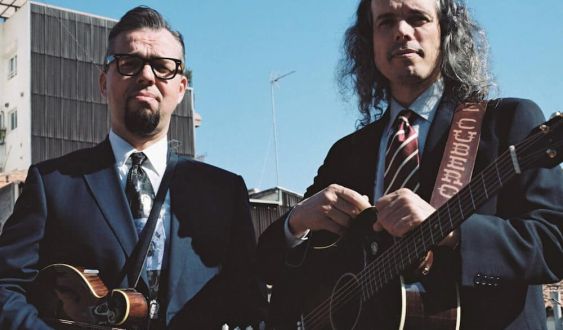
Its formula has never been commercial, but it has always enjoyed prestige among both the folkie public and the indie crowd. Enrique (vocals, guitar) and Roberto (vocals, mandolin) are Los Hermanos Cubero, a group that, in an effort to be original, has released two parallel albums: the instrumental Proyecto Toribio, where they retrace the steps of the hero of traditional music from La Alcarria, Toribio del Olmo, accompanied by several violinists; and Errantes telúricos, a magnificent collection of songs performed with Christina Rosenvinge, Amaia, Carmen París, Nacho Vegas and more figures who will come up in the conversation.
Los Cubero will perform next May 1st in the context of Nits del Coliseum, which begin today, April 25th, at the Teatre Coliseum with the revolutionary show Deforme Semanal, and which will also feature performances by José González (26th), Califato ¾ (28th), Derby Motoreta's Burrito Kachimba (29th), Triángulo de Amor Bizarro (30th) and, on May 2nd, Mujeres.
-- What do these two albums have in common beyond the fact that both feature collaborators?
-- They differ in the type of repertoire, but they are really the same thing, because the way of creating with the violinists or with the vocalists has been similar. It's the same spirit. The two albums are part of a single work, which is Los Hermanos Cubero.
-- Let's go by parts. Who was Toribio del Olmo and why have you dedicated an album to him?
-- A violinist from the first half of the 20th century from Algora, Guadalajara. His figure did not transcend, because the traditional music played in the villages for dancing and serenading was not heard on the radio, was not recorded, and was very rarely documented. But there is a lot of ethnographic work that we have been able to work with. From some of his field recordings, the repertoire he played captivated us, because there are many dance tunes, agarraos, jotas… he also played Mexican things, pop things from that time that were heard on the radio. This shows that traditional music is not traditional due to localism or stubbornness, but rather it absorbs things. There was a day when the polka was not traditional music, it was modern.
-- What can you tell us about the violinists who accompany you on this work?
-- We knew all of them from before. Most are from Castile, people who have very well studied the repertoire of dulzaina with violin, who maintain the phrasing, the picaos... we were interested in recovering Toribio's repertoire with that flavor. They are younger musicians than us, who are part of a very interesting resurgence of the violin in folk that has been happening in recent years.
-- Yes. We look for that energy that is in the subsoil, under the asphalt: that telluric energy that emanates from the earth. In some way, we seek an essence and an identity that we have possibly lost because we are uprooted. We have lived away from our land for many years, we make traditional music but we don't sound traditional because we are not traditionalists... it's our particular search.
-- Is being uprooted an advantage or a disadvantage?
-- It's a fact. The place where you are is the result of the path you have traveled, in which you have left some things and gained others. We accept ourselves as we are. We have lived in Catalonia for more than twenty years. We keep some friends in Guadalajara, but contact is three times a year. Many times we have wondered if, living in Guadalajara, we would make the music we make. Probably not, because in all these years we have been here we have learned and drunk from many other things.
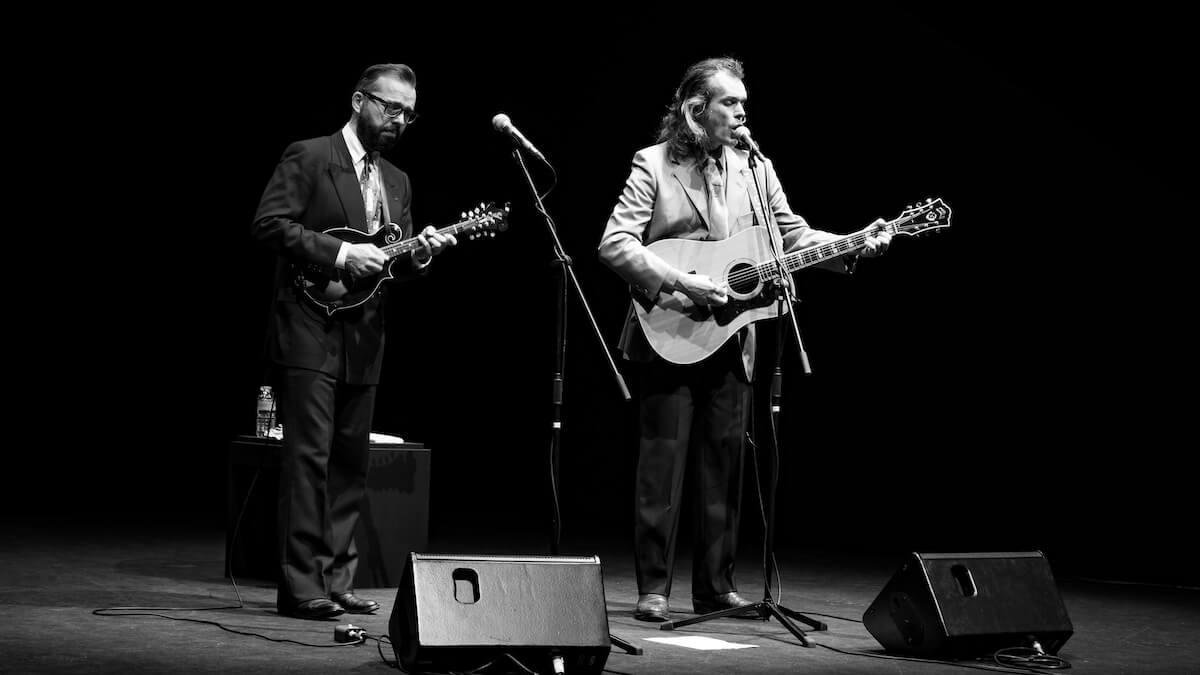
-- If we look at the list of collaborators on Errantes telúricos, we find people from rock, pop, flamenco, folk, and even a classically trained violinist like Ara Malikian...
-- It's a reflection of our tastes and our way of understanding music. We knew most of them from coinciding at festivals, we had a certain relationship and a certain affinity. We went looking for people whose work we liked, although we also made some proposals that, for different reasons, did not come to fruition.
-- In some cases there are new sounds for you, such as the electric bass or the drums. Has any of these collaborations forced you to step out of your comfort zone?
-- Yes, the idea was this: that we would not be in our comfort zone, and neither would they. Where we most stray from our style is in Así llegué a Granada ---a version of Tom T. Hall with the Grupo de Expertos Solynieve--- and in G.U.A.D.A.L.A.J.A.R.A. ---with Hendrik Röver y los Míticos GTs---. When you leave your comfort zone there is a period of adaptation that ultimately ends up being a learning experience, but we have not faced that with suffering, but as a game that has worked very well with everyone. It is also true that on this album there are songs that we had discarded in previous works, such as Llama encendida, a song that led us to other sounds, and that now was the time to record, because it has made us open up a bit more, break down borders...
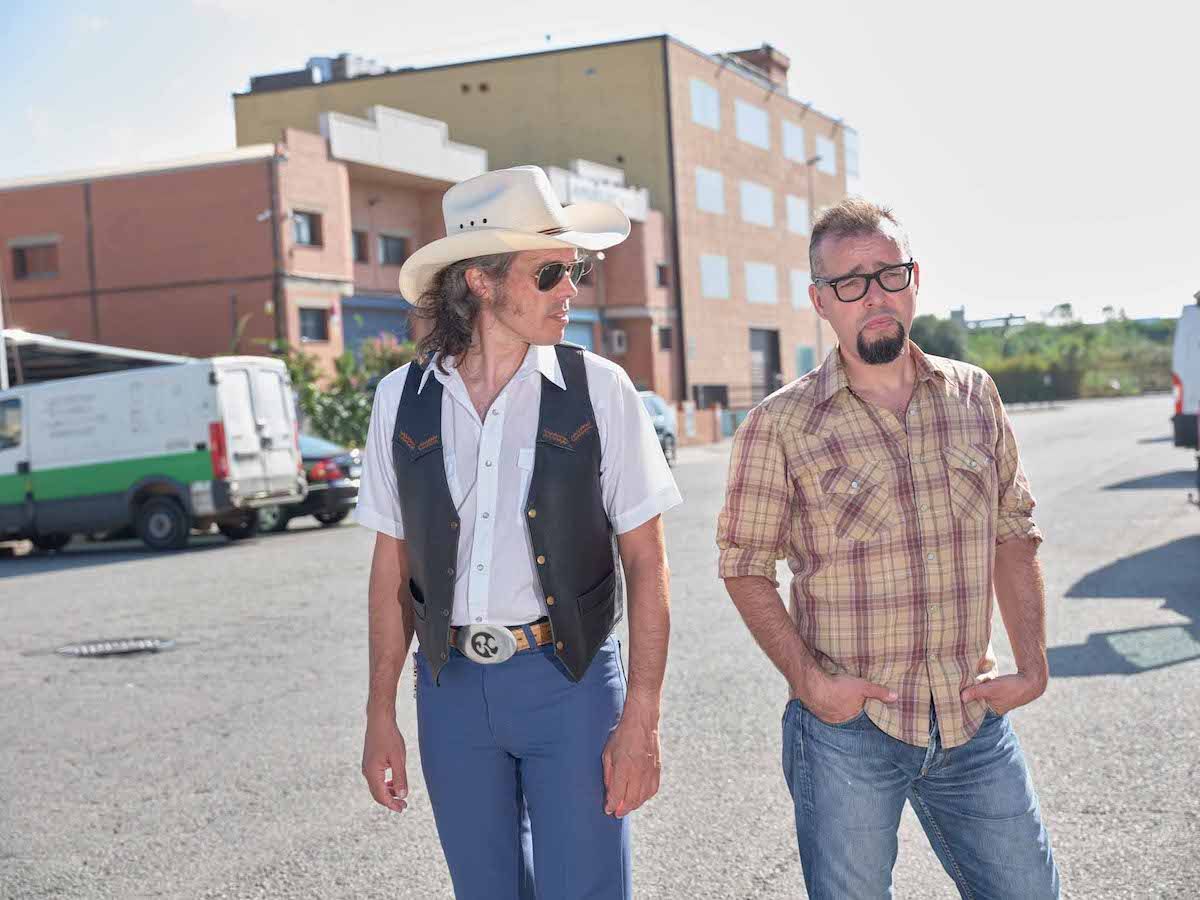
-- You made this song with the great Rodrigo Cuevas...
-- Yes, it goes very well with him because it's a very fiery, very passionate song. He brings a certain exuberance, a dimension that we don't have, because perhaps we are more withdrawn. Rodrigo's role in the current scene is fundamental, because he is getting many people to open their minds. He is a hundred percent traditional musician who, however, is also avant-garde.
-- The song Canción para un final, canción para un principio that you recorded with Rocío Márquez is very impactful. How was it?
-- Look, this is another song that we had already made some time ago and have rescued. It didn't fit much into our previous projects, but with her it acquires a complete meaning because of the way Rocío interprets it and where she takes it. It was the last song on the album that we were able to record in person before the pandemic. We met with her one morning, started trying things... and before going to eat --although we ate late-- we had already recorded it, the three of us around a microphone. Before the confinement we were also able to record with the Grupo de Expertos and Amaia, and then in the summer with Josele Santiago.
We seek an essence and an identity that we have possibly lost because we are uprooted-- Speaking of Josele Santiago, it seems there has been a very special connection with him on the track that closes the album, Problemas a los problemas...
-- Of course! We've had a lot of fun with everyone, but it's true that with those we've been with physically, it shows more... On the other hand, this song lends itself... We had a lot of fun with Rocío, but the song we did with her is not as openly expansive as the one we recorded with Josele, who is a very approachable guy with whom everything has been very easy.
Add The New Barcelona Post as your preferred Google source for free
Stay informed with the latest news.