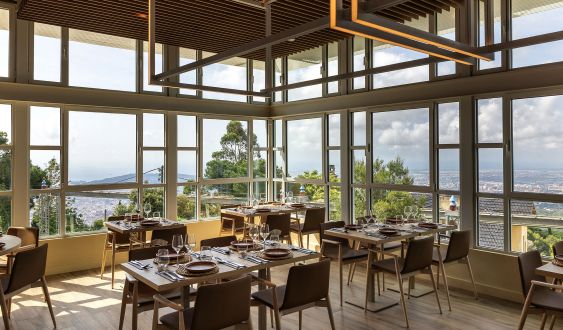
"When I arrived in Barcelona, I promised myself I would take cuisine to the highest point of the city." Rafa Zafra, freshly arrived from Seville to train at elBulli with Ferran Adrià, could hardly imagine then that such youthful ambition would end up becoming a literal reality. Two decades later, and already established as one of the country's most recognized chefs, he recalls those words with a smile and a certain irony, aware that time has ultimately proven him right.
At 512 meters above sea level, with Barcelona unfolding at his feet and the attractions of Tibidabo as a backdrop, Zafra has just fulfilled that promise, taking his gastronomy to the highest point of the city. But the reopening of the Masia Tibidabo restaurant, in the amusement park square, is not only the story of a chef adding a new project to his extensive career; it is also a new step in the transformation of Tibidabo, a space that is part of the memories of various generations of Barcelona residents and that now seeks to reconnect with the city by offering new experiences.
But the reopening of this restaurant should not be read as an isolated event, but rather as another piece of the transformation that Tibidabo is promoting together with B:SM (Barcelona Serveis Municipals) —the Barcelona City Council company responsible for its management—, with the aim of enriching the visitor experience and strengthening its bond with the city and its residents. A strategy that comes at a significant moment for the park, with the celebration of its 125th anniversary. Following this anniversary, the space has been incorporating new symbolic elements, such as the installation of the new Barcelona letters on the viewpoint.
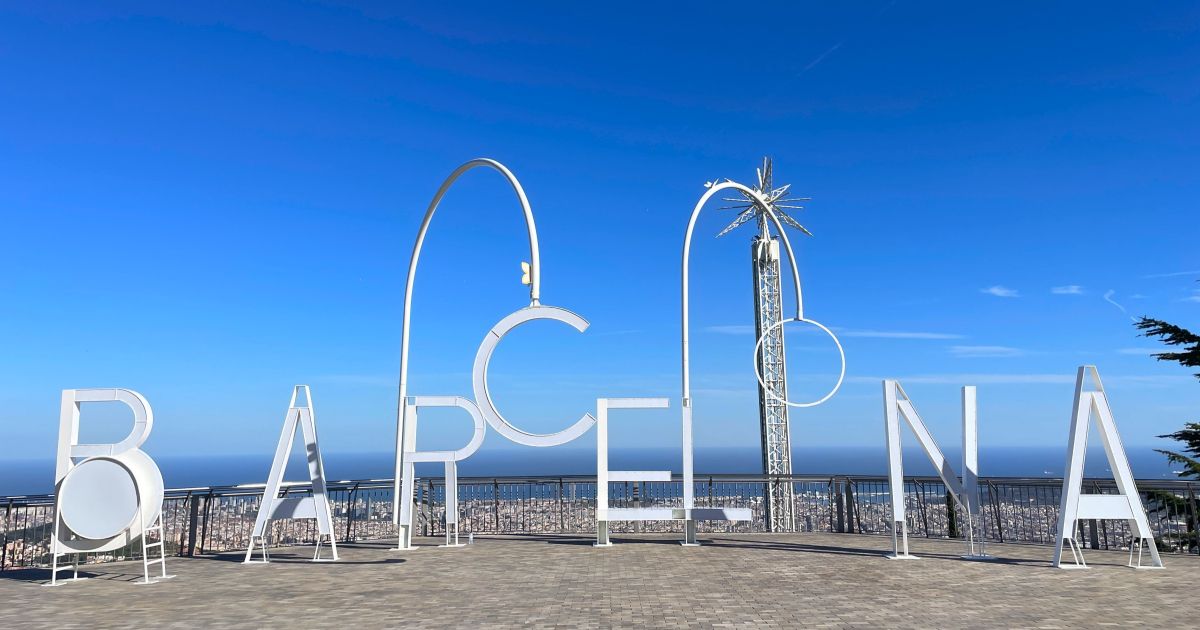
"We have many reasons to feel Tibidabo as our own and to keep going up to enjoy it," highlighted the first deputy mayor and president of BSM, Laia Bonet, during the restaurant's inauguration. The reopening of the Masia now adds one more reason to ascend to the amusement park: to enjoy Rafa Zafra's cuisine —with an average ticket of about 45 euros, far from the prices usually associated with high gastronomy— in a privileged setting, with some of the best views over Barcelona.
And, incidentally, contribute to dismantling one of the great clichés associated with this type of venue: that in amusement parks you can only eat fast and without too many pretensions.
Recovering the memory of Tibidabo
But, in reality, the reopening of La Masia does not so much mean the creation of a new project as a reconnection with the origins of Tibidabo and with a gastronomic tradition that has accompanied it for more than a century. The amusement park, one of the oldest in Europe and the world, incorporated catering as an essential part of the experience practically from its first years of life.
Long before roller coasters and attractions defined its identity, the mountain had already been conceived as a meeting place for Barcelona residents. In 1886, the first stable construction, a small chapel dedicated to the Sacred Heart, was erected on the summit. However, it was in 1901 when the project promoted by the pharmacist and businessman Salvador Andreu acquired the dimension with which it has reached our days, thanks to the launch of the funicular —the first built in Spain— and the tram that connected the city with the mountain.
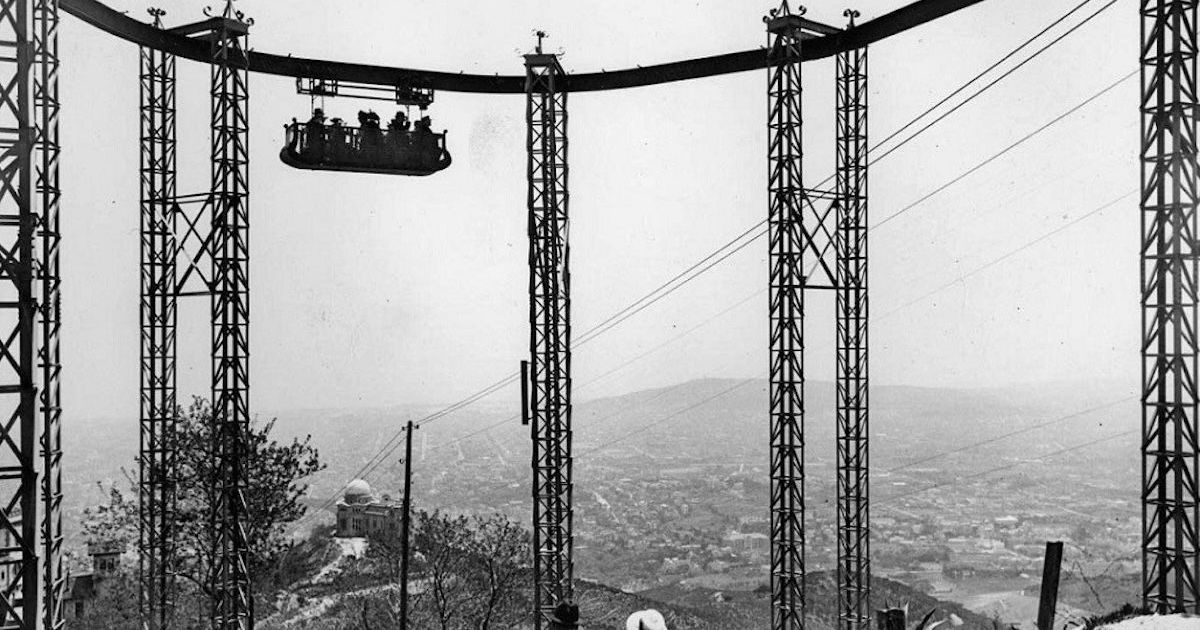
In time, the attractions that would end up making it one of Barcelona's most emblematic spaces would arrive, but gastronomy already played a leading role then. The Gran Café Restaurant Tibidabo and the Hotel-Restaurant Coll became reference points for those who ascended the mountain attracted by the views or these new forms of entertainment. In 1947, both establishments evolved to become La Masia, which remained open until a year ago.
A space for the five senses
Over time, the modernist building of La Masia, inaugurated in 1901, had become very deteriorated. In the words of Dani Freixes, founder of Varis Arquitectes and responsible for the rehabilitation project, a space "punished by the passage of time and by the elements". The studio, which has been intervening in different areas of the park for years, received a clear brief: to create a comfortable and unique space.
The architects interpreted the challenge as a space designed for the enjoyment of the five senses. "Rafa Zafra's gastronomic proposal takes care of taste and smell. We have worked on touch, to create a comfortable space; sight, with large windows that turn the panoramic views of Barcelona into protagonists of the space; and hearing, taking care of acoustics that favor conversation and after-dinner talk," the architect summarized.
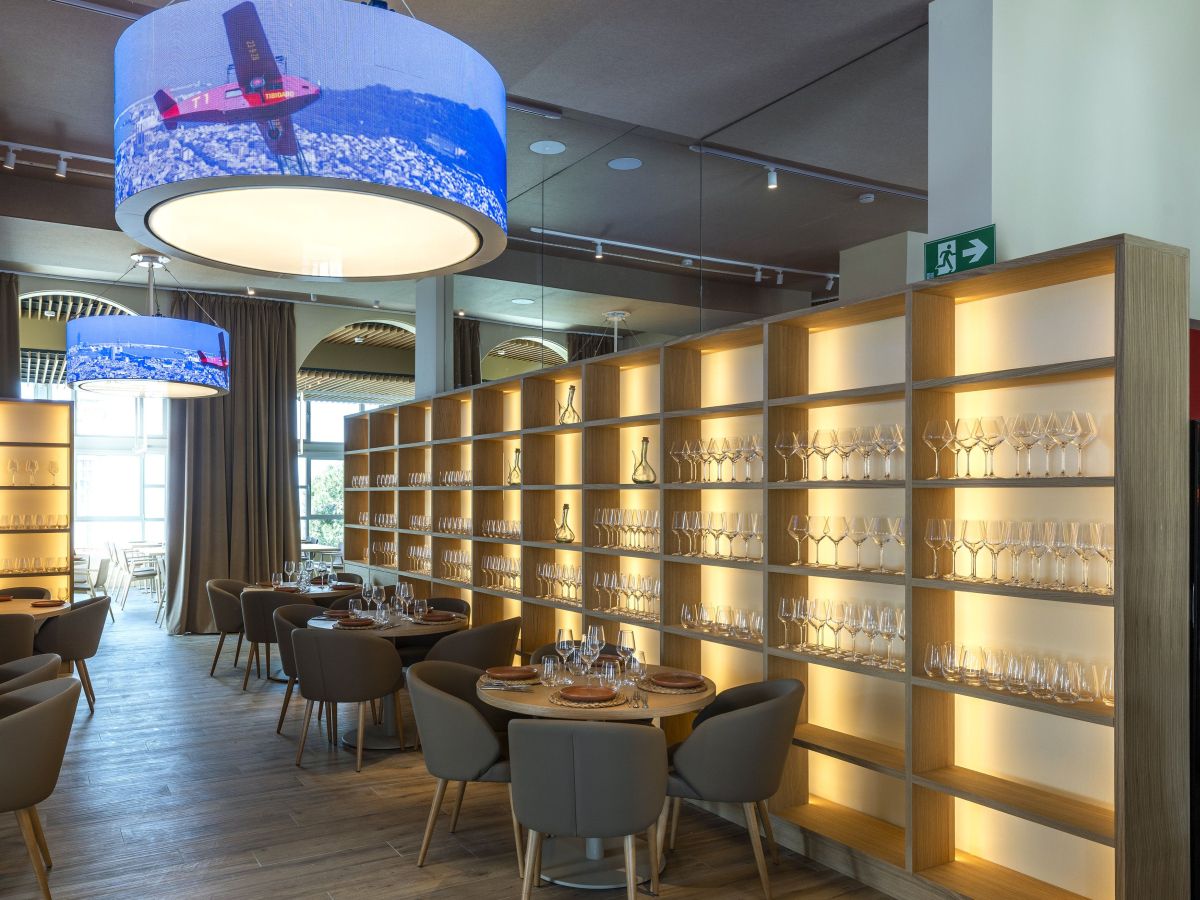
The rehabilitation of the space, with capacity for 300 diners, combines technology and tradition. The restaurant's own lamps function as projection surfaces, allowing historical images of Tibidabo to be displayed on them, from old photographs to elements of the park's imaginary, such as puppets. A few meters from this technological display, iconic elements of Catalan culture, such as the porró, preside over the shelves.
All of this is part of an experience designed to begin even before arriving at the restaurant. Those who book will be able to access through the Cuca de Llum, the funicular that connects the city with the top of the mountain in just five minutes and which Tibidabo recovered in 2021 as part of its commitment to sustainable mobility and connection with its origins.
A menu that tours the park
The team of chef Rafa Zafra, responsible for restaurants such as Estimar or Amar Barcelona and one of the most recognized chefs on the national scene, is in charge of taste and smell. The Sevillian chef has designed a proposal that seeks to bring traditional Catalan cuisine to all types of audiences. "We want children to eat well, with rich, healthy and balanced cuisine, but also for adults to find a place to enjoy like children," Zafra summarized.
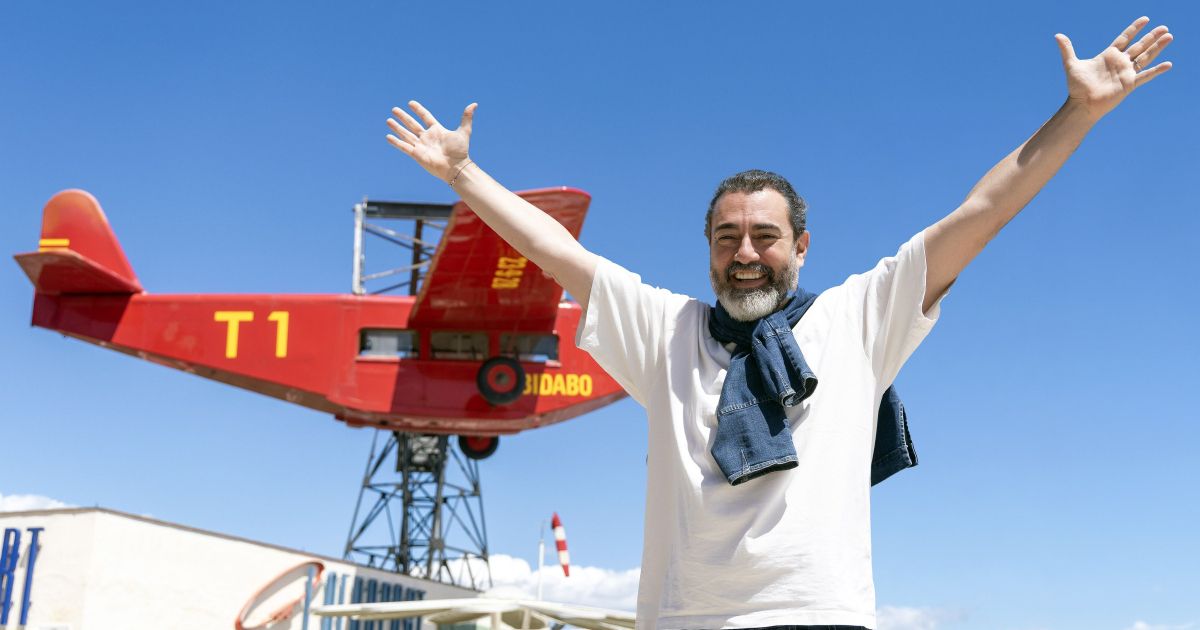
"Eating here is returning to the essential: product, cuisine, and moments to remember," summarizes the motto that presides over the menu. A proposal that pays homage not only to Catalan cuisine, with dishes recognizable to all diners, but also to Tibidabo itself. The culinary journey is structured around some of its most emblematic attractions: the Roller Coaster section brings together starters such as xatonada, salmorejo, or ensaladilla; the Airplane section —in reference to the historic attraction inaugurated in 1928 and converted into one of Barcelona's symbols— includes traditional Catalan dishes such as roasted cannelloni, cargols a la llauna, or fricandó.
Seafood products, Zafra's personal hallmark, find their space in the Pirate Ship, while meats star in the Free Fall section. The journey culminates with Bumper Cars transformed into desserts, featuring classics such as Catalan cream, egg flan, or grandmother's cake.
Add The New Barcelona Post as your preferred Google source for free
Stay informed with the latest news.