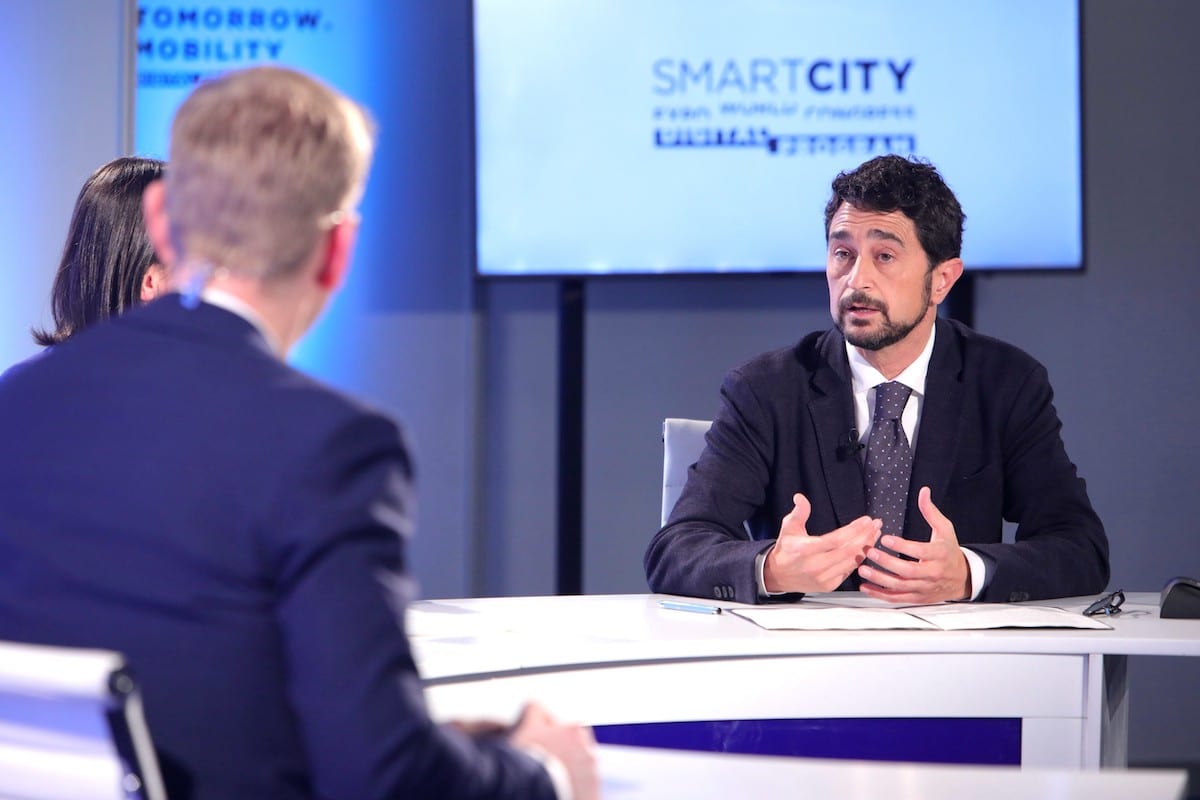
The third edition of Smart Ports: Piers of the Future has closed with 6,000 unique users and 20,000 views. This has been the second year it has been held digitally, awaiting the return to in-person attendance next year. Innovation in ports has once again been debated at the meeting that the Port of Barcelona organizes with six other ports to analyze the trends the sector is experiencing in its transition towards a more sustainable and digital model. "Generating wealth for the community is our biggest challenge and this implies that we have to innovate," stated the president of the Port of Barcelona, Damià Calvet. "We are convinced that being more efficient, competitive, and sustainable means bringing more innovation," he stressed.
For two days, ports like Barcelona's have explained how they are facing this transformation. In this edition, the invited ports were London (United Kingdom) and Gothenburg (Sweden). Their experiences shared the forum with those of the Port of Barcelona's partners in the organization of Smart Ports: Antwerp (Belgium), Busan (South Korea), Hamburg (Germany), Los Angeles (United States), Montreal (Canada), and Rotterdam (Netherlands).
One of the projects that Port de Barcelona has presented at Smart Ports has been the pilot it will develop at the Fishermen's Wharf to create an energy community, which will produce, consume, and store solar energy, with the support of the European consortium Creators, made up of 17 companies from the energy sector from eight countries. The objective of this project is to create several small interconnected renewable energy islands, which will work to increase energy self-consumption and the proportion of energy from renewable sources.
Port de Barcelona will develop this first pilot hand in hand with Comsa, which will be responsible for providing the necessary photovoltaic panels to generate the energy. They will be placed on the roofs of five buildings at the Fishermen's Wharf: the warehouse, the new fish market, the ice factory, the parking lot, and the net storage area. In addition, Comsa will provide a system to monitor the consumption and generation of energy that will be produced in this area of the port, and another to store the surplus that is not consumed at the moment.
If the results of this pilot are satisfactory, it is expected to extend it to the entire Port of Barcelona. Its Head of Innovation, Carles Rúa, points out that it can be very useful in spaces such as container terminals, which require a lot of energy to operate, but also in others that do not need as much, such as car terminals. In this case, there is a lot of space available to place solar panels that could transfer the energy they generate to other areas of the maritime infrastructure that need it more. Likewise, these new energy communities could serve cruise ships, which need to be powered when they dock at the piers and consume a lot of energy.
Given the new context of energy transition, Rúa has argued that we must rethink the way energy is used and has given the example of how ice is manufactured on this pier. Currently, ice is produced at night because energy is cheaper, but, thanks to this pilot, it can be manufactured during the day and kept at night because the energy cost will have been reduced.
Collaboration between ports and cities
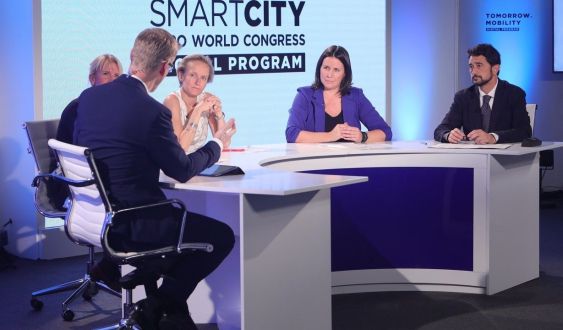
Smart Ports coincides with the Smart City Expo World Congress (SCEWC) fair, which is held from this Tuesday until Thursday at Fira de Barcelona's Gran Via venue. Although the event organized by the Port of Barcelona has maintained its digital format this year, recorded from its own set, some of the sessions have moved to L'Hospitalet de Llobregat. Precisely, the fair has awarded the Port of Barcelona with the World Smart City 2021 award for its intelligent mobility management system in cruise terminals developed together with Deep Solution and Delonia.
One of the sessions held at Fira de Barcelona was Ports collaborating with cities, which featured the participation of the ports of Barcelona, Hamburg, Antwerp, Montreal, and Los Angeles. The president of the Port of Barcelona, Damià Calvet; the Head of Strategy of the Port of Hamburg, Iris Scheel; the president of the Port of Antwerp, Annick de Ridder; the vice president of the Port of Montreal, Mélanie Nadeau, and the Director of Labor Relations and Workforce Development of the Port of Los Angeles, Avin Sharma, debated how they articulate this relationship with the cities that host them.
The session Ports collaborating with cities has featured the participation of the ports of Barcelona, Hamburg, Antwerp, Montreal, and Los AngelesThe five ports find in innovation one of the main pillars to combine their interests with those of local and regional administrations. For Calvet, the first step to finding new solutions is to understand what the port community needs and to find the best way to address it."The port cannot foster innovation alone," Calvet remarked.But it is also necessary to associate with other agents in the city who want to innovate, as will be done in thehubof blue economy, promoted together with the City Council. Nadeau and De Ridder have agreed with this commitment of the Port of Barcelona to promote innovation in a shared way. "Innovation and collaboration are two key words," De Ridder defended.
Sustainability has emerged as another essential characteristic in collaboration with cities. Electrifying the docks, increasing rail transport of containers and developing sustainable mobility are some of the tools that different authorities are promoting to reduce environmental impact, but there are also others. In this regard, Scheel explained how they have managed to reduce noise pollution in the port of Hamburg hand in hand with the residents of the infrastructure, while Nadeau has focused on the need to promote the social sustainability of the environment.
Add The New Barcelona Post as your preferred Google source for free
Stay informed with the latest news.
