[dropcap letter="A"]
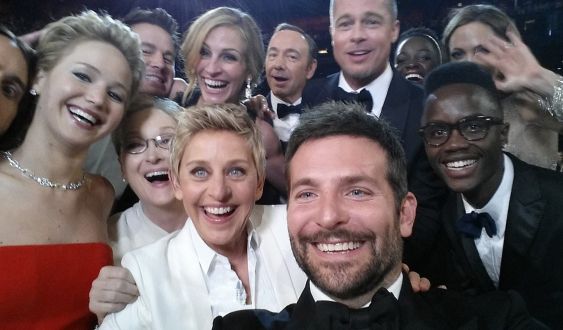
long history, human beings have left traces of their existence. From their beginnings, all cultures have represented those people who deserved to be remembered. Little by little, from immortalizing pharaohs, emperors, conquerors, and people who changed the world, we moved on to portraying families, who wanted a fake memory in photo albums. Celebrities and anonymous people had their own version of glory. On one hand, there was the stellar, on red carpets, and on the other, the domestic. Paparazzi tried to steal, to air it out, the private lives of public figures. But the explosion of social media, and especially the commercialization of the iPhone 4, ended that business. The celebrities themselves were capable of ruining an exclusive with the simple gesture of turning the phone, focusing on their face, and drawing a smile that they would immediately upload to their Instagram as a selfie. There they would get many more views —and friendly views— than readers the gossip press had, which would still take time to bring to light those furtive images taken with a telephoto lens. The photos of celebrities were close, in every sense. They transmitted a false correspondence with their fans, who could leave them comments and heart-shaped emojis.
Those same fans imitated their idols, and took self-portraits dressed and styled like them. They copied their pose, pouted, winked. In 2013 alone, more photos were taken than in all previous history. Selfie was the word of the year, chosen by the Oxford dictionary. Influencers began, any young people who were paid to wear clothes from a certain brand, as if that were casual, and not an advertising strategy. Naturalness entailed hours of artifice. Everyone was susceptible to becoming ad-men or mannequins. And since the product was oneself, it had to be sold as best as possible. The number of likes it collected would determine acceptance among netizens. That is: almost the entire world. And that would also determine the self-esteem of the one who exhibited themselves.
To please everyone is impossible, but it seems easier if you adapt to the canon. The number of cosmetic surgeries has skyrocketed in recent years and, every nineteen minutes, someone undergoes lip surgery to make them thicker. Nose reduction and the correction of wrinkles around the eyes have increased by 20% among young people. There are also multiple mobile applications aimed at stylizing the face, or lightening skin tone, as well as cameras specialized in self-portraits and valued at a thousand euros, along with a host of accessories, among which the selfie stick is a classic.
The Collins dictionary added the term snowflake generation in 2016 to designate those young adults of the 2010s, less flexible and more prone to offense than previous generations.The business is now in the self, and in all its filters. From an individualistic society we have moved to the era of egolatry. The landscape, the monument, art, has become mere context, a background ornament to prove —like those scribbles on a tree trunk or on a bathroom door— that "I was here." Some happily pose in Auschwitz, as if they were in an amusement park. Memory lasts as long as a witty tweet and has the same transcendence. The portrait portrays us. There is even a trend collected on the Selfies At Funerals page, where the sadness of those taking self-portraits is more important than the deceased.
The Collins dictionary added the term snowflake generation in 2016 to designate those young adults of the 2010s, less flexible and more prone to offense than previous generations. In The Guardian newspaper, Rebecca Nicholson said that they talk about feelings as often as they take self-portraits, have an indomitable narcissism and a form of political identity that reacts against the freedom of expression of others. If you are at the center of the world, and you have created that world to your measure, it is logical that you consider yourself sovereign. We return to the ancestral objective of the portrait: to represent those who stand out. And therefore deserve adoration.
In the maelstrom of the internet, it's hard to get attention. And since captures immortalize the moment, the one who photographs himself considers himself immortal. According to the study Me, Myself and My Killfie, published late last year, 127 people have lost their lives while starring in a risky situation in front of a camera. The first was in March 2014, when a boy wanted to immortalize himself perched on a train car, and was electrocuted by the catenary. Falls from skyscrapers or cliffs, games with weapons that didn't go well, traffic accidents, fleeing from a bull that ran faster, the eruption of a volcano, have become the macabre last image of some unconscious people. Contrary to their intention, navel-gazing is ending personality and judgment. People only look at each other to compare themselves: excellence is aesthetic. More than ever, there is a lack of broad-mindedness.
Add The New Barcelona Post as your preferred Google source for free
Stay informed with the latest news.