Co-organized by the BBVA Foundation and curated by David Bestué, visual artist, writer and critic of sculpture and architecture, and Martina Millà, head of programming and projects at the Fundació Miró, the exhibition takes a non-linear journey through time through modern and contemporary sculpture from a personal perspective that also includes ancient works and objects without authorship. It consists of a hundred works selected through seven stations in which the pieces are associated with each other, acquiring meaning.
Visitors should not be surprised to see, for example, terracotta, Egyptian or Greek works alongside contemporary pieces of metal or discarded materials. This eclecticism plays a crucial role in developing the idea of evolution in all directions and encompasses pieces from the early 20th century to the postmodern era and the present day.
Notable works include those by Antoni Gaudí, Júlio González, Alexander Calder, Joan Miró, Apel·les Fenosa, Lygia Clark, On Kawara, Richard Serra, Robert Smithson, Bruce Nauman, David Medalla, Eva Lootz, Susana Solano, Pipilotti Rist, Karin Sander or Wolfgang Tillmans, and so on, up to 65 international artists.
We are facing a journey that shows us how 20th-century sculpture wanted to go beyond representation and the generation of images, and how 21st-century sculpture brings new techniques and new imaginaries and sensibilities to push us to the limit in each era.
Historically, sculpture has always generated a tense dialogue with reality. From figurativism and the depiction of objects to their inclusion in the space of representation. It reflects on copying and repetition, on faithful recreation or abstraction, experimentation with materials, the exploration of physical properties, the relationship of the object with the subject and its environment, the passage of time and the occupation of emptiness.
The current era has led artists to seek a radical relationship with space, to opt for forms that irremediably flee from the figure, geometric or impossible forms that contort or stand on pedestals transmitting fragility; or rather quite the opposite, robustness, disproportion, etc.
David Bestué explains the collection by separating it into blocks:
- ARS INFAMIS: where the mold, the copying process, is valued. A working method that in antiquity was considered an "infamous art" that "stole forms" and in which two Gaudí molds for La Sagrada Familia, Nauman's work with his spectacular wax sculpture Head of Julie and Head of Julie Upside Down, Tongue with Tongue (1990) and Karin Sander's interesting 3D reproduction work stand out.
- CRUDO: material is above all else. Noteworthy are Perejaume's work, made from waste (1994), Dieter Roth's surprising book transformed into a sausage (1967), Joan Brossa's Pluja (1973), where water drops make words appear in a book, and David Medalla's foam piece, Cloud canyons (2016).
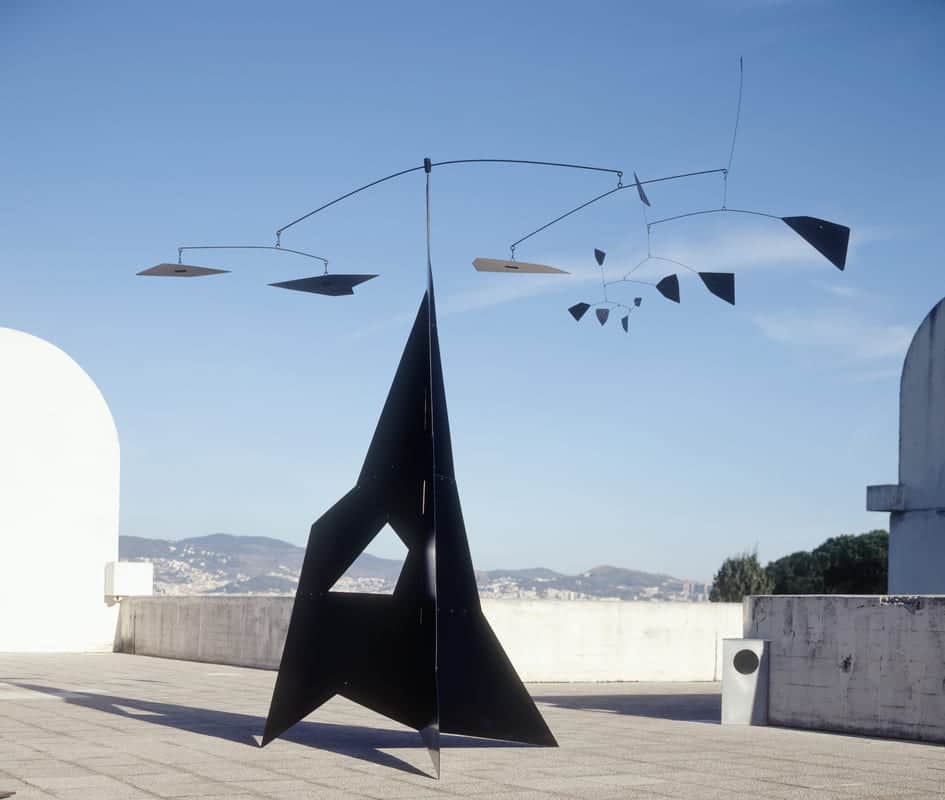
- ESPACIO: gravity and balance stand out. Here, Calder's El Corcovado (1951), Richard Serra's Soporte (1992), and Leandre Cristófol's La temática estelar (1940), made from shells collected during his time in a post-war labor camp, are prominent.
The exhibited works always raise how, in what way, they affect reality, and in turn, they aspire to the desire to capture human emotions, knowing themselves to be inert objects.
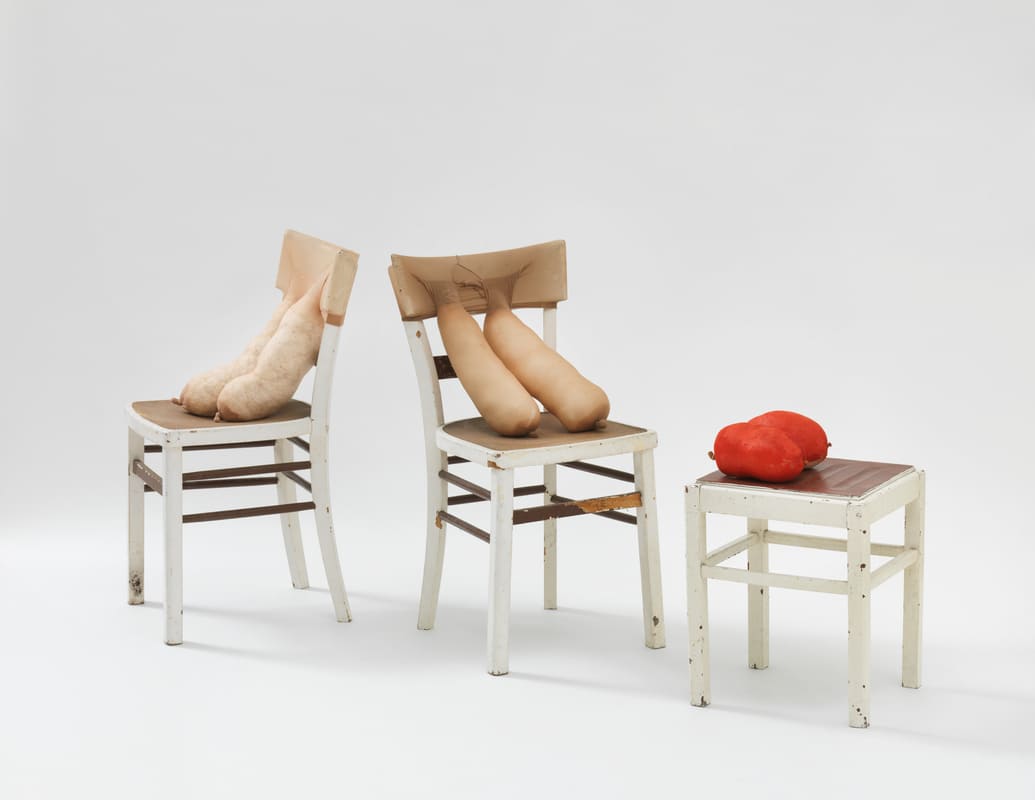
- OBJETO DOBLE: objects take on a very different function from their usual use. The reuse and metamorphosis of the use of pieces, in which works by Robert Gober, Ester Partegàs, and Apel·les Fenosa's work, who, together with Picasso, created the Busto de Dora Maar (1939), and which is presented with Fulla de figuera (1958), stand out. We also find Miró's Femme (1946), made of bone and stone, with a story behind it that reveals how a girl used it as a doll in 1949.
- PRESENTE CONTINUO: where the passage of time provides ephemeral, damaged pieces. We find cat mummies and a lizard inside a metal piece treated with electrolysis in 1890. A Hirchhorn clock, Roth's P.O.T.H.A.A.VFB (1968), and Pipilotti Rist's projection Doble luz (2010) on a bronze figure by Miró himself.
- UN CUERPO NUEVO: the body, corporeality, focuses on the bust and the human figure. The aforementioned bust of Dora Maar along with that of Matilde de Aguilera y Gamba (1863-87) show us a clear idealization of beauty.
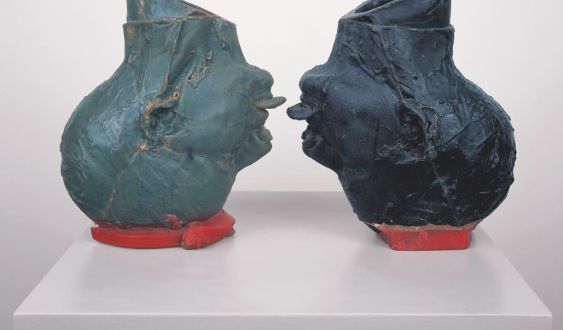
- CONTACT: sensations like sexual drive try to be represented through objects. To highlight Cheeck to cheeck by June Crespo (2015) and the work Los enamorados II (1933) by Juli González.
Bestué also assigns a new mission to current sculpture. A sculpture understood as something real, palpable, physical, in the virtual world of the Internet in which we live.Consider "that it can bring things that virtual media cannot, such as the idea of presence, intensity or materiality."
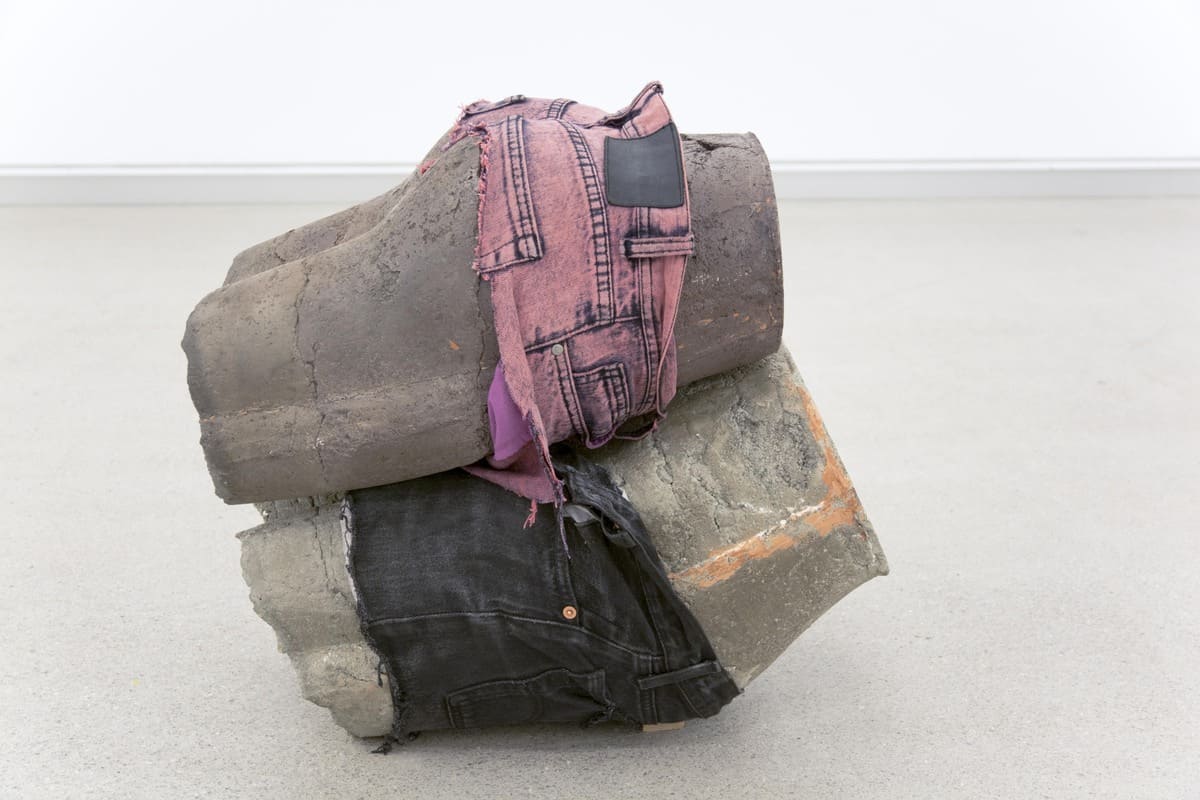
June Crespo. Cheek to Cheek, 2015. Private collection.
Sculpture, throughout time, always yearns to "capture a body, a kiss or a feeling lost in a time and space," in Bestué's words.The curator takes as a reference for the title the work of the poet Mario Montalbetti, in which he reflects on the meaning of the wordsenseand, in the line of Deleuze, redefines thesenseas a direction, a conscious or unconscious decision-making, not as meaning anything in particular. Bestué also fantasizes with Ovid's myth of Galatea and Pygmalion, the beautiful sculpture that comes to life by the work of Aphrodite and must face the world by itself, exist in reality.
The exhibition is accompanied by a catalog that brings together the curatorial text, relevant essays on the subject, signed by Mario Carpo, Jane Bennett, Ester Pino, Julia Spínola, Aimar Arriola and Maite Garbayo, an interview with the sculptor Susana Solano by David Bestué, as well as an epilogue by Martina Millà. The exhibition has a public program that includes, among other proposals, a small-format exhibition on the sculptural technique of bronze casting, one of the most used by Miró.
Add The New Barcelona Post as your preferred Google source for free
Stay informed with the latest news.