[dropcap letter="E"]
he tribune organ that presides over the Basilica allows connecting the chromatic reality that Gaudí wanted to be present in its interior with another vibration -in this case invisible- such as that of spiritual reality. A synesthesia of notable pregnance occurs: the confluence of sight and hearing enables an essentially immaterial experience, from which every human being -whatever their religiosity, their particular creed and of course their origin- can benefit. Bruno Zevi wrote that internal space is the absolute protagonist of the architectural fact, even if "it cannot be completely represented in any form, nor apprehended nor lived except by direct experience." The alliance of color and music in the majestic interior of the Sagrada Familia encourages that intimate experience -for some spiritual- that is offered as a metaphor for one's own interiority.
Juan de la Rubia, titular organist of the Sagrada Familia, knows many of the secrets of this expiatory temple, which as such is financed by the faithful themselves. He explains the details concerning the building, and emphasizes the importance Gaudí attached to music. Very especially to music that could be interpreted by the human voice. Music of maximum relevance due to the spiritual power of the word, invested with a color and, therefore, a sensible signification that is added to the linguistic one; hence the numerous tribunes, built ex professo for a choir rarely heard, due to its dimensions. But he also recalls the importance of music interpreted by the organ, the so-called "king of instruments," which Gaudí thought of endowing with an unprecedented plenipotence in one of his most inspired projects, still to be realized: he intended to place the instrument at a height close to the ceiling and, through the placement of various sound sources, create a maximally enveloping sound.
The organ is considered, above all instruments, the most technically capable of performing the alchemy of that synesthesia and giving voice to diverse, highly complex discourses. It can unfold melodies in counterpoint, thanks to its multiple keyboards, and also approaches the timbral nuances typical of a symphony orchestra, due to the multiplicity of registers. Through hundreds of pipes, an infinity of acoustic possibilities is perpetuated, which the interpreter's creativity has at its disposal. The organ manages to develop over time a type of experience that seems to transcend temporality itself - being, in fact, anchored in physical reality and mathematically taking advantage of the fluctuation of times. If a composer has managed to verbalize that spiritual experience, that is Johann Sebastian Bach.
Despite its limited portability, the organ is the most complex and versatile music-making machine. It invites us to discover the invisible movement of immaterial reality, decanting affections between the light walls of the Sagrada Familia. You just have to close your eyes to see the colors. Let yourself be intoxicated by the iridescence, which is pure sound.The piece that plays from beginning to end in our video, theCiacconaof Bach (extracted from thePartita for Violin No. 2), deeply baroque, is at the same time timeless. An extensive and circular piece, which evolves in highly inspired modulations from an initial declamation that will be rediscovered, glorious, in the closure. It possesses moments of fascinating and subtle counterpoint in which sonic chromaticism is celebrated, that play of colors that captivates by the palpable -and, yet, enigmatic- dimension of its reality. It shines in its organ version through an imaginative transcription, which in turn reveals the evocative potential of the instrument. An optimal instrument for improvisation on a given theme, or for the sound illustration of scenes in the narration of a second, deeply lived reality. We think not only of the liturgy, but also of that other cult of modernity, such as the art of moving images -cinema- which in its first decades used to be accompanied by live musical performances.
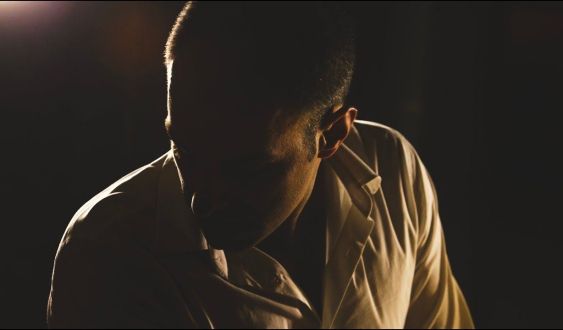
It is an immense pleasure to have the collaboration of Juan de la Rubia, a complete musician who has been invited to play the main organs of the world and who has also performed with pioneering early music ensembles, such as the Freiburger Barockorchester. His passion for music has led him to undertake projects as diverse as improvising on silent films by F. W. Murnau (Faust, Nosferatu) or Fritz Lang (Metropolis), as well as making organ transcriptions of fundamental works in music history such as Johannes Brahms's First Symphony. In addition, he keeps his primal fascination for the piano alive and currently enhances his projection as an orchestra conductor, whether at the organ or the harpsichord.
The mastery of the panoramic vision that, in sound, the organ requires -the ability to harmonize and concert timbres, lengthening or shortening tempi- is evident in Juan de la Rubia's live performances. Not only the hands, but also the feet set in motion the prodigious artifact, in this case, the work of organ builder Albert Blancafort. Despite its limited portability, the organ continues to be the most complex and versatile music-making machine. It invites us to discover the invisible movement of immaterial reality, decanting affections between the walls of light of the Sagrada Familia. One only has to close one's eyes to see the colors. To let oneself be intoxicated by the iridescence, which is pure sound.
Add The New Barcelona Post as your preferred Google source for free
Stay informed with the latest news.
