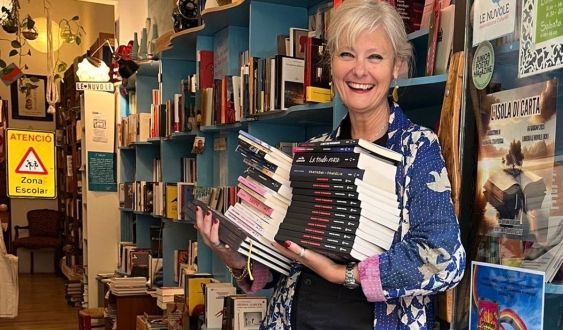
Among the more than forty languages into which Carlos Ruiz Zafón's The Shadow of the Wind has been translated, is Italian. L'ombra del vento has led thousands of Italian-speaking readers to delve into Barcelona in the first half of the 20th century. These are the types of journeys that reading a book fosters. Journeys from one country to another and from one era to another. Words are the fuel, the engine, and the transport for limitless getaways, because they trace paths from the imagination of those who create novels, poetry, essays, or any other literary domain. That's why, when we enter a bookstore, we are, above all, aspiring to travel to any imaginable destination, real or fictional, far or near.
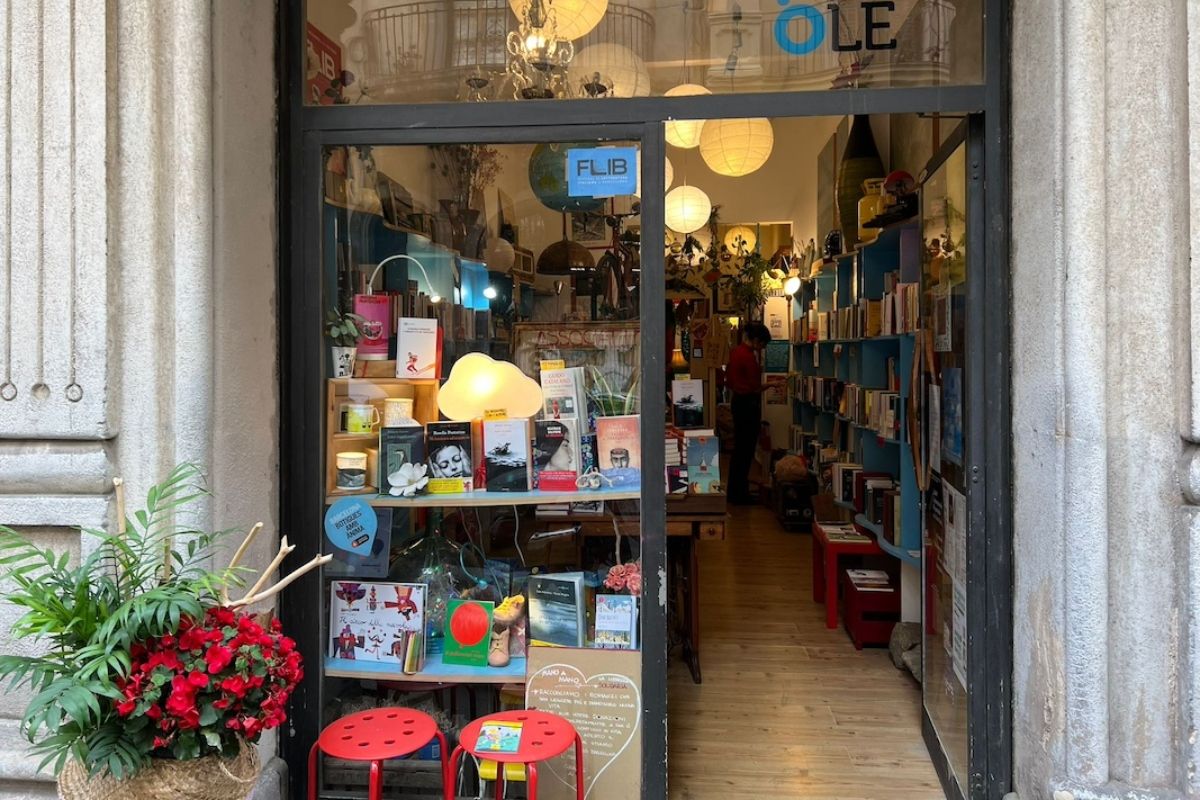
At number 11 on Sant Lluís street, a small armchair and a planter with flowers on a rush chair, in front of a bookstore window, announce that we have arrived at a special establishment. Inside, we confirm it. Wherever we look, books. We are in the Le Nuvole bookstore, the only bookstore in Barcelona specialized in Italian literature that also combines the sale of books with the organization of presentations of works with authors, in person or virtually. But interesting talks on diverse and very current topics are also cooked there. This Friday, for example, a talk will take place with Fabrizio Acanfora, an Italian musician, writer, and activist.
Since being diagnosed with an autistic disorder in adulthood, Acanfora has dedicated himself to promoting a critical vision of the dominant conception of disability in our society. He presides over the Neuropeculiar association, which proposes a new social and cultural paradigm that values neurodivergence, not to grant it inclusion, but to focus on the coexistence of differences, and for some years he coordinated the Master's in Music Therapy at the University of Barcelona, where he teaches classes on Autism Spectrum Disorder. For his autobiographical essay on autism, Eccentrico, he received the Giancarlo Dosis National Scientific Dissemination Award, granted by the Italian Book Association.
What is the role of protest and resistance in a world dominated by a system that seems to leave no alternative to submission? This question is one of the starting points of Acanfora's latest book, Rompere il gioco. El attivismo nel ventunesimo secolo, which will be presented at the bookstore. Because, apart from making us travel, books are small schools where discovery leads to learning, awareness, and consciousness. And book presentations demonstrate this, because they open debates that, as they become richer, open up more.
Classes, conversation, and talks in Italian
At Le Nuvole bookstore, all this happens very often, and always in Italian. And the soul that makes it possible for so much Italian culture to coexist in various formats is Cecilia Ricciarelli. She is a native of Rome, where she graduated in Literature, before living in different cities, such as Paris. At the Sorbonne University, she obtained her doctorate in cinema.
In the back room of her bookstore in Gràcia, a cozy space that could be part of any home, she herself teaches Italian classes. Precisely, it was the teaching of Italian at the Istituto Italiano di Cultura, from when this Roman literature graduate settled in Barcelona, that led her to realize that it was not easy in this city to find literature in Italian.
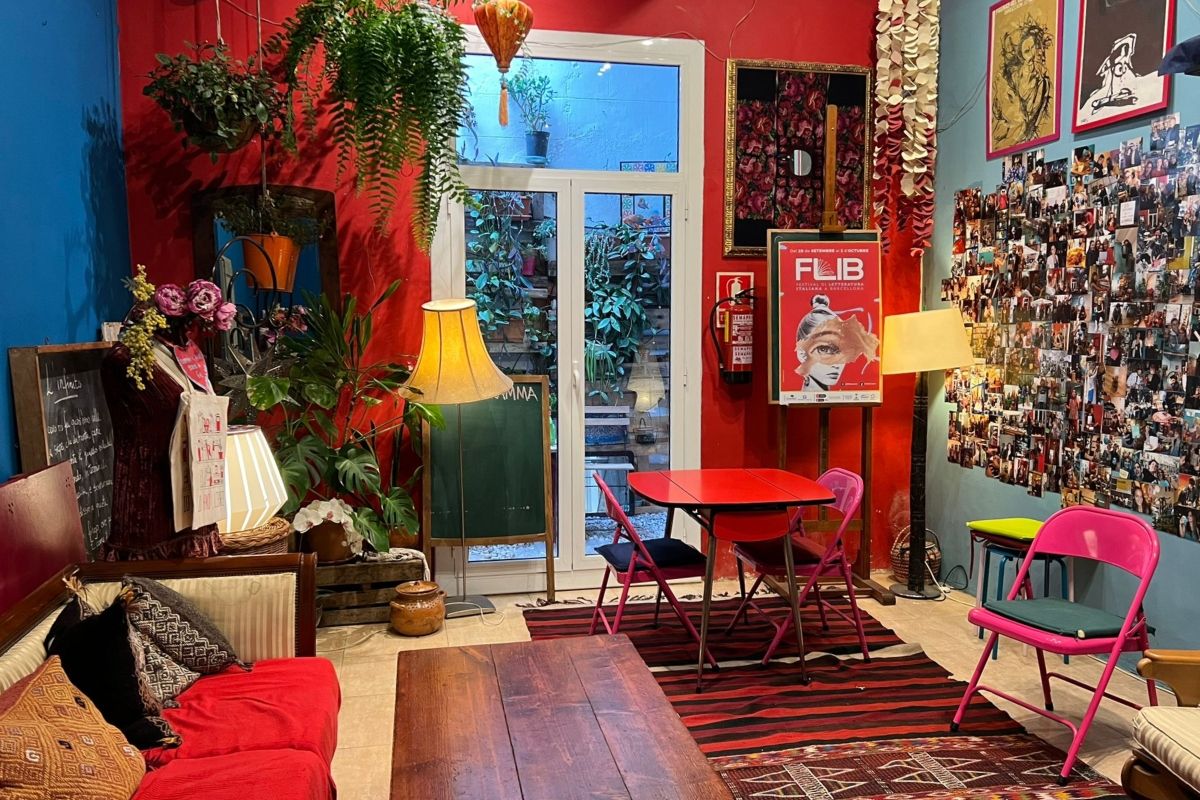
A friend encouraged her to be the one to open an Italian bookstore. And she did. It was in 2011, when she had already been living and working here for three years. With the perspective of time, today she realizes the value of undertaking this business alone. But her cultural proposal, her bookstore, which is a great bridge of connection with Italy, has not only resisted, but has taken root, being today a point of reference, both for Italians residing in Barcelona, who are many, and for all the others who are passing through, who are even more, and for Catalans and Spaniards who appreciate and are interested in Italian culture.
"With pride I am part of the booksellers of Barcelona", expresses Cecilia, who is the president of the Llibreters de Gràcia. About thirty book stores come together with this woman of letters at the helm. Cecilia highlights some of these businesses: "We have the Japanese bookstore Haiku, the English one, Hibernian Books, La Memoria, for history books, and Casa Anita, specialized in children's books". That is to say, in a short distance, the specific themes are shown in these oases of culture as if they were, each one of them, the shelf of a large bookstore in the Gracia neighborhood. "We are all small, independent bookstores, that organize activities together, such as the Diada de Sant Jordi", she explains.
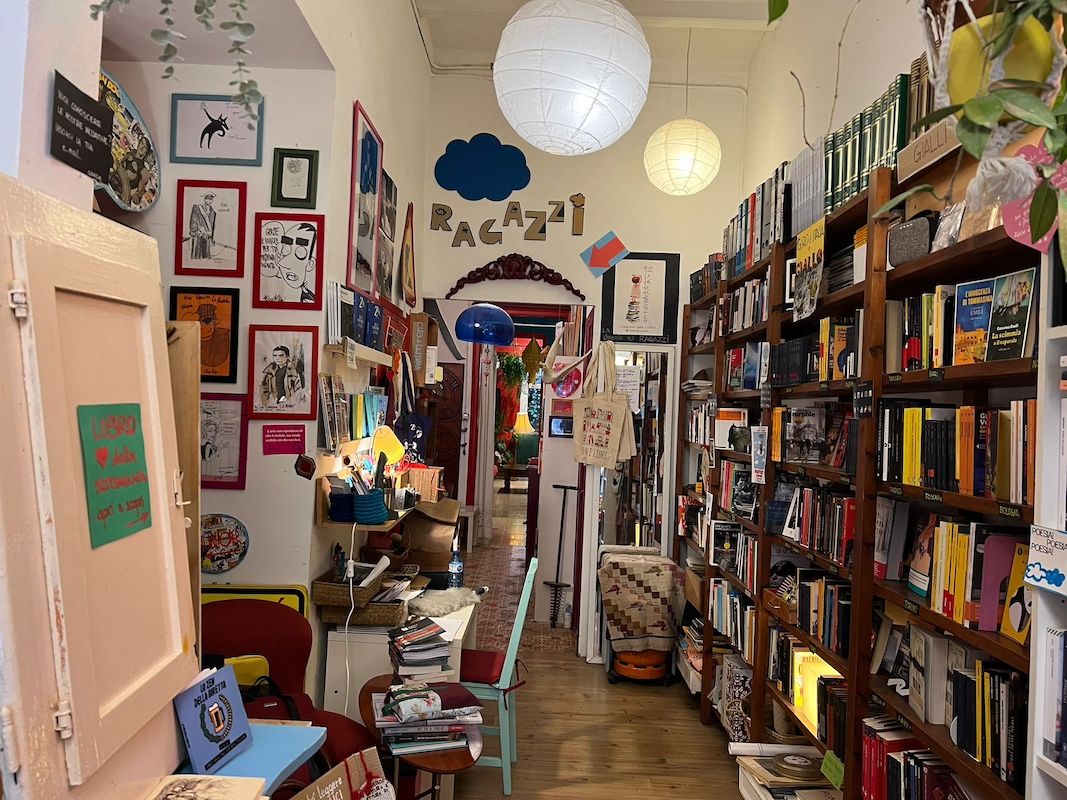
The books sold by these bookstores invite one to travel between cultures, and this is another pride that the owner of Le Nuvole can feel, as a connection with Italy. She remembers that, when her friend told her to open an Italian bookstore because there wasn't one, the first thing she thought was: "I am not an expert in Catalan literature, but what I can contribute is linked to my culture".
Reading more than a hundred books a year
Cecilia is a bookseller, a bookseller. "I feel bad when I don't know what a book I have in the store is about", she confesses. So every night she dedicates a good three hours to reading. "For me, it's a way to rest, because, if not, I keep thinking about work. By reading, I clear my mind, it's like my meditation", she explains. She reads more than a hundred books every year.
By reading, she also measures the level of difficulty of the reading, and thus knows to whom she can recommend it and to whom not. "I see what can be difficult for a Catalan", she states. This way she can be a true bookseller, advising readings to each client. In her store there are, above all, books in Italian, because those by Italian authors translated into Spanish or Catalan can already be found in any other bookstore. "Our clients want to read in the original language. Before advising them a title, we talk a little, so that I can get an idea of their level of Italian or of the authors that may be more appropriate, classic or contemporary". There are ---she says--- many people who, even if they don't speak Italian, can read books in this language.
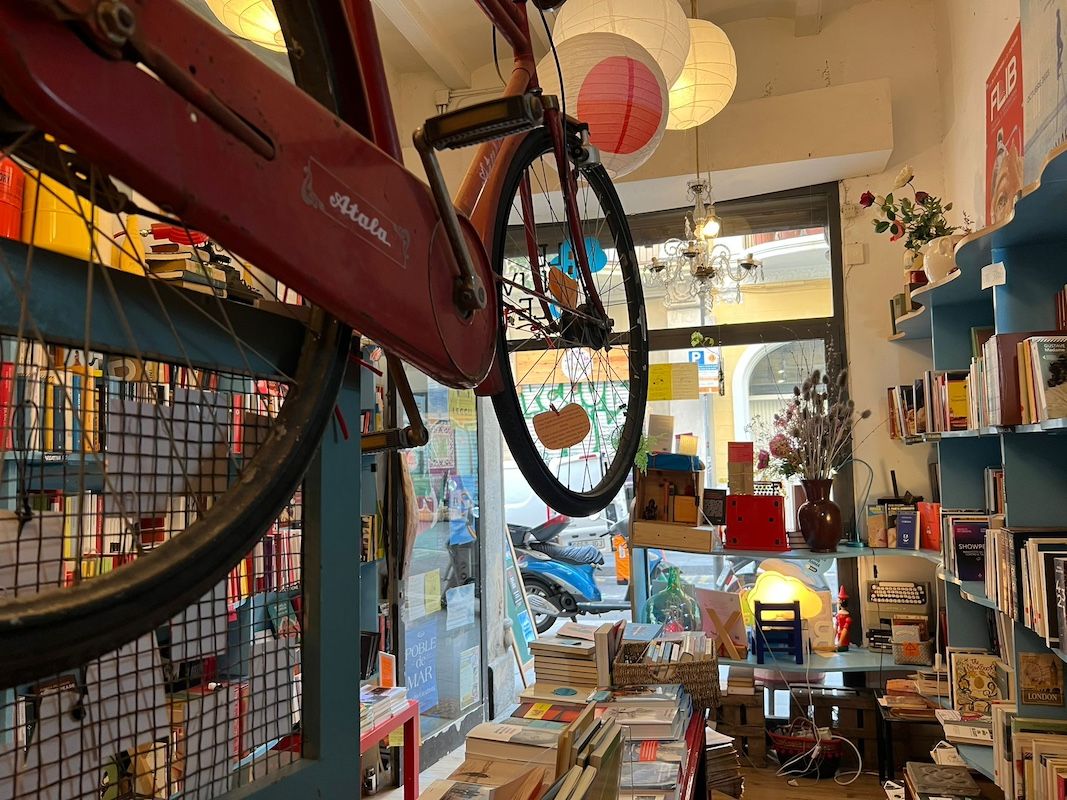
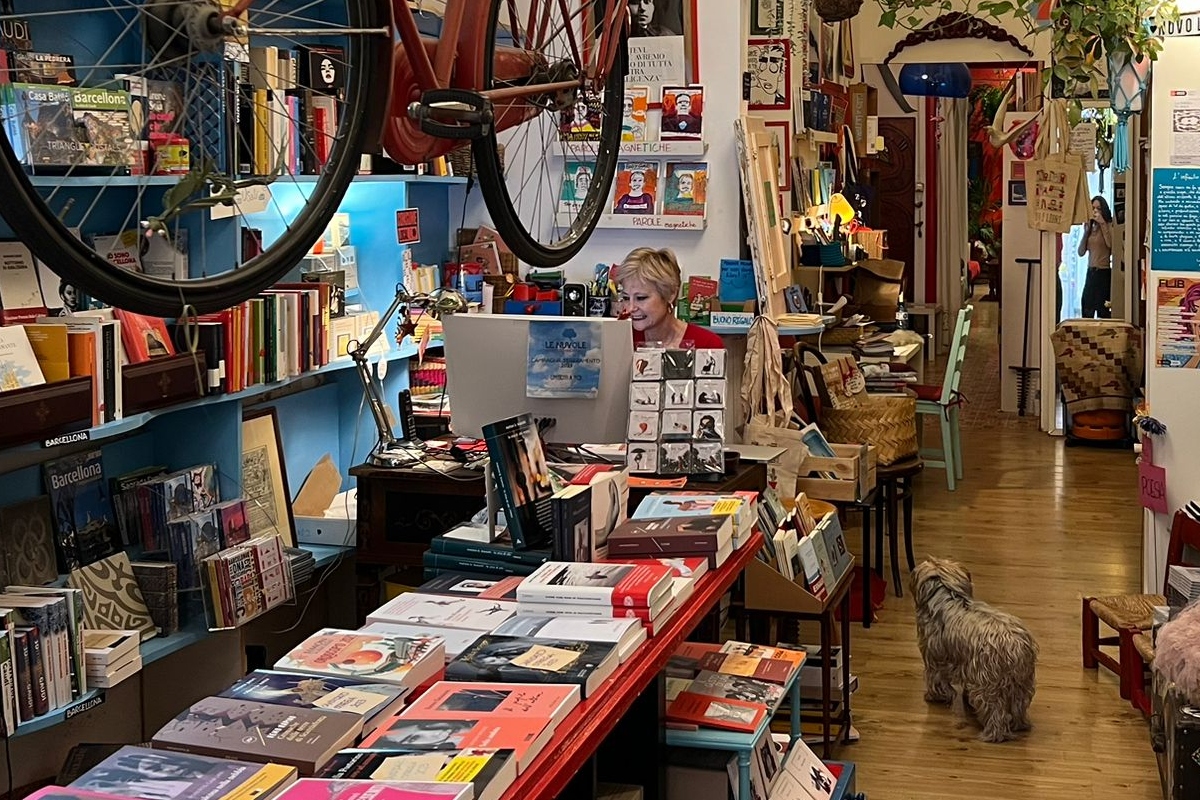
All of Le Nuvole's clientele pass under a splendid bicycle hanging from the ceiling of the bookstore, in the first space upon entering, and from this means of transport, books hang. The blue shelves give a lot of life to this bookstore where so many things happen. The activities that Cecilia organizes are announced through her Facebook account, on Instagram and, just launched this week, on a WhatsApp channel.
Very often, Cecilia travels to Italy. Every year she visits the Turin Book Fair and the Bologna Children's Book Fair. And, throughout the year, she follows a hundred Italian booksellers who, like her, run small independent bookstores in different Italian cities. The Italian authors she invites to present their books at Le Nuvole also propose readings done by other authors.
"I am outside the industrial circuit; it is a riskier situation, even more fragile, but independent bookstores have this space of freedom"Cecilia is an ambassador of Italian literature in Barcelona and, in Italy, the dissemination she has made of our Diada de Sant Jordi has taken root well. Many booksellers she knows have signed up for the tradition of the rose accompanying a book"If Halloween has brought us pumpkins, why shouldn't we bring roses and books and export the celebration of Sant Jordi?" says the person who, in addition to being in front of the bookstore, teaches Semiotics at the European Institute of Design, also in Gràcia.
The importance of trust
One of Cecilia's greatest satisfactions is when customers tell her that she was right in recommending a certain book to them. And she explains that "the authors best known to the non-Italian public are, above all, classics such as Italo Calvino, Natalia Ginzburg, Elsa Morante, Alessandro Baricco, Erres De Luca, Melania Mazzucco, Andrea Camilleri, or Antonio Manzini, to name a few. But "experience has taught me that the people who come to my bookstore are curious people who let themselves be advised, and who alternate editorial novelties and classics of Italian literature." And this, "for a bookseller is a true pleasure."
In the most common commercial circuits, Cecilia knows that books have a short life, but in her bookstore, there are no ages or product expiration dates. "Thoughts have no expiration date. I am outside the industrial circuit, it is a riskier situation, even more fragile, because, if I make a mistake, the error is all mine. But independent bookstores have this space of freedom," she states.
"I hear it said that Italians, Catalans, and Spaniards are not great readers, and it is surely true, but it is thanks to them that Le Nuvole is still open. Catalans are very curious and interested in Italian culture, and the same goes for Italians and Catalan culture. I sell a lot of the selection of books about Barcelona, in Italian, by Mercè Rodoreda, Juan Marsé, Manuel Vázquez Montalbán, Alicia Giménez Bartlett, Carlos Ruiz Zafón, Enrique Vila-Matas, Eduardo Mendoza... which is another way of getting to know this city," she concludes.
Add The New Barcelona Post as your preferred Google source for free
Stay informed with the latest news.
