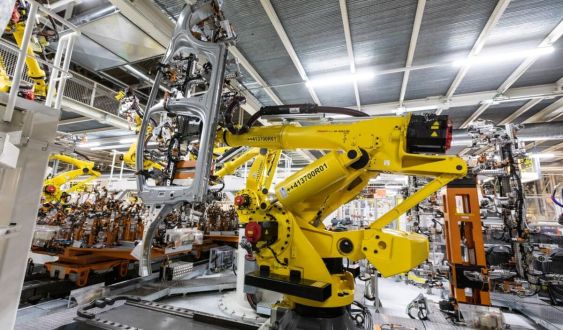
The robotics sector is regaining momentum in Catalonia, after two years of a certain slowdown, not only due to the industrial inactivity caused by covid-19 but also because 2019 was also a complex year due to geopolitical trade tensions and a slight slowdown in the global economy. All in all, the short-term future foresees the resumption of activity in the robotics sector, according to Carles Soler, a member of the Robotics Working Group of the Industry 4.0 Commission of Industrial Engineers of Catalonia.
However, it is necessary to differentiate by areas. In Catalonia, industrial robotics has had a flat performance throughout 2020, without much impact from the pandemic, explains Soler, and argues that this activity was preceded by a very expansive cycle. "In the six preceding years, 2012-2018, the industrial robotics sector practically tripled its volume, growing by 265%", according to data from the International Federation of Robotics (IFR), and in 2019 it suffered a significant setback, with drops of 12% worldwide and 28% in Spain ---largely due to the recession recorded in the automotive sector, a key piece in the expansion of robotics in Spain and Catalonia---.
In the services sector, the behavior has been very disparate. The year 2020 has been favorable for those activities that have had opportunities as a result of the health crisis, such as the intralogistics segments or those linked to health. Soler explains that intralogistics, mobile logistics ---such as the development of the autonomous car--- are areas of robotic application that "have come to stay". "Trends that were already emerging have accelerated and the pandemic situation has boosted them", in fact, in intralogistics ---robots that optimize the operation of warehouses--- it is expected that in the next two years "the number of installed robots will double from 80,000 units to 160,000 units", adds Soler.
However, other areas with significant weight in Catalonia, such as educational robotics, have suffered a significant slowdown in the last year due to the decrease in activity in educational centers due to the impact of preventive measures for covid-19.
Companies must foster cooperation alliances to gain size and face new Industry 4.0 projectsHowever, to boost the sector in Catalonia "more industrial and business alliances are needed", specifies this telecommunications engineer and director at Casiopea Robotics and president of Fundación educaBOT. For Soler, "all applications of digital transformation, that is, the path towards Industry 4.0, require company capabilities that in Catalonia, with a fabric basically of SMEs, we do not have." "Organizations must collaborate with each other and with other entities expert in technology, either through alliances or through the outsourcing of knowledge services, because the more capacity you have, the more projects you can tackle, since we are talking about initiatives that require a certain level of investment," he says and concludes: "Having an industrial fabric of a certain dimension guarantees the implementation of 4.0.
In Catalonia, the latest data referring to the robotics sector correspond to a report by Acció and refer to 2019. "They are valid, there haven't been too many changes," says Soler, while valuing the weight of large subsidiary companies of multinationals established in the territory. This makes Catalonia stand out within Spain because there is a lot of industry, but "neither Catalonia nor Barcelona are a reference hub in the sector."
According to Acció, one can speak of a sector where 89% are SMEs and 17.69% are startups; so that 44% of the companies in the ecosystem have an annual turnover exceeding one million euros; in total, 147 companies work in robotics. Of these, 28.5% correspond to auxiliary industries (services, engineering or component manufacturers); robot manufacturers (15.6%); integrators (33.3%) and companies dedicated to training (22.4%).
It is an industry that tends towards internationalization, as more than a third, 36%, are exporters. The sector as a whole had an annual turnover of 460 million euros in 2019 and generated close to 2,000 jobs.
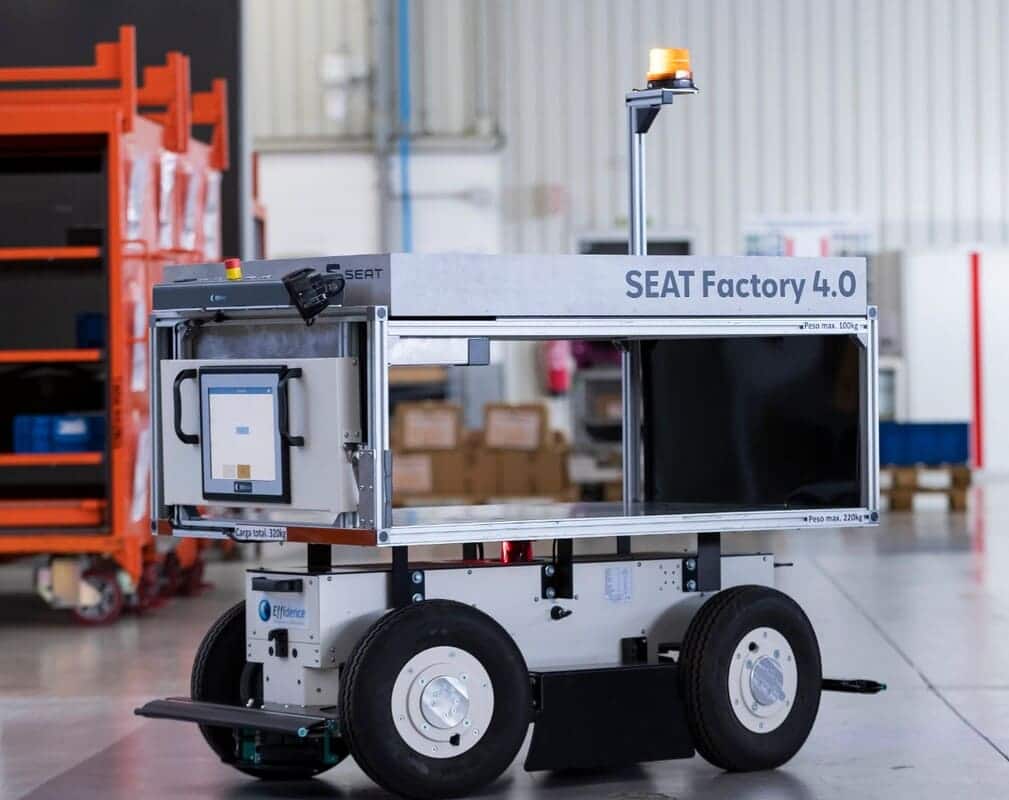
Within the future trends of the sector as a whole, artificial intelligence, along with the implementation of robotics through plug and play systems and intuitive programming, and sustainable robotics, is one of the future axes. Carles Soler is very clear in this regard: "Artificial intelligence will be the tool that eliminates jobs, not robotics." In this sense, he defends his particular thesis that "those who think that the jobs that will disappear due to the implementation of robots will be converted into other jobs of greater added value are mistaken; robotics eliminates jobs." However, Soler argues that throughout history there have been other "radical changes in production systems and we have been able to adapt with certain ease and reinvent ourselves to guarantee the future," therefore, "we will also do so with industry 4.0."
Recognition for ABLE's exoskeleton
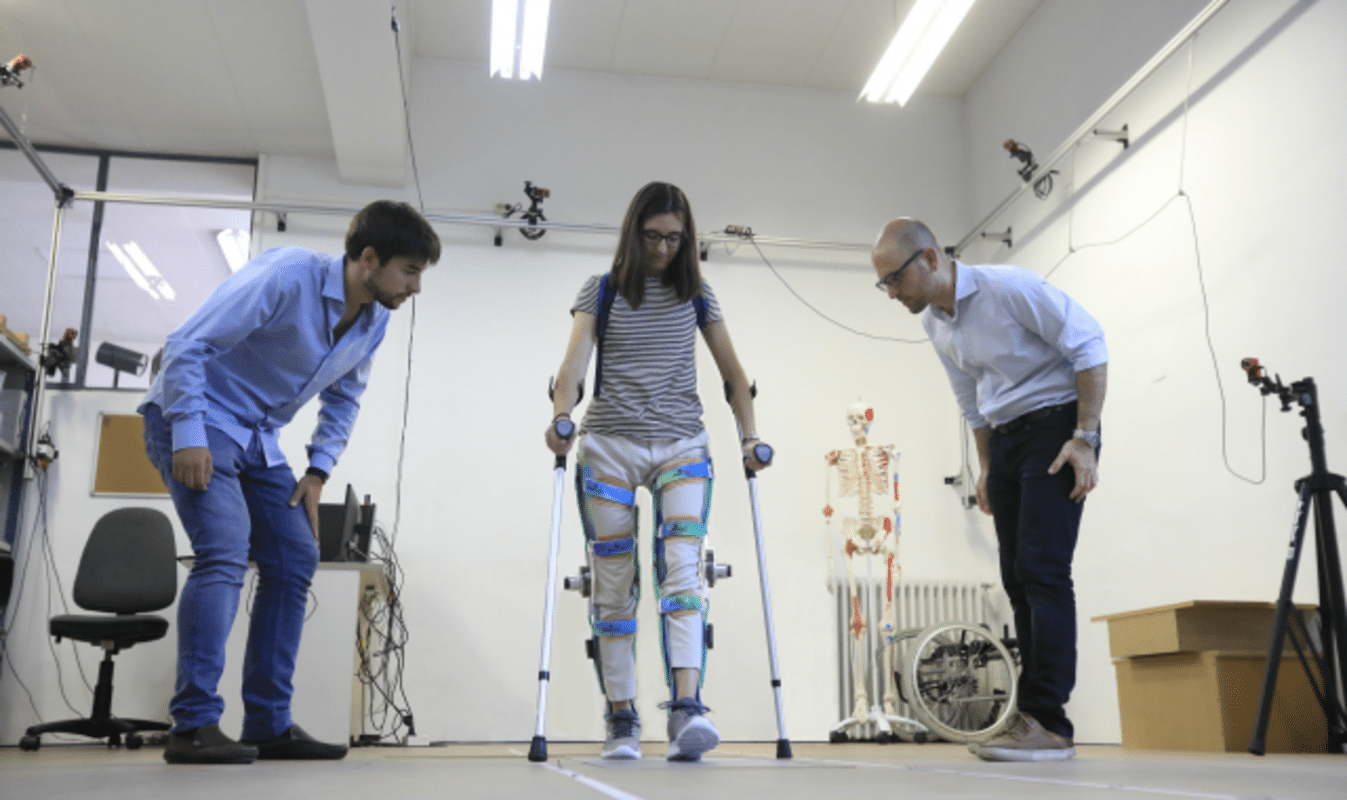
Enginyers Industrials de Catalunya has just celebrated the Robotics Night 2021, a sector meeting that this year has been able to be in person again. In this seventh edition, it has awarded as Project of the year the ABLE robotic exoskeleton, the first product of the company ABLE Human Motion, which emerged from the Biomechanical Engineering Laboratory of the Universitat Politècnica de Catalunya, with the aim of creating the lightest and most accessible robotic exoskeletons on the market. ABLE is a robotic exoskeleton that allows people with paraplegia to stand up or walk autonomously.
ABLE is a robotic exoskeleton that allows people with paraplegia to stand up or walk autonomouslyThe Industry 4.0 Commission valued ABLE for its compact and lightweight design, for the intelligent algorithms that optimize gait patterns, and for the significant cost reduction compared to current solutions. This technology allows for the improvement of the efficiency of conventional rehabilitation processes and enables many people whose mobility and independence are reduced by a disability to use it in their daily lives.
Add The New Barcelona Post as your preferred Google source for free
Stay informed with the latest news.
