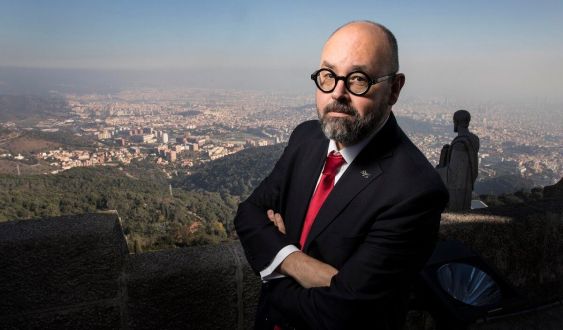
With the disappearance of an iconic writer, the worlds cultivated by him or her seem to enjoy a second life, between nostalgic and hopeful. This happened last June with the unexpected death of Carlos Ruiz Zafón, the author of Barcelona origin who, despite residing in Los Angeles, never forgot the city where he was born. On November 17, Planeta published a posthumous book by one of its best-selling authors.
[subscribe_newsletter_esp]
The City of Mist is presented as a compilation of stories that Zafón had previously published in different editions, but also includes others that are now presented for the first time. The anthology is headed by a note from Émile de Rosiers, its editor, in which he acknowledges that this collection of stories positions us before a possible roadmap to discover Zafón's literary universe. As Rosiers states, this new publication closes the list of the author's works, achieving the greatest possible recognition through the coining of the adjective "Zafonian."
The unexpected nature of this edition does not condition its reading, but, on the contrary, allows us to freely rediscover many of the elements present in Zafón's great works. It is impossible to approach these stories without constantly finding references to his previous works. David Martín, protagonist of The Angel's Game, returns in two of them narrating melancholic encounters ---like memoirs, of events that never happened--- in the Gothic nave of Santa María del Mar.
It is impossible to approach these stories without constantly finding references to his previous works. David Martín, protagonist of The Angel's Game, returns in two of themThe so-called bookmaker Antoni de Sempere, or the translator Raimundo de Sempere, are characters who constantly remind us how "Zafonian" that surname has become. If we disregard the posthumous nature of the stories compiled here, we would believe that we are facing a kind of hookthat the author throws at us to predispose us to a possible revision of that world of mystery that we have been discovering throughout Zafón's different novels.
Once again, Barcelona is for Zafón the perfect place complement that acts as the home of mysteries. The Barcelona that the author draws in his stories is the same one that has followed him throughout all his previous works, especially the tetralogy The Cemetery of Forgotten Books (2001-2016). The fantastic character of his stories coexists with an objective vision of the city, a geographical space that holds a strong spiritual and historical charge accumulated by the events experienced by each and every one of its inhabitants.
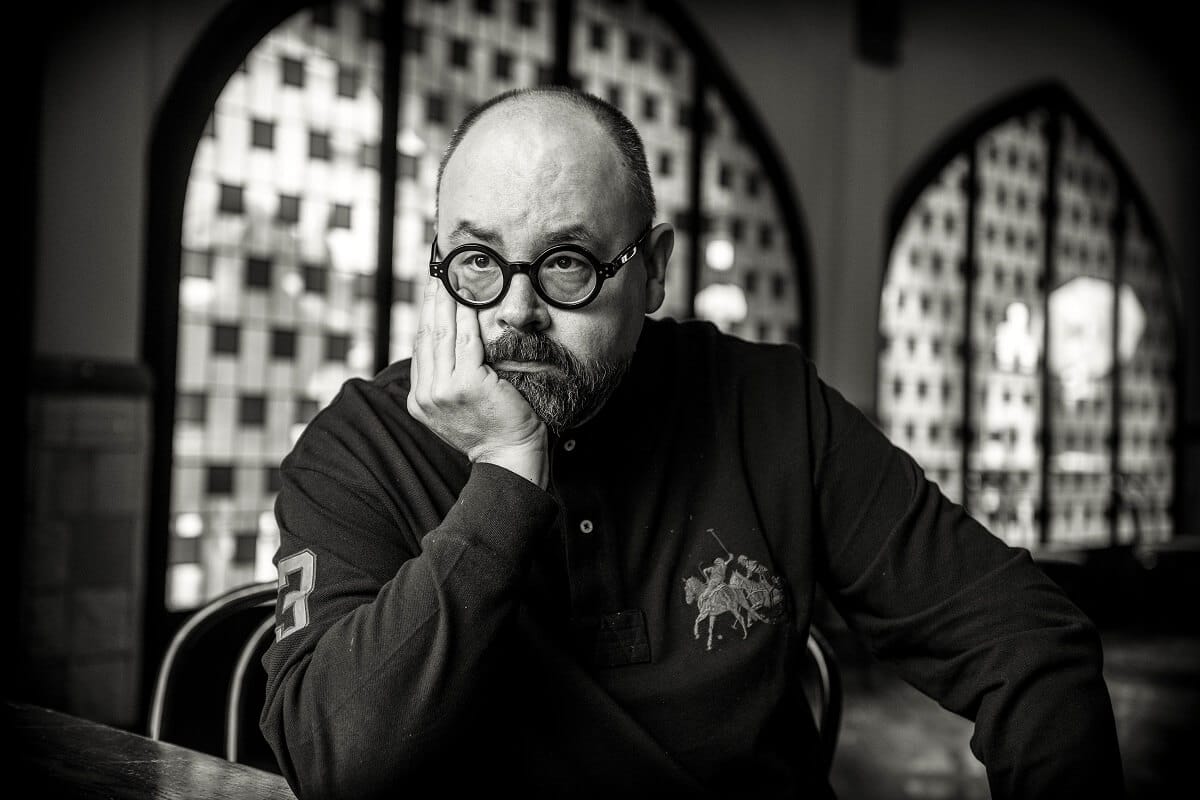
Unlike other occasions, in this anthology of stories, the author places us in different historical moments, thus demonstrating an important knowledge of the different circumstances that have transformed the city of Barcelona. This approach to its past, despite the freedom allowed by fantastic narration, is nothing more than proof of the respect and love that Zafón felt for it.
The city described in Zafón's stories is not an easy place, nor do its characters enjoy particularly simple circumstances, but amidst all that coming and going of transformations, Barcelona presents itself as the space where the deepest dreams come to life: the characters cannot help but show themselves poetically fascinated by the city.
Once again, Barcelona is for Zafón the perfect place complement that acts as the home of mysteriesPerhaps it is in the story of The Prince of Parnassuswhere we find the best example of this optics of beauty, when Miguel de Cervantes, an illustrious character from the story, exclaims from the heart: "I take with me the memory, prisoner of the beauty of its streets and debtor of its dark soul, to which I promise to return to surrender mine and embrace myself in the sweetest of its oblivions."None of the arguments in which the experiences of the different characters unfold would make sense without that place that allows them to constantly refer to a past.The history that has turned the city into what it is, a constant melting pot of strengths.
The trace left by Zafón's work in Barcelona, after its fantastic recreation, reminds us that what is genuine about the city is not the goodness of its circumstances, but the eternal possibility of regenerating and dawning brighter than it was. Barcelona is for Zafón the rose of fire that no matter how much it burns will never be consumed. Reading The City of Mist places us before a reality: vindicating Zafón's work necessarily leads us to do the same with Barcelona, and there is no better way to do it than to allow ourselves to know the city and scrutinize it in all its dimensions. Perhaps we will never hear from the Sempere family again, or never find the Cemetery of Forgotten Books, but we should not doubt that, despite everything, Barcelona will continue to be the place of infinite possibilities.
Add The New Barcelona Post as your preferred Google source for free
Stay informed with the latest news.