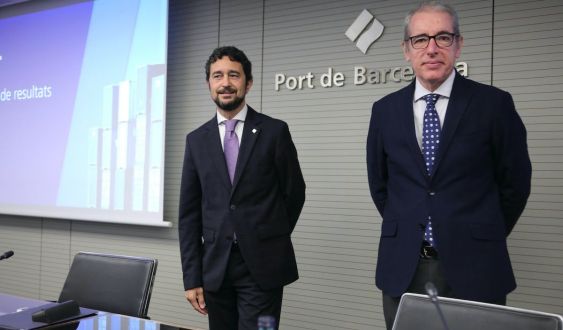
The good performance of all traffic at the Port of Barcelona, with the exception of vehicles, has allowed it to break a historical record in total traffic, reaching 36.3 million tons in the first half of 2022. This figure represents an 11% growth compared to last year, when 32.7 million tons were registered during the same period.
In 2021, activity had already begun to recover from the pandemic crisis, only 5% below 2019 results, but it was not until this semester that pre-pandemic figures were surpassed by 6%. In 2019, total traffic stood at 34.5 million tons, the highest record at that time in the historical series.
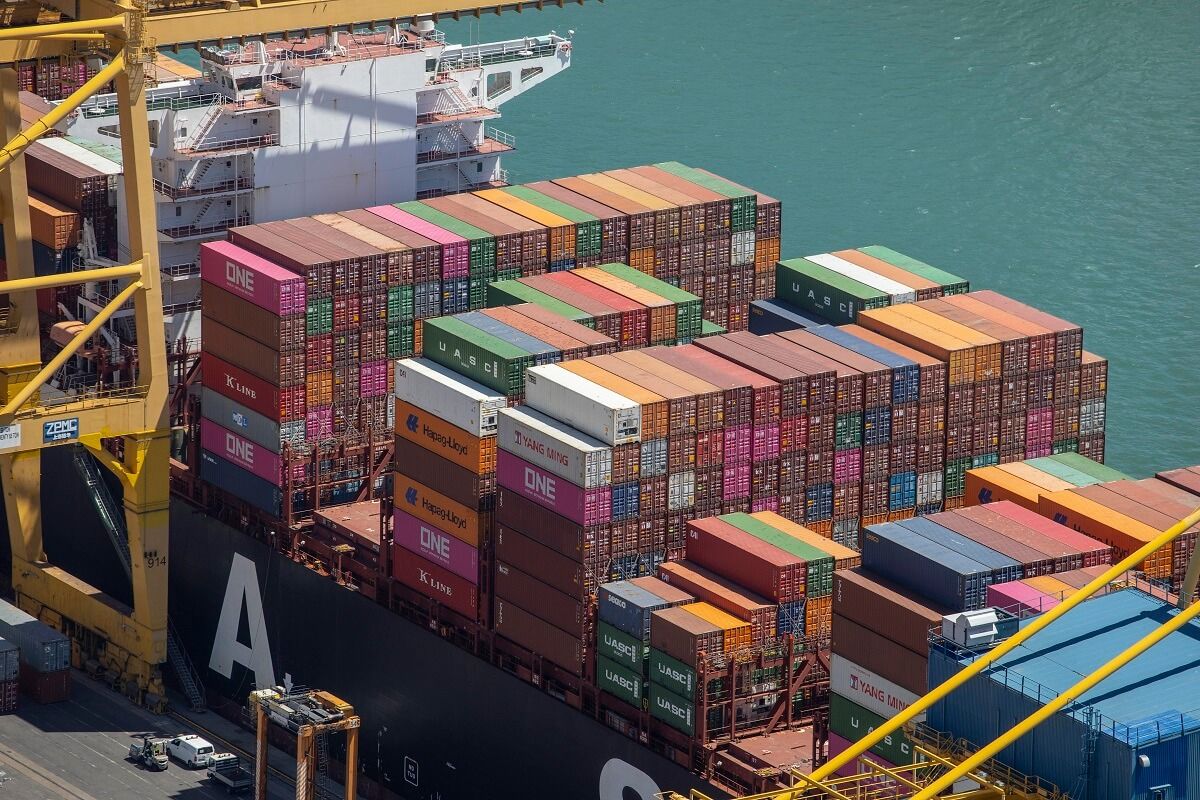
The recovery trend that the Port of Barcelona is seeing in the first six months of the year has been accompanied by another historical record, this time in container traffic, surpassing the barrier of 1.8 million TEU, with a growth of 0.7% compared to 2021. In addition, imports have grown by double digits, with an 11% increase, which the general director of the Port of Barcelona, José Alberto Carbonell, has stressed has not happened for a long time. In the same way that imports have risen considerably, exports have fallen by 6%, especially due to the reduction in pork shipments to China.
In line with the good evolution of traffic, economic indicators are also positive in this first semester. Thus, the port registered a net profit of 21 million euros, an 84% increase compared to the previous year. Turnover has grown by 18%. In both cases, these are figures similar to those of 2019. And, for the rest of the year, the president of the Port of Barcelona, Damià Calvet, has maintained that "they do not see any significant alert for the second half" that could imply a change in trend.
One traffic that is not fully recovering is that of vehicles, still affected by a crisis that began before the arrival of COVID, as a consequence of the transformation the sector is undergoing and the new mobility options that are emerging. The pandemic only deepened the shock. In this first semester, the fall in vehicle traffic has been 13%, in line with the decrease in production being registered by Spanish automakers and in registrations.
However, Carbonell has indicated that a change in trend in this traffic began to be seen in the past month of June, continuing in the first days of July. In this regard, he has remarked that it has been noticed in the arrival of new traffic of electric vehicles manufactured in China. Among them are those of Tesla, which since this May are distributed from the Port of Barcelona to Europe. Likewise, the completion of Seat's Temporary Employment Regulation File (ERTE) has also benefited activity in the infrastructure.
Cruises, at the center of the debate, have not yet recovered
In the midst of negotiations with the City Council, the president of the Port has defended that there is not "an alarming increase in cruises, but a progressive recovery of this very important traffic." Specifically, the number of cruise passengers is 47.5% below 2019, with 670,000 people.
Calvet has insisted that "there has never been an open bar" in the port with cruises and has recalled the pact agreed with the consistory in 2018, which limited the number of terminals destined for this traffic to seven and concentrated them in the Moll Adossat, as well as promoting the electrification of the infrastructure to prevent ships from polluting when they are stopped. "We are complying with what we agreed and, therefore, we ask to be allowed to work," he stressed.
The number of cruise passengers is 47.5% below 2019, with 670,000 peopleThe president has considered that, if the arrival of cruises is to be limited, the space available for them must be limited, with the aim of not violating maritime legislation. On this issue, he emphasized that the 2018 agreement already limited the number of terminals.
Asked about the proportion between cruises that are based in Barcelona and those that make a stopover, he said that it cannot be known until the end of the year because certain markets such as the American, which are of the first type, have not yet arrived. In 2019, cruises based in the port accounted for 57% of the total, a quantity that Calvet has indicated they are working to increase.
Add The New Barcelona Post as your preferred Google source for free
Stay informed with the latest news.
