
We are the blaugrana people, it doesn't matter where we come from
A flag unites us as brothers
It has been shown that no one will ever be able to bend us
Every good name is the prelude to a great story. This is the case of La Telaraña azulgrana (Península, 2024) written by Roger Vinton. The man who still uses a pseudonym in high society to embrace freedom and escape self-censorship. His reference Mark Lombardi also painted the puzzles of the most powerful in the form of a spiderweb.
La Telaraña azulgrana is the chronicle of power at Can Barça from 1899 to 2024. The never-before-told story of a club that the author previews for us over coffee in a private room at the Laie bookstore, under the watchful eye of a Pablo Picasso painting. It recalls the encyclopedia of the late journalist Ramon Barnils.
You make the story or it gets unmade for you, with more or less sugar. "The history of Barça is poorly explained, due to the historians' negligence," insists the author.
The starting lineup of examples is largely unknown: the history before the legendary Hungarian player Ladislau Kubala and his possible sale to Juventus, the archive of captain Joaquín Peris de Vargas, the case of the Filipino Juan de Garchitorena de Carvajal, the file of president Gaspar Rosés i Arús, the whistles in 1925 to the Spanish anthem, the Catalan identity made blaugrana, the nickname of culés at the old Industria street field, the campaign to oust Diego Armando Maradona or the authentic origin of the More than a club.
Barça is much more than a ball that goes into the goal or sometimes hits the post. Behind any football club there are also the secrets of a Catholic or Protestant community, of a railway workers' union or of a group of police and security forces.
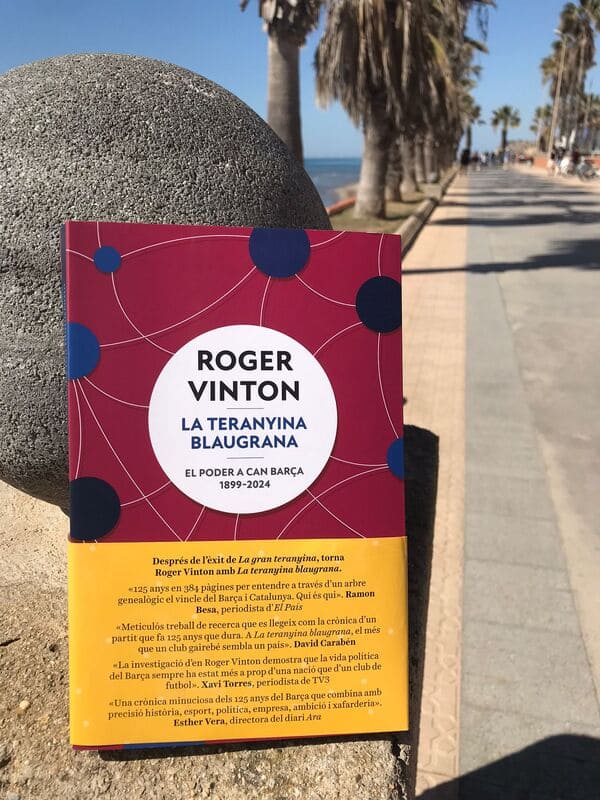
The story of the Swiss Joan Gamper, who was the founder of Barça, has not been told very well either, Roger Vinton reminds us. He resigned as an accountant for Ferrocarriles de Sarriá. He had health problems and made the journey across the Pyrenees to heal himself. They say he was marginalized by the club and that he agreed to his suicide with a friend because of the stock market crash of '29. Vinton questions and breaks the official narrative: Gamper had a great business vision and internationalized Barça until the black swan of the World War caused the club's economy to plummet. In fact, the blaugrana finances would make for a spin-off of this spiderweb.
The author says ---he has read all the club's minutes from 1911 to 1936 and beyond--- that "the great absurdity is to separate politics and sport" and that is why the culture of football interests us so much.
Political interference in un nom que sap tothom? Quite a few! For example, the events of 1925 where the dissolution of Barça was proposed when the assembly of members was considered "the club's worst enemy", the CNT during 1937 and the workers' commission with secretary Rossend Calvet, the management of the transition between 1939 and 1946 or the creation of a State Club for "political interest" like Real Madrid at the hands of the Padrós brothers, from Mataró.
In the blaugrana web we have 384 pages and 125 years of history where tradition and narrative do not always match the documents. Journalist Ramon Besa recalls that "Barça's history moves between two souls" such as blue and garnet, sanity and outburst or the sea and the mountain. Objectifying dualism is very complex and adding dialectics even more so: thesis, antithesis and synthesis.
Perhaps at Can Barça we are precisely missing this: a good whistle of synthesis.
According to Roger Vinton, the best presidents of Barça are Joan Gamper, Gaspar Rosés, Montal father and son ---the first cotton merchant signed Kubala and the last cotton merchant signed Johan Cruyff ---, Josep Sunyol ---president in 1938 after being shot in 1936, yes you read that right--- and Joan Laporta during his first stage years after the famous Elefant Blau. Since then, they say we still live under the 2003 regime, that is, the legacy of the batch of directors who accompanied the young Laporta in that historic struggle with publicist Lluís Bassat for the club's presidency.
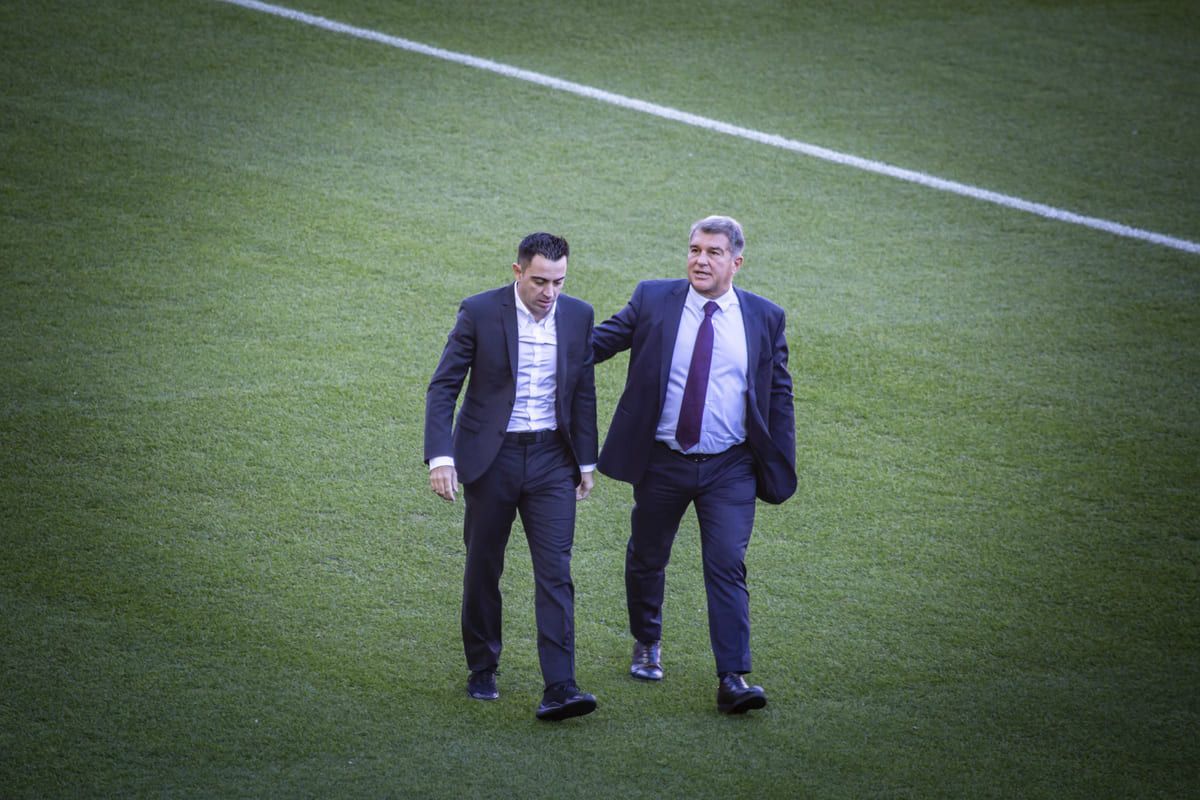
Everyone wants to control Barça and climb onto its web. It seems that the elites consider it theirs and whoever makes it theirs becomes elite. The author finishes at goal mouth that the type of elite that now governs the club is made up of financiers, executives and liberal professionals. Before, they were stone-cut entrepreneurs. It is the reflection of a change of era in society. "The club is governed by whoever rules the economy", he concludes.
Beware, however, that La Telaraña azulgrana is not a football book.
It is power and culture. Like Barça.
And now yes, now we want the ball.
In the words of David Carabén himself, Barcelona's spirit has a firm will for leadership and to assume full responsibility for its destiny, where the way of doing things is a differentiating factor: the process, even above the final result.
And in all of this, the author of the manifesto finds commonalities with the way of being of the Catalan people, a nation of merchants refractory to authoritarianisms. A game of combination, collective, with precedents both in Ramon Llull's Ars Magna and in Antonio Gaudí's trencadís, and a clear reflection of traditions such as sardanas and castellers.
Hopefully, we will all be able to provide the club with the necessary instruments to ensure its survival, as we know it, for another one hundred and twenty-five years.
Add The New Barcelona Post as your preferred Google source for free
Stay informed with the latest news.
