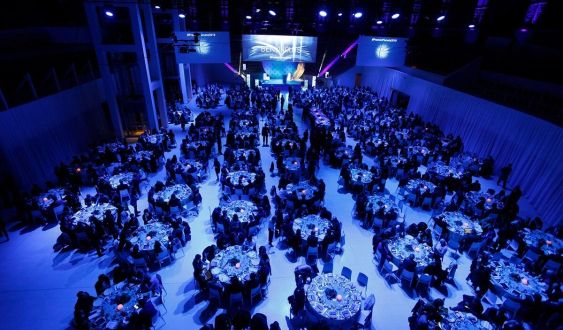
After last year's atypical edition, the Planeta Award returns to its original format, with the traditional awards ceremony every October 15, which will be presided over by the Kings. The 70th edition will be held at the Museu Nacional d'Art de Catalunya (MNAC), its new location since 2019 after leaving the Palau del Congressos, without taking into account the small parenthesis that the Palau de la Música represented in 2020. The pandemic forced a more discreet gala, without dinner and with only a hundred guests. Even the finalist, popular television presenter Sandra Barneda, received the award from a distance.
In this edition, back to normality, the Planeta Award, one of the best endowed for unpublished works, has broken participation records, with 654 original works submitted, the highest figure in the history of this award created in 1952 by the founder of the publishing house, José Manuel Lara Hernández. From among the almost 700 original works, the jury has already chosen the ten finalist novels of the LXX edition. The philologist José Manuel Blecua; the journalist and writer Fernando Delgado; the writer Juan Eslava Galán; the poet, literary critic and journalist Pere Gimferrer; the writer Carmen Posadas, the writer and former general director of the National Library Rosa Regàs and the editorial director of Planeta, Belén López, have been in charge of selecting the best stories that have been submitted. Juan Eslava Galán, Carmen Posadas and Rosa Regàs won the Planeta in the past.
Only three of the finalist originals have been submitted without a pseudonym: Descalza voy contigo, by Antimio Cruz Bustamante; El túnel de Oliva, by Jorge Sánchez López; and La llama del pasado, by Aurelio González González. The rest of the titles and authors to be discovered who will compete for the Planeta this year are Cadáveres insepultos, by Escolarca de Clazómenes; Ciudad de fuego, by Sergio López; Barbarie by El Arlequinado; El viaje by Camilla Seymour; El canto del grajo, by Fermina Cobos; Hijos de la ira, by Yuri Zhivago and Donde el recuerdo nos lleve, by Elahanleys.
Regarding the origin of the novels received in the 2021 edition, the participation of authors from South America stands out, with 104 works submitted, and from North America, with 53, mostly from Mexico, in addition to Spain. There is also European participation, widely distributed among the different neighboring states. From Spain, Planeta has received 389 originals. Madrid is in the first position, with 79 novels, followed by Barcelona (53); Valencia (24); Las Palmas (23); Seville (15), Cadiz (14), Alicante (13) and Zaragoza and Murcia (12), among other origins.
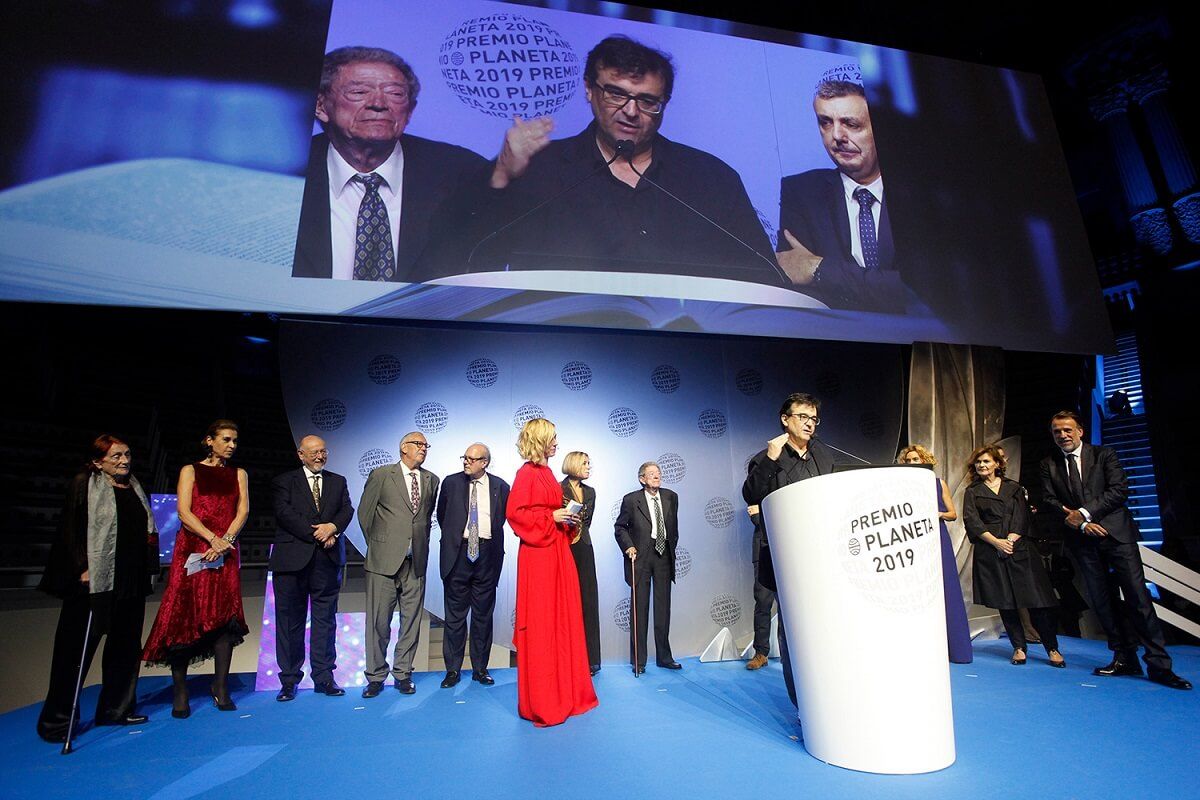
One of these originals will join the list of winners formed by writers such as Ana Maria Matute (1954), Juan Marsé (1978), Manuel Vázquez Montalbán (1979), Terenci Moix (1986), Soledad Puértolas (1989), Antonio Gala (1990), Antonio Muñoz Molina (1991), Camilo José Cela (1994), Maruja Torres (2000), Juan José Millás (2007) or Eduardo Mendoza (2010). The most recent have been Javier Cercas (2019) with the detective novel Terra Alta, the first installment starring the mosso d'esquadra Melchor Marín, and Eva García Sáenz de Urturi (2020) with the medieval thriller Aquitania.
The winner will receive a prize of 601,000 euros and the finalist, 150,250 euros. These amounts are far from the original endowment that this award began with, 40,000 pesetas (a little more than 200 euros), which, moreover, initially only contemplated one winner and, from 1974, added the runner-up prize. Since its birth, the Planeta check has been gaining zeros over the years, at the same time that the country was developing economically, until it reached 100,000,000 pesetas for the winner and 25,000,000 pesetas for the finalist in 2001, when the prize turned 50 years old. With the arrival of the euro, the figures were rounded and remained fixed at the current ones.
Add The New Barcelona Post as your preferred Google source for free
Stay informed with the latest news.
