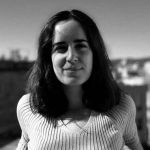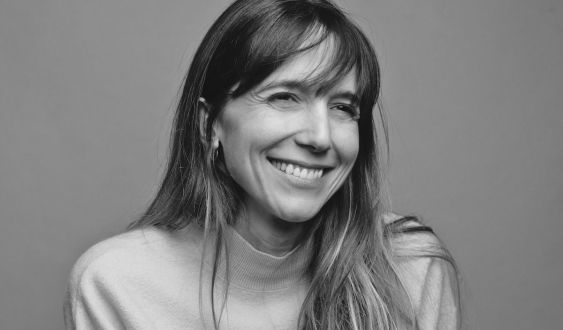
Laura Ferrero (Barcelona, 1984) has always been interested in astronauts, whom she defines as those who "went very far to see what they had closer." Having read their stories for a long time, she knows them well, she emphasizes, which has allowed her to intertwine them with her own when she set out to tell it ---and imagine it---, weaving parallels with the family that disintegrated as soon as it formed and left its members floating in a distant universe.
Los astronautas (Alfaguara) begins to take shape with the unexpected discovery of a photograph that for many may seem commonplace. It was at that moment when an adult Ferrero saw her father, mother, and herself, writer and protagonist of the novel, together for the first time. The snapshot was taken when she was just one year old, shortly before her parents separated and that family ceased to exist forever.
From that fortuitous encounter, Ferrero turned the photograph into the germ of everything she was never told. In the first person, "it was my story, it's easier for me," the author narrates what could have happened, making fiction replace reality, after trying to find it by interviewing her parents and realizing that their versions did not fit. "It's not autobiographical. Based on things I know, I fill in silences and gaps," she maintains. This has been the first time she has written from something so autobiographical, so she has had to find a way to tell the story, knowing that there were chapters she could not explain or had to pass through the sieve of imagination: "Writing about family does not mark the path to where I had to go, but to where I did not have to go."
It has been a process that has had many stages, lasting between four and five years, she explains, combining it with the writing of the short story collection La gente no existe (Alfaguara, 2021) and leaving it for a time when her mother fell ill. "Los astronautas is like a person's life, with its pauses," she says. By telling this story, Laura Ferrero feels that she has been able to "find the way to accept uncertainty and gaps." "It is a book written only from love. It has been a journey of many years, very transformative," she remarks.
Although it has that autobiographical origin, the Barcelona author feels that the novel reflects "the same themes, the same ways of looking at the world" as the rest of her books. "I have always written about personal themes," she emphasizes. A vision that she defines as "dwelling on details," from an intimate daily life, whether it be the affectionate familiarity of Duralex plates and Santillana notebooks or the passive rejection of dates with bacon at Christmas, with a very graphic style, as much as the green Pilot or the pointed handwriting of grandparents. "Your parents are always very close but you have never stopped to look closely," she argues. Maybe you don't need to go to space to understand them.
Add The New Barcelona Post as your preferred Google source for free
Stay informed with the latest news.