
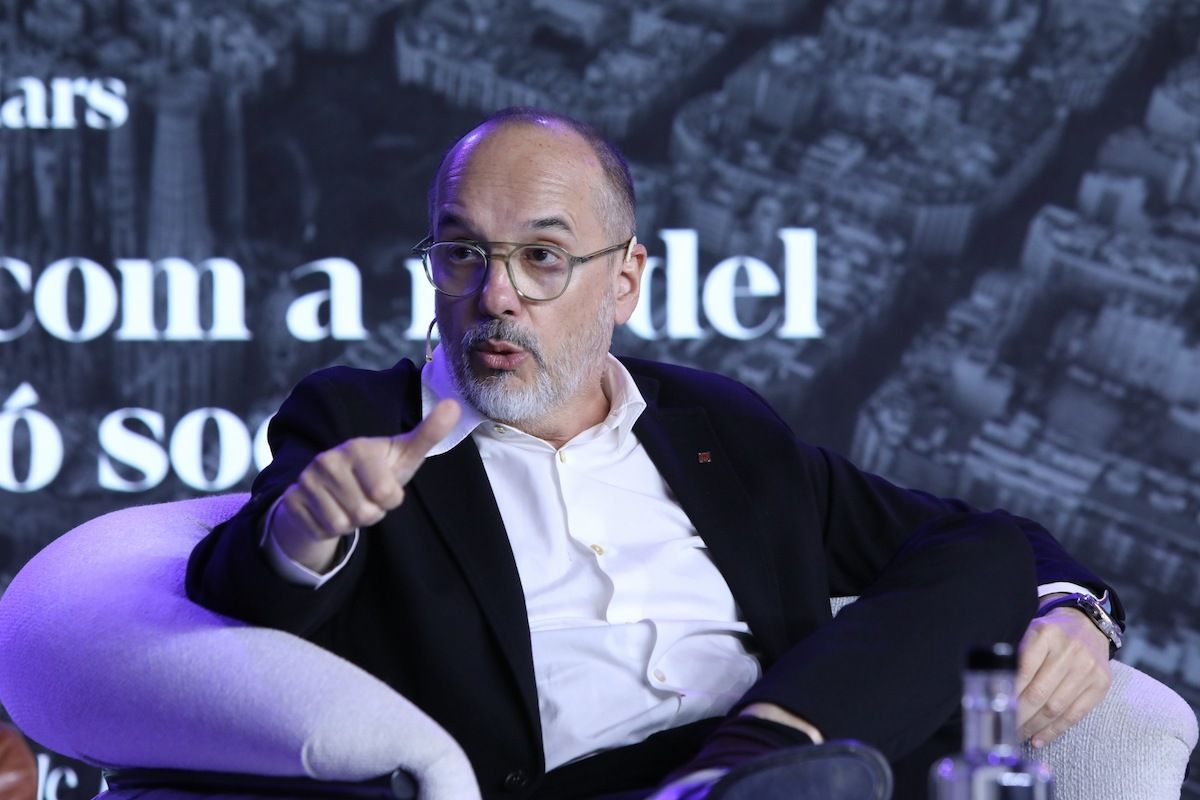
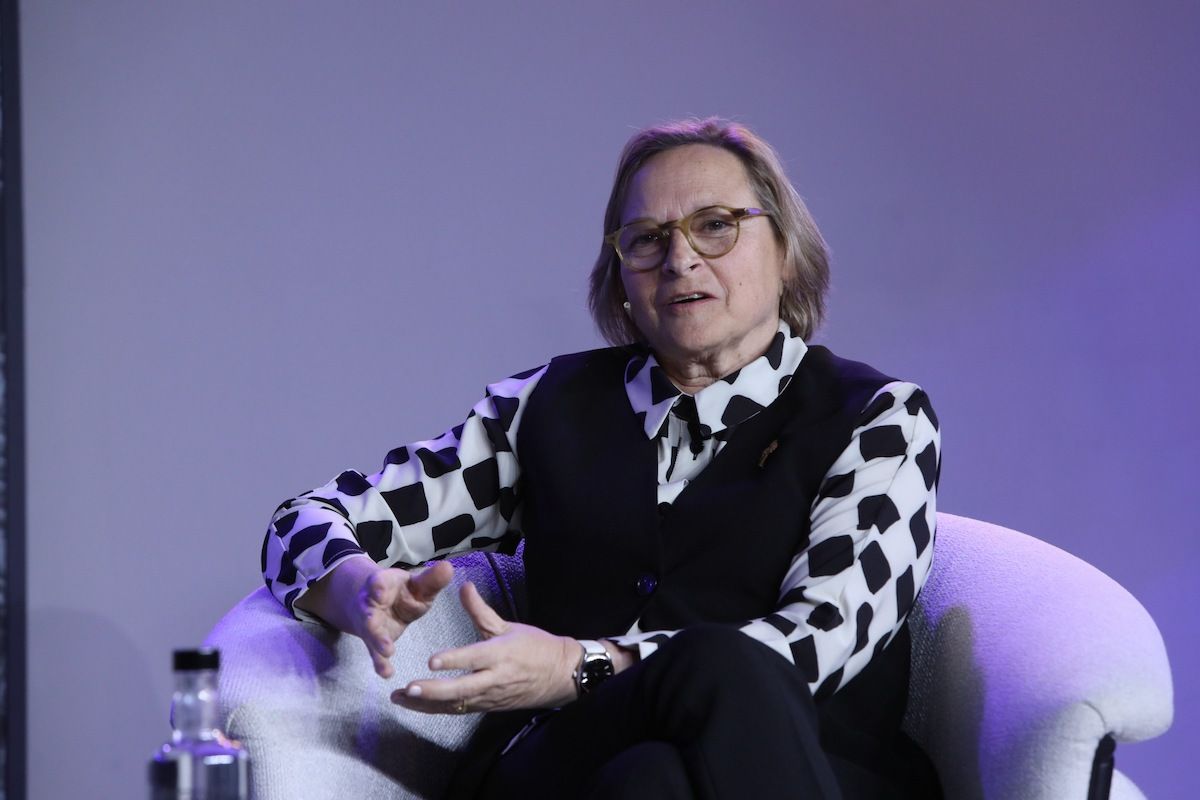
The Minister of Social Rights, Carles Campuzano, has announced that the parliamentary processing of the Catalan Third Sector Law is in its final phase, with its approval expected before summer. The text that the Parliament is finishing to polish will serve to provide recognition and legal security to social entities, as well as regulate the mechanisms of collaboration of the third sector with the public administration and the private sector. "It is the political recognition of a reality that today we proclaim, but that has no legal framework that recognizes it. It exists, it is happening, but we do not have a law that says this is the third sector and with the third sector we are going to do these things," the minister said in a new edition of the The New Barcelona – Moments Estel·lars cycle, accompanied by the general director of the Fundació Catalunya La Pedrera, Marta Lacambra. The session had the collaboration of CASA SEAT, Must Media Group and Barcelona Global.
This will be one of the ways to strengthen a third sector with a long tradition in Catalonia, but affected by the cuts of the last economic crisis, an aggravating factor of its historical structural deficiencies. The new norm to provide a framework for entities such as foundations, associations, and non-profit cooperatives, promoted by the Taula d'Entitats del Tercer Sector Social and La Confederació, will be accompanied by another, the Law on the instruments for the provision of the public system of social services, designed to modernize the concertation model and move from prioritizing, in the contracting process, the economic offer to the quality of the project and attention to the person. But, as Campuzano has remarked, this second norm will be less likely to be approved in this legislature, with elections scheduled for less than a year from now.
The minister also took the opportunity to demand "a country agreement" that guarantees salary equalization for third sector workers, mostly women, one of the main threats to the sector. "This model has an enormous weakness: the difference in salaries between third sector workers and workers who perform the same tasks but work in the health sector or in public administration," Campuzano stated. "Today, a health nurse can earn up to 96% more than a nurse in a residence, or a geriatric assistant is earning less than a supermarket cashier," he maintained. "We face an enormous challenge. We must allocate resources and, for that, a country agreement is essential to allow us to achieve salary equalization for workers in the social services field," he declared. According to Campuzano, these salaries, which are far below what they should be, are not only a problem of "dignity," but will also prevent entities from finding the workers they need in the future.
To all this, Lacambra has demanded from the administration "more trust" in social entities, often, suffocated by all the bureaucracy they have to follow. "From suspicion and distrust, bureaucracy is trapping us all. We are complicating our lives in an extraordinary way," emphasized the general director of the Fundació Catalunya La Pedrera. Hers is one of the 3,000 social entities in Catalonia, according to figures from the Department of Social Affairs, a fabric that totals a global workforce of 100,000 workers and reaches one million users, reinforced by a volunteer network of 300,000 people.
In the case of the Fundació Catalunya La Pedrera, heir to the savings banks of Catalonia, Tarragona, and Manresa, its impact expands throughout Catalonia. Through its memory workshops for Alzheimer's and Parkinson's patients, the foundation serves 2,000 people daily throughout the territory. A large part of its resources are obtained from its main asset, La Pedrera, visited by one million tourists a year. But they are also responsible for operating Món Sant Benet, a monastery that, according to Lacambra, has become the third largest job generator in Bages after Ausa and Tous. They even own 0.5% of the territory of Catalonia, a total of 9,000 hectares of natural heritage, of which 70% are forested areas, with small parts in Montserrat, the Ebro Delta, Cap de Creus, Tavertet, or the Congost de Mont-rebei.
"Our survival was not easy; we came from a financial environment where nothing was left. Thanks to the Law of Special Foundations, we managed to reactivate some statutes and a board of trustees. We had assets, but we didn't have a single euro, so we had to start imagining what kind of return could be obtained from La Pedrera and Sant Benet," explained Lacambra. Currently, the foundation's budget stands at 42 million euros.
A sector with medieval roots
The third sector has a history that goes back a long way. The origin of these entities now called non-profit, because they are neither the administration nor private companies, began to appear with the industrial revolution from the second half of the 19th century. "At a time when the welfare state did not exist, civil society began to articulate itself to respond to the social risks associated with industrialization, to job loss, to getting sick, to having an accident or to getting old and no longer living off your work," Campuzano explained. They were also strengthened during the Franco dictatorship, until, with the arrival of democracy, the different governments configured a care model in collaboration with these historical entities, especially in the field of disability, the elderly and children.
Now, as the minister has stressed, some of these initiatives find their origins in the Middle Ages, with many of the foundations that manage residences in different municipalities coming from old religious organizations that provided charity or hospice services.
According to the minister, "third sector entities are not only service providers, they are also a driving force for the claim of rights." "They have a high value, because they help to build community, to make us feel members of the same society that pursues common causes," he reflected. Campuzano has also highlighted "the resilience capacity" of the sector, which, despite suffering the crisis, "withstood well the pull of austerity policies." "There is always talk of the crisis of the associative world, but it has an iron health," he stressed. "Despite the growing individualism and social networks that isolate us, there are thousands of people committed to social causes," he congratulated himself, referring again to the more than 300,000 volunteers in the third sector. Finally, the minister has assured that the Government "does not work to nationalize the third sector," in reference to the groups that demand that all these entities be absorbed by the Generalitat and become public sector.
Add The New Barcelona Post as your preferred Google source for free
Stay informed with the latest news.
