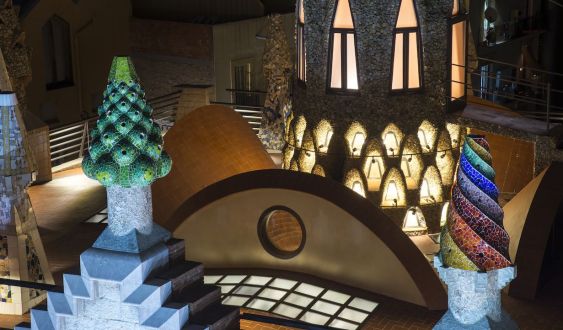
It is one of Barcelona's most hidden architectural gems, an almost inexplicable eccentricity: it was easy to understand that the magnates of the time dedicated themselves to conquering the Eixample as one appropriates pieces of the New World, but the Palau Güell expresses the rarity of someone who decides to ennoble the Raval, to modernize the city within its walls, to build an entire palace in the narrowest, most conflictive, and most medieval area possible.
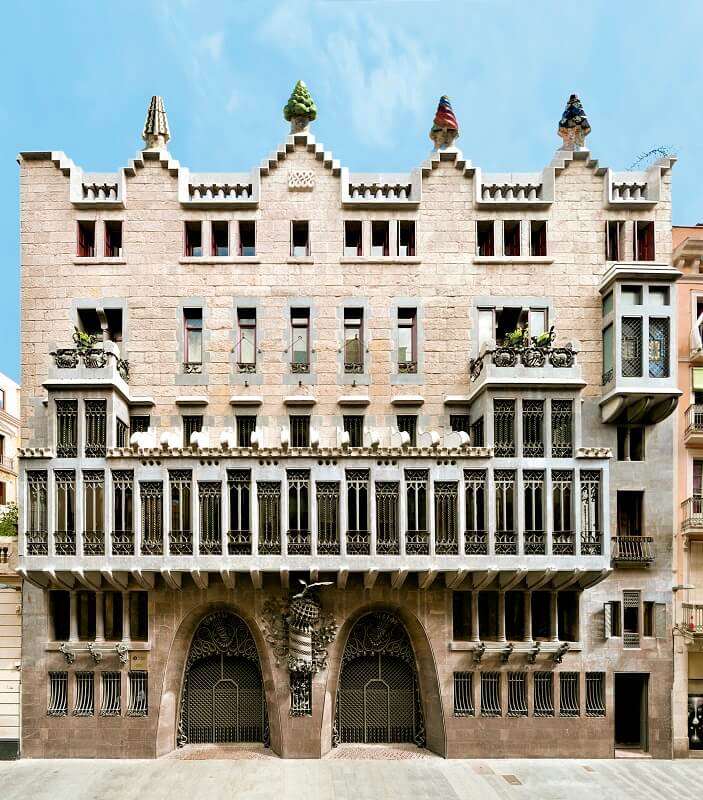
Important things for the visitor: first, that we are before Gaudí's first great masterpiece; second, that this is also a World Heritage site; and third, that understanding Modernism means understanding how its promoters lived. What symbols, what chambers, what corners they wanted to find every day when they woke up. As soon as we enter the Palau Güell, however, one thing becomes very clear to us: it is impossible that the financiers of Catalan Modernism were conservative people. Conservative people would not promote such crazy architecture. A conservative class would not go to live in the Raval. And, above all, a conservative magnate would never hire a brilliant eccentric like Gaudí, willing to demonstrate that there can be order in the greatest disorder.
If you are a tourist, you already know: Güell is a name that appears everywhere. In the Park, in the Colonia, on the gate of the Pedralbes estate... Someone in this city had set out to modernize it and bring it up to European standards, while in Brussels the Tassel house was being finished, in Vienna Otto Wagner's famous metro was being built, or in Paris Gimard's, or right here our particular fairy forest, that is, the Palau de la Música, and our particular Magic Kingdom, that is, the Hospital de Sant Pau, were being finalized.
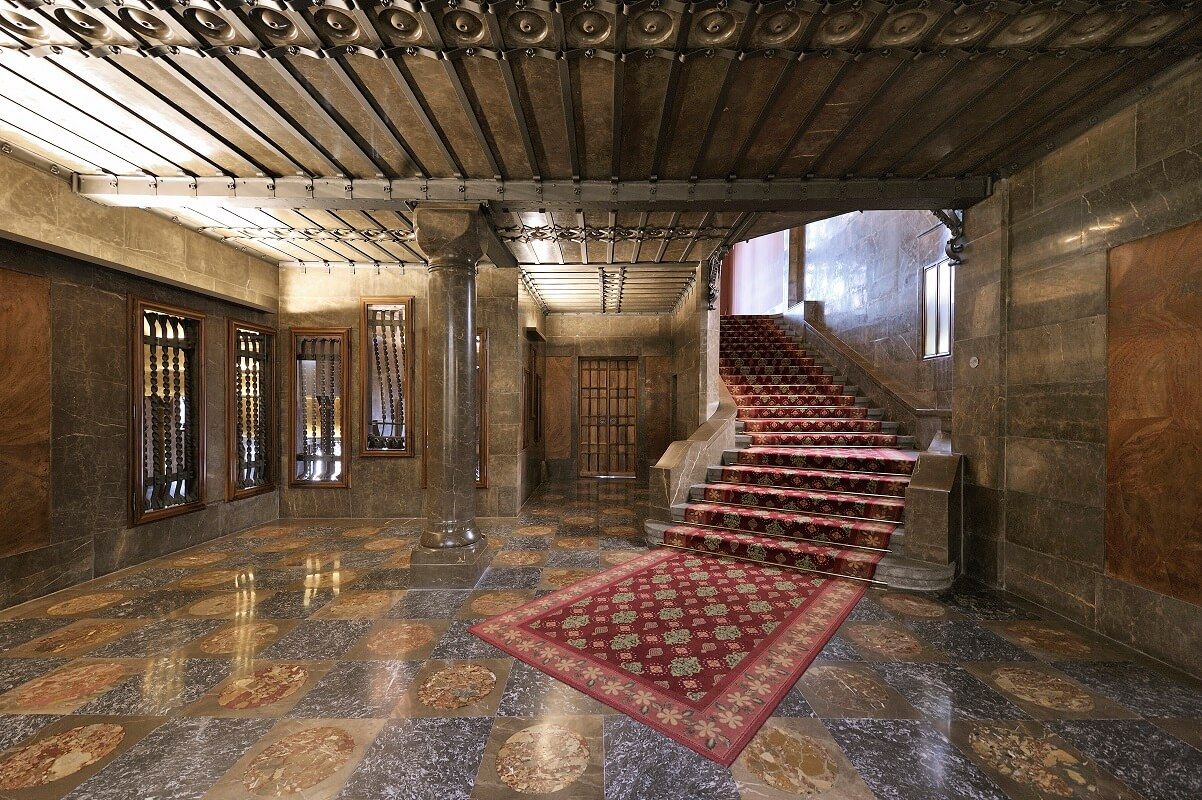
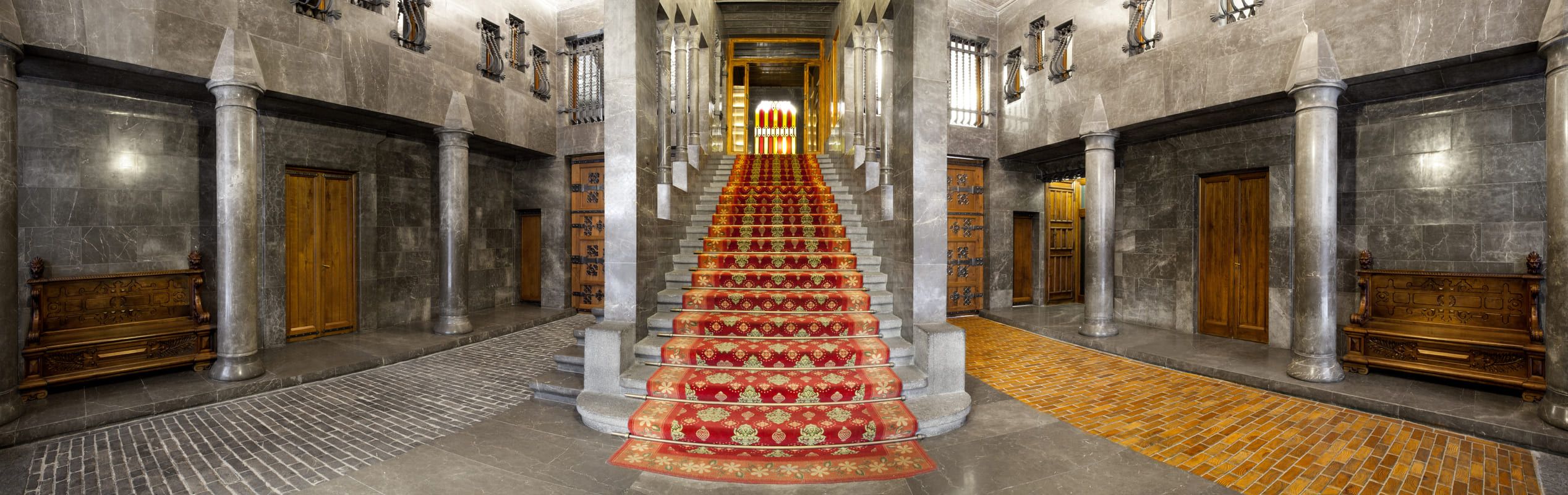
Well, precisely at that moment, just when the walls had been torn down and the Universal Exhibition was being prepared in the Ciutadella, Güell decided to commission Gaudí to build a palace... in the Raval. Below the Liceo and the Principal, near the future statue of Columbus, right next to the Rambla, that is, among the people. A conservative would prefer to stay on the outskirts with the peace of the birds, and take refuge in more rationalist and prudent architectures. Modernism in Catalonia was the opposite of prudence: it was imagination in power. It is not surprising that many politicians and intellectuals in Madrid (and the king himself) saw it as a dangerous architecture, and it is not surprising that the first thing we see on the entrance staircase is a stained glass window with the four bars. Mr. Tourist: if you want to understand Modernism, beyond the beautiful and the wonderful, you will have to understand this.
When you enter the Palau Güell, you must start from the premise that the concept of "palace", in these latitudes, does not involve noble materials. Here you will only find glass, stone, iron, wood, in a conception of nobility that is profoundly bourgeois and, ultimately, progressive: it is not the palace of the people, okay, but it is the palace of the rich man of the people. That's something. Here materials become noble through talent and effort, not through the lust of precious metals or courtly vestibules. Here there is no court, here we are in the house of a family. Nobles of red blood, red on a yellow background, like that of this stained glass window on the "noble" staircase. Eusebi Güell already lived on the Rambla before getting married, specifically in the building we know as Centro Galego, and it seems that the initial idea was to build the palace in the adjacent building: the roots, where we were born and grew up, before expanding. Güell offered a whole message to the conquerors of the new apples of discord: let us not forget where we come from.
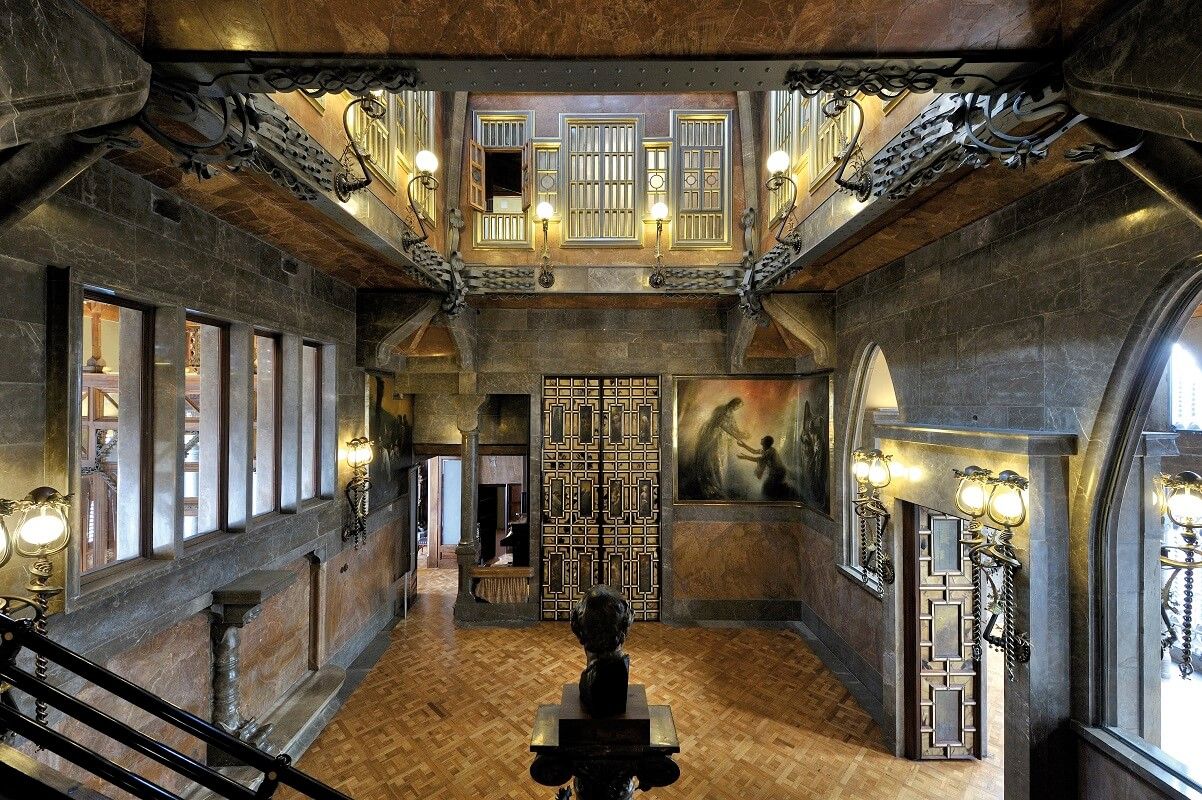
Well then, in this Palace on Conde del Asalto street (which is what Nou de la Rambla was called then) the Güells, led by the young Gaudí, spent their money: a place not only for family residence, but also intended for social, cultural, and political events. It is difficult to assign each bedroom to all members of the family, and mixtures must have been inevitable, but between family and service, at least twenty-four people must have lived here. In the halls and drawing rooms, events, receptions, concerts, visits, and presentations were often held: however, it seems that no dance was ever celebrated (it is unknown if it was for spiritual reasons, superstition, a quirk, or simply a matter of morality and rectitude). Little by little, the family left the Palau to move to the rural house in Park Güell, already in the 1920s, where Eusebi died, but from where his body was transferred to his true home, his true placenta: the Palau Güell.
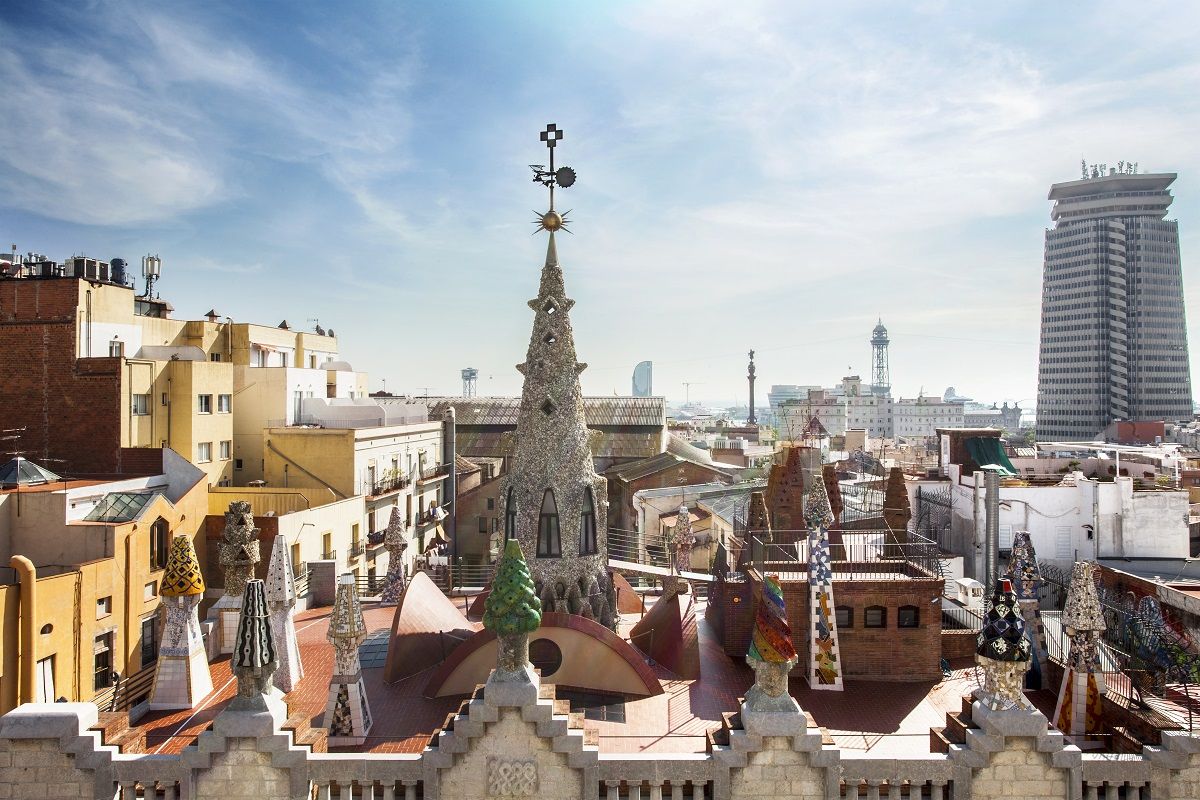
The Barcelona Provincial Council became the custodian of the Palau in 1944, following Mercè Güell's decision with the approval of all her siblings, after years of war and exile. It was used for the archive of the Institut del Teatre, as a Museum of Performing Arts, and as an occasional auditorium. Until now, it is only what it should be: that is, a beautiful ghost palace with its consequent specters and echoes. It could be a film set, it could be a fantasy novel's delirium, or the refuge of a particularly colorful and sentimental Count Dracula. With an organ included, it seems the girls very often played the organ. The visit to the rooftop, with its famous trencadís chimneys, is a true baptism in Modernism, but also a multicolored manifesto that rises like a banner of ancient lineage, softly, delicately, sensually, mediterraneously.
The Palau Güell is a complete welcome to the kingdom of Barcelona, to the court of modernity, to the industrial aristocracy. The facade is on a street so narrow that it seems not to exist, but both the halls and the rooftop are a sword plunged into the dragon of mediocrity. Gaudí has always seemed to me a predecessor of Disney, in terms of the curvilinear and almost caricaturesque approach, but he is also a precise chronicler of our medieval past. A continuator, an updater of our most glorious moments. While the counties of Barcelona were lost or disintegrated, Modernism came to resurrect their spirit and ennoble their loss: if we don't have nobles, we will create them.
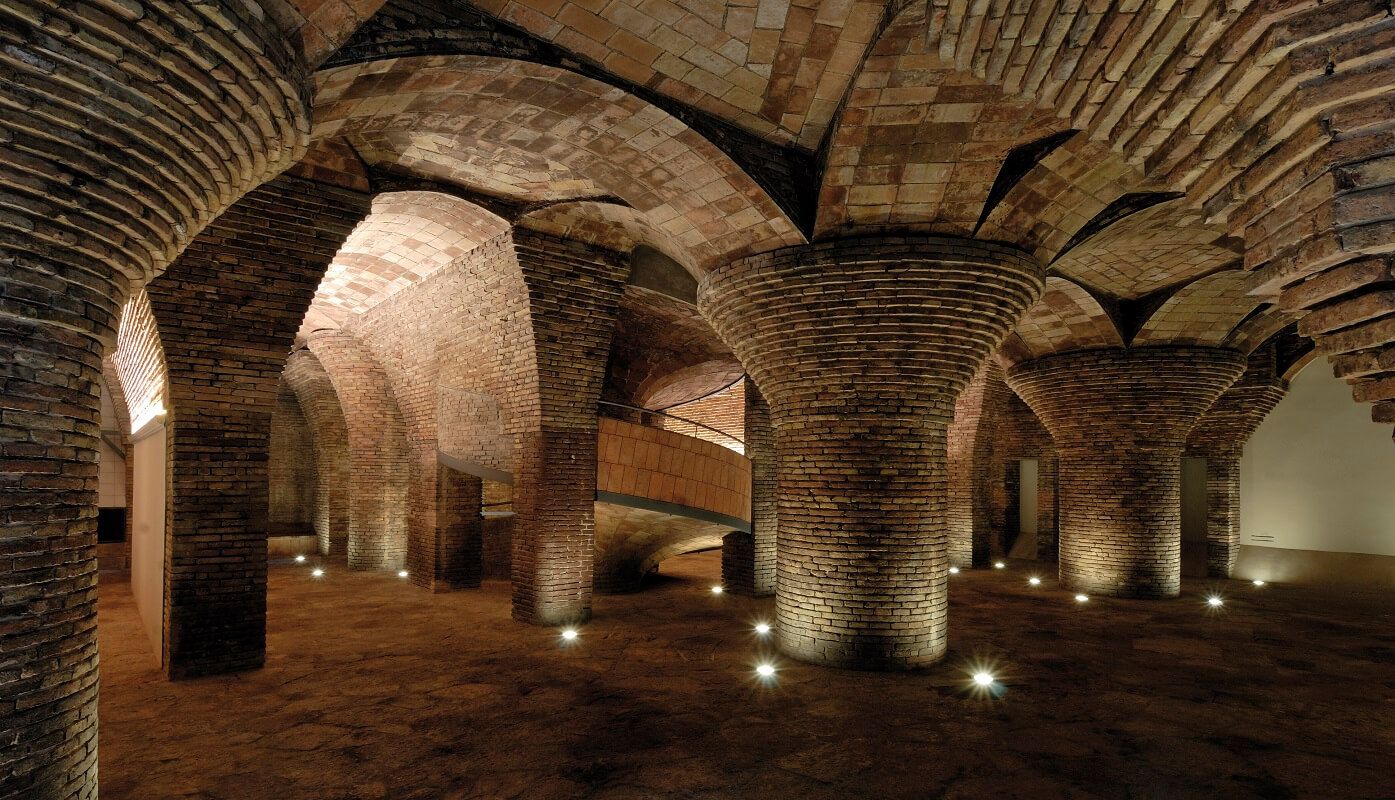
Marble, tiles, lampposts, wrought iron, clay. A combination of straight lines (it was a young Gaudí) with delirious sinuosities in a kind of attempt to order the Universe, the past, the Big Bang, Genesis, the history of Humanity and daily family life. Luxury in the hands of good ideas, and not in the hands of expensive materials, and a stable located in a space as surprisingly low as it is immense, solid, sumptuous. A kind of cellar of dreams, a place where desires or infallible plans of reconquest could be bottled. Well-worked oak doors with vegetal figures, red coronation ceremony carpets, hanging lamps like small aspiring luminous botafumeiros. Colonnades that evoke the Teresianas, ceilings reminiscent of Renaissance palaces, windows that promise (or swear) the completion of the Sagrada Família. Corners of sobriety, corners of absolute excess, halls that seem like endless astrological maps, hyperbolas, ellipses, the new Catalan vaults conceived by the Great Architect of the Universe. Despite the dining tables or the beautiful wooden fireplaces, or the traditional bedrooms, it is clear that Gaudí did not make a palace for a family, but for an entire country. As he did with the park, as he did with the crypt, as he did with everything.
I trust that tourists have ended up understanding it: when something is taken from you, you have no choice but to imagine and create it. The rest is done by eternity, and the selfies that immortalize us.
Add The New Barcelona Post as your preferred Google source for free
Stay informed with the latest news.
