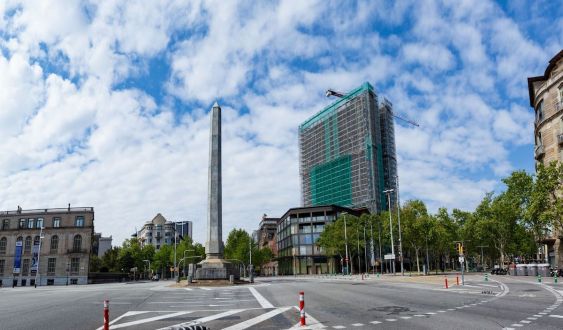
At the noblest intersection of the Eixample, in the geometric center (as they say) of the city, stands an obelisk dedicated to nothing and no one. It commemorates no victory, no defeat, no character, no foundational gesture. More than a monument, it is an unsettling presence, like the monolith from "2001: A Space Odyssey" among monkeys. While all the obelisks in the world celebrate pharaohs (Luxor, Karnak), or emperors (Augustus, in Rome), or national heroes (the cinematic Washington obelisk, dedicated to George himself), the Barcelona obelisk stands nameless and without cause. Without reason. Disconnected from history, amputated from meaning and any narrative, absurd, in an induced coma, limited to existing.
Let's go by parts. This square in front of the Palau Robert was not foreseen in the Cerdà Plan: it was only the intersection space between Diagonal Avenue and Passeig de Gràcia. Even then, it was called Cinc d'Oros, for its four roundabouts (one at each corner and a larger one in the center). In 1906, six lampposts were placed, distributed around the central roundabout. The increase in traffic forced their removal in 1957 (and today they are the ones that appear along the entire Gaudí Avenue).
In 1915, the idea arose to erect a monument there dedicated to Francesc Pi i Margall, president of the First Spanish Republic (which is like erecting a monument to naivety), but the project was aborted due to a dispute between republicans and Catalanists. It was resumed in 1917 and the work was commissioned to Miquel Blay, who designed a sculptural ensemble with the bust of the president. The arrival of Primo de Rivera's dictatorship again suspended the project.
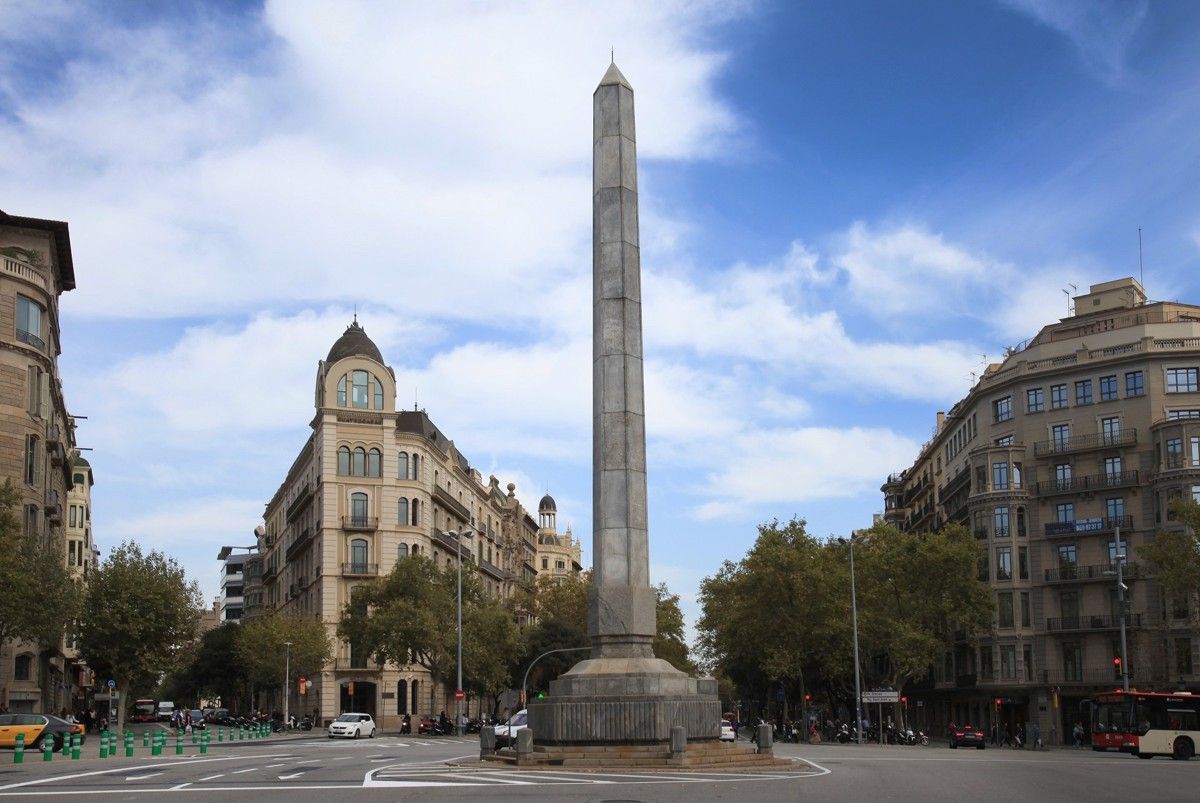
With the arrival of the Second Republic, the square was named Pi i Margall, which, in fact, was its first official name. Even so, Blay's work, already somewhat outdated, was discarded, and the competition called in 1932 was won by Josep Viladomat, with an image of the Republic in the form of a female nude in bronze, with a Phrygian cap and her arm raised holding a laurel branch. It was then integrated into an ensemble with the famous obelisk (known as El llapis), made of granite and 20 meters high, in addition to a medallion by Joan Peu dedicated to Pi i Margall.
The monument was inaugurated by President Lluís Companys in 1936. After the Civil War, the Francoist authorities removed the statue and the medallion and placed an allegory of Victory by Frederic Marès, next to a shield with the Francoist eagle (popularly known as el Lloro). The square was renamed "Plaza de la Victoria" (just as Diagonal became "Avenida del Generalísimo"). It must be said, however, that Marès' statue had originally been conceived as the figure of the Republic, because it competed with Viladomat's in the 1932 competition. Marès had to modify his work, such as covering the previously nude torso, to adapt it to its new purpose. They also changed the inscription "Barcelona a Pi i Margall" to: "To the heroic soldiers of Spain who liberated it from red-separatist tyranny. The grateful city."
In 1979 the Francoist shield was removed, in 1981 the square was renamed Plaza de Juan Carlos and since 2016 it has been called Plaça del Cinc d'Oros. As for the statue of Victory, it was removed in 2011, leaving the current obelisk without a statue, without an inscription, without a name, without reason or cause. Empty of content, emptier than the hole dug in the sparse grass of the Jardinets de Gràcia in homage to Espriu (a work by Frederic Amat), as if it were precisely the shadow of the obelisk.
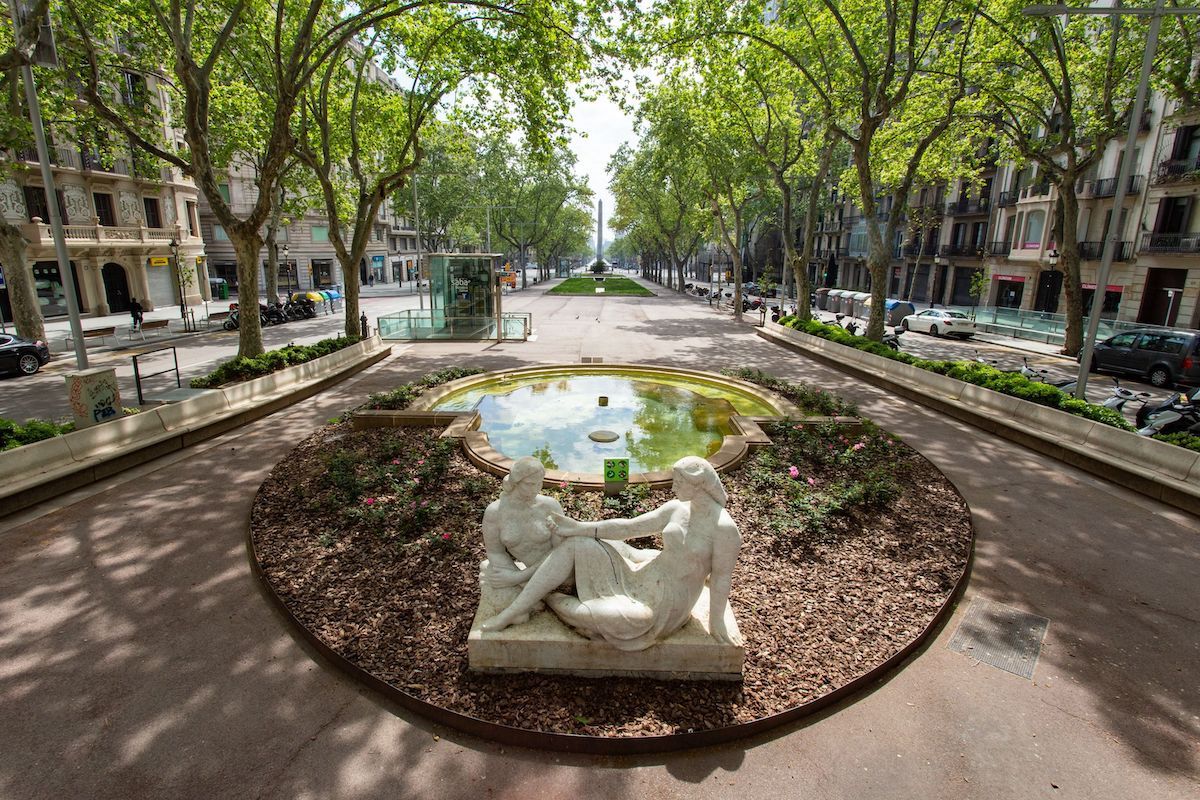
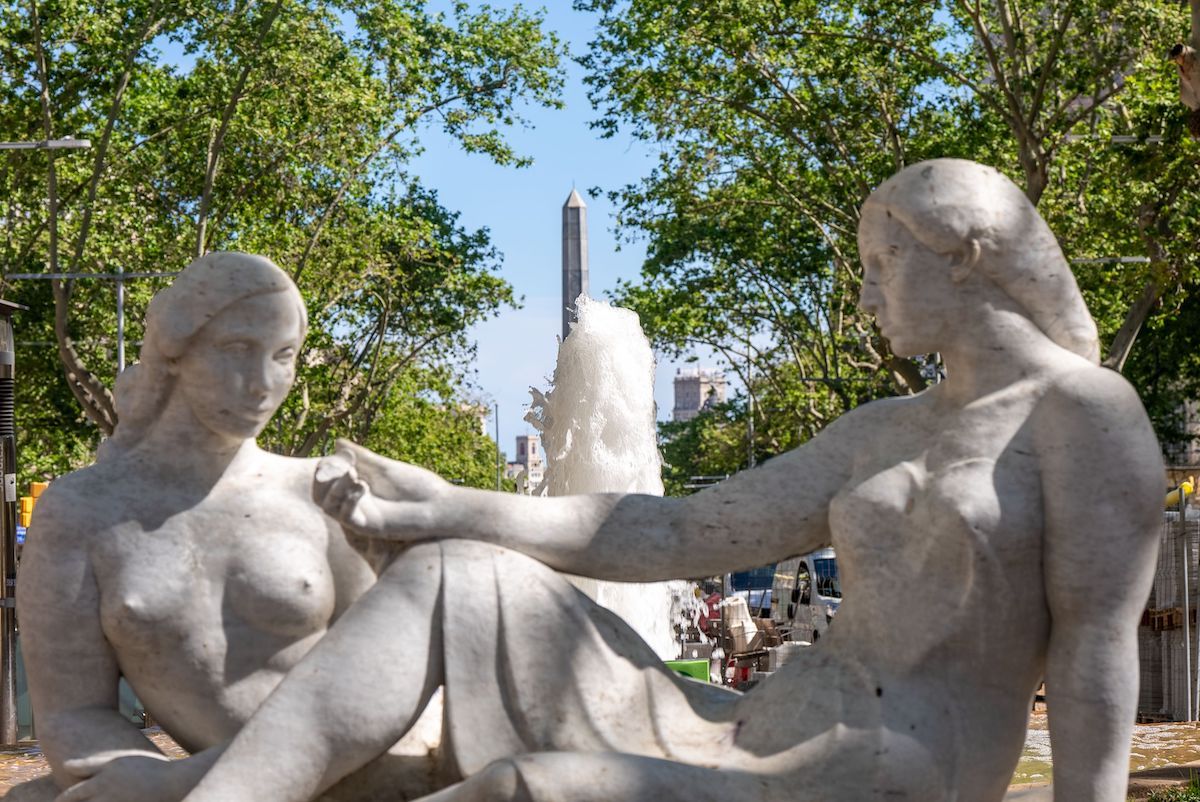
This absence of name, of reason for being, makes it a shamefully unique monument. Architecturally, an obelisk is always elegant: of deliberate simplicity, a slender needle, in this case of late noucentista style, with a sought-after austerity and perfect geometry. It is an urban obelisk, without hieroglyphs, without solar cult, without a foundational legend. A monument that refuses to be monumental, I fear due to the great traumas suffered by the city. From so many wounds, we have preferred not to take sides. It would be so easy, I don't know, to dedicate it to freedom. But no: this is unfortunately too delicate a term in our home.
The price is high: in the navel of Barcelona we today erect a monument of amputated memory, for a defeated city or, in any case, perplexed, that never quite knows what it wants to remember because, surely, it prefers to forget. What profound sadness.
Add The New Barcelona Post as your preferred Google source for free
Stay informed with the latest news.
