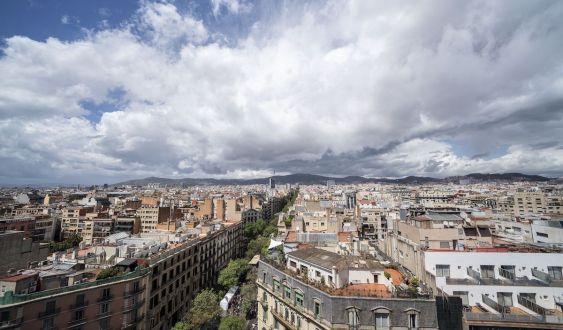
For 35 years, Barcelona has been imagining what it wants to be and where it wants to go. Mayor Pasqual Maragall was the one who started this path, creating an office to draw up the first strategic city plan in 1988, in line with the long-term vision that other European and American cities were adopting. With the transformation that the Catalan capital experienced with the Olympic Games as a backdrop, the local administration wanted to find a way to accompany the changes that were taking place and to do so jointly among the different social and economic agents.
The internationalization that Barcelona experienced from 1992 onwards, as well as the crisis that followed, modified the vision of the future that was to be promoted, incorporating elements such as the knowledge economy and expanding the scope of action. In 2003, Barcelona looked beyond its borders and opted to strengthen the relationship with the 36 surrounding municipalities, where 3.3 million people live, a commitment that crystallized in 2010 with the creation of a unique and pioneering governing body in all of Spain, the Barcelona Metropolitan Area (AMB).
Now, with a consolidated AMB, the new revision of the plan, with 2030 as the horizon, wants to broaden the focus even further and include some 200 municipalities surrounding Barcelona, spread over a much larger area than the metropolitan area and with a population that rises to 5.4 million inhabitants, going from El Vendrell to Malgrat de Mar, passing through Sabadell, Terrassa and Granollers. "The new strategy appeals to the entire metropolitan territory, to the real city," defends the new plan. From the metropolitan area, the zone closest to the Catalan capital and with a similar density, towards the metropolitan region, located in a more distant radius from the city and less populated.
"Despite the economic, social, and territorial consolidation of metropolitan dynamics, we still do not have adequate governance instruments to be able to face the resulting challenges," he adds, "all of this has significant repercussions on the provision of services, the supply and management of infrastructures, and local financing, which translates into significant territorial inequalities." The issue, therefore, is not only about broadening the focus but about developing "a collaborative type of metropolitan governance that overcomes the difficulties arising from administrative boundaries and knows how to adapt to the variable geometry of the challenges". The proposal of the Barcelona Metropolitan Strategic Plan (PEMB), coordinated by Oriol Estela and chaired by the mayor of Barcelona, Ada Colau, to go beyond the metropolitan area and provide instruments to this new region of action has met with the rejection of socialist mayors such as Antonio Balmon (Cornellà de Llobregat) and Nuria Marín (L'Hospitalet de Llobregat).
Beyond the instruments that the PEMB argues are needed to structure this metropolitan region, halfway between the AMB and the Diputación de Barcelona, the plan has identified missions, terminology inspired by the economist Mariana Mazzucato and which refers to areas of action that must allow the articulation of this diverse identity formed by 200 municipalities. The eight missions of the metropolitan region include issues such as economic competitiveness, decent work, mobility, housing policies, and territorial cohesion, but also the food model and culture. All of them are translated into specific objectives that must be achieved by 2030, such as dedicating 1.2% of GDP to R&D or increasing cultural participation by 10%.
[separator type="thin"]
Objectives for the metropolitan region by 2030
- Innovative and inclusive economy
- Sufficient income levels
- Environmental and climate emergency
- Sustainable and safe mobility
- Healthy food
- Territorial cohesion
- Adequate housing
- Cultural vitality
[separator type="thin"]
Add The New Barcelona Post as your preferred Google source for free
Stay informed with the latest news.
