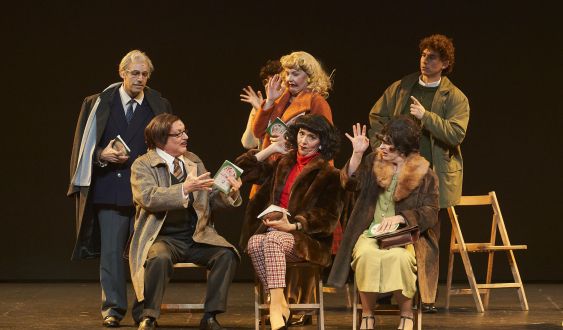
There where we place today the neighborhood of Camp del Arpa, in 1877 the Foment Martinenc was constituted, a workers' center with a spirit of ideological advancement promoted by young people from Sant Martí de Provençals. In the foundational documents it is cited that its purpose is to collaborate in instruction and, certainly, the pedagogical activity of the Foment contributed to the tradition of the Catalan school. In parallel, hiking, a chess club, the blaugrana club -one of the oldest in Catalonia-, dance and billiards have enlivened, and still do today, the afternoons of many neighbors. Also a theater group that has brought to life on stage the characters from works by Guimerà, Ignasi Iglesias, Serafí Pitarra and the main Catalan and Spanish playwrights.
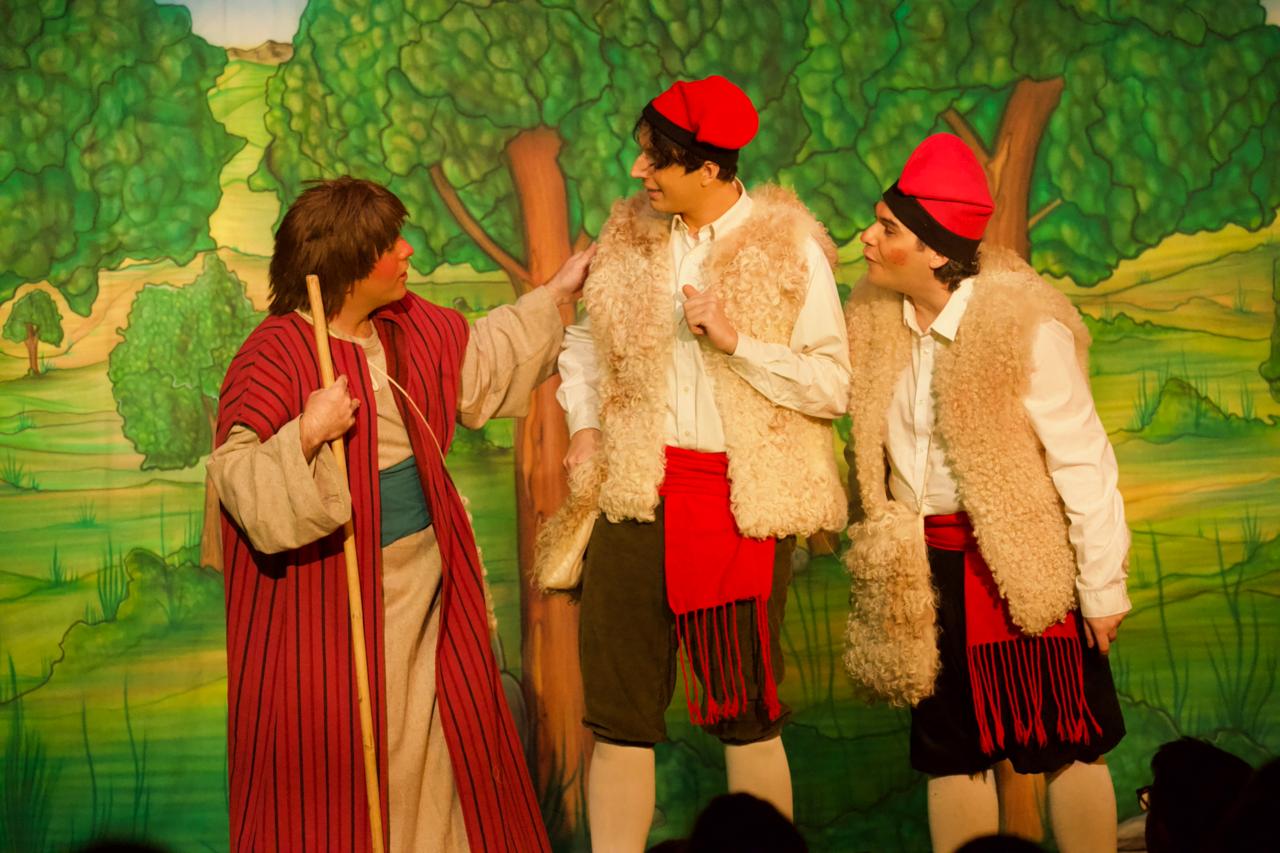
These days, the Abraxas theater group, from Foment Martinenc, is performing Els Pastorets, and it has been 45 Christmases that they have staged them. Ricard Sentís is one of the actors. He explains that during the year about twenty people participate in the different theater groups of the entity, organized by age, especially seniors, but the performance of Els Pastorets brings together about fifty former members of the group who left it or who perhaps no longer live in the neighborhood, and family members and children of actors, relatives or people from the entity who are part of other sections of the Foment join them. All of them, on January 3 and 4 next, at six in the afternoon, will perform again before the public, consolidating a tradition that in the lives of many people adds meaning to these holidays, due to the family and social reunion it signifies and because interpreting a character on stage contributes to acquiring skill in orality, non-verbal communication, while socializing, leads to feeling part of a group.
"I started doing theater in my first or second year of ESO, and I did it more or less every year. I studied at the Vedrunes school and we always did some play. At 13 or 14 years old I did Els Pastorets and, with five other participants, we said that we had a great time and we looked for where we could continue doing them. And one of them knew Foment Martinenc. I started in the youth group and then moved to the senior group. I have been an actor and I have directed. Now I am an assistant director of Els Pastorets. But when a lighting technician is needed, I also do it and other days I act, or I sit at the soundboard," says Ricard. And he adds that they do not have a fixed director, that "any of the members of the group can present a project and direct and, if the rest agree, we carry it out."
This is how most amateur theater groups organize themselves and prepare plays that they will perform during the year. Their members rehearse every week in the premises of a social, cultural, parish, neighborhood entity, a civic center or neighborhood community center. In Catalonia there are about 345 amateur theater groups that are part of the Federació de Grups Amateurs de Teatre de Catalunya. Many of them are grouped into coordinators that are organized throughout the territory. In Barcelona, there are twenty-eight coordinated groups, "which means that they share plays and collaborate more closely with each other, with joint activities," explains the head of the Coordinadora de Barcelona de Grups de Teatre Amateurs de Catalunya, Carles Cuní.
The contribution of these theater groups to the cultural and social fabric of the country has been recognized with the various Creus de Sant Jordi and Medallas de Honor that many of them have received over the years. However, Cuní considers it a shame that society "does not admire enough this work that moves so many people, who prepare everything without resources. With their own tools, they make plays at zero cost. And very good amateur theater is made."
Carles Cuní: "With their own tools, they make plays at zero cost. And very good amateur theater is made"
La Cubana's tribute
Well then, the company La Cubana, with the play 'Love came by taxi', by Rafael Anglada, wanted to pay this tribute, recognition, and admiration for what planted the seed in many of its actors and actresses: the love for theater.In 1959, L'amor venia amb taxi premiered at the same Teatre Romea in Barcelona. These days, and until February 15, the actors of the La Cubana company bring this recreation back to the stage to highlight amateur theater.
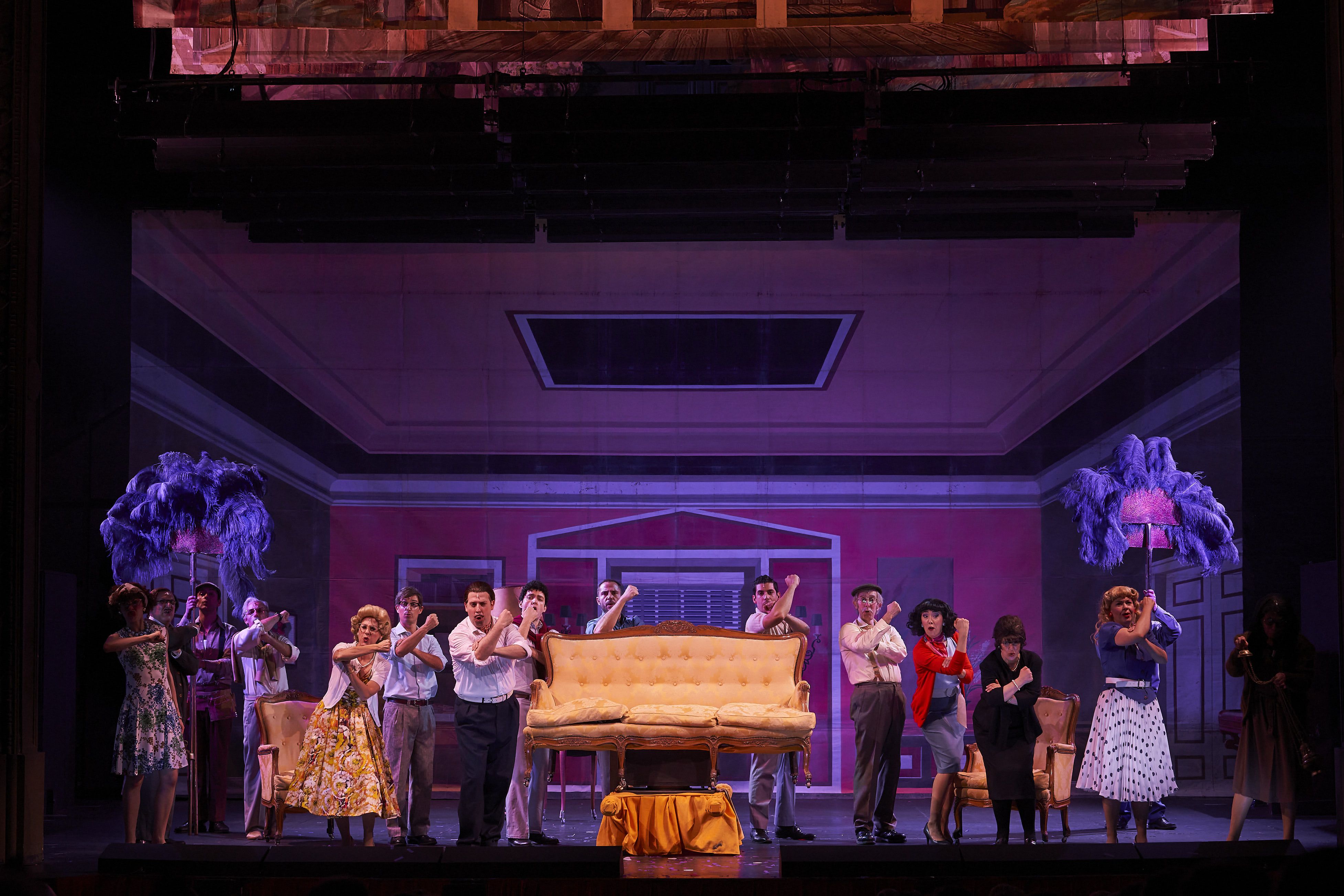
It is also their grateful remembrance of the athenaeums, recreational societies, parish centers, and neighborhood associations where so many actors and actresses began to take the stage in those first roles rehearsed throughout the year. "Amateur theater -they say- is a handcrafted tradition that should not be allowed to die." And -they specify- "we speak of amateur theater and not amateur because sometimes the word amateur has been misused to differentiate this activity from what is professional, when getting paid or not getting paid for a job has nothing to do with professionalism, but with the seriousness and responsibility you put into something you do."
Stage experience since childhood
Ariadna Clapés is one of the actresses of Love came by taxi, to the Romea Theater. She explains that when she was a baby, she already participated in the theater of the Centre Parroquial San Vicenç de Sabadell playing baby Jesus in Els Pastorets. At eight years old, she played a tree in Snow White in the plays she rehearsed as an extracurricular activity. Later she was a member of the children's operas of the Teatre La Farándula choir. "I clung to theater, to singing, to this whole world of performing arts to better manage emotions, and I think many people have done it, at the beginning, for this," she says.She acknowledges that she has had "the luck of growing up in a family where art was very present. My father and mother met at the Esbart Dansaire de Sabadell and have always danced there. I was already in my mother's belly while she danced. My paternal grandparents met doing Els Pastorets in La Faràndula and a few years later I also did them. My parents decided that my little sister would play baby Jesus in La Faràndula and I in Els Pastorets de San Vicenç". In fact, her great-grandfather was one of the founders of La Faràndula and her grandfather was one of the set designers and directors of Els Pastorets de la Faràndula and her grandmother had played Sant Miquel and the Virgin Mary in many plays.
"In Sabadell there is a lot of theater and a lot of community is created. I, moreover, had come to do sixty performances of the same musical, and this has given me enormous learning to then move into the professional world," says Clapés. She believes that the love for theater will still grow, because "technologies and social networks give the feeling that we are connected, but in reality we are not, and people need to form a real community. And in L'amor venia amb taxi all this is talked about, that everyone has their role in this community."
Ariadna Clapés: "I was already in my mother's belly while she danced"His stage partner in this play by La Cubana, Rubèn Montañá, also values all the experience that amateur theater has left him. In this case, in Badalona. At eleven years old, he joined the Círcol de Badalona, at that time Círcol Catòlic, first to do theater workshops for children and then he became involved with the stable company. Els Pastorets was the fixed performance every year, during childhood and adolescence along with a couple or three more plays. "Now I no longer act, but I am still involved and in 2021 I did Els Pastorets for the last time. Until I entered the Institut del Teatre to professionalize myself, I combined everything," he explains. "And within an entity like this, it's not just theater, there was a dance group, basketball, and the activities end up being part of the city's cultural fabric, because they ask you to contribute, for example, historical reenactments. City councils rely heavily on amateur theater groups in the city for many events throughout the year," he says.

Besides building social cohesion, "you also learn a lot, really, because you take courses with very professional teachers. We took it very seriously, you learned a lot, and we did productions with great rigor. When you dedicate yourself professionally, you realize the value of all this, the large number of classical texts you have defended on stage, and you already have that previous experience which is very valuable." In fact, it is a personal gain that, as Rubèn explains, is also noticeable in school. "In classes, when we had to give an oral presentation, reading aloud, there was a big difference between those who had done theater and those who hadn't."
He admits that, in part, he signed up for theater because he was shy. He feels that "theater is life and with it you experience personal growth. You are recreating other personalities, situations you don't live, but that you stage, and facing an audience, having the humility to make mistakes, I think is important. This suffering in front of the audience, not knowing what will happen, gives you the freedom to relativize everything. On stage, you don't think about pretending anything, but about doing your best at that moment, and this is a very therapeutic thing. When you do theater, your life and your future disappear, the audience at that moment makes you land and you have the feeling that time goes slower. I suppose that's why theater is so addictive, whether professionally or not. When you've tried it and spend some time without doing it and then return, it seems like you can no longer live without it, because of the adrenaline of the exposed minutes and at the same time being very well accompanied."
He even believes that in the pedagogical field it would be very good to implement theater in schools. "It generates group empathy and requires a lot of dedication, creating excitement with many different artistic fields, it makes you bring out things of your own, and it not only benefits those who go on stage, but everyone who participates in such a project." He, who besides being an actor, writes literature for children and young people, has also taught theater to teenagers. "Many times, the most disengaged or unmotivated students in the classroom show a vital maturity in theater that makes them more present than others. This happens because they find themselves immersed in an activity that is abducting them."
Rubèn Montañá: "On stage you don't think about pretending anything, but about doing your best at that moment, and this is a very therapeutic thing"Actress Alicia Puertas has also experienced it, in the classes she has taught for thirty years in schools and institutes. "Theater fosters perseverance and constancy, which is very important, and you concentrate on a common goal, culminating in a final performance, you dedicate a lot of time to the same piece. Through repetitive and constant work, a joint effort is achieved." She has seen that "students with a very bad academic record and even truants, would not miss theater class, and a change had been seen in them that reverted to other subjects, because that work of perseverance was implicit." Puertas started at the Casal familiar recreativo de Manresa and currently teaches classes at the Institut del Teatre.
Casals and athenaeums throughout the city
The Lluïsos d'Horta, the Lluïsos de Gràcia, the Ateneu Popular La Flor de Maig del Poblenou... each neighborhood has known how to concretize its theater proposals for neighbors near and far. At the Centre Cultural Els Catalanistes de Sant Andreu, theater has been performed since 1866. Opera singer Joan Gual and actress Rosa Maria Sardà passed through its stage. From the entity, they explain that currently about twenty-five people perform theater, bringing to the stage about five or six plays a year, in which two to twelve people can act."Small theater groups are a meeting space in which, after a few days, a complicity is created. And you have the feeling of being with friends or at least, sharing the experience of this art in a space of trust." These are the words of actress Mercè Rovira, who after graduating in dramatic art from the Institut del Teatre, has trained to use theater resources to help people with special needs.
At the Casal de Gent Gran Bascònia in Sant Andreu, they also do theater. "This year there are a dozen. We started 37 years ago, first doing radio-theater. Everyone rehearsed their character and we did it in front of the audience, but seated. Now we do it in a room at the Casal," explains its president, Nuria Sulé Solé. They rehearse twice a week and do one or two plays a year. They are currently rehearsing Plat de Crema, by Àngel Guimerà.
Monologues on stage
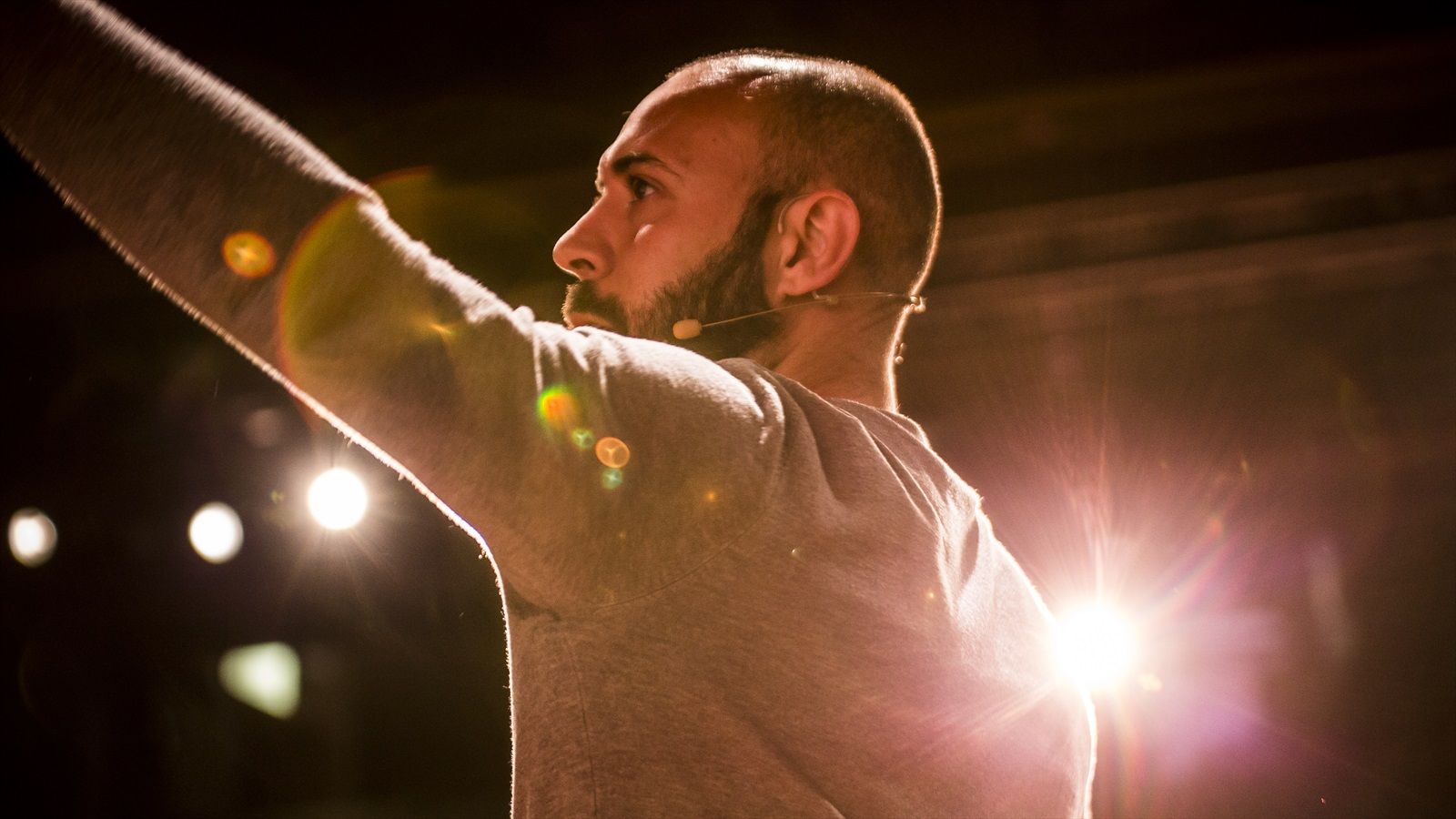
Actor Andreu Casanova, who performs until March 1st at the Teatre Goya with his monologue Tinder Sorpresa, has also performed since his beginnings on stages in different neighborhoods, some of which no longer exist. He started in an amateur company in the Eixample and soon realized that he really liked improvisation. "I became very fond of watching improv. It moved things in me that I felt went beyond entertainment, and I felt I wanted to do it. In a show, you've been a police officer, a limousine driver, you've been able to fly, you create stories from scratch, from nothing, and this is magic," he comments. And the strongest and most basic premise of improv - he adds - is that there is no error, it gives you absolute freedom," he states.
The formula of open mics that invite monologists to experiment in front of an audience in bars and all the small neighborhood theaters located throughout Barcelona are a path to socialization and to sharing good times with very real and human energy, which suddenly plants us in the present moment.
And it is to all this that La Cubana applauds with its show L'amor venia amb taxi. Until February 15th, at the Teatre Romea.
Add The New Barcelona Post as your preferred Google source for free
Stay informed with the latest news.
