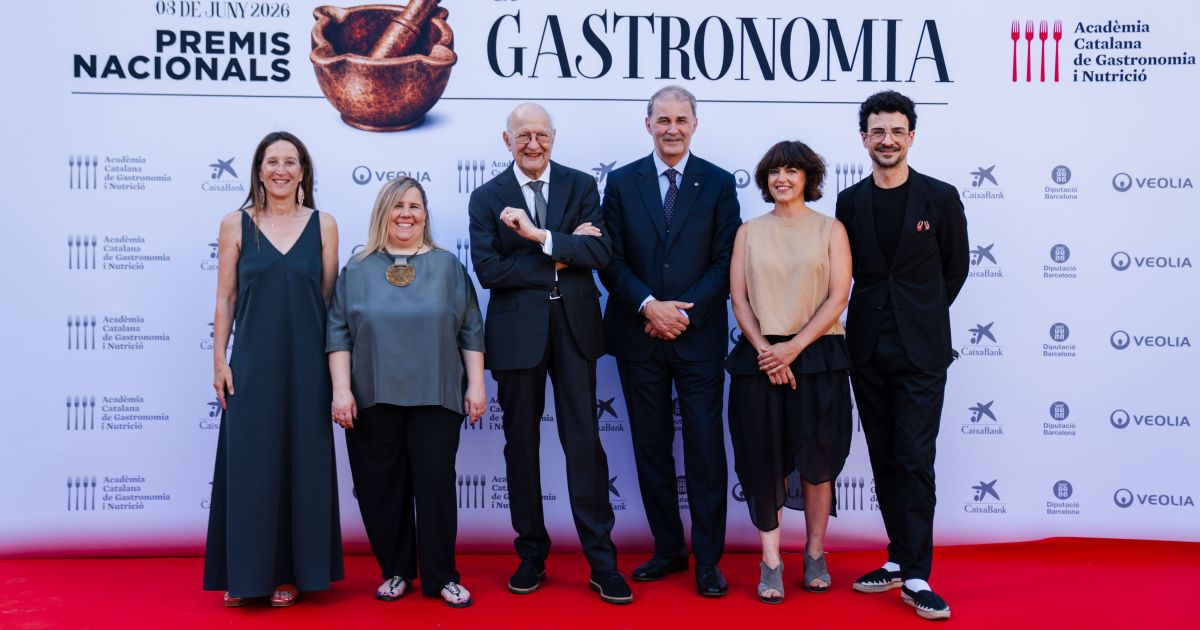
"In gastronomy, Catalans have a distinctive trait of our essence: to permanently debate between seny and rauxa," affirmed Joan Font i Torrent, president of the Catalan Academy of Gastronomy and Nutrition, at the beginning of the XXIV edition of the National Gastronomy Awards. "The ancestral seny of a solid culinary culture and the rauxa that provokes the explosion of a long-contained collective talent, capable of transforming the past."
The observation served as the guiding thread of the entire evening. Not only for its value as a statement of intent, but because the awards ended up illustrating, each in its own way, this tension between what is preserved and what pushes forward. From haute cuisine to the dining room, from journalism to mountain cuisine, this year's award winners demonstrated that Catalan cuisine advances best when it does not break with what has made it recognizable.
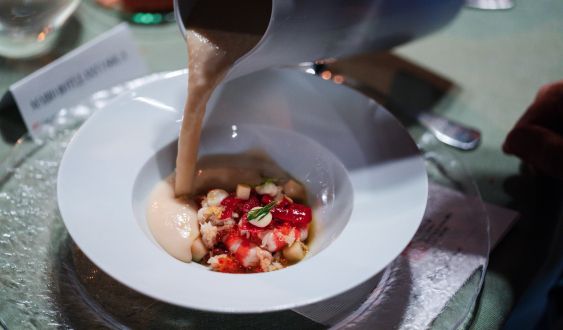
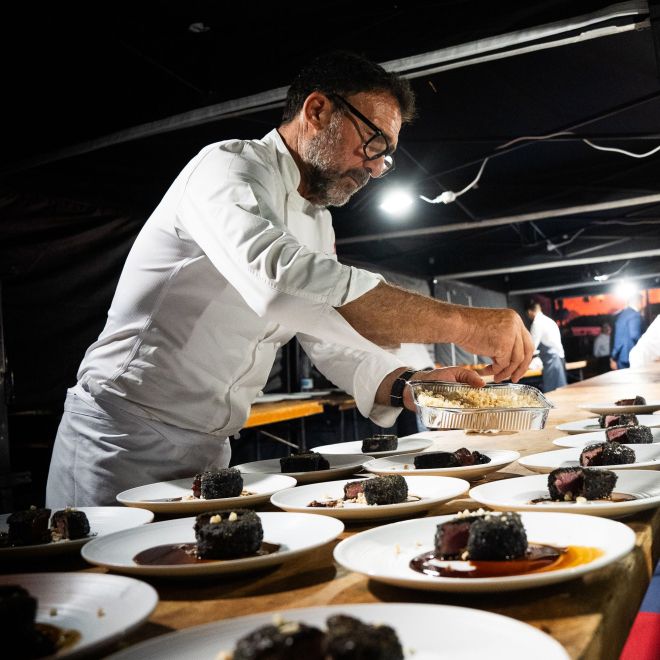
The dinner also gave continuity to this idea. The awards ceremony, held among the centenary trees of the gardens of the Palau de Pedralbes, was accompanied by a menu cooked jointly by Romain Fornell and Òscar Manresa. A professional complicity that seemed to recall that rigor and instinct are not always opposed. Often it is precisely when they meet that cuisine advances.
Three distinct languages
The National Author Gastronomy Award recognized Raül Balam Ruscalleda, one of the most personal voices in contemporary Catalan cuisine. "I would no longer understand my life without the life of a restaurant," he stated. From Moments, at the Mandarin Oriental Barcelona, where he arrived as head chef in 2009, Balam has built a proposal rooted in the territory and capable of taking a 'suquet de pescadors' to a gastronomic menu.
On the other hand, Jaume Subirós received the National Traditional Gastronomy Award for a career linked to El Motel Empordà in Figueres, where he took over from Josep Mercader in 1979. Subirós recalled his mentor's approach, focused on seasonality and product, and left a phrase that summarized an entire way of understanding the profession: "If you do something for a long time they call you a classic, but I believe there is a cuisine that is good and that is what should exist and what should endure."
From another place, Laia Comas provided a third way of understanding this fidelity. Far from the big spotlights and from a mountain kitchen that does not separate territory from daily life, the Revelation Award recognized a career built on coherence, roots, and conviction. At the helm of Mare de la Font in Solsona, Comas champions local produce, the link with producers, and a culinary identity that doesn't need to make noise to have its own voice. "It's a recognition of well-made cuisine and also of Catalan cuisine," she explained.
In favor of narrative
Trinitat Gilbert, a journalist for the newspaper ARA, has been recognized with the Nèstor Luján Award for Els aliments que mengem, a work that provides insight and context to various local ingredients. Gilbert, who in 2016 created the Mengem space with Esther Vera, has placed gastronomy at the center of a sustained journalistic career. "For me, writing about gastronomy is a passion, it's the profession I chose and I can't imagine living any other way," she explained. The award recognizes a way of observing, writing, and explaining cuisine with rigor and a unique voice.
The Head Waiter Award placed this same idea of profession on the other side of the experience. This year it has distinguished Patricia Sierra, front-of-house manager at Granja Elena, one of the names that has best defended high-end neighborhood cuisine in Barcelona. Her career explains a way of understanding the dining room that is not limited to serving, but rather observes, accompanies, and makes the client feel understood. "Part of the success is taking care of people, being empathetic, spontaneous, and natural. At a time when everything is so dehumanized, close treatment is highly valued," explained the award winner.
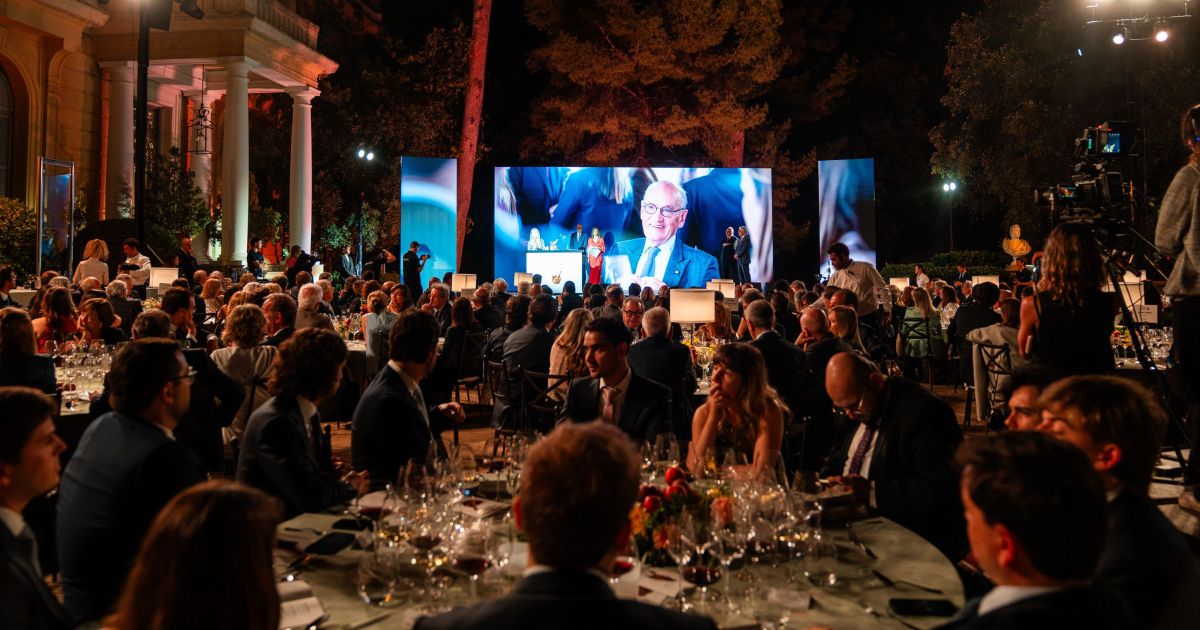
From here, the night broadened its focus. After dedicating the Special Award to Carles Vilarrubí, a decisive figure in the projection of Catalan gastronomy, the President of the Generalitat, Salvador Illa, placed the sector on a national scale. "Restaurants represent 3% of the employed population, about 115,000 people, and generate more than 7.5 billion euros annually," he emphasized. Illa also announced the official presentation, this July, of the Cuina Catalana brand. An initiative that, he explained, "will not be an administrative seal or a logo," but rather a tool to project Catalan gastronomy and chefs.
The end of the night returned to the starting point. Between seny and rauxa, the awards ended up drawing more than just a list of winners. They spoke of houses that endure, of kitchens that move without losing their roots, of dining rooms that still understand hospitality as a form of care, and of journalism capable of providing context to what we eat. Perhaps herein lies the strength of Catalan cuisine: in continuing to advance without renouncing memory.
Add The New Barcelona Post as your preferred Google source for free
Stay informed with the latest news.