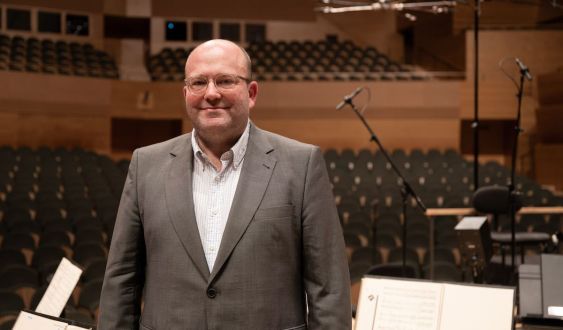
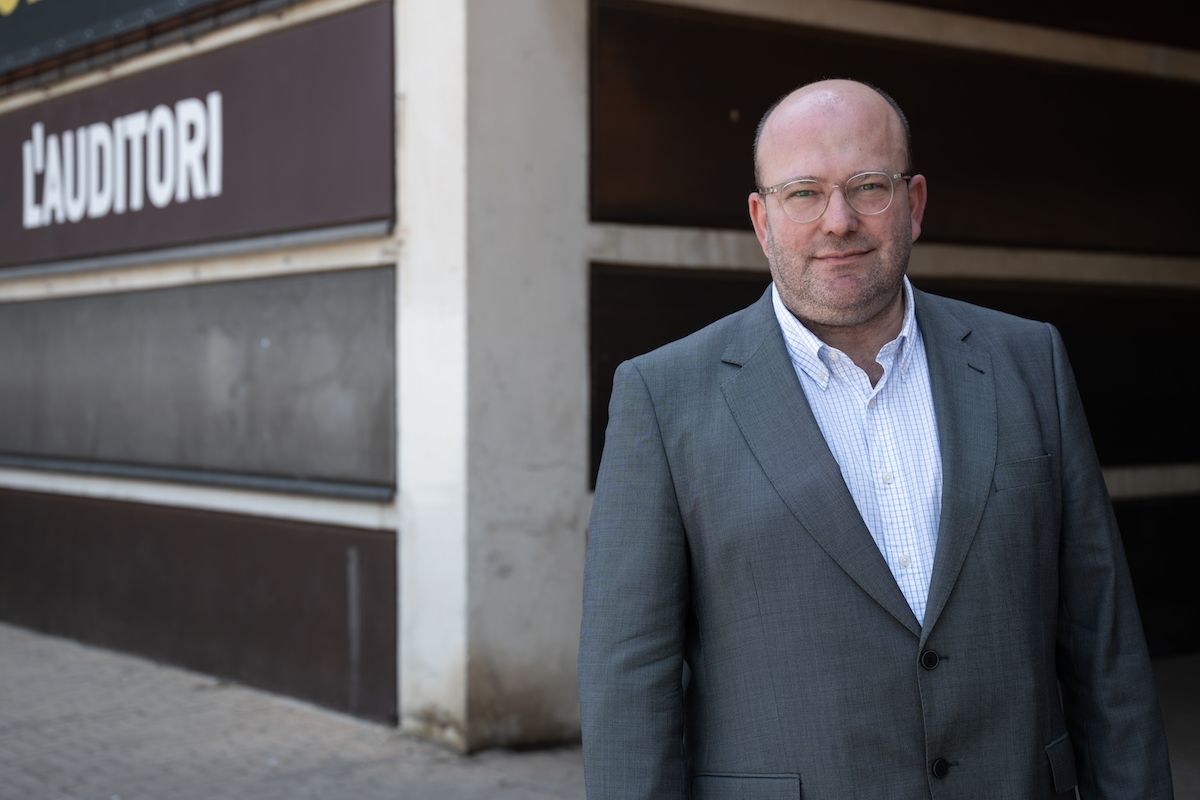
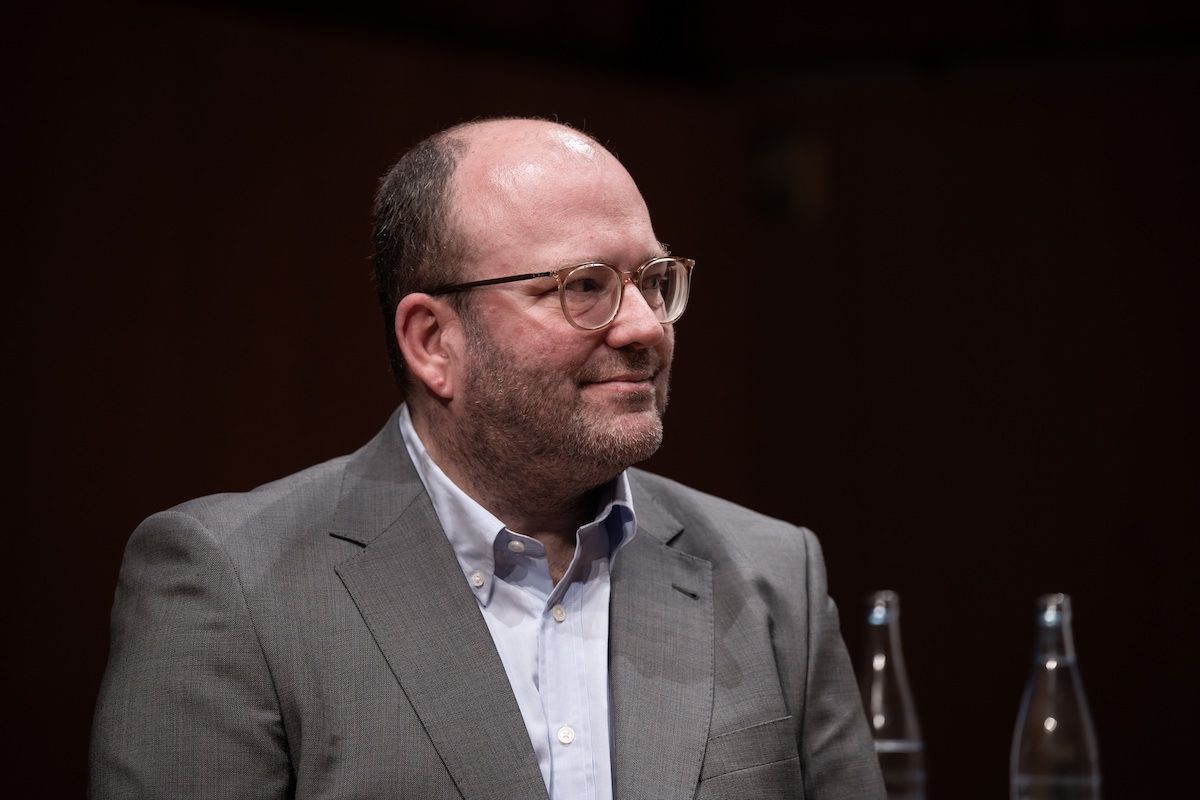
Víctor Medem is director of L'Auditori de Barcelona since mid-2025. A cultural manager and artistic director, he has been working for decades on musical projects with international projection, such as the Schubertíada de Vilabertran. His experience combines dialogue with top-level European institutions and participation in international co-production networks, educational projects, and a constant commitment to heritage, new creation, and the promotion of new audiences.
--- You arrive at the direction of L'Auditori after years working on cultural projects. What changes when you assume the responsibility of an institution like this?
--- What is really different is that it is a public institution. L'Auditori is a consortium of the City Council and the Generalitat, with a very clear mission. It should not only function as a concert hall. It was built with specific objectives and, over time, it has incorporated many functions that give it a much greater and more powerful personality than what can sometimes be perceived.
--- What do you think is the priority function of a new director?
--- When you come here, you don't come to do "your project." You come to get to know the house, to begin with, and to value everything that has already been done and is being done, to direct it always keeping the public mission in mind. Evidently, it is also about detecting shortcomings and seeing what can be developed further, but always from that responsibility. We organize about 550 of our own activities each year. That already says a lot about what L'Auditori is.
"For many people, from different social contexts, L'Auditori is the gateway to music"--- Speaking of public mission, I understand that educational service appears as a fundamental axis…
--- Because, in fact, it is. Of the 550 annual activities, about 300 belong to the educational service. A pioneering, prescriptive service that started many years ago, when there was not yet widespread concern for these issues: family, school, and participatory concerts that reach 174,000 people a year. Here, initiatives such as Cantània or Canta Gran are channeled, which have meant that practically all families in Catalonia have passed through L'Auditori at some point. And we are talking about very diverse social contexts. For many, it is the gateway to music!
--- And it is also a way of understanding culture as a right, of accessing tools that make a richer life possible…
--- Exactly. Projects like Apropa Cultura, which is an initiative born here, allow people in vulnerable situations to get to know and enjoy the regular program. It is a deep, very silent work, but fundamental for L'Auditori. A private facility would hardly do this so decisively and broadly. It is part of our responsibility as a public service.
--- In these educational projects, the work does not end or begin on the day of the concert, right?
--- No, in fact, the concert is only one part. Before that, there is work with school teachers, in the classrooms, which makes music enter the daily lives of students. If you want to offer quality music, you have to prepare the listening. The previous work is very important: the didactic material, the listening guides, the work with the teachers.
--- How is this basic, pedagogical work combined with the search for artistic excellence within the framework of major European orchestras?
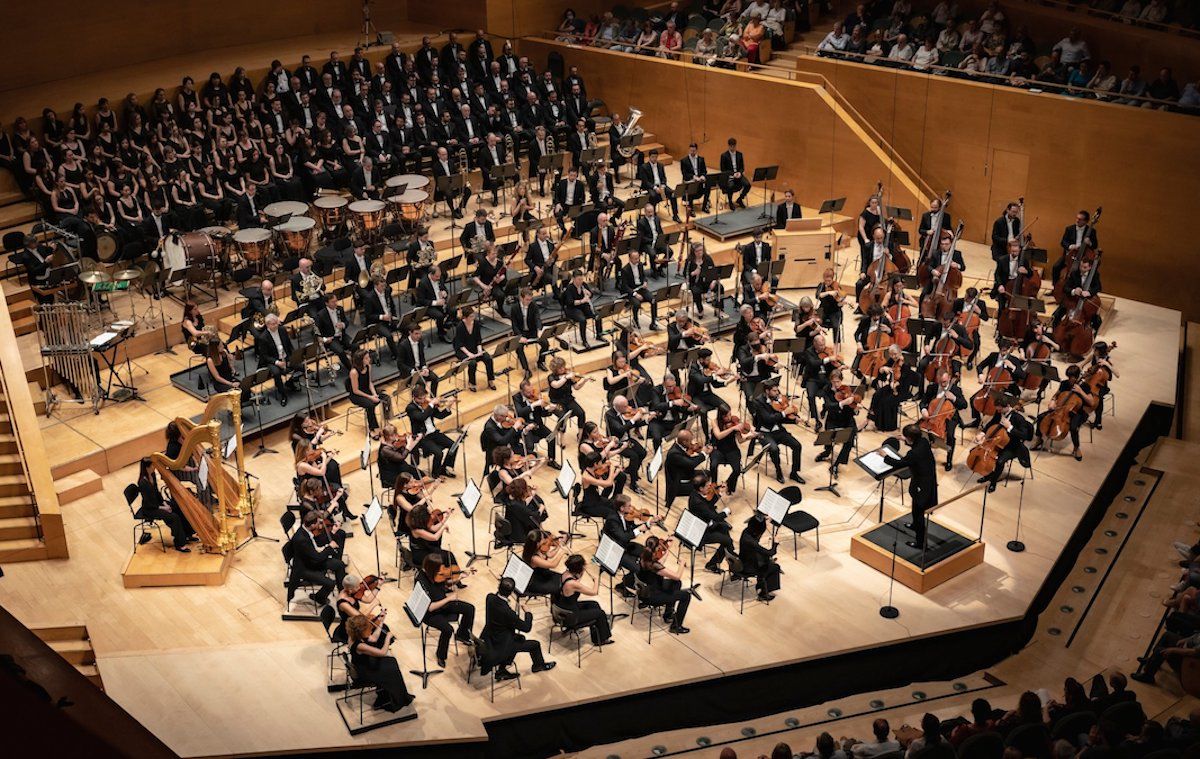
--- They are not separate dimensions, actually. Our mission is to bring the best possible music to the citizens, with the best performers, and the Orquestra Simfònica de Barcelona i Nacional de Catalunya (OBC) and the Banda Municipal de Barcelona (BMB) function as two stable, top-level bodies. Evidently, all this takes time. Leading an orchestra means working hard on rehearsals, having a clear idea, and giving space and confidence for projects to grow. We live in a very "immediate" society, and music needs to settle.
"Musicians who had left for important European orchestras are now starting to return"--- There has been talk of the artistic improvement of the OBC in recent years, certainly, and I myself was able to enjoy it a few weeks ago…
--- It is evident that the orchestra has improved, and that does not happen by chance. It has to do with sustained work and deposited trust. And there is a very clear indicator: musicians from our country who had left to train and start their careers abroad are now beginning to return, because they see that there is a solid project and an attractive work context. The orchestras here are raising their level. And this is not over yet, it will sound even better.
--- Beyond classical music, L'Auditori also bets on new creation.
--- This is especially the case of Sampler Sèries, a cycle of research music. We program what is currently being done in the most important production centers in the world. If there is no one who bets on it, as the market does not regulate it, it would not have visibility. A private promoter will not organize, for example, an electroacoustic concert with twenty loudspeakers. But these are things that must be done, trying new sounds and media... This is how art advances. Next season the OBC will premiere 13 works, and we will continue to give opportunities to young local creators or performers: they will take center stage on the same stage as great internationally renowned soloists.
--- This responsibility also includes the visibility and promotion of heritage.
--- Yes, we are L'Auditori, home of the Barcelona Symphony and National Orchestra of Catalonia: we have a responsibility with the country's composers, such as Robert Gerhard, whom we want to achieve the deserved relevance. There is an enormous heritage, which too often remains in the archives. Also from the Music Museum we intend to give visibility to musical jewels that we possess. Such as, for example, a collection of instruments that is one of the best in Europe, especially in guitars and keyboards. The museum carries out a very important work of heritage preservation and dissemination. The challenge is to make it even more visible, and link it more to the concert program, creating new synergies.
---From there also arises, with all coherence, the creation of its own label…
--- Exactly. An orchestra that doesn't record doesn't exist internationally. With L'Auditori Digital we are putting our orchestra and our composers on the global map. It is a tool for projection, but also for preservation.
"Europe is not just a recent political construction; composers 'made' Europe before it existed"---In other contexts, I have heard you defend the idea of L'Auditori's season as a journey, not just a sum of concerts.
--- Because I am a great defender of the season as a narrative: a journey that begins in September and ends in July, where things happen and where the public can accompany that process. Festivals, which are a trend lately, create very powerful peaks of attention, and that is fantastic… although it somehow makes that idea of continuity lost. For me, it is key that people do not just come to a specific event, but feel that L'Auditori is part of their cultural life on a regular basis.
--- In that narrative, the idea of Europe also appears strongly, the reality from which we understand ourselves and which we live even before being fully aware of it.
--- We are very interested in showing that Europe is not just a recent political construction, but a cultural reality that already existed centuries ago. Composers were making Europe before Europe existed: Mozart traveling from court to court, Wagner going to Paris to learn the trade, Rachmaninoff building his identity through exile. All of that is already Europe. And I believe that extracting these narratives from the programs we already do can greatly help to understand the eras, the contexts, and also the present.
--- When you talk about Europe, you don't do it from an abstract idea, but from the concrete experience of traveling and working there… Does that also condition how you view your task at the head of L'Auditori?
--- Yes, of course. In the end, all of that gives you perspective. Seeing how work is done in other places, participating in networks, in co-productions, allows you to compare ways of doing things. And it also helps you to position yourself here without complexes. We have talent, we have very good equipment and the feedback we receive confirms that we are playing in this same space. Music demonstrates that Europe is not just an administrative framework, but a shared civilization.
--- Does that European narrative also dialogue with the current political moment?
--- I don't approach it from a naive perspective. Europe has problems, but also very important achievements that are often taken too much for granted. Music allows you to understand the extent of processes, and to show that there is a shared history that does not arise from nothing, and that establishes a common framework in terms of human values. We want to put artistic achievements at the center: they are tools to understand each other better and foster a respectful and full life.
Add The New Barcelona Post as your preferred Google source for free
Stay informed with the latest news.